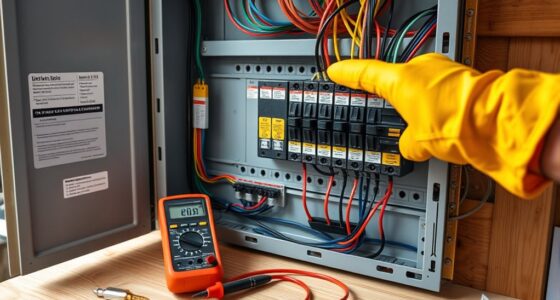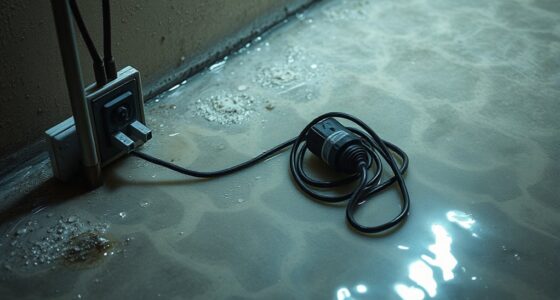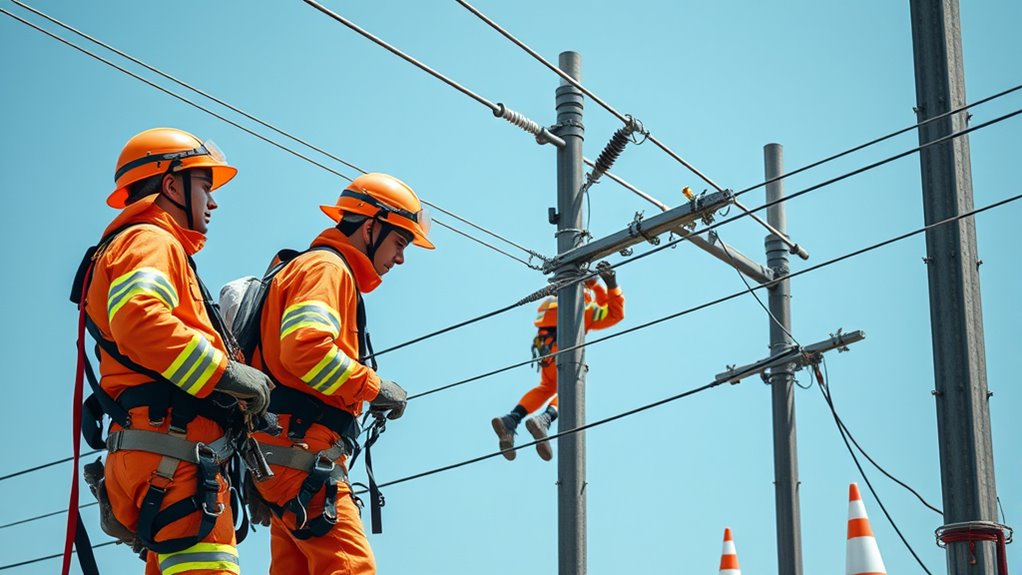

To stay safe during power line repairs, you should perform thorough equipment inspections, ensuring tools, gear, and machinery are in good condition. Familiarize yourself with emergency procedures and keep communication lines open with your team. Always wear proper PPE and follow lockout/tagout protocols to prevent accidental energization. Stay vigilant about environmental hazards and equipment changes. Continuing with these safety measures helps you protect yourself and your team—discover more essential protocols by exploring further.

Get backup power and energy gear delivered free with Prime
- Fast, free delivery on millions of items
- Prime Video, Amazon Music and more included
- Member-only deals all year
Key Takeaways
- Conduct thorough equipment inspections and verify the integrity of tools, protective gear, and safety devices before starting work.
- Follow strict lockout/tagout procedures to de-energize and secure power sources prior to maintenance.
- Use appropriate PPE correctly and ensure it fits and is undamaged to protect against electrical hazards.
- Familiarize and regularly rehearse emergency response plans, including safe power shutdown and first aid procedures.
- Maintain clear communication and vigilance, monitoring environmental conditions and team coordination throughout the repair process.
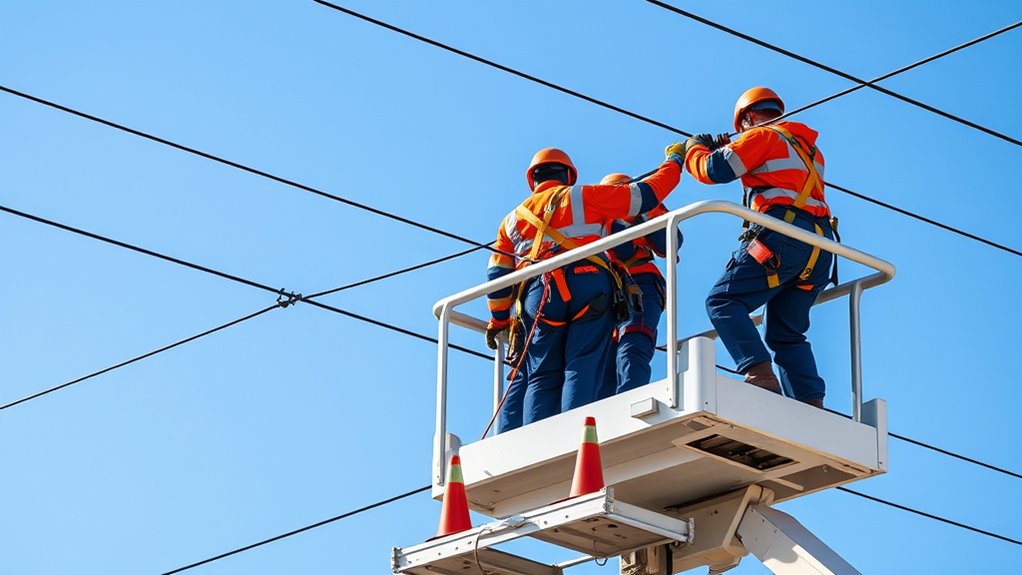
Power line repair teams face significant risks every time they step into the field, making strict safety protocols essential. One of the most critical aspects of staying safe is conducting thorough equipment inspections before starting any work. This means checking all tools, protective gear, and machinery to guarantee they’re in proper condition. Faulty equipment can lead to dangerous situations, such as electrical shocks or equipment failure, which could result in serious injuries or fatalities. You should examine insulation on gloves and boots, verify the integrity of insulating tools, and guarantee that all safety devices are functioning correctly. Regular inspections help you identify potential hazards early, preventing accidents before they happen. Proper sizing and load‑planning tools are also crucial in ensuring that equipment is suitable for the task, reducing the risk of overloads or failures.
Regular equipment inspections prevent hazards and ensure safety in power line repair.
Alongside equipment inspection, having well-practiced emergency procedures in place is crucial. No matter how diligent you are, unforeseen incidents can occur—such as accidental contact with live wires or equipment malfunction. Knowing exactly what to do in these situations can make the difference between a minor incident and a catastrophe. You should familiarize yourself with emergency protocols, including how to shut down power safely, administer first aid, and contact emergency services promptly. It’s also important to have clear communication plans, so everyone on the team knows their roles during an emergency. Regular drills reinforce these procedures, keeping them fresh in your mind and ensuring quick, coordinated responses when needed.
Safety protocols also emphasize personal protective equipment (PPE). Wearing the right gear—such as helmets, gloves, eye protection, and flame-resistant clothing—is non-negotiable. Proper PPE acts as a barrier against electrical hazards and falling debris. Before starting work, double-check that all safety gear fits correctly and is free of damage. Additionally, you should always follow lockout/tagout procedures to guarantee power sources are disconnected and secured before beginning repairs. This step reduces the risk of accidental energization while you’re working on the lines.
Communication is another cornerstone of safety. Always keep in contact with your team and supervisors, especially when working at heights or in complex environments. Use radios or signaling devices to stay connected, and never assume someone else has checked a safety measure. If conditions change unexpectedly—like weather or equipment issues—you need to reassess your safety protocols immediately. Staying vigilant about equipment inspection and emergency preparedness keeps you protected and helps prevent accidents. Remember, safety doesn’t just depend on following rules but on actively maintaining awareness and readiness throughout every step of your work.
insulated electrical gloves for power line repair
As an affiliate, we earn on qualifying purchases.
As an affiliate, we earn on qualifying purchases.
Frequently Asked Questions
How Often Should Safety Training Sessions Be Conducted?
You should conduct safety training sessions at least annually, ensuring your team stays current with best practices. Regular training frequency helps reinforce essential skills and safety protocols. Additionally, incorporate refresher courses every six months or as needed, especially after incidents or updates in safety standards. This approach keeps your team well-prepared, reduces risks, and promotes a safety-first culture on every power line repair job.
What Are the Latest Advancements in Protective Gear?
You’ll be amazed by the latest protective gear, featuring innovative helmet technology that feels like wearing a future-ready fortress. Wearable sensor integration now provides real-time health data, alerting you instantly to hazards and fatigue. These advancements create gear so advanced, it’s almost like having a personal safety robot by your side. Staying protected has never been this high-tech, giving you confidence to tackle power line repairs with unparalleled safety and precision.
How Do Teams Handle Emergencies During Repairs?
When emergencies happen during repairs, you follow established emergency response procedures and incident management protocols. Quickly assess the situation, alert your team, and activate backup plans. You coordinate with emergency services if needed and prioritize safety above all. Clear communication, swift decision-making, and adherence to safety protocols help you manage incidents effectively, minimizing risks and ensuring everyone’s safety during unexpected situations.
What Are the Protocols for Working in Extreme Weather?
When facing extreme weather, you brace yourself like a ship against a storm, knowing weather-related risks can escalate quickly. You follow strict protocols—monitoring forecasts, securing equipment, and halting work if conditions turn hazardous. Emergency preparedness becomes your anchor, guiding you through lightning, high winds, or freezing rain. You prioritize safety above all, trusting that these measures keep you grounded amid nature’s fiercest tempests.
How Is Team Communication Maintained Remotely?
You maintain remote communication by using reliable radios, satellite phones, or digital messaging tools, guaranteeing clear, constant contact with your team. Always verify that your safety equipment, like headsets and communication devices, are functioning properly before starting work. Regular check-ins, status updates, and quick response protocols help you stay coordinated, especially in challenging conditions. Staying connected ensures safety and efficiency during power line repairs, even when you’re miles apart.
high visibility safety helmets for electrical work
As an affiliate, we earn on qualifying purchases.
As an affiliate, we earn on qualifying purchases.
Conclusion
Stay alert and follow safety protocols at all times, but remember, one overlooked step could change everything. Power line repairs are unpredictable, and danger lurks around every corner. Are you prepared for the unexpected? Keep your focus sharp and your safety gear on. Because when you’re working high above the ground, a single moment of distraction could be your last. Stay vigilant—your safety depends on it.
As an affiliate, we earn on qualifying purchases.
As an affiliate, we earn on qualifying purchases.
Halloween Picks
halloween
As an affiliate, we earn on qualifying purchases.