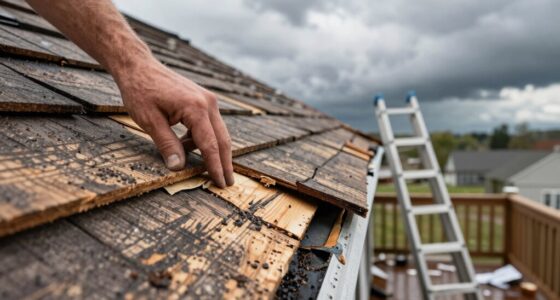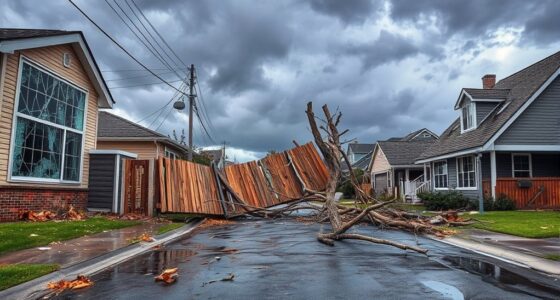
Handling fallen trees and large debris safely starts with evaluating the situation and ensuring no power lines are nearby. Use proper safety gear like gloves, helmets, and goggles, and keep others at a safe distance. Start by removing smaller branches before making controlled cuts on the larger wood, always aware of weight shifts. If you’re unsure about complex or unstable trees, it’s best to seek professional help. Staying cautious and prepared helps prevent accidents—continue to learn more to handle the task effectively.

Get backup power and energy gear delivered free — and shop member deals
- Fast, free delivery on millions of items
- Access to Prime Big Deal Days deals on October 6–7
- Prime Video, Amazon Music and more included
Key Takeaways
- Assess the stability of the fallen tree and surrounding structures before starting removal.
- Use proper safety gear and follow equipment safety guidelines during cutting and handling.
- Remove smaller branches first to create a clear workspace and reduce weight hazards.
- Avoid working near power lines or unstable areas; hire professionals for complex or large trees.
- Clear debris promptly and consider recycling wood to maintain safety and reduce site hazards.

When dealing with fallen trees and large debris, safety should always come first. Whether you’re handling a storm aftermath or clearing out a yard, understanding how to approach tree removal and debris disposal securely is essential. Large fallen trees can be unpredictable, and improper handling can lead to serious injury or property damage. Before you start, assess the situation carefully. Check the stability of the tree and surrounding structures, and look out for hanging branches or unstable roots that might shift unexpectedly. Never attempt to move or cut a tree if you’re unsure of its stability or if it’s near power lines. When in doubt, calling professional tree removal services ensures the job gets done safely and efficiently.
Prioritize safety when removing large fallen trees and debris; assess stability and call professionals if unsure.
If you decide to proceed yourself, equip yourself with the proper tools—chainsaws, gloves, safety goggles, helmets, and sturdy footwear. Always follow safety guidelines for operating equipment, keeping bystanders at a safe distance. When cutting a fallen tree, start by removing smaller branches and debris to create a clear working area. Be cautious of the tree’s weight distribution; cutting in the wrong spot can cause the trunk or limbs to shift suddenly, risking injury. Use controlled cuts and avoid rushing, as haste increases the risk of accidents. If the tree is large or entangled with other structures, it’s better to seek professional help rather than risking further damage or injury. Additionally, familiarize yourself with proper safety procedures to minimize risks during the process.
Once the tree is cut into manageable sections, focus on debris disposal. Remove and clear away smaller branches, leaves, and other debris promptly to prevent trip hazards and maintain a tidy area. Proper debris disposal not only improves safety but also prepares the site for any necessary repairs or landscaping work. You can recycle some of the wood or branches by chipping or mulch, reducing waste and benefiting your yard. Be mindful of local regulations regarding debris disposal—some areas have specific requirements for yard waste collection or composting. If disposal seems overwhelming, professional services can often handle large debris efficiently, ensuring everything is removed safely and responsibly.
Throughout the entire process, stay alert and cautious. Don’t rush through tree removal or debris disposal; take your time to do each step carefully. Remember, safety is the priority. If at any point you feel unsure or unsafe, don’t hesitate to call in professionals. Handling fallen trees and large debris might seem straightforward, but the risks involved make it wise to respect your limits and seek expert assistance when needed. By following these precautions, you protect yourself, your property, and everyone around you from unnecessary harm while restoring your space efficiently.
As an affiliate, we earn on qualifying purchases.
Frequently Asked Questions
Can I Remove Fallen Trees Without Professional Help?
You shouldn’t remove fallen trees yourself unless you’re experienced in land clearing and tree pruning. Doing so without proper knowledge can be dangerous, risking injury or further damage. If the tree is small and manageable, you might handle it with the right tools, but it’s best to call professionals for larger or hazardous trees. They ensure safe removal and proper disposal, preventing accidents and making sure the land is cleared correctly.
What Tools Are Safest for Debris Removal?
You should use a chainsaw for debris removal, but only if you’re trained in chainsaw safety. Always wear protective gear, including gloves, goggles, and ear protection. Keep the chainsaw sharp and follow manufacturer instructions. For debris disposal methods, consider stacking smaller branches and using a compost or burn pile if permitted. Never attempt to move large, unstable debris alone—call professionals for those jobs to prevent injury.
How Do I Identify Unstable or Hazardous Trees?
You can identify unstable or hazardous trees by evaluating their tree stability and looking for signs like cracked or missing branches, leaning trunks, or fungal growth at the base. Conduct a hazard assessment by checking for dead or hanging limbs and roots that are exposed or cracked. If the tree shows any of these signs, it’s likely unstable and needs professional evaluation before attempting any removal or further action.
When Should I Call Emergency Services for Debris?
You should call emergency services immediately if debris causes significant property damage or disrupts utilities, like gas, water, or power lines. If fallen trees or large debris block roads, threaten to fall further, or pose a risk to people or pets, get help right away. Prompt action helps prevent injuries and minimizes property damage. Don’t hesitate—calling emergency services guarantees you get professional assistance quickly and safely.
Are There Legal Restrictions on Debris Disposal?
You need to follow debris disposal regulations and legal cleanup guidelines to avoid fines or penalties. Check with your local authorities or waste management services for specific rules about disposing of fallen trees and large debris. Some areas require permits, designated disposal sites, or special handling for hazardous materials. Staying informed guarantees you handle debris responsibly, keeps your community safe, and complies with all legal requirements.
As an affiliate, we earn on qualifying purchases.
Conclusion
Remember, staying safe while dealing with fallen trees and debris is vital. Always assess the situation first, wear protective gear, and use proper tools. For example, imagine your neighbor’s tree crashes onto your driveway after a storm. Instead of rushing in, you call a professional, ensuring the debris is cleared safely. By following these steps, you protect yourself and others, making cleanup efficient and accident-free. Safety always comes first—don’t take shortcuts!
heavy-duty work gloves for yard work
As an affiliate, we earn on qualifying purchases.
As an affiliate, we earn on qualifying purchases.
As an affiliate, we earn on qualifying purchases.
Fall Picks
fall essentials
As an affiliate, we earn on qualifying purchases.