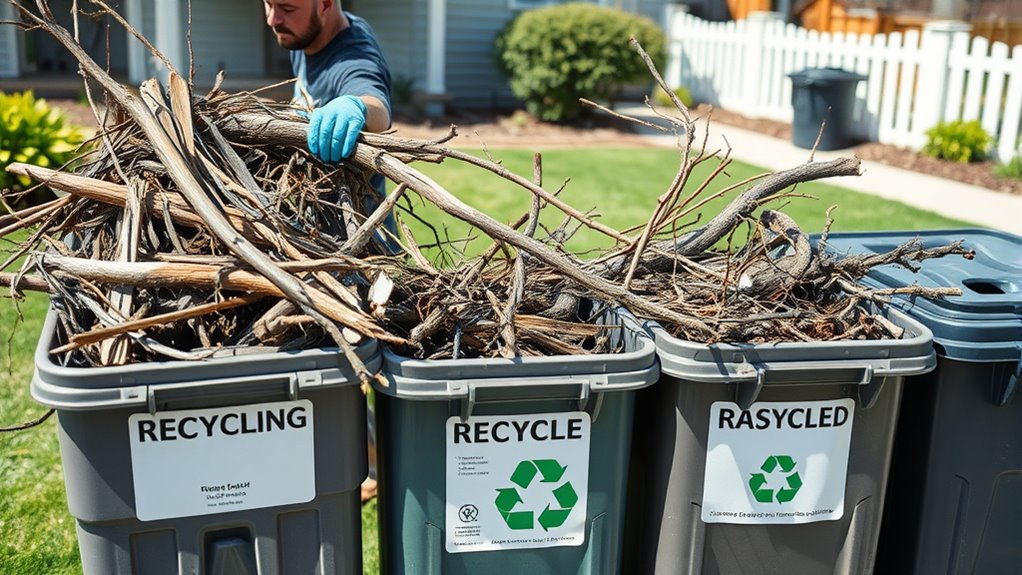

To dispose of storm debris safely and legally, start by separating organic waste from hazardous materials and check your local regulations. Consider chipping large branches into mulch or donating them. Use proper equipment and wear protective gear if you handle debris yourself. Avoid burning unless permitted, and follow municipality guidelines for curbside pickup. Knowing these steps guarantees you manage storm debris responsibly—if you continue, you’ll learn more ways to handle debris effectively and safely.
Key Takeaways
- Check local regulations and municipal guidelines for storm debris disposal methods and permitted practices.
- Identify and separate hazardous materials, such as treated wood or plastics, before disposal.
- Use approved debris management services or curbside pickup for safe, legal removal.
- Avoid burning storm debris unless explicitly permitted by local authorities and follow safety protocols.
- Consider recycling or repurposing organic debris into mulch or compost to reduce waste and promote sustainability.
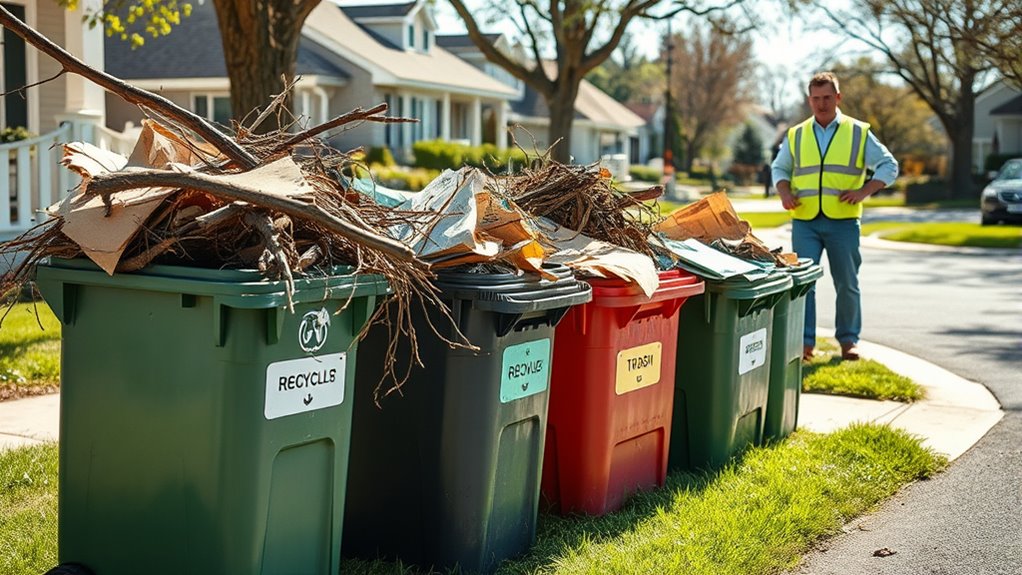
Have you ever wondered how to properly dispose of storm debris after a severe weather event? When storms leave behind fallen branches, broken trees, and other organic debris, managing it safely and efficiently is vital. One effective approach involves using chipping techniques, which transform large branches and wood into mulch or chips. This process not only reduces the volume of debris but also creates useful material for landscaping, erosion control, or composting projects. To get started, you’ll need a wood chipper or hire a professional service. Carefully feed the branches into the machine, ensuring you’re wearing protective gear and following safety instructions. The resulting chips can be repurposed around your property or donated to community gardens, promoting sustainable disposal practices. Proper installation and venting of equipment used during debris management can also help prevent fire hazards.
Another popular method is debris composting. Organic storm debris, like leaves, small branches, and shredded wood, can be composted to create nutrient-rich soil. To do this effectively, start by separating the compostable material from non-organic waste like plastics or metals. Layer the debris in a designated compost area, mixing it with green materials such as grass clippings or kitchen scraps to balance carbon and nitrogen levels. Regularly turning the compost helps aerate it, speeding up decomposition and preventing unpleasant odors. Keep the pile moist but not waterlogged, and monitor its temperature to guarantee microbial activity stays active. Over time, you’ll produce dark, crumbly compost that can enhance your garden beds or serve as a natural mulch layer.
While chipping and debris composting are excellent for managing organic storm debris, it’s vital to follow local regulations. Many municipalities have specific guidelines on how to handle and dispose of storm debris, especially if it includes hazardous materials like treated wood, plastics, or non-organic waste. Check with your local solid waste authority or public works department before starting any disposal project. Some areas offer curbside pickup for storm debris, but they may require you to separate organic from non-organic materials or follow particular stacking procedures. Never burn storm debris, unless explicitly permitted, as this can pose fire hazards and violate air quality standards.
Frequently Asked Questions
Are There Specific Permits Required for Large Debris Removal?
Yes, you often need specific permit requirements for large debris removal. Check with your local government or waste management authority to understand debris collection regulations in your area. They might require permits for hauling and disposal, especially if you’re dealing with significant debris or using specialized equipment. Failing to obtain the necessary permits can lead to fines or legal issues, so always verify permit requirements before starting your debris removal project.
Can I Dispose of Storm Debris in My Regular Trash?
Think of storm debris as the unwelcome guest at your yard’s party. You shouldn’t toss it in your household trash, as it’s often not meant for that. Instead, treat yard waste like a special guest and follow local regulations. Many areas require yard waste to go to designated drop-offs or be collected separately. Check your city’s guidelines to ensure you’re disposing of storm debris lawfully and responsibly.
What Hazards Should I Watch for During Debris Cleanup?
During debris cleanup, watch out for hazards like sharp objects, unstable piles, and hidden contaminants. Always follow safety precautions, such as wearing PPE essentials like gloves, sturdy boots, and eye protection. Be cautious of electrical hazards from downed power lines, and avoid inhaling dust or mold. Stay alert, take your time, and prioritize your safety to prevent injuries and health issues during cleanup.
How Do I Dispose of Hazardous Materials Like Chemicals or Asbestos?
Like a modern-day Indiana Jones, you need to handle hazardous waste carefully. For chemicals or asbestos, don’t try to dispose of them yourself. Follow proper disposal procedures, which usually involve contacting certified hazardous waste facilities. They have the expertise and equipment to manage these materials safely. Always wear protective gear, label the waste, and comply with local regulations to prevent health risks and environmental damage.
Are There Community Programs for Free Debris Disposal Assistance?
Yes, many communities offer free debris disposal assistance through local programs. You can participate in community cleanup events or find volunteer debris removal opportunities to help clear storm debris. Check your town’s website or contact local government offices to learn about upcoming events or programs. These initiatives aim to support residents in safely and legally managing storm debris, making cleanup easier and more efficient for everyone involved.
Conclusion
Now that you know how to dispose of storm debris safely and legally, you’re ready to tackle cleanup like a pro. Remember to follow local guidelines and avoid the chaos of a runaway apple cart by properly sorting and disposing of your debris. Think of it as your own personal quest—like a knight safeguarding their kingdom. By doing so, you’ll keep your property pristine and avoid any run-ins with the law. Stay safe, and may your cleanup be as smooth as a well-oiled machine!