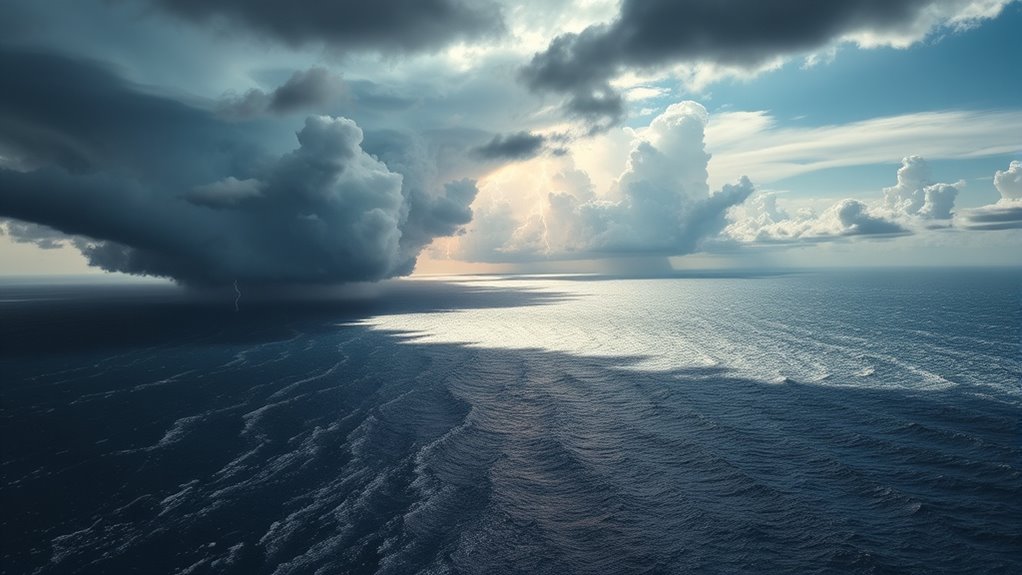

Global climate patterns, driven by ocean currents and atmospheric pressure systems, greatly impact how often storms form. Warm currents like the Gulf Stream heat the air, making storms more likely, while cold currents stabilize the atmosphere and reduce storm activity. Variations such as El Niño or La Niña shift pressure systems and temperature gradients, affecting storm frequency and strength. Understanding these connections helps you grasp how climate patterns shape storm behavior; explore further to see how these dynamics evolve over time.

Get backup power and energy gear delivered free with Prime
- Fast, free delivery on millions of items
- Prime Video, Amazon Music and more included
- Member-only deals all year
Key Takeaways
- Ocean currents influence regional warmth, affecting atmospheric instability and storm formation potential.
- Variations in atmospheric pressure systems, driven by climate patterns, determine storm development zones.
- Temperature gradients created by ocean currents provide energy for cyclone intensity and frequency.
- Climate phenomena like El Niño and La Niña alter ocean-atmosphere interactions, impacting storm activity.
- Human-induced climate change modifies ocean and atmospheric dynamics, leading to shifts in storm frequency and severity.
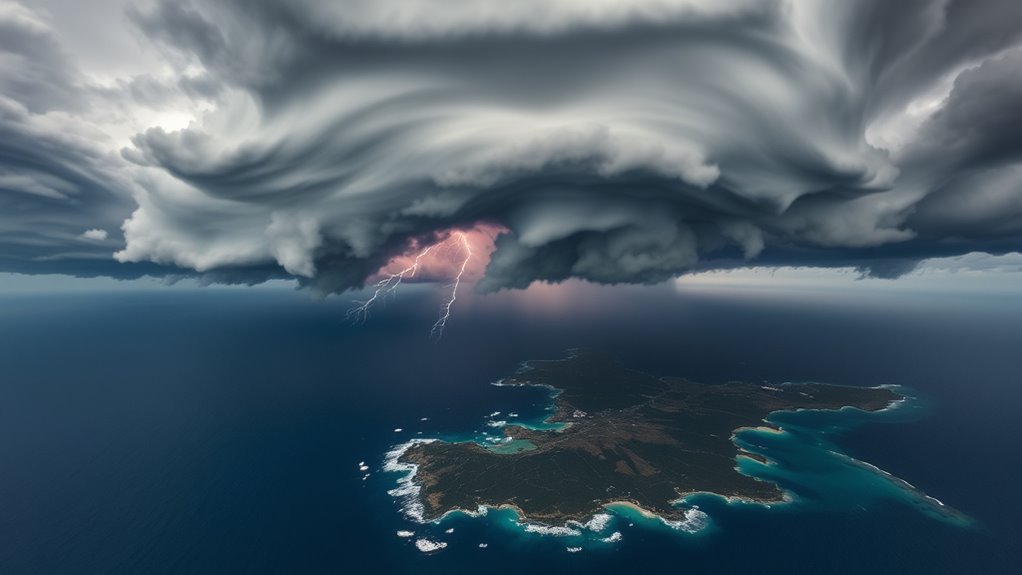
Have you ever wondered how climate patterns influence the development and intensity of storms? It all starts with the complex interactions between ocean currents and atmospheric pressure systems. Ocean currents act like conveyor belts moving warm and cold water across the globe, shaping the climate of different regions. Warm currents, such as the Gulf Stream, heat the air above the ocean, making the atmosphere more unstable. When warm, moist air rises from the ocean surface, it creates the perfect conditions for storm formation. Conversely, cold currents tend to stabilize the atmosphere, reducing the likelihood of storms. This dynamic profoundly impacts where and how frequently storms develop, especially tropical cyclones and hurricanes. Additionally, the strength and direction of ocean currents are influenced by global climate patterns, which can alter storm-prone regions over time.
Ocean currents and atmospheric pressure shape storm development and intensity worldwide.
Atmospheric pressure plays an essential role in this process. Low-pressure systems, which often form over warm ocean waters, act as the engines driving storm development. When the atmospheric pressure drops, it signals that air is rising and cooling, which encourages cloud formation and storm growth. High-pressure systems, on the other hand, tend to suppress storm formation by pushing air downward and stabilizing the atmosphere. The balance between these pressure systems, influenced by climate patterns, determines whether conditions are ripe for storms or if the weather stays calm. During periods of climate variability, such as El Niño or La Niña, shifts in ocean currents and atmospheric pressure can lead to increased storm activity in certain regions.
Furthermore, climate patterns influence the frequency and intensity of storms through their effect on temperature gradients. When ocean currents distribute heat unevenly, they create temperature differences between areas, which in turn generate atmospheric pressure variations. These variations can lead to the formation of cyclones and other storm systems by causing the air to rotate and organize around a central low-pressure zone. The stronger these temperature gradients, the more energy is available for storms to intensify, sometimes resulting in more destructive weather events. Understanding the ocean-atmosphere interactions is crucial for predicting how climate change may impact future storm activity.
In essence, the interplay between ocean currents and atmospheric pressure underpins the climate patterns that govern storm activity. Changes in these patterns—whether driven by natural variability or human-induced climate change—can lead to shifts in storm frequency and severity. By understanding these relationships, you can better grasp why certain regions experience more frequent or intense storms during specific periods. Recognizing how climate patterns influence storm development helps you anticipate potential weather threats and highlights the importance of monitoring ocean and atmospheric conditions for weather forecasting and climate resilience efforts.
As an affiliate, we earn on qualifying purchases.
Frequently Asked Questions
How Do Climate Change Policies Influence Storm Frequency Globally?
Climate change policies directly influence storm frequency by shaping policy effectiveness and mitigation strategies. When you support strong policies, you help reduce greenhouse gas emissions, which can lessen the intensity and possibly the occurrence of storms. Effective mitigation strategies lower the risks associated with climate change, leading to fewer extreme weather events. Your actions contribute to global efforts, making policies more impactful and helping protect communities from increasing storm threats.
What Role Do Ocean Currents Play in Altering Storm Patterns?
Imagine ocean circulation as the Earth’s gentle dance, guiding warm and cold waters across vast distances. Marine influence shapes storm patterns by redistributing heat and moisture, which can intensify or ease storms. When currents shift, they alter the energy fueling storms, making them more unpredictable. Your understanding of ocean currents reveals how these subtle movements profoundly impact storm behavior, highlighting the delicate balance of our planet’s climate system.
How Accurate Are Current Climate Models in Predicting Storm Outbreaks?
You can trust that current climate models are quite reliable in storm prediction, but they’re not perfect. They use complex data to forecast storm outbreaks, improving constantly with new information. While model reliability is high for short-term predictions, uncertainties remain in long-term forecasts due to climate variability. So, stay updated with the latest forecasts, knowing that scientists are continually refining these models to better anticipate storm activity.
Can Local Climate Variations Override Global Climate Influences on Storms?
Like a small whirlpool in a vast ocean, local climate variations can sometimes override regional weather influences. Urban microclimates, with their heat islands, and regional weather patterns, may intensify or weaken storms despite overarching global climate trends. So, yes, local factors can profoundly impact storm development, making predictions more complex. You should consider both global and local conditions to understand storm behavior accurately.
What Are the Long-Term Societal Impacts of Changing Storm Patterns?
You’ll face long-term societal impacts as changing storm patterns test your community’s resilience and threaten economic stability. Increased storm intensity and frequency can cause widespread damage, disrupt infrastructure, and strain resources. You’ll need to adapt through better planning, stronger buildings, and proactive policies. Building societal resilience now helps secure economic stability later, ensuring your community can recover faster and withstand future storm challenges effectively.
As an affiliate, we earn on qualifying purchases.
Conclusion
You now see how global climate patterns directly influence storm frequency. For example, scientists have found that regions experiencing rising sea surface temperatures see a 25% increase in storm activity. Staying aware of these patterns helps you understand the changing weather and its impacts. As climate change continues, you’ll want to pay attention to these shifts, so you can better prepare for more frequent and intense storms in the future. Knowledge is your best tool in steering these changes.
As an affiliate, we earn on qualifying purchases.
climate change educational books
As an affiliate, we earn on qualifying purchases.
As an affiliate, we earn on qualifying purchases.
Halloween Picks
halloween
As an affiliate, we earn on qualifying purchases.