
TL;DR

Get backup power and energy gear delivered free with Prime
- Fast, free delivery on millions of items
- Prime Video, Amazon Music and more included
- Member-only deals all year
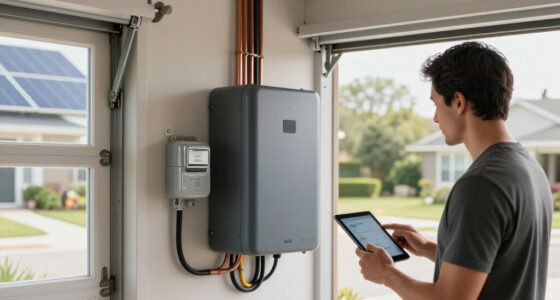
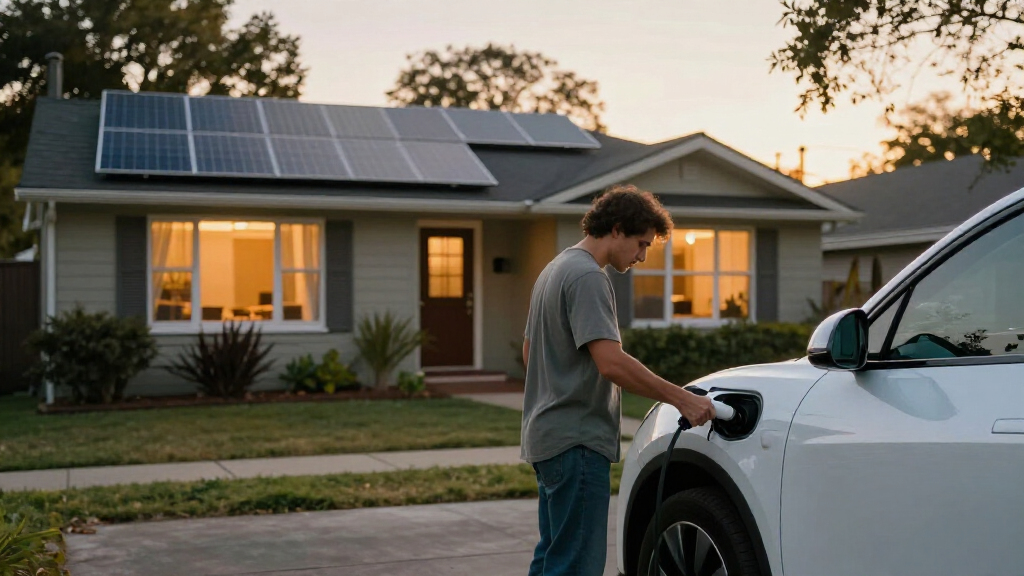
Tesla announced that its latest Model 3 and Model Y can provide backup power to homes when paired with a Powerwall 3 and a standard Wall Connector. The approach puts power-conversion hardware in the vehicles, avoiding the costly separate bidirectional DC charger used by most U.S. vehicle-to-home systems.
Tesla announced Tuesday that its latest Model 3 and Model Y electric vehicles can send power to a home when paired with a Powerwall 3, expanding a backup-power feature previously available in the Cybertruck. The system uses conversion hardware built into the vehicles, allowing owners to avoid purchasing the separate bidirectional DC charger required by most vehicle-to-home systems in the United States.
The newly announced setup requires a Powerwall 3 home battery and Tesla’s standard Wall Connector, which the report says retails for $595. Tesla estimates the vehicle can add two to three days of backup power, but the report does not specify the household energy use or conditions behind that estimate. The Powerwall 3 is listed at $8,200 before installation, which can add several thousand dollars.
Tesla’s system uses AC bidirectional charging: the vehicle’s onboard hardware converts the battery’s direct-current power into alternating current suitable for a home. Most commercially available U.S. vehicle-to-home systems instead use a separate DC bidirectional charger. Canary Media reports these chargers typically cost $6,500 to $10,000 or more, not including a home battery.
The Cybertruck has had vehicle-to-home capability for more than a year, according to the report. Its home-backup arrangement does not require a Powerwall, but does require a separate hardware package listed at $1,990 and installation estimated at $1,800 to $2,200. Tesla’s Model 3 and Model Y announcement is therefore an expansion of the company’s approach, not the launch of its first EV home-backup system.
Lower-Cost Routes to Home Backup
The announcement could make EV-based home backup less dependent on expensive standalone conversion equipment. Vehicle batteries hold substantial stored energy, but the cost and complexity of connecting them safely to homes have limited adoption. By placing conversion equipment in the vehicle, Tesla’s design changes where that hardware sits and may reduce the additional equipment a household must buy.
The savings are not the same as making backup power inexpensive overall. Model 3 and Model Y owners still need a Powerwall 3, installation, and a compatible vehicle and charger; the vehicle and home battery themselves also represent major purchases. The system’s value will depend on how much backup energy a household needs, the cost of installation, and how often it uses the feature.
Lower equipment costs could also matter beyond outages if vehicles eventually provide power to utility grids. That use, known as vehicle-to-grid (V2G), involves more requirements than powering a home and depends on utility rules and technical approval. The announcement does not establish that the new Model 3 and Model Y setup is broadly available for grid services.
As an affiliate, we earn on qualifying purchases.
How Tesla’s AC System Differs
Homes and electric grids use alternating current, while EV batteries store energy as direct current. A vehicle-to-home system needs equipment to convert and manage that electricity before it can be used by household circuits. In many current systems, a separate bidirectional charger performs that work outside the vehicle.
Tesla instead puts the relevant conversion hardware in the vehicle, according to Canary Media’s reporting. Tesla Energy residential business head Colby Hastings said the company sees this as a longer-term, scalable design. The report describes Tesla as a late entrant to vehicle-to-home backup compared with automakers that have offered DC-based systems, while noting that Tesla’s approach may reduce the price of the additional conversion equipment.
The broader potential is significant but not a near-term guarantee. A study cited by Canary Media found California could meet one-third of its grid storage needs by drawing on 10% of the 9.7 million EVs it expects by the mid-2030s. That is a modeled scenario, not a forecast of storage that is already available. Grid use also faces regulatory and interconnection limits: the report says only California and Maryland had established utility regulations allowing AC bidirectional charging beyond pilot projects.
As an affiliate, we earn on qualifying purchases.
Availability, Cost and Grid Access
The report does not give a specific rollout date, list every eligible Model 3 or Model Y configuration, or explain whether the feature will be available in all markets. Tesla also did not provide enough information in the source material to independently assess the two-to-three-day backup estimate, which will depend on a home’s electricity use and other conditions.
The advertised equipment prices do not represent a complete installed cost for the Model 3 and Model Y arrangement. A Powerwall 3 installation adds several thousand dollars, and the report does not give a single total for the vehicle, battery, charger, installation and any other site work. Compatibility and local requirements may also affect a particular home.
Grid exports are a separate and less settled question. PG&E was technically piloting interconnection of Tesla systems, according to the report, while Tesla said it had enrolled Cybertrucks in programs with PG&E and Texas utilities CenterPoint Energy and Oncor. It is not clear from the source whether the newly announced Model 3 and Model Y setup has been approved for those programs or can export power in every service area.
As an affiliate, we earn on qualifying purchases.
Rollout and Utility Certification
The next practical developments are details on when the feature reaches eligible Model 3 and Model Y owners, which configurations qualify, and what the full installed price will be. Customers will also need to confirm local availability and installation requirements with Tesla and qualified installers.
For grid services, utility certification and interconnection will remain key steps. PG&E was testing interconnection of Tesla systems, and regulators in other states may need to set rules for AC bidirectional charging. Until more markets approve such arrangements, the clearest announced use for the new vehicles is backup power at homes equipped with Powerwall 3.
vehicle-to-home power conversion hardware
As an affiliate, we earn on qualifying purchases.
As an affiliate, we earn on qualifying purchases.
Key Questions
Which Tesla vehicles can power a home under the announcement?
Tesla said its latest Model 3 and Model Y can provide home power when paired with a Powerwall 3. The Cybertruck already had a home-backup capability, according to Canary Media. The report does not identify every eligible trim or model year.
Do Model 3 and Model Y owners need a Powerwall?
Yes, the reported setup for the Model 3 and Model Y requires a Powerwall 3. The Cybertruck’s separate home-backup package does not require a Powerwall, according to the report.
What does the new system cost?
The standard Wall Connector is listed at $595, and the Powerwall 3 at $8,200 before installation. The report says Powerwall installation adds several thousand dollars; it does not provide a complete installed total for the Model 3 and Model Y system.
How is Tesla’s system different from most vehicle-to-home chargers?
Tesla puts the power-conversion hardware in the vehicle, using AC bidirectional charging. Most U.S. vehicle-to-home systems described in the report use a separate bidirectional DC charger to convert battery power for household use.
Can the Model 3 and Model Y send electricity back to the grid?
The announcement covered home backup, not general grid exports. Tesla and utilities have been involved in grid-related programs and pilots, but the report does not confirm that the newly announced Model 3 and Model Y setup is approved for grid service in every location.
Source: rss
Fall Picks
fall essentials
As an affiliate, we earn on qualifying purchases.