TL;DR
The U.S. installed 20% more battery storage capacity in the first nine months of 2026 than in the same period of 2025, according to a report from SEIA and Benchmark Mineral Intelligence. The report expects full-year additions to exceed 2025 by 26%, even as residential installations are forecast to decline 8%.
The United States installed 20% more battery storage capacity in the first nine months of 2026 than during the same period last year, according to a report from the Solar Energy Industries Association (SEIA) and Benchmark Mineral Intelligence. The report projects that total capacity additions for 2026 will finish 26% above 2025, despite a forecast decline in home battery installations.

Get backup power and energy gear delivered free with Prime
- Fast, free delivery on millions of items
- Prime Video, Amazon Music and more included
- Member-only deals all year
Most of the capacity added so far this year came from utility-scale projects, though the report also counts residential and commercial systems. The figures cover the first three quarters only; the final three months of 2026 had not yet been included in the reported installation tally. The report’s full-year projection is a forecast, not a completed annual count.
Eleven states had already reached record battery installation levels in 2026, according to the report: Alabama, Colorado, Georgia, Illinois, Iowa, Massachusetts, Michigan, Mississippi, Montana, Utah and Virginia. The report does not provide state-by-state capacity totals in the information available here, so the records indicate a broad spread of activity but do not establish which states added the most capacity.
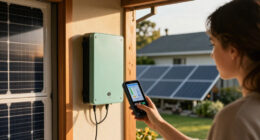
The outlook differs by market segment. SEIA and Benchmark Mineral Intelligence forecast that residential installations will fall 8% in 2026 compared with 2025. They attribute the expected decline to the removal of federal incentives for home energy storage at the end of last year, while also saying the residential business is recovering faster than anticipated.
What’s driving another banner year for U.S. batteries?
Battery storage is growing overall, led by utility-scale projects. Home installations are forecast to decline as federal incentives end.
What is driving growth
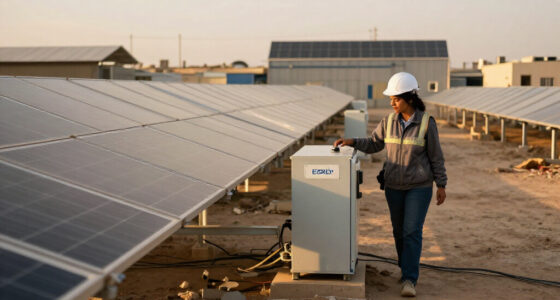
Most reported additions came from utility-scale projects, which can store electricity for later use.
Utility-scale projects lead
Large installations account for most capacity added so far, supporting growth in the overall market.
Batteries have become cheaper
The report says costs fell substantially over the past decade, helping batteries become a more important grid technology.
Growth varies by market
National expansion does not mean every type of installation is increasing.
- Most reported capacity additions came from large projects.
- Utilities and data center developers are among those interested in battery storage.
- Installations are forecast to fall 8% in 2026 versus 2025.
- The report links the expected decline to federal incentives ending in 2025.
Record activity across states
The report says installations reached record levels in 11 states, without providing state-by-state capacity totals.
What to watch next
The reported comparison covers January through September; the final quarter is still to come.
Fourth-quarter results will show whether actual 2026 additions match the 26% forecast.
Final figures will show whether home installations fell as projected and how the reported recovery progressed.
Grid Storage Growth Outpaces Home Systems
The increase points to continued expansion in a technology used to store electricity and release it later, including when generation from wind and solar is lower. Batteries can absorb surplus power when it is available and make that electricity accessible at another time. That function can help grid operators manage shifts in renewable generation and changing demand, although installation totals alone do not show how much electricity systems deliver or how they affect reliability.
The mix matters. With most reported additions coming from utility-scale installations, growth in the overall market is not a sign that every customer segment is expanding. The projected residential decline highlights how policy changes can affect household adoption even while large projects continue to lift total capacity. For consumers, utilities and developers, the report describes a market growing overall but with different conditions across its sectors.
Battery projects are also described as relatively quick to install compared with some other power infrastructure. Their ability to store electricity for later use has attracted interest from utilities, data center developers and households. The report does not quantify how much of this year’s growth comes from any one type of buyer or explain how much new capacity is tied to data center demand.
Products Worth Considering

DREAME D30 Ultra CE Robot Vacuum and Mop, 25,000Pa Suction

Levoit Vital 200S-P Smart Air Purifier for Large Rooms (Up to 1875 sq ft)

Sonos Era 300 Wireless Smart Speaker with Dolby Atmos, Black
As an affiliate, we earn on qualifying purchases.
A Record Year Still in Progress
The report places this year’s installations against a longer decline in battery costs: it says batteries have become exponentially cheaper over the past decade, helping them become an increasingly important grid technology. It does not give a specific cost series or identify a particular price measure, so the claim provides general context rather than a precise estimate of how much costs have fallen.
The current outlook also follows a policy change affecting home storage. The report says federal incentives for residential energy storage were removed at the end of 2025, and links that change to the expected 8% annual drop in home installations. It also says residential business is recovering faster than expected, but does not specify the earlier forecast or the timing and scale of that recovery.
Because only the first nine months of installation data are included in the reported year-to-date comparison, the final 2026 result remains pending. The projected 26% annual increase should be read as the report authors’ expectation for total additions, not as a final measured outcome.
“The report projects overall battery capacity additions in 2026 to surpass 2025 figures by 26%.”
— Solar Energy Industries Association and Benchmark Mineral Intelligence
Final Quarter Could Change Totals
The report’s year-to-date growth rate is based on the first nine months of 2026, and the annual 26% increase remains a forecast until full-year data are available. The supplied figures do not give the total installed capacity in megawatts or megawatt-hours, nor the breakdown among utility-scale, commercial and residential systems.
It is also unclear how the expected residential decline will compare with the final result, or what specific factors explain the faster-than-expected recovery reported by SEIA and Benchmark Mineral Intelligence. The report’s summary attributes the projected drop to the loss of federal incentives, but does not isolate that policy change from other possible influences on household purchases.
The 11 state records show installations reached new highs in those states, but the available information does not define the measurement period or provide the comparison figures behind each record. No final full-year national total has been reported in the material available for this article.
Full-Year Data Will Test Forecast
The next key milestone is the release of fourth-quarter and full-year 2026 installation data. Those figures will show whether actual additions meet the report’s projection of a 26% increase over 2025 and will clarify how much of the growth came from utility-scale projects versus smaller systems.
Residential installations will be another point to watch. A final annual result can show whether the projected 8% decline materialized and whether the reported recovery continued after federal incentives ended. Until those figures are published, the report offers an early-year picture and an industry forecast, rather than a final account of 2026.
Source: rss
Key Questions
How much did U.S. battery installations grow in 2026 so far?
The United States installed 20% more battery storage capacity in the first nine months of 2026 than in the same period of 2025, according to SEIA and Benchmark Mineral Intelligence.
What is the full-year forecast?
The report projects that total battery capacity additions in 2026 will be 26% higher than in 2025. That remains a forecast until full-year installation data are available.
Are home battery installations also growing?
Not according to the report’s forecast: it expects residential installations to decline 8% in 2026 compared with 2025. The report links the expected fall to the end of federal home-storage incentives at the close of 2025.
Where has battery installation activity reached records?
The report says installations reached record levels in 11 states: Alabama, Colorado, Georgia, Illinois, Iowa, Massachusetts, Michigan, Mississippi, Montana, Utah and Virginia.
Source: canarymedia.com