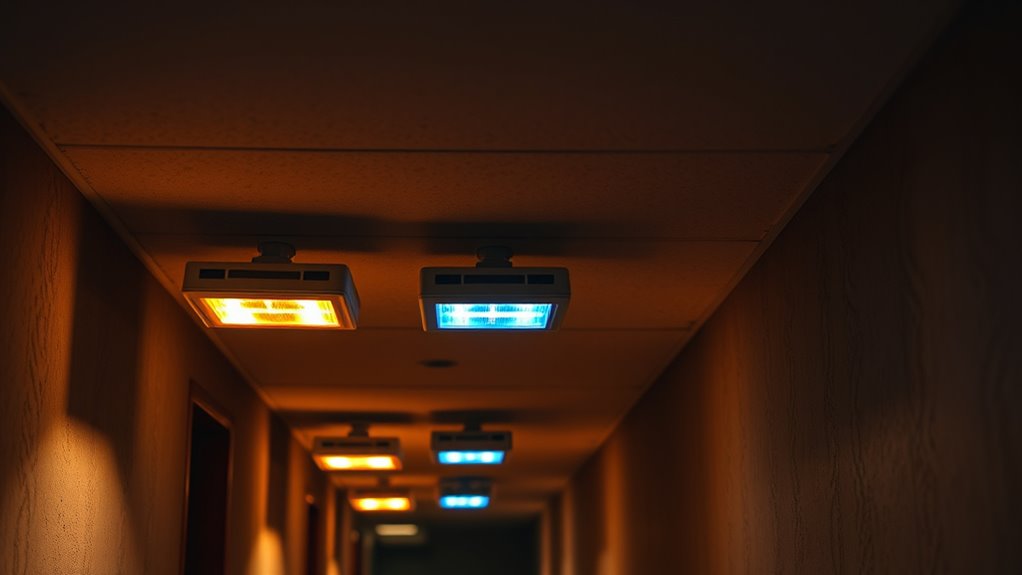
When choosing the best light temperature for emergency lighting, opt for cooler temperatures around 4000K to 5000K, as they improve visibility, increase alertness, and provide better color accuracy for hazard identification. These temperatures are also more energy-efficient and generate less heat, ensuring safer and more reliable lighting during power outages. By selecting lights with higher CRI and LED technology, you enhance safety and performance—continue to explore for more tips on making the right choice.
Key Takeaways
- Select higher Kelvin temperatures (4000K-5000K) for improved visibility and occupant alertness during emergencies.
- Prioritize lights with high CRI (above 80) to ensure accurate color rendering for hazard and exit identification.
- Use energy-efficient LED emergency lights to reduce heat, extend lifespan, and ensure reliable performance.
- Cooler lighting enhances safety by promoting alertness and quick decision-making in emergency situations.
- Balance comfort and safety by considering environment-specific needs when choosing light temperature for emergency lighting.
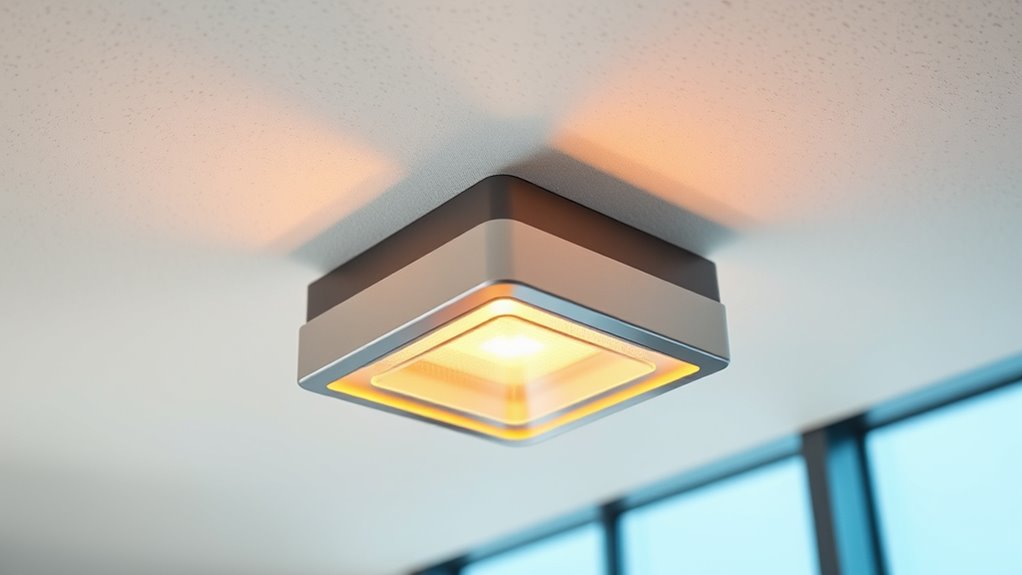
When selecting emergency lighting, choosing the right light temperature is essential for ensuring safety and visibility during power outages. The color temperature of your emergency lights influences how well you can see your surroundings and how clearly you can identify objects, which directly impacts safety. Light temperature is measured in Kelvin (K), and the range typically falls between warm white (around 2700K) and cool white (up to 6500K). Opting for the correct temperature means balancing visibility, comfort, and energy consumption.
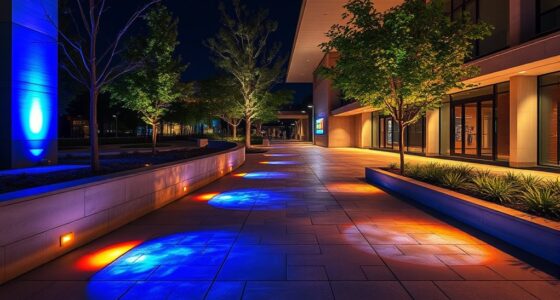
A key factor to consider is color rendering, which determines how accurately the light displays colors in your environment. During emergencies, you want to quickly and accurately identify hazards, exits, or important signage. Lights with a higher color rendering index (CRI) — usually above 80 — provide better color accuracy. Cooler temperatures, such as 4000K to 5000K, tend to offer higher CRI, making it easier to distinguish colors and details. Warm white lights, though more comforting, may cause colors to appear dull or distorted, potentially hampering quick decision-making during critical moments.
Higher CRI and cooler temperatures improve color accuracy, aiding quick hazard and exit identification during emergencies.
Energy efficiency also plays a crucial role in selecting emergency lighting. Typically, cooler light temperatures tend to be more energy-efficient, especially when using LED technology. LEDs not only consume less power but also have longer lifespans, ensuring reliable illumination without frequent replacements. Choosing lights with a higher Kelvin temperature can reduce energy consumption, which is especially important in settings where power sources are limited or where prolonged emergency lighting is necessary. Additionally, energy-efficient lights generate less heat, minimizing the risk of overheating in confined spaces.
Another aspect to consider is the psychological and physiological effects of light temperature. Cooler lights tend to promote alertness and focus, which are essential during emergencies. Warm lights may create a more relaxed atmosphere but can impair visibility and reaction times. Thus, selecting emergency lights with a cooler temperature enhances both safety and operational efficiency, helping occupants feel more alert and aware of their surroundings. Furthermore, advancements in light technology have led to more efficient and effective emergency lighting options that optimize safety and energy use.
Frequently Asked Questions
How Does Light Temperature Affect Emergency Evacuation Times?
You’ll notice that light temperature affects your perception during an emergency, which impacts evacuation speed. Cooler lights (blueish) improve light perception and clarity, helping you identify exits faster. Warmer lights (yellowish) can cause confusion and slow down your response. By choosing the right light temperature, you enable quicker decision-making and smoother evacuations, minimizing risks and ensuring safety during critical moments.
Can Different Light Temperatures Impact Visibility for People With Color Blindness?
Ironically, the color of emergency lights can markedly impact those with color blindness. You might think all lighting is equal, but different temperatures affect color perception and visual contrast. Cooler lights enhance contrast, aiding color differentiation, while warmer lights may blur distinctions. If you overlook this, you risk impairing visibility for people with color vision deficiencies, making evacuation more challenging when every second counts.
Are There Industry Standards for Optimal Emergency Light Temperature?
Yes, industry standards recommend emergency lights with a color temperature around 4000K to guarantee good color rendering, which helps you see clearly during emergencies. You should also prioritize fixtures with durability, so they withstand frequent use and harsh conditions. This balance ensures your emergency lighting provides reliable illumination, improves visibility for everyone, and maintains functionality over time, aligning with safety regulations and best practices.
How Do Temperature Choices Influence Energy Efficiency of Emergency Lighting?
You might notice that choosing the right light temperature directly impacts energy efficiency. Cooler temperatures often lead to higher energy consumption because they generate more heat, affecting thermal performance. Warm light temperatures typically use less energy and produce less heat, helping your emergency lighting system run more efficiently. By selecting an appropriate temperature, you maximize thermal performance, reduce energy consumption, and guarantee reliable illumination during emergencies.
What Are the Long-Term Maintenance Considerations for Various Light Temperatures?
You need to consider bulb lifespan and replacement costs when evaluating long-term maintenance for different light temperatures. Cooler temperatures often have longer lifespans, reducing replacement frequency, but may be pricier upfront. Warmer temps might save money initially, but require more frequent replacements, increasing costs over time. Regularly inspect your emergency lighting to ensure bulbs are functioning and plan for replacements based on the expected lifespan to avoid downtime.
Conclusion
Ultimately, selecting the right light temperature makes a significant difference during emergencies. By balancing brightness with comfort, you create a calm, clear corridor of safety. Cool tones cast crisp clarity, while warm hues foster comfort and reassurance. When you choose wisely, you craft a luminous landscape that guides and guards, turning chaos into calm. Remember, the perfect glow not only guides your way but guards your peace of mind in moments of need.