When designing outdoor communication lighting systems, you should incorporate solar panels to guarantee sustainability and reduce grid reliance, especially in remote areas. Use energy-efficient LED fixtures that are weatherproof and properly placed to maximize coverage and prevent interference. Including smart controls and sensors allows you to adjust lighting based on conditions, while modular systems enable easy upgrades. Reliable power sources and remote monitoring help maintain performance and prevent failures—continue to explore for detailed strategies to optimize your system.
Key Takeaways
- Incorporate solar panels and battery storage to ensure reliable, off-grid power for outdoor communication lighting systems.
- Select energy-efficient, weatherproof LED fixtures strategically placed to maximize coverage and minimize light pollution.
- Use smart controls and sensors to adjust lighting based on ambient conditions, reducing energy consumption.
- Design modular systems for easy upgrades, expansion, and remote monitoring to maintain optimal performance.
- Prioritize durability and proper placement to withstand environmental stresses and ensure system resilience.
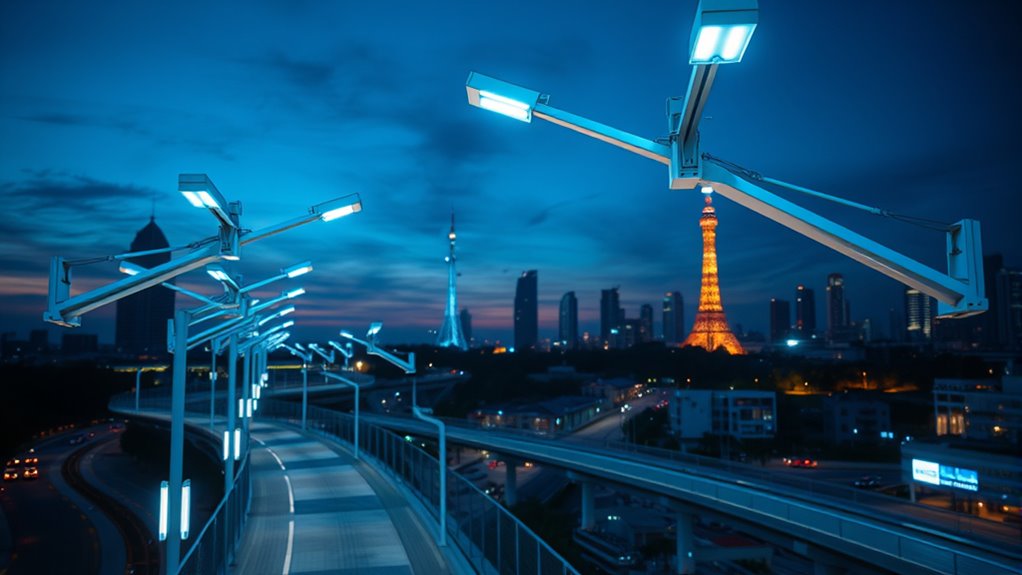
Outdoor communication lighting systems are essential for ensuring reliable, safe, and efficient connectivity in various settings. When designing these systems, you need to prioritize features that enhance performance while reducing operational costs. One of the most effective ways to achieve this is through solar integration. By incorporating solar panels into your lighting setup, you rely on renewable energy, which minimizes your dependence on grid power and lowers long-term expenses. Solar-powered lighting systems are particularly advantageous in remote or off-grid locations where traditional electrical infrastructure may be limited or unavailable. They offer a sustainable solution that can operate independently, providing consistent illumination without the need for extensive wiring or frequent maintenance.
Power efficiency becomes a critical consideration in your design process. You want your communication lighting systems to consume as little energy as possible while maintaining high levels of visibility and durability. Selecting LED fixtures is a smart move because LEDs are inherently more energy-efficient than traditional bulbs. They generate less heat, have longer lifespans, and require less power, which collectively contribute to lower energy costs and reduced environmental impact. When aiming for power efficiency, also consider smart controls and sensors that can automatically adjust lighting levels based on ambient conditions or the presence of personnel. This prevents unnecessary energy use during low-traffic periods or daylight hours, further optimizing your system’s performance.
In addition to solar integration and power efficiency, you should focus on the robustness of the lighting fixtures. Outdoor environments can be harsh, with exposure to weather, dust, and vibrations. Selecting weatherproof, rugged fixtures ensures reliable operation over time, reducing downtime and maintenance needs. Proper placement is equally crucial; you want to position lights to maximize coverage while avoiding glare or light pollution that could interfere with communication signals or disturb nearby residents. Incorporating reliable power sources into your design enhances system dependability and minimizes unexpected failures, especially in critical communication applications.
It’s also important to embed flexibility in your design. Modular systems allow for easy upgrades, whether you add more solar panels, enhance battery storage, or expand lighting coverage. Integrating remote monitoring capabilities can give you real-time data on system performance, enabling proactive maintenance and ensuring your communication links stay active.
Frequently Asked Questions
What Are the Latest Energy-Efficient Lighting Technologies Available?
You should consider the latest energy-efficient lighting technologies like LED lights, which offer high efficiency and long lifespan. Solar integration is becoming more popular, allowing you to leverage renewable energy and reduce costs. Look for options with good color rendering to guarantee visibility and clarity. These technologies help you achieve sustainable outdoor communication lighting, lowering energy consumption while maintaining effective illumination and environmental responsibility.
How Do Weather Conditions Affect Outdoor Communication Lighting Performance?
Weather conditions markedly influence outdoor communication lighting performance. You need to guarantee weather resilience by selecting fixtures that withstand rain, snow, and wind. Harsh weather can cause damage or reduce brightness, so proper sealing and durable materials are essential. Additionally, consider the environmental impact; choosing energy-efficient, weather-resistant lights minimizes ecological harm. Regular maintenance helps maintain peak performance and prolongs fixture lifespan, ensuring your communication system remains reliable regardless of weather challenges.
What Maintenance Practices Ensure Longevity of Outdoor Lighting Systems?
To guarantee longevity of your outdoor lighting systems, regularly perform maintenance practices like inspecting for corrosion and applying corrosion prevention measures. Keep the fixtures clean and free of debris, and replace bulbs promptly when they burn out to maintain peak performance. Check wiring connections for damage, and ensure protective enclosures are intact. Consistent upkeep prevents deterioration, extends system life, and guarantees reliable communication lighting regardless of weather conditions.
How Can Lighting Be Integrated With Smart City Infrastructure?
You can integrate lighting with smart city infrastructure by leveraging integrated sensor networks and adaptive illumination. These networks gather real-time data, allowing you to modify lighting based on pedestrian movement, traffic flow, or weather conditions. This approach enhances safety, energy efficiency, and user experience. Implementing IoT-enabled fixtures ensures seamless communication between lighting systems and city infrastructure, making your urban environment smarter, more responsive, and better suited to evolving needs.
What Are the Safety Standards for Outdoor Communication Lighting?
You must guarantee outdoor communication lighting meets safety standards by focusing on visual compliance and hazard mitigation. Check local regulations for brightness and color requirements to prevent glare and ensure visibility. Use proper shielding to minimize light pollution and reduce hazards for pedestrians and drivers. Regular inspections help maintain compliance, and incorporating adaptive lighting can address changing environmental conditions, ensuring safety for all users and aligning with industry standards.
Conclusion
By implementing well-designed outdoor communication lighting systems, you enhance safety, visibility, and overall efficiency. Did you know that properly lit outdoor areas can reduce accidents by up to 50%? This statistic highlights the importance of thoughtful lighting design. When you prioritize quality and strategic placement, you guarantee reliable communication and protection for everyone. So, invest in smart outdoor lighting solutions—your community and operations will thank you for it.