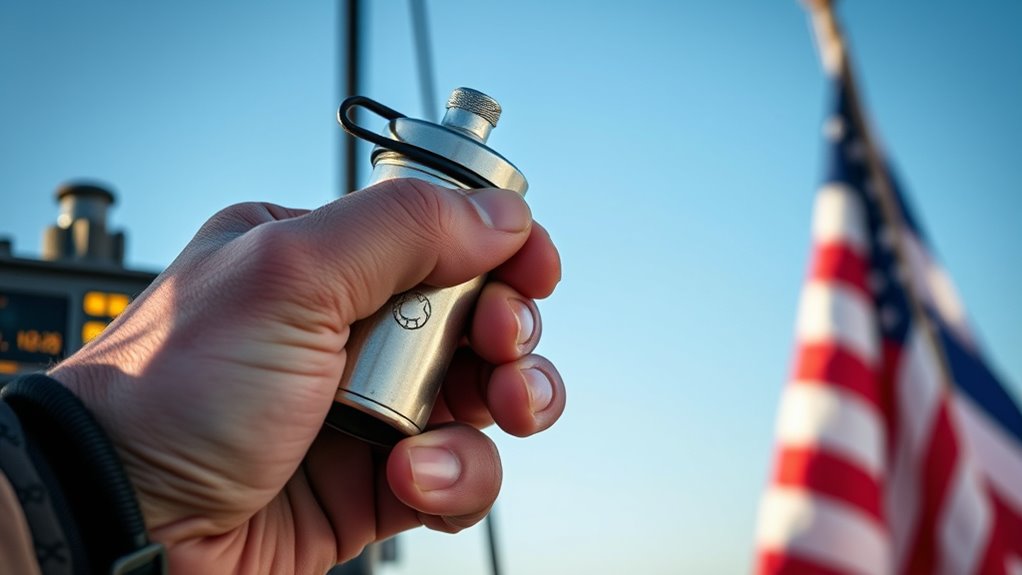

Many believe louder whistles always reach farther, but environmental factors like wind, noise, and terrain matter more. Combining visual signals, like flags or reflective surfaces, boosts your chances of getting noticed. Proper maintenance of your whistle is vital for clear sound, and using multiple signaling devices improves reliability. Mastering hand signals, choosing the right devices, and practicing effective blasts make your signals more effective. Keep exploring to discover practical tips that can help you signal more confidently and increase rescue success.
Key Takeaways
- Loud whistles alone don’t guarantee long-distance hearing; combine with visual signals for better visibility.
- Proper maintenance of whistles and signaling devices ensures optimal sound and performance.
- Environmental factors like wind, noise, and terrain significantly influence signal effectiveness.
- Using clear, steady blasts and repeating signals improves recognition and response chances.
- Relying on multiple signaling methods (visual and auditory) increases the likelihood of rescue.
Common Signal and Whistle Myths Debunked
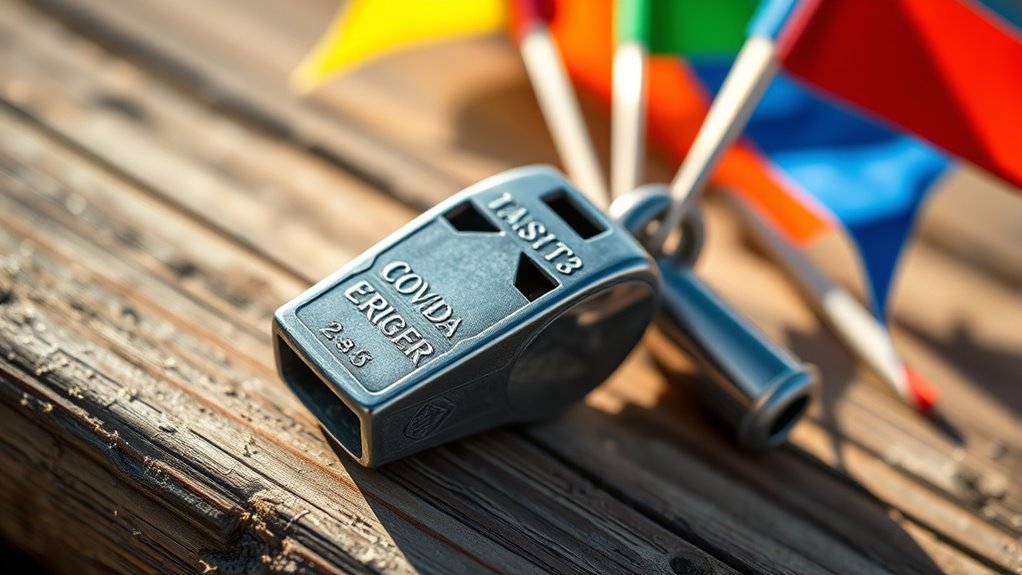
Many people believe that loud whistles can always be heard from great distances, but this isn’t necessarily true. The effectiveness of your signal depends on more than just volume; factors like wind, background noise, and terrain influence how well it’s received. Visual signaling, such as using reflective surfaces or brightly colored flags, can enhance your chances of being seen, especially in low visibility conditions. Additionally, proper whistle maintenance is vital—dirt, rust, or damage can diminish sound quality or volume. Regularly check your whistle for debris and ensure it’s functioning correctly. The type of headphone jack you use can also impact audio clarity and volume, which is important when communicating signals in noisy environments. Relying solely on loudness isn’t enough; combining clear visual signals with a well-maintained whistle increases your chances of attracting attention and staying safe.
Essential Signal Devices and Their Uses
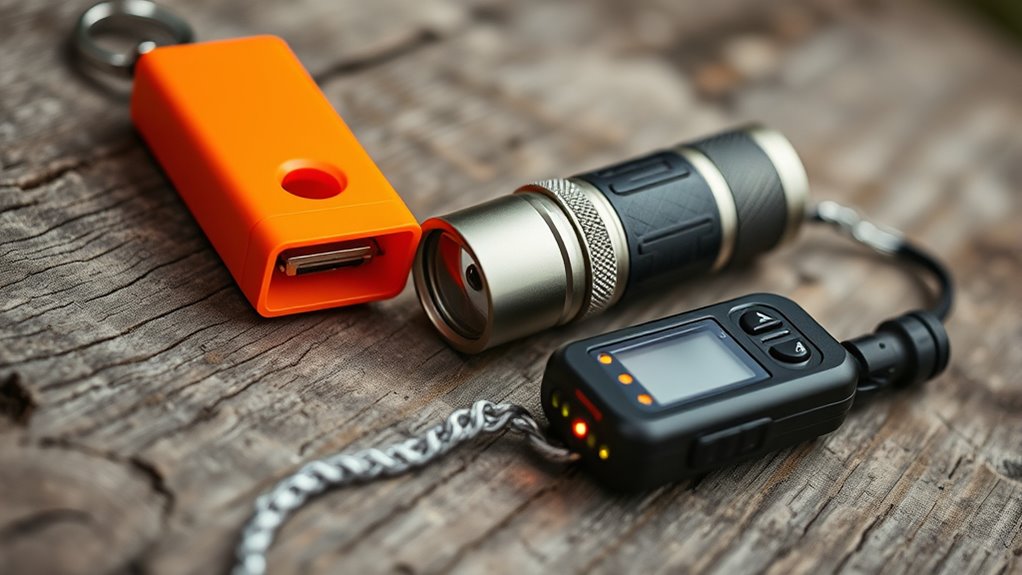
When you’re trying to attract attention in an emergency, having the right signal devices is vital. Marine signaling devices, such as flares, mirrors, and flags, help you communicate your distress over a distance. Emergency whistles are compact, reliable tools perfect for short-range signaling, especially in noisy conditions or when visual signals aren’t visible. An emergency whistle can be heard over long distances and can alert nearby vessels or rescue teams to your location. Marine signaling devices are indispensable for preventing misunderstandings and ensuring quick rescue. Always carry a few of these devices, understand how to use them properly, and keep them in easily accessible locations. Proper use of these essential signal devices greatly increases your chances of being noticed and rescued quickly. Additionally, choosing a Vetted signaling device ensures better performance and reliability in critical situations.
Practical Tips for Effective Signaling and Whistling
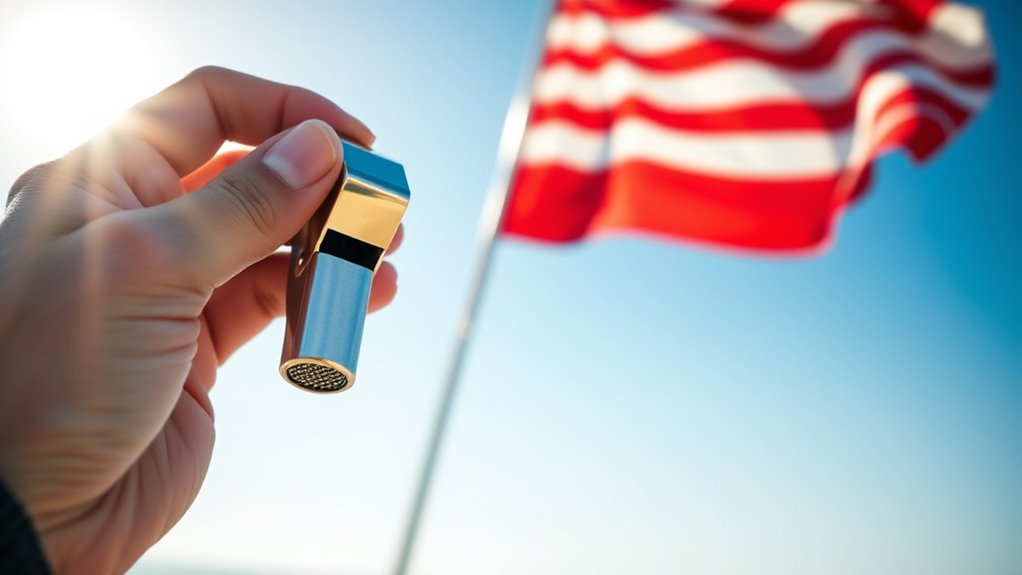
To guarantee your signals and whistles are effective in an emergency, it’s crucial to use them correctly and consistently. Mastering hand signal gestures helps ensure your intentions are clear even from a distance or in noisy environments. Practice specific signals like waving repeatedly or raising your arm to attract attention. When it comes to whistling techniques, focus on steady, sharp blasts rather than prolonged, soft sounds. Use your diaphragm to produce loud, clear notes that carry over long distances. Maintain a consistent pattern—such as repeating signals every few seconds—to increase recognition. Regular practice helps you develop confidence and precision in both hand signals and whistling. Being aware of signal effectiveness allows you to adapt your techniques to different situations, increasing your chances of being noticed and rescued in an emergency.
Frequently Asked Questions
How Loud Should a Signal or Whistle Be to Be Effective?
Your signal or whistle should be loud enough to be heard clearly over background noise, typically around 120 decibels, aligning with volume standards for safety and effectiveness. Consider sound perception; if others can’t hear it from a reasonable distance, it’s too quiet. Test your signal regularly, ensuring it’s loud enough to grab attention quickly, especially in emergency situations, without causing discomfort or hearing damage.
Are Electronic Signals Superior to Traditional Whistles in Emergencies?
Electronic signals can be more effective in emergencies, especially with digital alternatives that offer louder, clearer sound and multiple alert options. However, you should consider durability considerations, since electronic devices may fail in harsh conditions or power loss. Traditional whistles remain reliable and simple, providing a backup if batteries or electronics fail. Using a combination of both guarantees you’re prepared for various situations and environments.
Can Weather Conditions Significantly Affect Signal and Whistle Effectiveness?
Weather can dramatically interfere with your signals and whistles, making them almost useless in severe conditions. Heavy rain, fog, or strong winds can dampen signal durability and block sound transmission, reducing your chances of being noticed. Always consider weather interference when planning your rescue signals. It’s vital to have backup options and durable devices designed to withstand harsh weather, ensuring your signals remain effective no matter what Mother Nature throws your way.
What Are the Legal Restrictions on Using Certain Signaling Devices?
You need to follow legal compliance when using signaling devices, as certain device restrictions are in place to prevent misuse or confusion. For example, some whistles or horns might be restricted on boats or in specific regions, and using unauthorized devices can lead to fines or penalties. Always check local regulations and verify your signaling equipment meets legal standards to avoid trouble and ensure effective communication.
How Long Should I Practice to Master Effective Signaling Techniques?
You should practice your signaling techniques regularly, ideally several times a week, to build confidence and consistency. Focus on maintaining the proper signal duration—about 1-2 seconds per signal—and guarantee your practice sessions are frequent enough to develop muscle memory. Consistent practice helps you recognize the right timing and improve clarity, making your signals more effective in emergency situations. Aim for at least 15-20 minutes per session for steady progress.
Conclusion
Now that you know the truth behind signal and whistle myths, you’re better equipped to use them effectively. Remember, the key isn’t just having the right device but knowing how and when to use it. Imagine yourself in an emergency, your signals cutting through the chaos—will you be ready? Master these basics, and you’ll increase your chances of being seen and heard when it matters most. Are you prepared to make your voice heard?