When power’s out, you can still cook safely and efficiently by using off-grid tools like portable stoves, solar ovens, or wood-burning devices. Stock non-perishables, prepare ahead, and organize your tools for easy access. Safety is key—store fuels properly, keep a fire extinguisher handy, and monitor heat carefully. Planning ahead and understanding your options help you cook without regrets. Keep exploring for more tips to master off-grid cooking confidently.

Get backup power and energy gear delivered free with Prime
- Fast, free delivery on millions of items
- Prime Video, Amazon Music and more included
- Member-only deals all year
Key Takeaways
- Stockpile durable, non-perishable foods and prepare make-ahead meals to ensure availability during power outages.
- Utilize renewable energy devices like solar ovens, rocket stoves, and portable grills for reliable off-grid cooking.
- Keep essential tools such as cast iron cookware, portable stoves, and proper utensils organized for quick access.
- Implement safety measures by storing fuels properly, monitoring heat sources, and maintaining a clean, hazard-free workspace.
- Adapt cooking techniques by controlling fire airflow, using thermometers, and adjusting methods based on available resources.
As an affiliate, we earn on qualifying purchases.
Why Off-Grid Cooking Matters During Power Outages
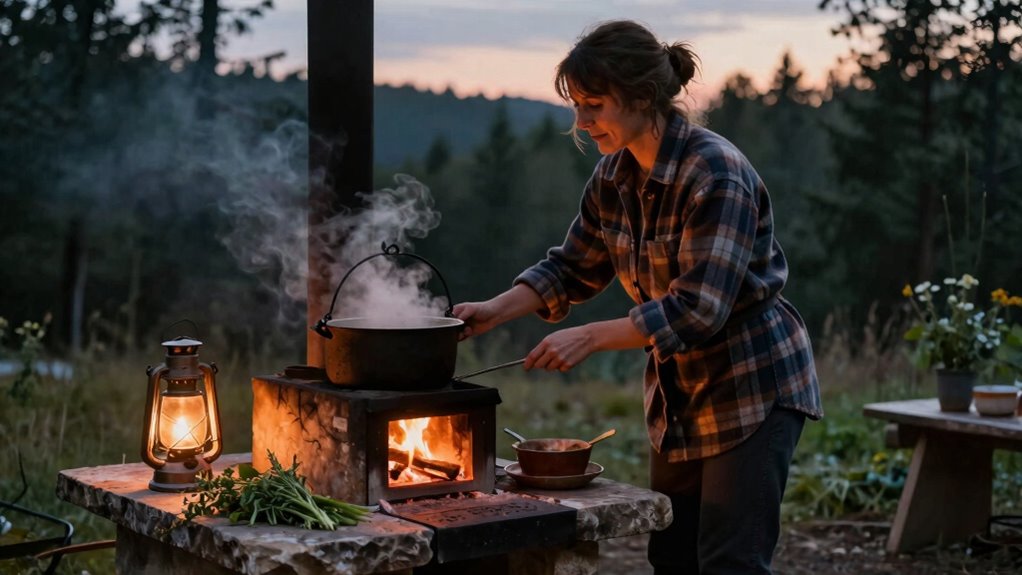
When the power goes out unexpectedly, off-grid cooking becomes essential to keep your meals on track. Relying on renewable energy sources like solar or wind guarantees you can cook without depending on the grid, boosting your emergency preparedness. During outages, traditional electric appliances are useless, so having off-grid options helps you maintain a sense of normalcy. Renewable energy systems provide sustainable, reliable power, making cooking safer and more efficient when power lines fail. This self-sufficiency reduces stress and minimizes disruptions to your daily routine. Plus, embracing off-grid cooking enhances your resilience, ensuring you’re prepared for any emergency. In times of crisis, knowing you can cook safely with renewable energy keeps you in control and less vulnerable to power outages.
As an affiliate, we earn on qualifying purchases.
Must-Have Tools for Off-Grid Cooking
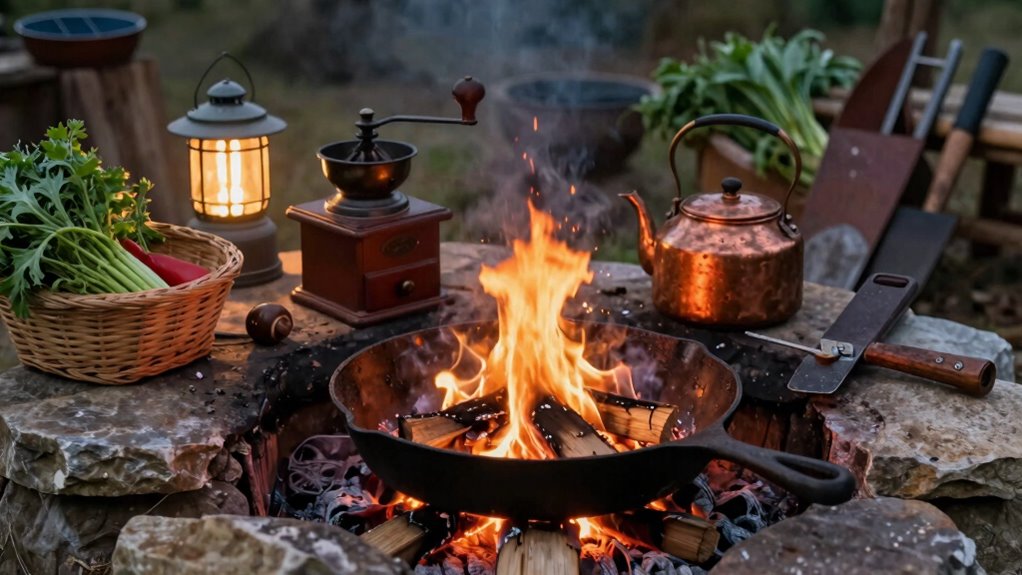
To cook effectively off-grid, you need the right tools that can operate independently of the main power grid. A reliable, portable stove or grill is essential for consistent cooking, especially during outages. Invest in cast iron cookware for durability and even heat distribution, making cooking safer and more efficient. A well-organized kitchen setup helps prevent accidents and keeps your tools accessible, promoting cooking safety. Include a sturdy knife, cutting board, and basic utensils to streamline meal prep. A manual can opener and storage containers keep ingredients fresh and manageable. Good kitchen organization reduces clutter, minimizes hazards, and guarantees you can focus on cooking without stress. These tools form the foundation for safe, organized, and effective off-grid cooking. Additionally, understanding digital concepts can enhance your ability to adapt recipes and techniques when traditional resources are unavailable.
As an affiliate, we earn on qualifying purchases.
Effective Techniques for Cooking Without Electricity
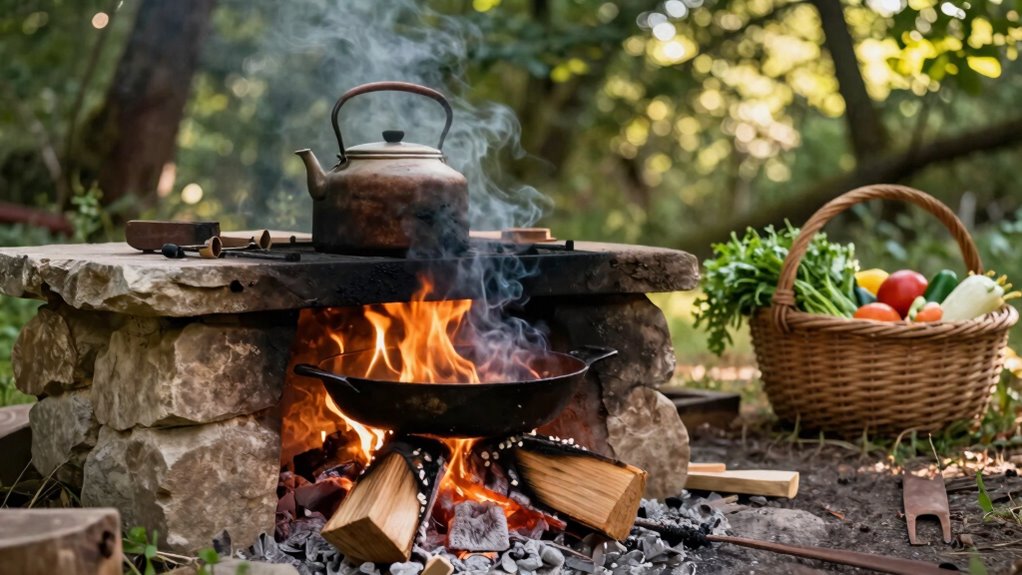
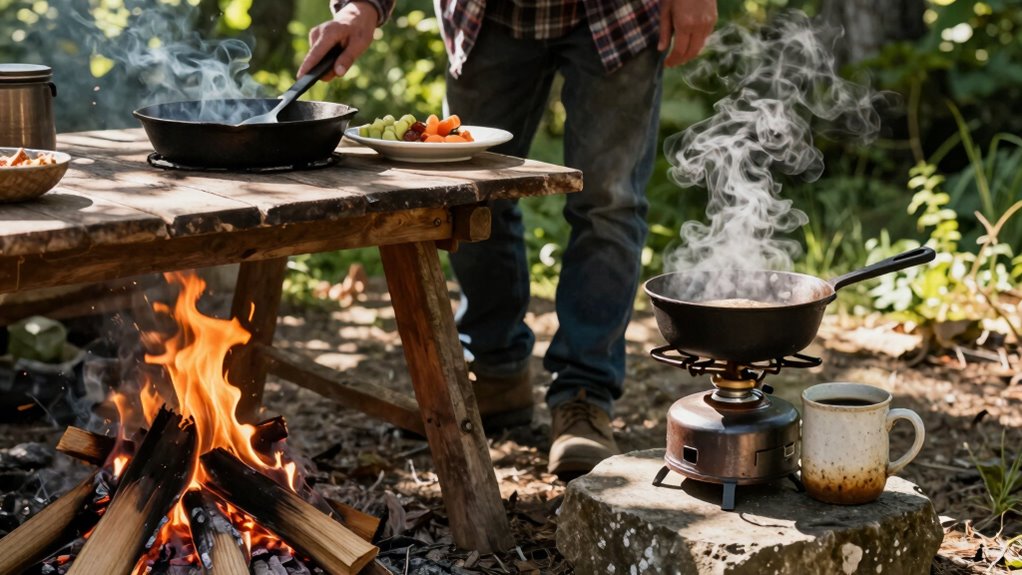
You can prepare meals without electricity by using alternative cooking methods like open fires, solar ovens, or wood stoves. Portable equipment such as camping stoves or handheld grills makes cooking flexible and convenient wherever you are. Mastering these techniques guarantees you stay well-fed even when off-grid.
Alternative Cooking Methods
As an affiliate, we earn on qualifying purchases.
Alternative Cooking Methods (Effective Techniques for Cooking Without Electricity)
Alternative cooking methods are essential for off-grid living, offering reliable ways to prepare meals without electricity. You can embrace traditional skills or adapt indoor appliances like wood stoves or solar ovens. These methods uphold cooking traditions while ensuring you’re prepared during outages. For example, a solar oven harnesses sunlight for baking, while a rocket stove efficiently burns minimal fuel. Additionally, understanding the Milky Way shooting season can inspire a connection to nature while cooking under the stars. Moreover, utilizing cycling skills can enhance your experience by promoting a sustainable lifestyle that complements off-grid living.
| Method | Description |
|---|---|
| Solar Oven | Uses sunlight to bake and cook food |
| Rocket Stove | High-efficiency wood-burning stove |
| Ember Cooking | Cooking over hot coals or embers |
Portable Cooking Equipment
When electricity isn’t available, having the right portable cooking equipment can make all the difference in meal preparation. Instead of relying on indoor appliances or electric stoves, you’ll want to consider alternatives like propane stoves, camping grills, or solar ovens. These options are lightweight, easy to transport, and don’t depend on electricity. Portable butane burners can quickly heat your meals, while compact camping stoves are perfect for larger dishes. Solar ovens use sunlight to cook, making them eco-friendly and cost-effective. Understanding cooking fundamentals can help you maximize your outdoor cooking potential. For example, learning about crisping techniques can enhance your ability to create delicious meals even in off-grid conditions. Avoid the temptation of indoor appliances or electric stoves, which require power, and instead focus on versatile, portable equipment that assures you can cook safely and efficiently no matter where you are. Additionally, making travel easier can enhance your outdoor cooking experience by ensuring you have the right tools and knowledge at your fingertips.
Wood and Charcoal Grilling and Baking Tips
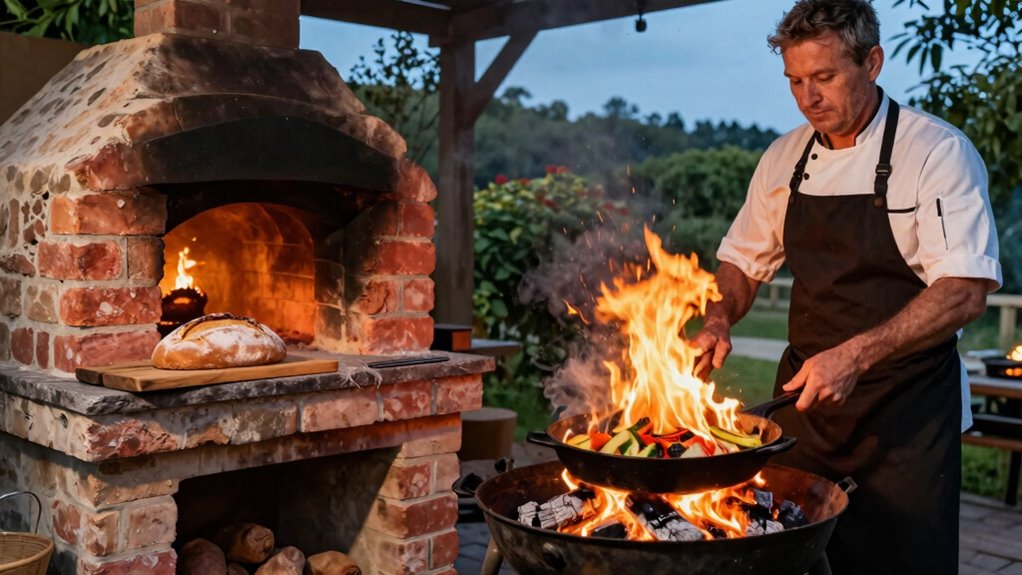
Mastering wood and charcoal grilling and baking begins with understanding how to control your fire and airflow. A steady wood fire creates consistent heat, ideal for baking or slow cooking, while charcoal grilling offers easy temperature management. To get the best results:
Control fire and airflow for perfect grilling and baking with steady heat and easy temperature management.
- Arrange your wood or charcoal for proper airflow, ensuring the fire burns evenly.
- Adjust vents or dampers to control temperature; more airflow means higher heat.
- Use a thermometer to monitor heat levels, maintaining steady temperature during cooking.
Solar-Powered Cooking Devices and Benefits
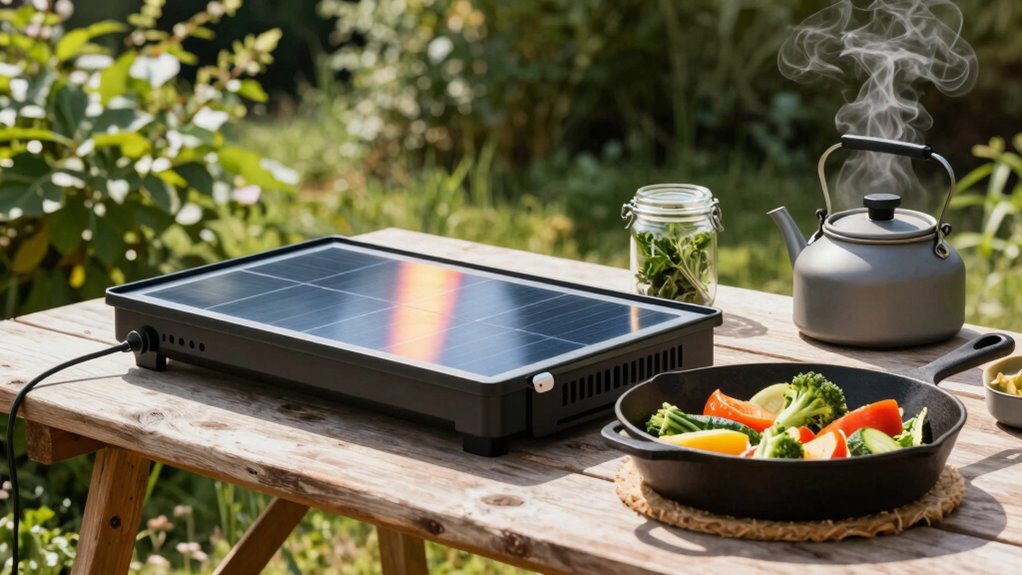
Solar-Powered Cooking Devices and Benefits
Solar-powered cooking devices harness the sun’s energy to prepare meals, offering a clean and sustainable alternative to traditional fuels. These devices use solar panels to capture sunlight and convert it into heat, making them highly energy-efficient. You can set up a solar oven or solar cooker easily in sunny locations, enabling you to cook without electricity or gas. Their energy efficiency means you get maximum heat with minimal resource use, reducing your carbon footprint. Plus, solar-powered devices are portable and require little maintenance, making them ideal for off-grid living or emergency situations. By choosing solar cooking, you’re embracing a renewable, eco-friendly option that saves money and reduces dependence on fossil fuels, all while cooking delicious meals under the sun’s natural light. Additionally, the principles of energy efficiency can help you optimize your cooking techniques for better performance, especially when integrated with smart appliances that enhance the cooking experience. Understanding the importance of cabling solutions can further improve your setup for solar-powered devices, ensuring effective energy distribution and efficiency.
Using Propane and Portable Fuel Sources Safely
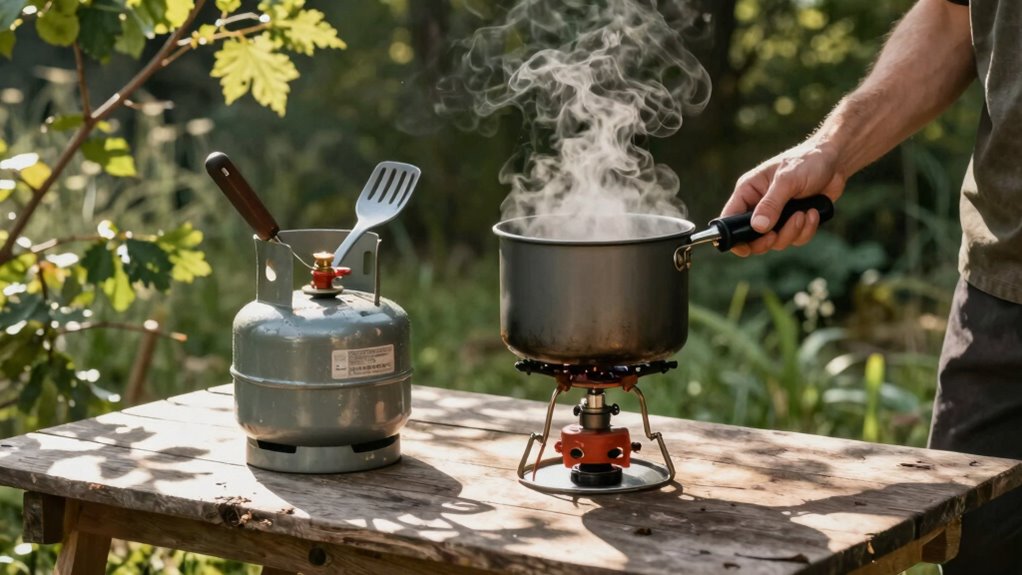
Using propane and other portable fuel sources can be safe and effective if you follow proper handling procedures. First, always store fuel in well-ventilated, upright containers away from heat sources to prevent leaks and accidents. Additionally, ensure that your storage methods comply with safety regulations to further reduce risks. Second, adhere to safety protocols by checking for leaks with a soapy water solution before igniting, and never overfill tanks. Furthermore, awareness of sugar content in food choices can help you prioritize health while cooking off-grid. Third, handle fuel with care, keeping containers sealed when not in use, and avoid storing them inside your living space. Proper fuel storage and strict safety protocols ensure you’re minimizing risks. Remember, always keep a fire extinguisher nearby and never leave a lit stove unattended. Following these steps helps you enjoy reliable off-grid cooking without compromising safety. Additionally, using whole-home water systems can enhance your off-grid experience by ensuring a consistent and clean water supply for cooking and other needs. Engaging in aquatic exercise can also be a great way to stay active and healthy while living off-grid. Furthermore, understanding the concept of comparative advantage can help you make informed choices about resource allocation and efficiency in your off-grid setup.
How to Plan and Prepare Off-Grid Meals in Advance
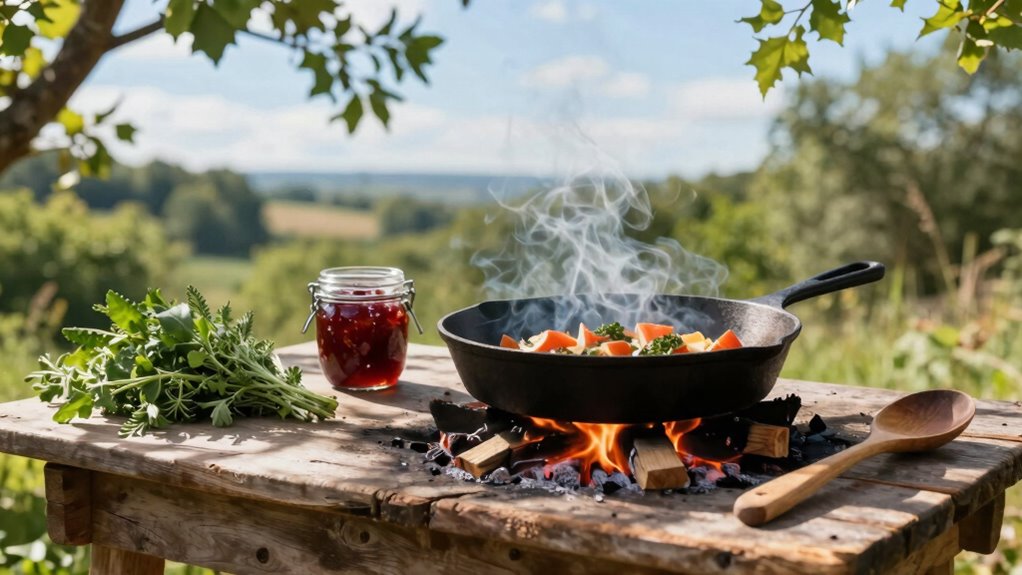
To cook smoothly off-grid, start by stockpiling non-perishable foods that can last through your trip. Prepare make-ahead meals so you can save time and effort when you’re ready to cook. Planning in advance guarantees you won’t run out of essentials or scramble for ingredients. Incorporating smart technology into your planning can enhance your cooking efficiency and meal preparation, even in off-grid situations. Additionally, focusing on content relevance can help you better understand which meals will provide the most satisfaction and nourishment during your off-grid experience.
Stockpile Non-Perishable Foods
Planning ahead by stockpiling non-perishable foods is essential for off-grid cooking success. You want a reliable supply that can last through emergencies and power outages. Focus on foods with long shelf lives and consider meal preservation methods like canning techniques to extend usability.
- Choose canned goods, dried grains, and legumes for easy storage and versatility.
- Use canning techniques to preserve fresh produce, ensuring a steady supply of seasonal foods year-round.
- Rotate stock regularly to prevent spoilage and keep your supplies fresh.
Stockpiling non-perishable foods reduces stress during outages and guarantees you’ll have the ingredients needed for nutritious meals. Proper meal preservation techniques, like canning, make your pantry resilient and ready for anything.
Prepare Make-Ahead Meals
Preparing make-ahead meals is a smart way to guarantee you’re never caught off guard during an off-grid situation. Planning and prepping meals in advance saves time and reduces stress when power is unavailable. Focus on dishes that store well and can be easily reheated or enjoyed cold, like stews, canned salads, or baked casseroles. To assure meal presentation stays appealing, pack foods in airtight containers and add fresh herbs or toppings just before eating for flavor enhancement. Pre-made meals also let you concentrate on other essentials, knowing your nutrition is covered. By investing a little effort upfront, you create a reliable supply of delicious, satisfying meals that look good and taste even better, making your off-grid experience more comfortable and enjoyable.
Safety Tips for Off-Grid Cooking
Safety Tips for Off-Grid Cooking
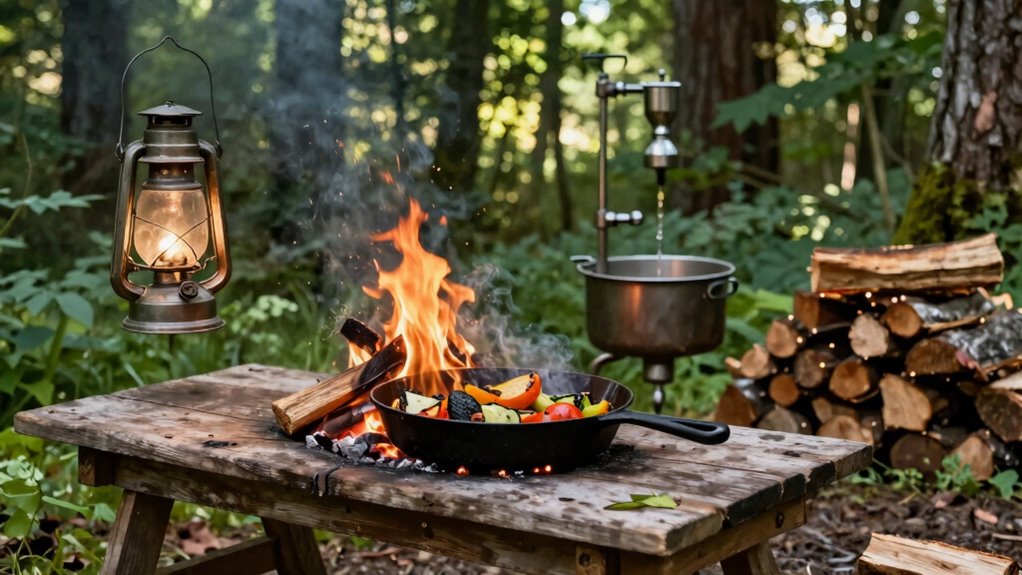
When cooking off-grid, safety should always come first to prevent accidents and guarantee a smooth experience. Proper kitchen organization keeps tools and ingredients within reach, reducing hazards. Always check your fuel sources and ventilation to avoid carbon monoxide buildup. Using bike generators can provide a reliable energy source for cooking appliances, especially in remote areas. Use ingredient substitutions wisely; replacing ingredients can alter cooking times and safety needs, so be mindful. Additionally, understanding the importance of caregiver emotional health can provide a valuable perspective on teamwork and patience, which are essential in both cooking and sports. Having the right gaming gear can also enhance your efficiency in managing cooking tasks. It’s crucial to remember that home safety tips can apply to any cooking environment, ensuring you create a safe space for food preparation.
To stay safe, remember these tips:
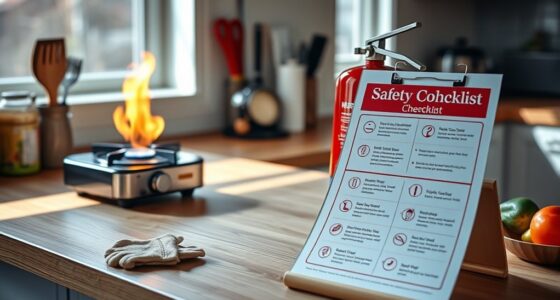
- Keep a fire extinguisher nearby and know how to use it.
- Store flammable items away from heat sources.
- Maintain a clean workspace to prevent slips and accidents.
Troubleshooting Common Off-Grid Cooking Challenges
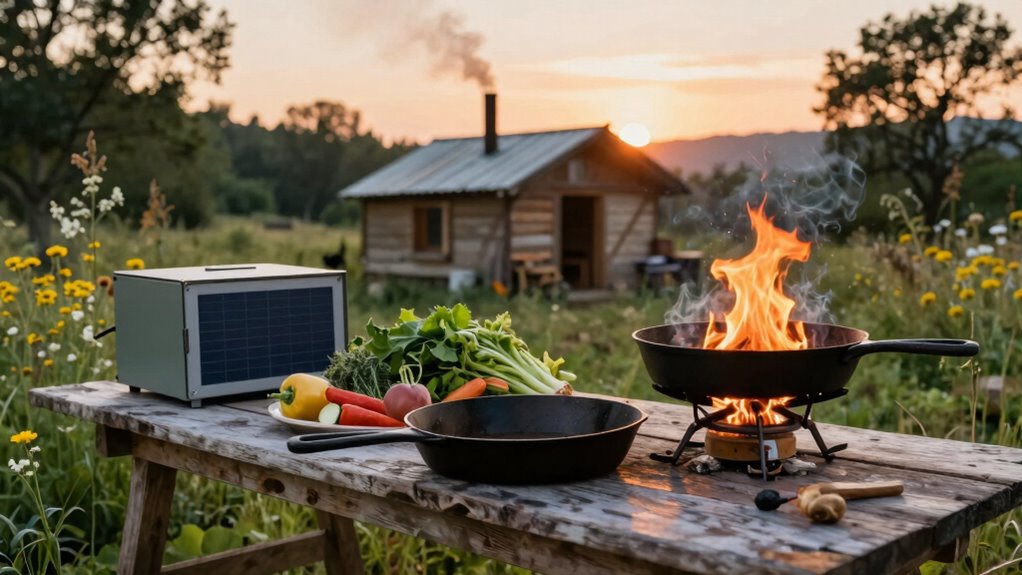
Off-grid cooking often presents unexpected challenges, but quick troubleshooting can keep your meal on track. If your indoor cooking setup isn’t heating properly, check your heat source and connections first. For culinary arts enthusiasts, maintaining consistent temperatures is key, so consider alternative fuel sources or adjusting cooking times. If ingredients aren’t cooking evenly, rearrange your pots or pans for better heat distribution. When power or fuel runs low, prioritize recipes that require less energy, like salads or cold dishes. Keep a basic toolkit handy to fix minor issues quickly. Staying adaptable and understanding your equipment helps you troubleshoot efficiently, ensuring you can continue creating delicious meals off-grid without compromising safety or quality.
Frequently Asked Questions
How Long Can Off-Grid Cooking Supplies Typically Last During Extended Outages?
During extended outages, your off-grid cooking supplies can last from several days to weeks, depending on your fuel efficiency and storage essentials. If you stock enough fuel like propane or wood and use energy-efficient appliances, you’ll prolong your cooking capacity. Properly storing fuels in safe, airtight containers ensures longevity, so you can cook reliably until power is restored. Regularly check and rotate supplies to maximize their lifespan and readiness.
What Are the Environmental Impacts of Different Off-Grid Cooking Methods?
You should consider the environmental impacts of your off-grid cooking methods by choosing renewable fuels like wood, solar, or biogas, which lower emissions and support sustainability. These options reduce greenhouse gases compared to fossil fuels, helping you minimize your carbon footprint. By selecting cleaner, renewable energy sources, you contribute to emissions reduction while still enjoying effective cooking when power’s gone.
Can Off-Grid Cooking Be Cost-Effective Compared to Traditional Methods?
You might be surprised, but off-grid cooking can be cost-effective. When you do a proper cost analysis, you’ll find that equipment affordability plays a big role, especially with simple tools like solar ovens or wood stoves. Over time, you save on energy bills and reduce reliance on expensive fuels. Plus, investing in durable, efficient equipment means lower maintenance costs, making off-grid cooking a smart, budget-friendly choice.
How Do Weather Conditions Affect Off-Grid Cooking Reliability?
Weather conditions greatly impact off-grid cooking reliability. During seasonal variations, you might face challenges like strong winds or heavy rain that affect your cooking methods, especially if you rely on open flames or solar devices. To guarantee weather resilience, you should prepare backup options, such as insulated cook tents or portable stoves, so you can adapt and keep cooking regardless of changing weather patterns.
Are There Any Legal or Safety Regulations for Off-Grid Cooking Setups?
You definitely need to check local permitting requirements and safety standards before setting up your off-grid cooking station. Ignoring these rules can lead to disastrous fines or dangerous fires that could level your home—literally! Always guarantee your setup complies with regulations to avoid catastrophe. Proper permits and safety standards aren’t just bureaucratic hoops; they’re your shield against the chaos of unsafe, illegal cooking practices.
Conclusion
When the power’s out, off-grid cooking becomes your lifeline—bringing warmth and comfort in a world gone quiet. While modern appliances offer convenience, embracing traditional methods reconnects you with simpler, reliable techniques. In the absence of electricity, you find resourcefulness and resilience. So, whether you’re grilling over wood or harnessing solar power, remember: it’s not just about cooking without power, but about thriving through the challenge while savoring every moment.
Fall Picks
fall essentials
As an affiliate, we earn on qualifying purchases.