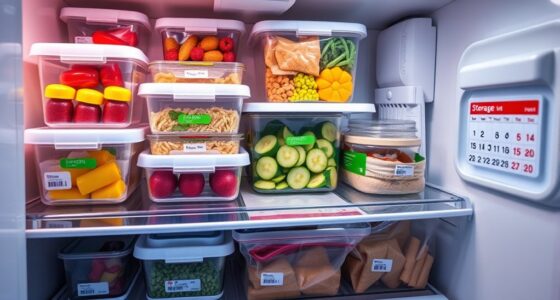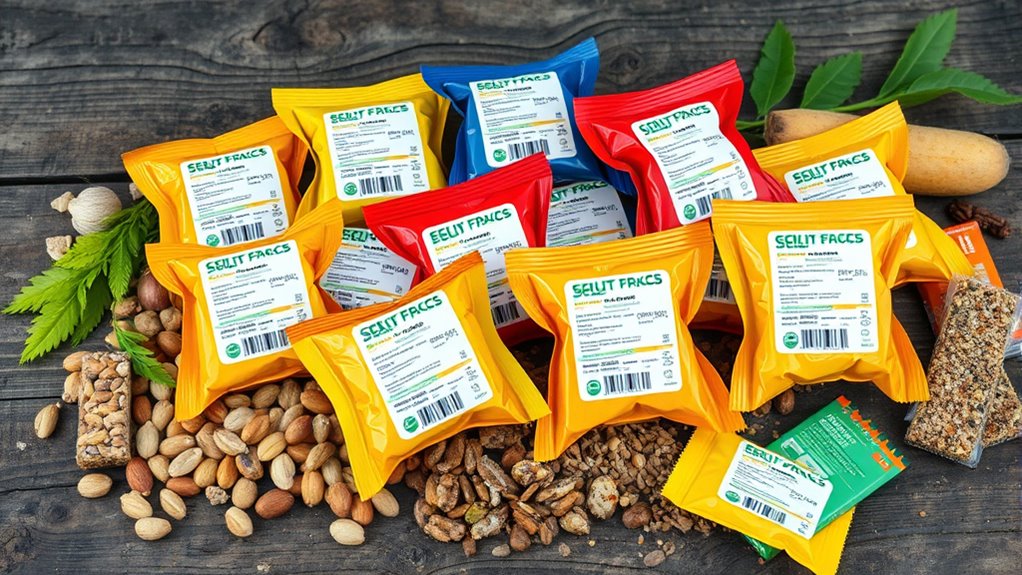

To create nutrient-dense emergency food packs, choose foods rich in vitamins, minerals, and calories like dried beans, lentils, whole grains, nuts, dehydrated fruits, and vegetables. Use airtight packaging such as vacuum-sealed bags or mylar pouches with oxygen absorbers, and store everything in a cool, dark, dry place. Regularly check expiration dates and rotate supplies. If you want to discover more tips for maximizing nutrition and shelf life, keep going—you’ll find valuable strategies ahead.
Key Takeaways
- Select foods high in vitamins, minerals, and calories like dried beans, nuts, seeds, and dehydrated fruits and vegetables.
- Use airtight, vacuum-sealed packaging with oxygen absorbers stored in a cool, dark, dry place for maximum shelf life.
- Incorporate non-perishable items with multi-year shelf stability and regularly rotate stock before expiration.
- Balance macronutrients by including carbohydrate, protein, and fat sources, plus fortified foods or supplements as needed.
- Choose easy-to-prepare, resource-efficient foods like instant oats, dehydrated soups, and pre-cooked grains to simplify meal prep during emergencies.

Ever wondered how to prepare emergency food packs that truly support your health during a crisis? The key lies in understanding meal preservation and how to optimize your supplies for long-term storage. When you’re assembling these packs, you’re not just stacking canned goods; you’re creating a carefully balanced system designed to sustain you through unpredictable circumstances. To do this effectively, focus on selecting nutrient-dense foods that pack a punch in vitamins, minerals, and calories without taking up too much space. Foods like dried beans, lentils, whole grains, nuts, seeds, and dehydrated fruits and vegetables are excellent choices because they retain their nutritional value over time and are easy to store.
Meal preservation is *crucial* because it *ensures* your food remains safe and nutritious over extended periods. Proper packaging and storage conditions are *vital*—use airtight containers, vacuum-sealed bags, and mylar pouches with oxygen absorbers to prevent spoilage and contamination. These methods help maintain freshness, prevent moisture intrusion, and extend the shelf life of your supplies. When considering long-term storage, avoid perishables and opt for items with a long shelf life, often marked by expiration dates that stretch several years into the future. Regularly rotate your stock to replace items nearing expiry, and keep your storage area cool, dark, and dry to maximize longevity. Additionally, choosing foods with UV protection can help prevent nutrient degradation over time.
Creating nutrient-dense emergency food packs also involves balancing macronutrients—carbohydrates, proteins, and fats—to ensure sustained energy and recovery. Incorporate fortified foods or multivitamin supplements to fill in any potential nutritional gaps. Adding powdered milk, protein powders, or meal replacement shakes can boost the nutrient profile without increasing bulk. Remember, variety is *essential*; a diverse selection prevents diet fatigue and guarantees you cover all nutritional bases.
Also, think about how you’ll prepare your meals. Opt for foods that can be cooked with minimal water or energy, such as instant oats, pre-cooked grains, or dehydrated soups. These options simplify meal preparation during stressful times and conserve your resources. Keep a durable, easy-to-open can opener and lightweight cooking utensils with your supplies.
Frequently Asked Questions
How Long Can Nutrient-Dense Emergency Food Packs Last?
Nutrient-dense emergency food packs typically last between 5 to 25 years, depending on their shelf life and storage conditions. You should store them in a cool, dry, and airtight environment to maximize longevity. Proper storage prevents spoilage and nutrient loss. Always check expiration dates, and rotate your supplies regularly to ensure you’re prepared for emergencies. With good storage, your food packs can remain safe and nutritious for years.
Are There Allergen Considerations in These Food Packs?
Yes, allergen considerations are essential when creating nutrient-dense emergency food packs. You should clearly include allergen labeling on packaging to inform users about potential allergens. Also, practice cross-contact prevention by thoroughly cleaning utensils and storage areas to avoid accidental exposure. This helps guarantee that individuals with allergies can safely use the food packs, reducing the risk of allergic reactions during emergencies.
What Is the Ideal Calorie Count per Serving?
For emergency food packs, aim for a calorie count of around 400-600 calories per serving. This balances calorie density and portion control, ensuring enough energy without overloading. Consider the pack’s intended duration and activity levels, adjusting servings accordingly. Keep in mind, calorie density varies; choose nutrient-rich ingredients to maximize energy without excessive bulk. Proper portion control helps prevent waste and makes your emergency supplies more practical and efficient.
Can These Packs Be Stored Long-Term Without Refrigeration?
Yes, these packs can be stored long-term without refrigeration if you pay attention to shelf life and storage conditions. Keep them in a cool, dry place away from direct sunlight, and make sure they are airtight to prevent moisture and pests. Proper storage conditions help extend shelf life, maintaining nutrient integrity and safety over time. Regularly check packaging for damage, and rotate supplies to stay prepared for emergencies.
How Do I Balance Macronutrients in My Emergency Food Packs?
Did you know that a balanced diet typically includes about 50% carbs, 20-30% fats, and 15-20% protein? To balance macronutrient ratios in your emergency food packs, consider your dietary preferences and include a mix of grains, nuts, seeds, dried fruits, and protein sources like beans or jerky. This way, you’ll guarantee sustained energy and nutrition during emergencies, tailored to your needs.
Conclusion
Remember, packing nutrient-dense emergency food is vital—you’ll want to include foods rich in vitamins, minerals, and calories. Did you know that during emergencies, access to proper nutrition can reduce recovery time by up to 30%? By choosing wholesome, compact options, you guarantee you’re prepared for unexpected situations and can maintain your health. So, take the time now to assemble a well-rounded pack—you’ll thank yourself when it matters most. Stay prepared and stay healthy!