
TL;DR

Get backup power and energy gear delivered free with Prime
- Fast, free delivery on millions of items
- Prime Video, Amazon Music and more included
- Member-only deals all year
French battery remanufacturer VoltR has raised €22 million in equity and grants to expand its factory in Verrières-en-Anjou. The company says it aims to double the site’s footprint and increase production capacity sixfold within two years, while doubling its workforce and adding about 40 jobs.
French battery remanufacturer VoltR has raised €22 million to expand its factory in Verrières-en-Anjou and scale production, the company said. The financing is intended to double the factory’s footprint and increase its production capacity sixfold within two years, supporting VoltR’s plans to grow its workforce and expand battery remanufacturing in Europe.
The funding consists of €16 million in equity from the SPI 2 fund, managed by Bpifrance on behalf of the French state under the France 2030 program, and Decathlon Pulse, the investment and innovation arm of Decathlon. A further €6 million comes from grants awarded through the Première Usine program. The figures and planned uses were reported by Energy Storage, drawing on reporting from pv magazine France.
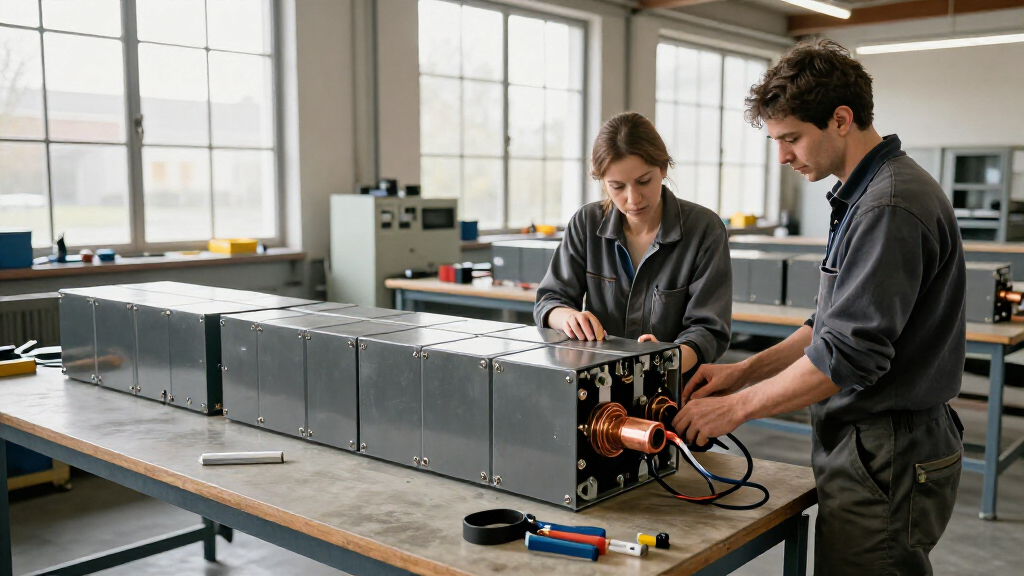
VoltR collects used lithium batteries, evaluates their individual cells and uses cells it deems suitable to make new battery systems. The company says the process is designed to extend the industrial life of cells after their first use. It reports that more than 20,000 remanufactured batteries have been put on the market over the past four years.
As production expands, VoltR plans to double its workforce and create about 40 jobs. The company describes the investors’ contributions as combining industrialization experience with knowledge of battery applications and markets. It has also listed potential uses for its products, including energy storage systems, although the report does not specify which products or customers will be served by the expansion.
Scaling Reuse in Europe’s Battery Chain
The financing would give VoltR more room to process used battery cells at industrial scale rather than relying only on smaller-scale operations. If the planned expansion proceeds, the sixfold capacity increase could allow the company to handle more batteries and supply more remanufactured systems, though the report gives no production figure against which to measure that increase.
Remanufacturing is one way to keep some battery cells in use after their initial application. VoltR says its model could reduce demand for new raw materials by reusing suitable cells. That is the company’s stated aim; the report does not quantify any material savings, emissions reductions or cost benefits. The project’s outcome will therefore depend on the number and condition of batteries available for collection, the share of cells that can be reused, and demand for the resulting systems.
The announced job creation also makes the expansion relevant to the local industrial workforce in western France. More broadly, the investment places battery remanufacturing within France’s efforts to develop domestic industrial capacity under the France 2030 program. It is not yet clear how much of VoltR’s planned output will remain in France or be sold elsewhere in Europe.
As an affiliate, we earn on qualifying purchases.
How VoltR Remanufactures Cells
Unlike a process that begins with new battery materials, VoltR’s stated method starts with used lithium batteries. The company assesses cells individually, then selects cells it considers suitable for assembling into new battery systems. This is intended to extend a cell’s service in a different or continued application after its first use.
VoltR says it has marketed more than 20,000 remanufactured batteries over four years. That number is a cumulative company-reported total; the source does not provide annual sales, battery capacity, or a comparison with the volume of batteries it has collected. The new financing marks a shift toward a larger factory operation, with the company targeting a doubled footprint and sixfold production capacity within two years.
The funding combines private investment with public support: equity from SPI 2 and Decathlon Pulse, alongside grants under Première Usine. The report identifies the funding sources but does not give a breakdown of how the €16 million equity portion is divided between the investors or detail the conditions attached to the grants.
“The company said the funding will allow it to double the footprint of its factory in Verrières-en-Anjou and increase production capacity sixfold within two years.”
— VoltR
As an affiliate, we earn on qualifying purchases.
Production Targets and Market Demand
The announcement gives a sixfold capacity target but does not state VoltR’s current output or the absolute annual capacity it expects to reach. It also does not specify when construction or factory expansion will begin, how the work will be phased, or what milestones will mark progress during the two-year period.
Other details remain open, including the expected timing of the roughly 40 new jobs, the range of battery types and applications the expanded facility will handle, and the share of output intended for energy storage. The source does not identify customer commitments, sales forecasts, or how many collected cells typically meet VoltR’s criteria for reuse.
The company’s stated goal of reducing demand for new raw materials is not accompanied by a quantified estimate. The eventual environmental and commercial effects will depend on the facility’s actual throughput, the durability and performance of remanufactured systems, and whether customers adopt them at scale.
As an affiliate, we earn on qualifying purchases.
Factory Expansion Over Two Years
VoltR says it will use the new financing to expand its Verrières-en-Anjou factory and raise production capacity over the next two years. The company also plans to double its workforce and create about 40 jobs. The report does not give specific dates for construction, recruitment or the start of expanded production.
The next updates to watch for are details on the factory work, hiring schedule and the capacity VoltR can achieve as the site grows. Information on customer contracts, product applications and measured raw-material savings would help show how the expansion translates into commercial activity and resource reuse. Those details have not been reported in the announcement.
As an affiliate, we earn on qualifying purchases.
Key Questions
How much funding did VoltR raise?
VoltR raised €22 million: €16 million in equity from the SPI 2 fund and Decathlon Pulse, plus €6 million in grants through the Première Usine program.
What does VoltR plan to do with the money?
The company says it will double the footprint of its factory in Verrières-en-Anjou and increase production capacity sixfold within two years. It also plans to double its workforce and create about 40 jobs.
How does battery remanufacturing work at VoltR?
VoltR says it collects used lithium batteries, assesses their cells individually and uses cells it considers suitable to make new battery systems. Its stated aim is to extend the industrial life of cells after their first use.
How many batteries has VoltR remanufactured?
VoltR reports that it has put more than 20,000 remanufactured batteries on the market over the past four years. The report does not state their total capacity or provide an annual breakdown.
When will the expanded factory be operating?
VoltR’s stated target is to increase capacity within two years. The announcement does not provide a construction timetable or a specific date for when expanded production will begin.
Source: rss
Columbus Day / Indigenous Peoples' Day Picks
long weekend sales
As an affiliate, we earn on qualifying purchases.