Adding backup power to your smart home guarantees your security cameras, locks, and thermostats stay connected during outages. You can choose between battery storage systems for quick, quiet backup or generators for longer-lasting power. Many homeowners use both to maximize reliability. Proper sizing, transfer switches, and seamless integration help keep your home safe and functioning smoothly during power failures. Keep exploring to discover how to optimize your backup setup effectively.
Key Takeaways
- Assess your home’s power needs and identify critical devices to determine appropriate backup solutions.
- Integrate battery storage systems for immediate, quiet backup during short outages.
- Install a generator with a transfer switch for extended power support during prolonged outages.
- Consider combining batteries and generators for layered, reliable backup coverage.
- Regularly maintain and monitor backup systems to ensure seamless operation during power failures.

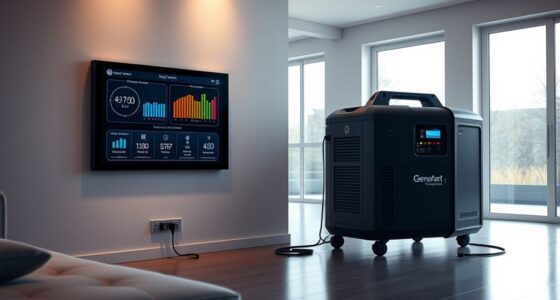
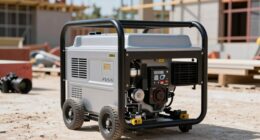
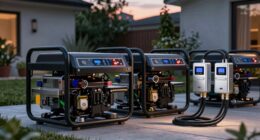
In today’s connected world, smart home systems rely heavily on continuous power to function seamlessly. Without a steady energy supply, your security cameras, smart locks, thermostats, and lighting can all go offline, leaving your home vulnerable and inconvenienced. To prevent these issues, adding backup power solutions becomes essential. Two common methods are battery storage and generator integration, each offering distinct advantages depending on your needs. Understanding how they work and how to implement them helps guarantee your smart home remains operational during outages. Properly sizing your backup system is crucial to ensure it meets your specific energy demands and maintains system reliability. Battery storage systems are increasingly popular because they provide instant backup power without loud noise or fuel dependency. When your main power source fails, these batteries kick in immediately, maintaining your smart home devices’ operation. They’re especially useful for short-term outages or when you want to avoid disruptions during brief power fluctuations. Modern battery storage units can be integrated seamlessly with your existing smart home setup, often controlled via apps that let you monitor charge levels and automatically switch over during outages. They’re compact, relatively easy to install, and don’t require ongoing fuel or maintenance, making them a reliable choice for many homeowners. Generator integration offers a different kind of backup, providing longer-lasting power during extended outages. Generators can run on propane, natural gas, or diesel, and they kick in automatically when the main power grid fails. This means you don’t have to be home or remember to switch them on manually. When considering generator integration, you should evaluate the size and capacity needed to support your entire smart home system or just critical devices. Proper installation involves connecting the generator to your home’s electrical system through a transfer switch, ensuring safe and efficient power transfer. While generators can be noisier and require fuel management, they excel at providing sustained power during prolonged outages, keeping everything from security systems to HVAC units operational. Choosing between battery storage and generator integration depends on your priorities. If you want quick, quiet, and maintenance-free backup power for short-term outages, batteries are a solid option. However, if you face frequent or prolonged power failures, a generator offers the endurance needed to keep your entire smart home running smoothly. Many homeowners opt for a combination of both, installing batteries for immediate response and generators for extended outages, creating a layered backup system that maximizes reliability. By carefully evaluating your home’s power needs and climate, you can select the right backup power setup that guarantees your smart home stays connected, secure, and comfortable no matter what’s happening outside.

Honeywell 22kW Home Standby Generator
PrecisionPower Technology delivers best-in-class power quality with less than 5 percent total harmonic distortion for clean, smooth operation...
As an affiliate, we earn on qualifying purchases.
Frequently Asked Questions
Can Backup Power Systems Integrate With Existing Smart Home Hubs?
Yes, backup power systems can integrate with your existing smart home hubs. You need to check the system compatibility and guarantee proper power management. Many modern backup solutions are designed to work seamlessly with popular smart home platforms, allowing you to control and monitor power backup during outages. By choosing compatible systems, you ensure reliable operation and maintain your smart home’s functionality without interruption.
What Is the Typical Lifespan of Backup Batteries in Smart Home Setups?
Ironically, your backup batteries often outlive their usefulness, but don’t count on it. Typically, they last about 3 to 5 years with proper battery maintenance. To keep your smart home powered smoothly, stick to regular replacement schedules and monitor battery health. Ignoring these details can leave you in the dark when you need backup most, making timely replacements essential for reliable backup power.
Are There Specific Backup Power Options for Outdoor or Weatherproof Smart Devices?
Yes, you can find weatherproof batteries designed specifically for outdoor or weatherproof smart devices, ensuring they withstand rain, snow, and temperature changes. Additionally, outdoor generators provide reliable backup power for larger systems or multiple devices, giving you peace of mind during outages. These options are built to endure harsh conditions, so you can keep your outdoor smart devices operational without worry, regardless of weather.
How Do Backup Power Systems Affect Overall Energy Consumption?
Backup power systems can considerably impact your energy efficiency, but they’re designed for power redundancy, so your smart home stays operational during outages. While they might increase overall energy consumption slightly, modern systems optimize energy use, preventing waste. Think of it as a safety net that keeps your smart devices running smoothly without draining your power supply—ensuring your home remains both smart and energy-smart in every situation.
Is Professional Installation Necessary for Backup Power Systems?
You don’t necessarily need professional installation for backup power systems, but DIY installation can save you money on labor costs. However, consider your comfort with electrical work and the complexity of the system. Cost considerations include not only the unit itself but also potential safety risks and future maintenance. If you’re unsure or dealing with complex setups, hiring a professional guarantees safety and proper functionality, which might save you money long-term.

Champion Power Equipment 201222 22 kW aXis Home Standby Generator with 200A Whole House Switch
Up to 20% more fuel efficient than leading competitors, this 22-kilowatt generator provides 22,000 watts of continuous power...
As an affiliate, we earn on qualifying purchases.
Conclusion
Adding backup power to your smart home guarantees you stay connected and in control during outages. Did you know that over 80% of smart home users consider backup power essential for uninterrupted security and automation? By investing in a reliable backup system, you safeguard your home’s convenience and safety. Don’t wait for a blackout to disrupt your routine—prepare now and enjoy peace of mind, knowing your smart home stays powered no matter what.

20kW Standby Generator with 200amp TS
Automatically restore power in just 10 seconds with the premium power of a Kohler generator that delivers advanced...
As an affiliate, we earn on qualifying purchases.
Honeywell 14kW Home Standby Generator
PrecisionPower Technology delivers best-in-class power quality with less than 5 percent total harmonic distortion for clean, smooth operation...
As an affiliate, we earn on qualifying purchases.