When comparing gasoline, propane, and battery backup solutions, consider your power needs, budget, and outage frequency. Gasoline systems provide high power but cost more to operate and store. Propane offers cleaner, longer-lasting fuel though with higher initial setup costs. Batteries are quiet, efficient, and low maintenance but have limited runtime. Each option suits different situations—keep exploring to find the best fit for your backup power requirements.
Key Takeaways
- Gasoline systems offer high power and familiarity but have higher ongoing fuel and maintenance costs.
- Propane backup solutions are cleaner, more efficient, and suitable for long-term storage, with higher initial installation costs.
- Battery backups are quiet, low maintenance, and environmentally friendly but typically provide limited runtime.
- Fuel availability, storage, and costs influence the long-term suitability of gasoline and propane systems.
- Choice depends on outage duration, power needs, budget, and preference for fuel efficiency versus immediate backup.
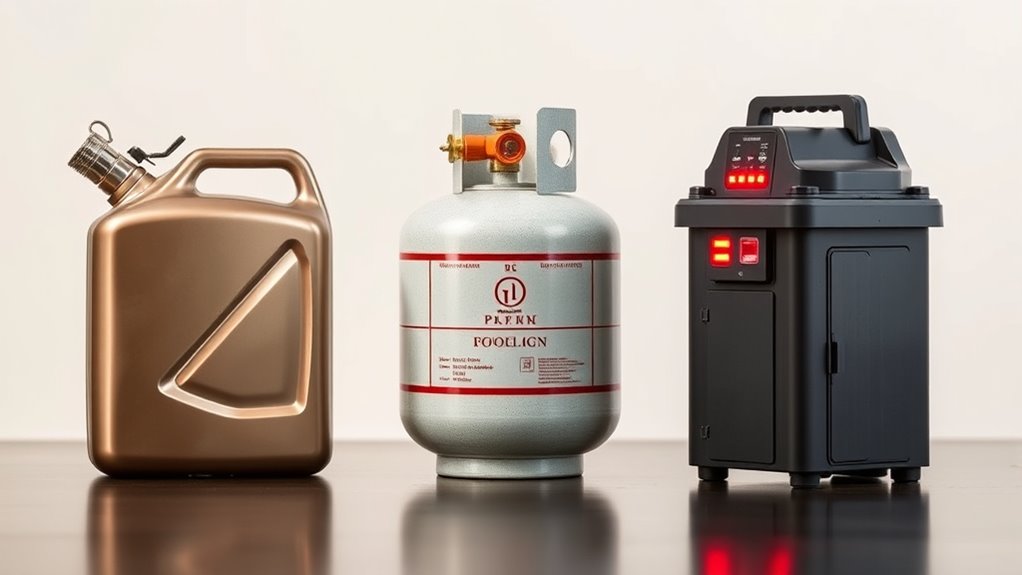
Gasoline backup systems are another popular option. They’re known for their reliable power output and are often the most familiar choice. They tend to offer high power output, making them suitable for running multiple appliances simultaneously. However, gasoline generators are less fuel-efficient compared to propane, especially during extended outages, which means you’ll need to stockpile fuel and monitor consumption carefully. Installation costs for gasoline units are generally moderate, but keep in mind that regular maintenance and fuel storage can add to the overall expense. Gasoline tends to be more readily available in many areas, so refueling is usually straightforward, but it also has a shorter shelf life, requiring you to use stabilizers or rotate supplies regularly.
Propane backup systems are another popular option. They’re known for their cleaner burning and longer shelf life, which translates to better fuel efficiency over time. Propane generators often have lower maintenance costs because propane burns cleaner and produces less engine wear. Installation costs for propane systems might be higher initially, especially if you need to install a storage tank or connect to an existing propane supply. Yet, in the long run, they can be more economical thanks to fuel efficiency and reduced maintenance needs. Propane also stores well for extended periods, making it a reliable standby fuel source, especially in areas prone to frequent outages.
Battery backup solutions, including portable power stations and home battery systems, are increasingly popular due to their quiet operation and ease of use. They don’t require fuel, so you avoid the risks and costs associated with storing combustible fuels. Battery systems are highly efficient, converting stored energy instantly without the need for fuel consumption. The main drawback is their limited runtime, which depends on the battery capacity and the power demands of your appliances. Installation costs for battery backups can vary widely; portable units are typically inexpensive and easy to set up, while whole-home systems involve professional installation and higher upfront costs. However, once installed, they require minimal maintenance and can be charged via solar panels or grid power, offering a sustainable and low-cost solution over time.
Ultimately, your choice hinges on your specific needs, budget, and the typical length of outages you face. Gasoline offers power and availability but comes with higher ongoing costs. Propane provides efficiency and longer-term storage benefits, while batteries deliver quick, quiet backup with minimal fuss. Weighing these factors carefully will ensure you’re ready with the best backup solution when the next outage strikes.
Frequently Asked Questions
Which Backup Solution Is Best for Long-Term Energy Needs?
You should choose renewable options like solar or wind for long-term energy needs because they offer better cost efficiency over time. These solutions reduce your reliance on fossil fuels, lower maintenance costs, and provide sustainable power. While initial investments may be higher, the long-term savings and environmental benefits make renewable backup options the best choice for reliable, cost-effective energy that supports a greener future.
How Do Installation Costs Compare Among the Options?
A penny saved is a penny earned, and when it comes to installation costs, you’ll find that propane and battery backup options usually have lower installation expenses than gasoline generators. Gasoline systems often require more extensive setup, increasing up-front costs. For a clear cost comparison, consider both initial installation expenses and ongoing maintenance. Choosing a solution that fits your budget today can save you money and hassle in the long run.
Are There Environmental Benefits to Each Backup Type?
You’ll find that battery backups have the lowest emission impacts and are more environmentally friendly than gasoline or propane options. They use renewable alternatives, producing no direct emissions, which reduces your carbon footprint. Gasoline and propane backups emit greenhouse gases, impacting air quality. Choosing a battery backup supports cleaner energy solutions, helping you minimize environmental harm and promote sustainability.
What Maintenance Is Required for Each Backup Solution?
They say “an ounce of prevention is worth a pound of cure,” and that’s true for backup solutions. You’ll need to verify fuel efficiency and storage requirements regularly. Gasoline and propane need fuel level checks and proper storage, while batteries require periodic testing and fluid maintenance. Keeping each system well-maintained guarantees reliable backup power and maximizes efficiency, saving you time and avoiding costly repairs when you need it most.
How Do Safety Considerations Differ Between These Options?
You need to be aware that fire hazards and storage requirements vary with each backup option. Gasoline poses a higher fire risk and needs proper, ventilated storage away from heat sources. Propane also has fire hazards and requires secure, upright tanks stored outdoors. Battery backups are safer, with minimal fire risk, but you should still store them in cool, dry areas to prevent damage. Always follow safety guidelines for each to prevent accidents.
Conclusion
Ultimately, choosing between gasoline, propane, or battery backup is like picking your hero in a classic story—you’ll want the one that fits your needs best. Gasoline offers power and convenience, propane provides reliability and longer storage, while batteries promise quiet, clean energy. Think of your decision as your own quest—trust your instincts, weigh the trade-offs, and pick the backup solution that keeps your home running smoothly, no matter what challenges come your way.