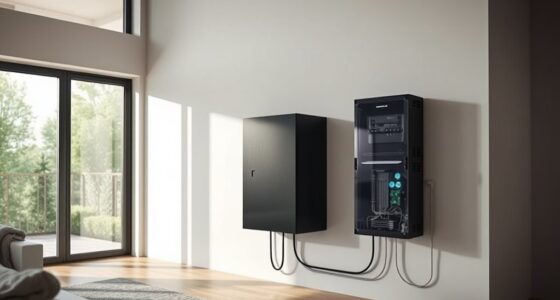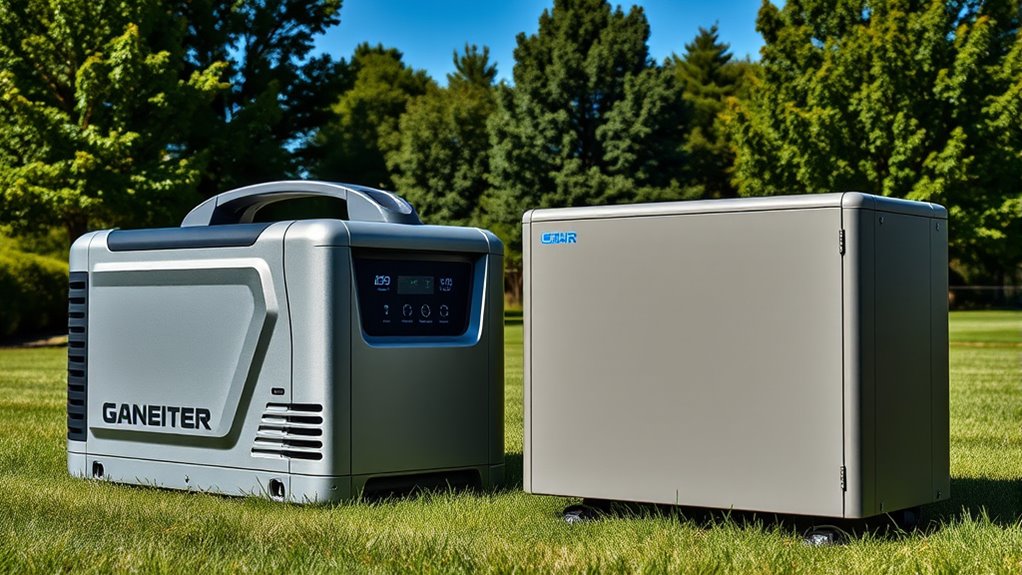

If you’re comparing backup generators and whole-house batteries, you’ll find generators are cheaper upfront but cost more over time due to fuel, maintenance, and noise. Batteries cost more initially but have lower ongoing expenses and operate quietly and cleanly. Your choice depends on your budget, outage frequency, and environmental preferences. To understand which option suits your needs best, explore the detailed cost factors and long-term benefits that follow.

Get backup power and energy gear delivered free — and shop member deals
- Fast, free delivery on millions of items
- Access to Prime Big Deal Days deals on October 6–7
- Prime Video, Amazon Music and more included
Key Takeaways
- Backup generators have lower upfront costs but higher ongoing expenses due to fuel and maintenance.
- Whole-house batteries involve higher initial installation costs but lower long-term operational and maintenance expenses.
- Generators incur fuel costs and regular servicing, increasing total ownership costs over time.
- Batteries operate quietly, environmentally friendly, and eliminate fuel costs, reducing long-term expenses.
- Overall, batteries tend to be more cost-effective for frequent outages despite higher initial investment.
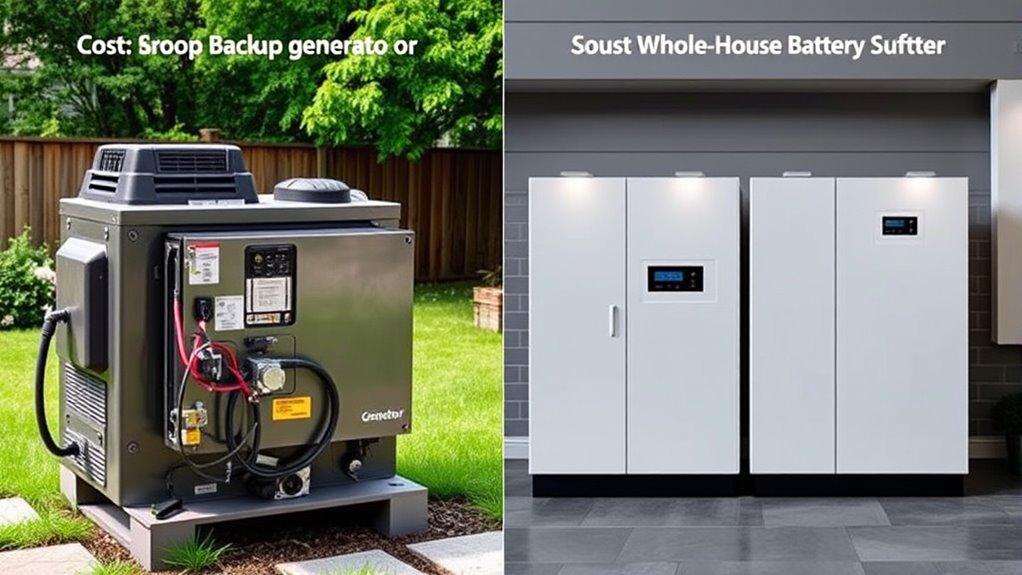
When a power outage strikes, choosing the right backup solution can make all the difference. You want something reliable that won’t break the bank or cause headaches down the line. Two popular options are backup generators and whole-house batteries, but understanding their cost implications is essential. Let’s start by considering fuel efficiency and installation costs, two key factors that can markedly influence your decision. Backup generators, especially gas-powered models, often have lower upfront costs compared to batteries. However, fuel efficiency varies widely depending on the generator’s size and type. A more fuel-efficient generator consumes less fuel for the same amount of power, saving you money over time. Still, you need to keep in mind that you’ll be paying for fuel regularly, which adds to ongoing costs, especially if outages are frequent or lengthy.
On the other hand, whole-house batteries usually have higher initial installation costs, but they shine when it comes to ongoing expenses. They don’t rely on fuel, so you won’t be paying for fuel consumption or maintenance related to combustion engines. The installation process for batteries can be more complex and expensive upfront because it often involves integrating with your existing electrical system and potentially upgrading your home’s electrical panel. But once installed, batteries offer a quiet, maintenance-free operation with minimal ongoing costs, making them cost-effective in the long run if you experience regular power outages. Additionally, storage capacity varies between systems, affecting how long they can power your home during an outage.
Whole-house batteries cost more upfront but save money long-term with no fuel or maintenance needs.
When weighing installation costs, consider that backup generators might be cheaper initially but require periodic maintenance and fuel refills. They also tend to be noisier and may need space outdoors, which could add to your setup costs. Whole-house batteries typically involve a higher initial investment, but since they don’t need fuel or regular servicing, your total ownership costs may be lower over time. Plus, batteries are cleaner and quieter, which can be an advantage if you’re concerned about noise or environmental impact.
Ultimately, your choice depends on your budget, power needs, and how often outages occur. If you’re looking for a more affordable initial investment and don’t mind the ongoing fuel costs, a backup generator might suit you. But if you prefer a cleaner, quieter system with lower long-term expenses, a whole-house battery could be the smarter choice. Weigh the upfront costs against the long-term savings, and consider your specific circumstances to make the best decision for your home.
As an affiliate, we earn on qualifying purchases.
Frequently Asked Questions
What Are the Environmental Impacts of Backup Generators Versus Batteries?
You should know that backup generators emit greenhouse gases, impacting air quality and climate change, especially if they use fossil fuels with low fuel efficiency. They also produce noise pollution, which can disturb your surroundings during operation. In contrast, batteries have a lower environmental footprint, producing no emissions or noise, but their manufacturing and disposal can involve resource extraction and waste concerns. Overall, batteries are generally more eco-friendly than traditional backup generators.
How Long Do Each of These Backup Systems Typically Last?
You’ll find that backup generators typically last around 10 to 20 years, depending on usage and maintenance, with fuel efficiency decreasing over time. They can be noisy, which might be disruptive during power outages. Whole-house batteries usually last 5 to 15 years, offering quiet operation and no fuel needs. Proper maintenance extends both systems’ lifespans, but batteries tend to need replacement sooner than generators.
Can These Systems Be Integrated With Existing Home Automation?
Yes, both backup generators and whole-house batteries can be integrated with your existing home automation system. You’ll find many models offer smart home compatibility, allowing you to control and monitor them remotely. Automation integration lets you set automatic responses during power outages, like activating backup power or sending alerts. Make sure to check compatibility with your smart home hub or platform, so you can seamlessly manage your backup system alongside your other smart devices.
Are There Any Tax Incentives or Rebates Available?
You can often find tax incentives and rebate programs that act like hidden treasure chests, sweetening the deal for your home power upgrades. These programs may cover part of your costs for backup generators or whole-house batteries, making your investment more affordable. Check with local and federal agencies to uncover these incentives, and watch your savings grow like a garden in full bloom as you power your home smarter and more efficiently.
What Maintenance Is Required for Each Type of Backup System?
For backup generators, you’ll need to regularly check fuel levels, change oil, and perform tune-ups to guarantee fuel efficiency and keep noise levels low. Whole-house batteries require minimal maintenance—just monitor the charge levels and keep connections clean. Batteries don’t produce noise or require fuel, making them a quieter, low-maintenance option. Both systems benefit from routine inspections to maximize performance and lifespan.
As an affiliate, we earn on qualifying purchases.
Conclusion
Ultimately, whether you choose a backup generator or a whole-house battery, it’s about finding what fits your needs—and timing. Sometimes, a sudden outage reminds us how unpredictable life can be, making the right choice more than just about cost. It’s about preparedness and peace of mind, quietly reminding us that sometimes, the best backup is the one that shows up when we least expect it. After all, coincidence often guides us to the right solution.
As an affiliate, we earn on qualifying purchases.
As an affiliate, we earn on qualifying purchases.
Fall Picks
fall essentials
As an affiliate, we earn on qualifying purchases.