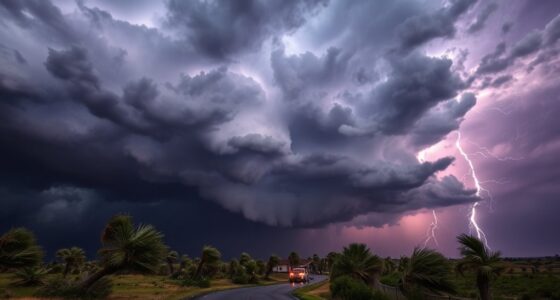
When ocean temperatures rise, they provide more energy that fuels hurricanes and typhoons, making storms stronger and more destructive. Warmer waters lead to increased wind speeds and heavier rainfall during storms, raising the risk of damaging storm surges. This means coastal communities face greater threats from these intensified weather events. If you want to understand how these temperature changes further impact ecosystems and safety, there’s more to learn below.

Get backup power and energy gear delivered free with Prime
- Fast, free delivery on millions of items
- Prime Video, Amazon Music and more included
- Member-only deals all year
Key Takeaways
- Warmer ocean waters provide more energy, fueling stronger and more intense storms like hurricanes and typhoons.
- Elevated temperatures increase storm wind speeds and rainfall, leading to more destructive weather events.
- Higher sea surface temperatures contribute to larger storm surges during cyclones.
- Prolonged marine heatwaves sustain and intensify storm development over longer periods.
- Increased ocean heat enhances the overall capacity for storm formation and intensification.
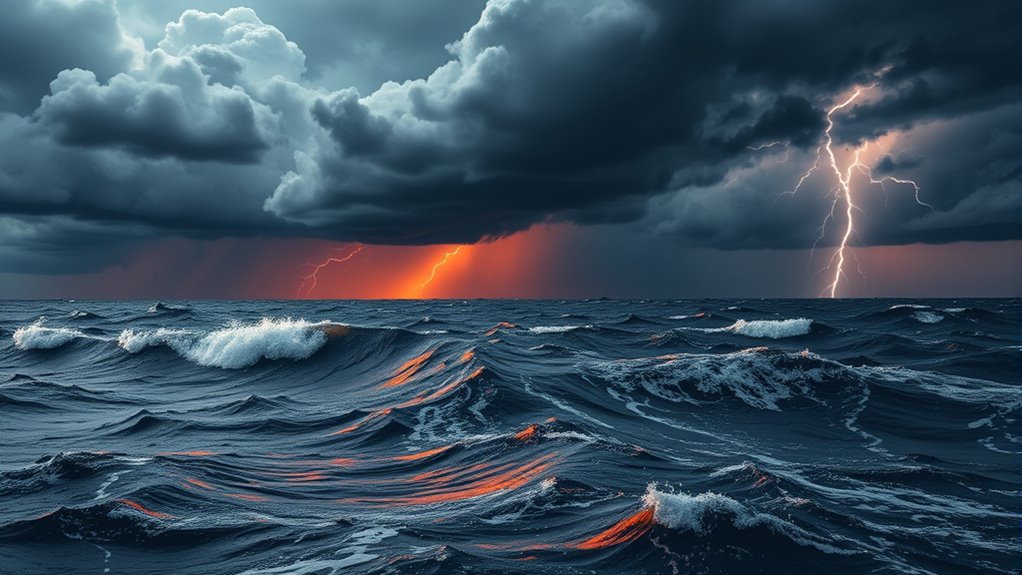
As ocean temperatures rise, the intensity of storms increases, posing greater threats to coastal communities worldwide. You might not realize it, but warmer waters fuel the development and strength of storms like hurricanes and typhoons. When the ocean heats up, it provides more energy to these weather systems, making them more powerful and potentially more destructive. This means stronger winds, heavier rainfall, and higher storm surges, all of which can devastate homes, infrastructure, and ecosystems along coastlines.
One of the most direct impacts of rising ocean temperatures is coral bleaching. When waters get too warm, corals become stressed and expel the symbiotic algae that give them color and critical nutrients. Without these algae, corals turn white—bleached—and become highly vulnerable to disease and death. Coral reefs act as natural barriers, protecting shorelines from waves and storm impacts, so their decline leaves coastlines more exposed to damage during intense storms. Marine heatwaves, which are prolonged periods of abnormally high ocean temperatures, exacerbate this problem. These heatwaves can last weeks or months, dramatically increasing the risk of coral bleaching on a large scale and weakening entire reef systems.
As marine heatwaves become more frequent and intense due to climate change, the implications extend beyond coral reefs. Warmer waters contribute to the overall increase in storm intensity by providing the heat energy necessary for storm formation and escalation. When the ocean surface temperature reaches a critical threshold, it creates ideal conditions for storm development, leading to more powerful and longer-lasting storms. This not only puts coastal populations at greater risk but also affects marine biodiversity, fisheries, and local economies that depend on healthy ocean ecosystems. Additionally, the ocean’s capacity to hold heat means that once warmed, it takes longer to cool down, prolonging the period during which storms can intensify.
You should also consider how these changes create a vicious cycle. The destruction of coral reefs and marine habitats from bleaching and heatwaves means fewer natural defenses against storm impacts. As reefs die off, coastlines become more vulnerable, and storms can cause even more damage. The increased frequency of marine heatwaves also disrupts marine life, affecting food sources and livelihoods. This interconnected web of effects illustrates how rising ocean temperatures don’t just make storms more intense—they also weaken the natural buffers that protect us from their worst impacts.
In essence, as ocean temperatures continue to rise, you’ll see more powerful storms, more extensive coral bleaching, and more frequent marine heatwaves. These combined effects threaten not just the environment but also the safety, economy, and resilience of coastal communities worldwide. Understanding this link emphasizes the urgent need to address climate change and curtail actions that accelerate ocean warming, safeguarding both natural ecosystems and human lives.
As an affiliate, we earn on qualifying purchases.
Frequently Asked Questions
How Quickly Can Ocean Temperatures Change in a Specific Region?
You might notice ocean temperatures can change quite quickly in some regions, especially during seasonal shifts or storms. Due to thermal inertia, waters take time to warm up or cool down, but regional variability plays a role. Coastal areas with shallow depths or strong currents can experience temperature shifts within days or weeks, while deeper waters change more slowly. Your local conditions determine how rapidly these temperature changes occur.
Do Ocean Temperature Variations Affect Only Hurricanes or Other Storms Too?
You’ll find that ocean temperature variations influence more than just hurricanes; they also impact storm formation and precipitation patterns. Warmer waters provide energy for various storms, including tropical storms and cyclones, increasing their intensity and frequency. These changes can alter rainfall distribution, leading to heavier precipitation in some areas. So, ocean temperature shifts affect the overall climate system, shaping how different storms develop and behave across regions.
How Do Ocean Currents Influence Local Temperature Changes?
You can see that ocean currents play a vital role in influencing local temperature changes, which directly impact marine biodiversity. Warm currents bring heat to colder areas, affecting local climate and ecosystems, while cold currents cool warm regions. As climate change progresses, understanding these currents helps in climate change adaptation, protecting marine life, and maintaining healthy ecosystems. Your awareness of these interactions is key to managing future environmental challenges effectively.
Can Human Activities Significantly Alter Ocean Temperature Patterns?
Oh, absolutely, your activities are practically rewriting ocean temperature scripts! By pumping greenhouse gases, you’re fueling marine heatwaves and causing coral bleaching, which warms the waters even more. These human-induced changes can profoundly alter ocean temperature patterns, intensifying storms and unsettling marine life. So, next time you enjoy that beachfront view, remember—you’re part of the climate chaos, turning oceans into boiling cauldrons and wrecking delicate ecosystems.
What Role Do Underwater Volcanic Activities Play in Ocean Temperature Shifts?
Underwater eruptions release geothermal heat, which can locally increase ocean temperatures. These volcanic activities inject heat into surrounding waters, creating hotspots that may influence nearby marine ecosystems and potentially contribute to broader temperature shifts over time. While individual eruptions have limited global impact, repeated underwater activity can gradually alter regional temperature patterns, affecting storm intensity and oceanic climate dynamics.
storm preparedness emergency kit
As an affiliate, we earn on qualifying purchases.
As an affiliate, we earn on qualifying purchases.
Conclusion
As ocean temperatures rise, they fuel storms like a matches igniting dry tinder, making them more powerful and destructive. You can’t ignore how these warming waters act as a storm’s secret energy source, intensifying their fury. By understanding this connection, you have the power to advocate for climate action and protect vulnerable communities. Just as a small spark can ignite a wildfire, small changes in our actions can help cool these rising temperatures and reduce storm severity.
As an affiliate, we earn on qualifying purchases.
As an affiliate, we earn on qualifying purchases.
Fall Picks
fall essentials
As an affiliate, we earn on qualifying purchases.