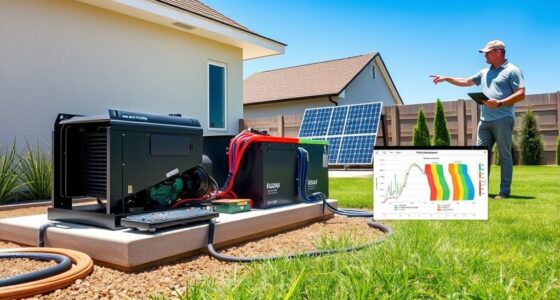
Integrating smart inverters into your home backup system allows you to optimize energy flow and improve grid interaction. They communicate with your energy storage and the grid, managing when to store or dispatch power based on real-time conditions. This helps you use more renewable energy, reduce reliance on the grid, and enhance system reliability during outages. Keep exploring to discover how smart inverters can transform your home’s energy independence.
Key Takeaways
- Smart inverters enable seamless transition between stored renewable energy and grid power during outages.
- They communicate with energy storage units for optimized charging and discharging based on real-time needs.
- Integration enhances grid stability and allows participation in demand response programs for additional benefits.
- Advanced monitoring features facilitate system diagnostics, performance tracking, and compliance with regulations.
- Overall, smart inverters improve energy independence, reliability, and efficiency in home backup systems.
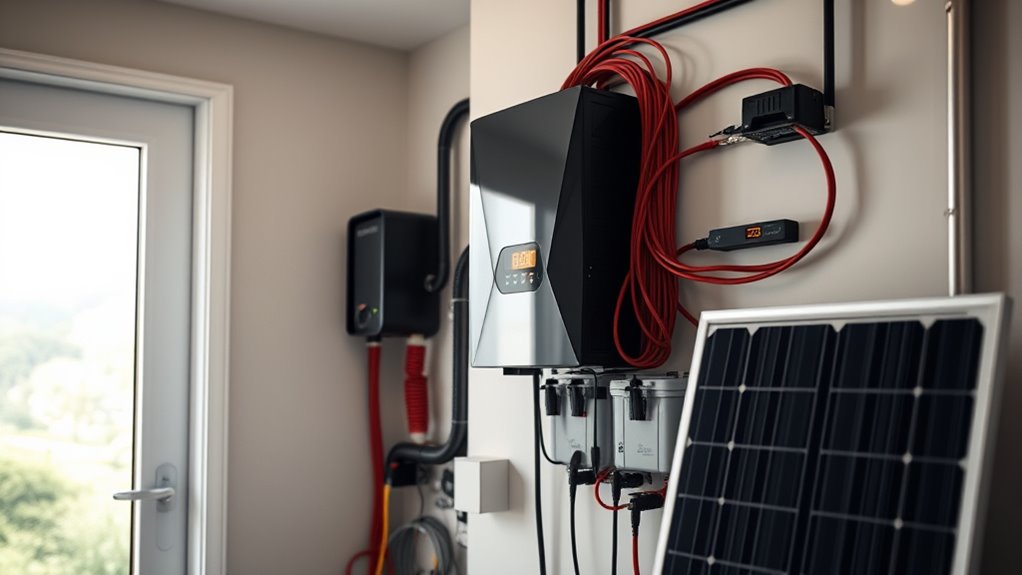
As more homeowners seek reliable backup power, integrating smart inverters into home backup systems offers a smarter, more efficient solution. These devices play a pivotal role in managing energy storage and optimizing grid interaction, guaranteeing your home remains powered during outages while maintaining safety and stability. Unlike traditional inverters, smart inverters communicate with your energy storage units and the grid, adjusting their operation based on real-time conditions. This capability allows you to maximize the use of stored energy, whether from solar panels or other sources, and reduces reliance on the grid during peak times or outages.
Smart inverters enhance energy storage management by intelligently controlling how and when energy is stored or dispatched. During periods of excess solar generation, they can direct surplus power into batteries, increasing your energy independence. Conversely, when energy demand rises or the grid is under stress, these inverters can draw from stored energy or supply power back to your home efficiently. This dynamic control helps you save money on energy bills and guarantees a more reliable power supply. They also facilitate seamless transitions between stored energy and grid power, which is essential during power outages or grid fluctuations.
Smart inverters optimize energy flow, boosting independence and ensuring reliable power during outages.
Grid interaction is another key benefit of integrating smart inverters. They maintain a two-way communication with the utility grid, enabling your system to respond to grid signals and operational commands. This interaction not only helps stabilize the grid during high demand but also allows you to participate in demand response programs, potentially earning incentives. Smart inverters can automatically disconnect from the grid in case of faults or instability, protecting your home equipment and guaranteeing safety. They can also coordinate with other distributed energy resources, creating a more resilient and interconnected energy ecosystem for your household. Additionally, the use of cookies to track visitor interactions can help optimize the delivery of relevant energy management information and updates.
Furthermore, smart inverters facilitate compliance with evolving regulations and standards. They come equipped with advanced monitoring and diagnostic features, providing you with real-time data on system performance. This transparency allows you to optimize your backup system, troubleshoot issues quickly, and guarantee everything operates at peak efficiency. By intelligently managing energy storage and grid interactions, smart inverters help you reduce carbon footprint, lower energy costs, and enhance your home’s overall energy resilience.
In essence, incorporating smart inverters into your home backup system isn’t just about keeping the lights on during a blackout; it’s about creating a smarter, more responsive energy environment. They enable you to harness renewable energy more effectively, interact safely and efficiently with the grid, and enjoy greater control over your home’s power supply. This integration represents a significant step toward a sustainable, reliable, and future-ready home energy system.
Frequently Asked Questions
Can Smart Inverters Be Integrated With Existing Backup Generators?
Yes, you can integrate smart inverters with existing backup generators, but you’ll face compatibility challenges and regulatory considerations. Not all generators are designed for smart inverter integration, so you need to verify compatibility first. Additionally, local regulations might restrict certain setups or require specific permits. You should consult a professional to guarantee seamless integration, compliance with regulations, and ideal system performance.
How Do Smart Inverters Impact Overall Home Energy Efficiency?
Smart inverters boost your home’s energy efficiency by enabling better system optimization and energy savings. They adapt to changing energy demands, improve power quality, and reduce waste by efficiently managing solar power and grid interactions. This results in lower energy bills and a more reliable, eco-friendly home. With smart inverters, you can maximize your renewable energy use and guarantee your system runs at peak performance, benefiting both your wallet and the environment.
Are There Specific Brands Recommended for Seamless Integration?
Did you know that over 80% of homeowners find seamless integration essential? For smooth setup, consider brands like SolarEdge or SMA, known for their excellent brand compatibility. These brands offer user-friendly interfaces, making system management easier. When choosing a smart inverter, prioritize those with strong compatibility and intuitive controls to guarantee hassle-free integration into your backup system. This way, you maximize efficiency and enjoy reliable energy backup during outages.
What Maintenance Is Required for Smart Inverters in Backup Systems?
You need to regularly check for firmware updates to guarantee your smart inverter runs smoothly and stays secure. Keep an eye on battery compatibility, especially when adding or replacing batteries, to avoid issues. Also, periodically inspect connections and clean any dust or debris. Proper maintenance helps maximize efficiency, prolongs inverter lifespan, and ensures reliable backup power when you need it most.
How Do Smart Inverters Handle Power Outages and Grid Fluctuations?
During power outages and grid fluctuations, your smart inverter detects changes in grid stability through its sensors. It responds instantly by adjusting power flow to maintain consistent energy supply and protect your system. This quick inverter response helps stabilize voltage and frequency, ensuring your backup system operates smoothly and safely. It’s this real-time detection and response that keeps your home powered reliably, even when the grid is unstable.
Conclusion
As you power up your home with smart inverters, imagine a quiet, seamless flow of energy, like a gentle river nourishing every corner of your sanctuary. With these advanced systems, you’re not just backup-ready; you’re embracing a future of smarter, more resilient living. Feel confident knowing that when the lights flicker, your home stays bright and steady—a beacon of innovation, quietly working behind the scenes to keep your life moving smoothly.