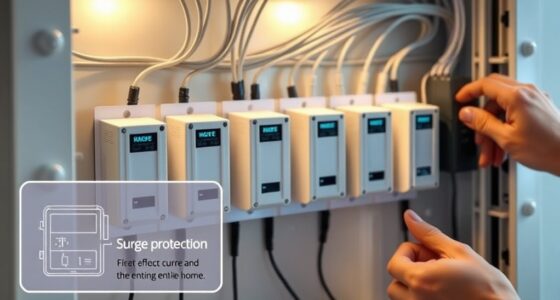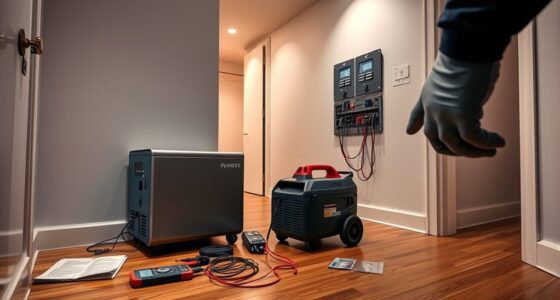

A transfer switch is a essential device that safely switches your home’s power source between utility and backup generator, either automatically or manually. It prevents dangerous back-feeding into the power lines and protects utility workers. Whether you need one depends on your backup plans and power needs. Installing a transfer switch ensures you can keep essential devices running safely and smoothly during outages. If you want to discover how it works and why it’s important, keep exploring the details.
Key Takeaways
- A transfer switch safely switches power between utility and backup generators without back-feeding into the grid.
- It ensures continuous power supply to critical devices during outages and prevents electrical hazards.
- Automatic transfer switches detect outages instantly and switch sources within seconds, reducing downtime.
- Proper installation and regular maintenance are essential for safety and compliance with electrical standards.
- You need a transfer switch if you use a generator for backup power to ensure safe and reliable operation.
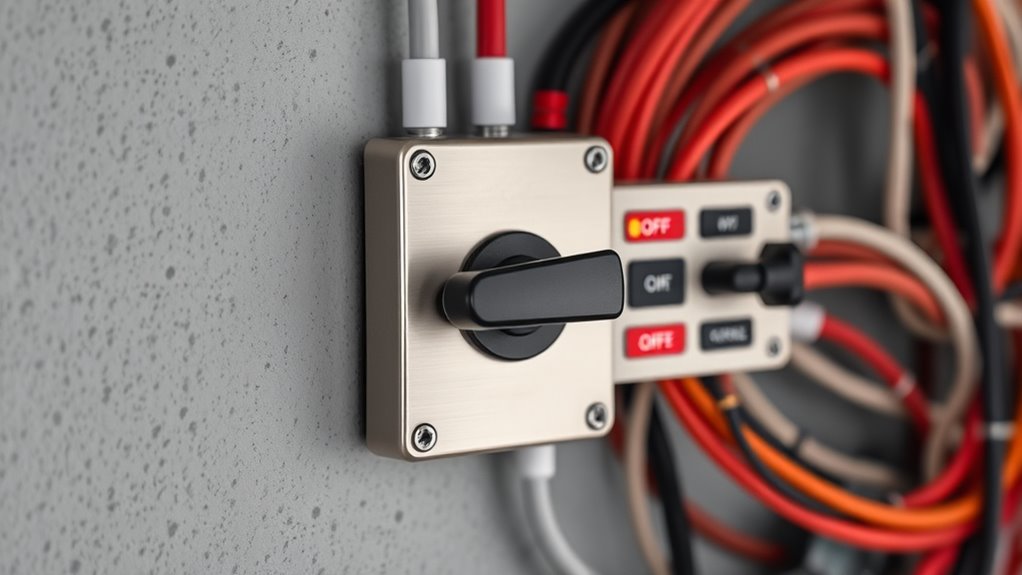
If you’re considering backup power options, a transfer switch might be just what you need to guarantee a seamless shift during outages. When the power grid fails, having backup power is essential to keep your home or business running smoothly. But simply connecting a generator directly to your electrical system can be risky and complicated. That’s where a transfer switch comes in, offering a safe and efficient way to switch between utility power and backup power sources. It ensures your generator is isolated from the main grid, preventing dangerous back-feeding that could harm utility workers or damage equipment.
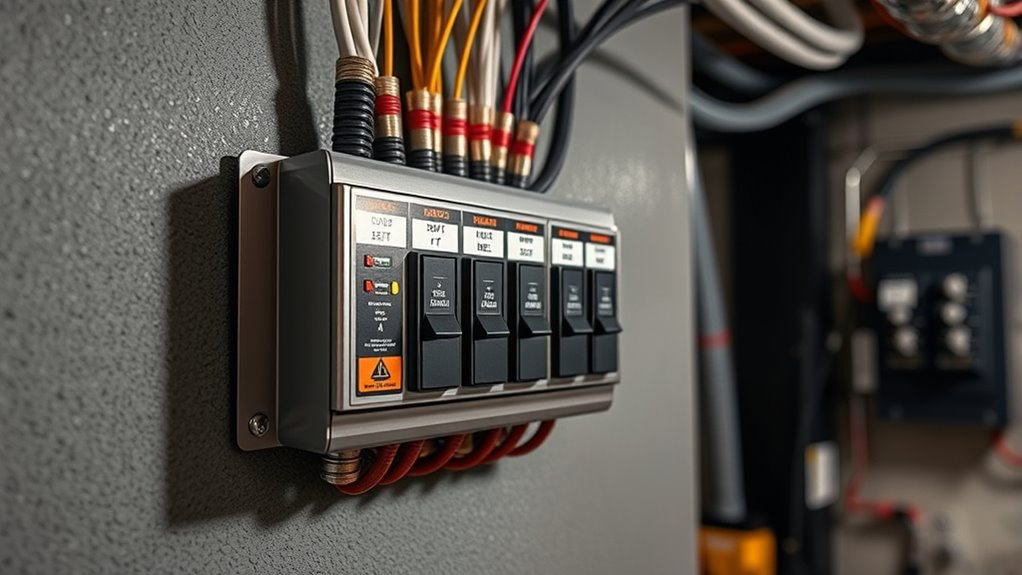
A transfer switch acts as a safety device, automatically or manually switching your electrical load from the utility to your generator when a power outage occurs. Without one, you’d have to manually unplug and reconnect appliances, which is not only inconvenient but also hazardous. Manual transfer switches require you to be physically present and attentive, increasing the risk of electrical shock or incorrect connections. Automatic transfer switches eliminate these risks by detecting outages and switching power sources seamlessly, often within seconds. This quick response minimizes downtime and keeps critical devices powered without interruption.
Automatic transfer switches detect outages and switch power seamlessly within seconds.
Safety considerations are a significant factor when deciding on a transfer switch. Installing one ensures you don’t accidentally energize the utility lines while your generator is running, which could be deadly to utility workers repairing the lines. Proper installation and maintenance are crucial to guarantee safety and peak performance. A licensed electrician should handle the installation, ensuring it complies with local electrical codes and standards. Regular testing and inspection are also recommended to confirm the switch functions correctly and that all safety features are intact.
In terms of backup power, a transfer switch provides peace of mind. It allows you to power essential appliances, heating systems, or medical devices without risking unsafe situations. It also simplifies the process of switching power sources, saving you time and effort during stressful outages. Additionally, a transfer switch can increase your generator’s efficiency by directing power only where it’s needed, reducing fuel consumption and wear on your generator. Understanding hydrogen energy and its safety protocols can further enhance your knowledge of safe energy solutions.
Ultimately, whether you need a transfer switch depends on your backup power needs and safety priorities. If you rely heavily on continuous power or have critical equipment, investing in a transfer switch is a wise choice. It enhances safety, convenience, and reliability, making the whole backup power process safer and more straightforward. So, if you’re serious about safeguarding your home or business during outages, a transfer switch is a smart addition to your backup power system.
Frequently Asked Questions
Can a Transfer Switch Be Installed Outdoors?
Yes, a transfer switch can be installed outdoors if it has a weatherproof design. You should guarantee it’s specifically rated for outdoor installation, offering protection against moisture, dust, and extreme temperatures. Proper outdoor installation involves securing the switch in a sheltered location or using an appropriately rated weatherproof enclosure. This way, your transfer switch remains functional and safe, providing reliable power transfer during outages without weather-related concerns.
How Long Does It Take to Install a Transfer Switch?
Installing a transfer switch usually takes a few hours—perfect if you’re keen to get back to binge-watching your favorite show, right? The installation process involves careful wiring and adhering to safety precautions to prevent shocks or damage. Rushing might seem tempting, but taking your time ensures everything is safe and correctly installed. So, plan for a morning or afternoon, and remember, safety always comes first—even if it’s just a switch.
Are Transfer Switches Compatible With All Generator Types?
Transfer switches are generally compatible with most generator types, but you need to verify for specific generator compatibility. Some switch types work better with portable generators, while others are designed for standby or whole-house models. Always verify the switch type and compatibility before installation to ensure safe and efficient operation. If you’re unsure, consult your generator’s manufacturer or a professional installer to select the right transfer switch for your setup.
What Is the Average Cost of a Transfer Switch?
Imagine your home’s power switchboard as a busy crossroads. The average cost of a transfer switch ranges from $200 to $1,000, depending on size and features. Installation costs can add another $100 to $300 if you hire a professional. If you’re handy, DIY installation might save money, but make certain you follow safety guidelines. Either way, this investment keeps your power flowing smoothly during outages.
Do Transfer Switches Require Regular Maintenance?
Transfer switches generally don’t require regular maintenance, but you should follow a maintenance schedule to ensure reliable operation. Periodically inspect for corrosion, loose connections, or debris, and test the switch to confirm it operates smoothly. Troubleshooting tips include checking the power source, resetting the switch if needed, and consulting the manufacturer’s guidelines. Staying proactive helps prevent issues and guarantees your transfer switch functions correctly during an outage.
Conclusion
Understanding whether you need a transfer switch is key to ensuring your home stays powered during outages. Did you know that homes with transfer switches experience 30% fewer power-related issues? If you rely on a generator, a transfer switch makes switching seamless and safe. Don’t wait until an outage hits—install one now and enjoy peace of mind. Protect your home and loved ones with this simple, effective upgrade.