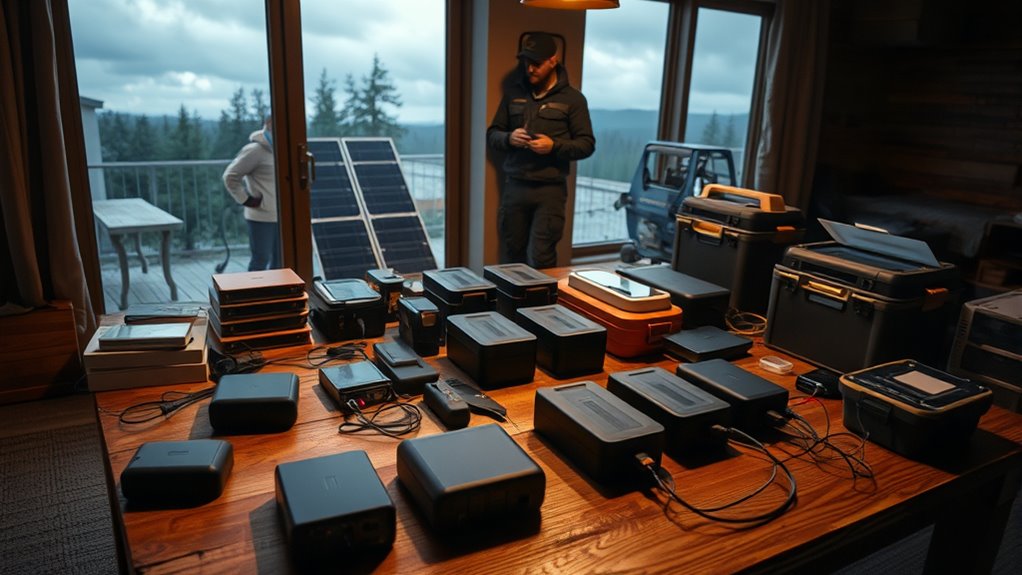

To maintain a backup plan during multi-day blackouts, you should incorporate renewable energy sources like solar panels and battery storage to keep essential devices running. Make certain you have reliable communication tools such as battery or solar-powered radios, and keep backup power banks charged ahead of time. Stock supplies, develop clear plans, and consider alternative power options like portable wind turbines or hand-crank chargers. Stay prepared and explore more strategies that can ensure your safety and comfort during extended outages.
Key Takeaways
- Develop a multi-layered energy plan combining solar panels, battery storage, and portable renewable devices.
- Maintain and regularly test backup communication tools like battery-powered radios and satellite phones.
- Stock sufficient supplies, including food, water, and essential medications, to sustain your household during extended outages.
- Establish clear emergency routines and designated meeting points to coordinate safely without grid access.
- Stay informed about weather forecasts and upgrade your preparedness plan based on evolving risks and technology options.
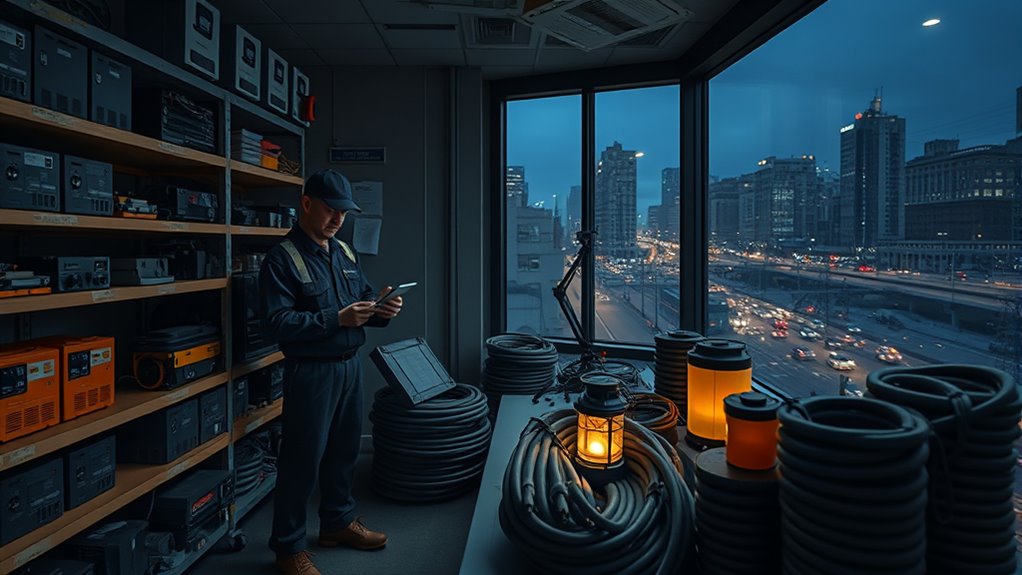
Have you ever been caught in a blackout unprepared? If so, you know how quickly your daily routines can come to a halt, leaving you feeling vulnerable and out of control. To avoid this, it’s essential to have a solid backup plan, especially for multi-day blackouts. While traditional generators can help, investing in renewable energy sources can offer a more sustainable and reliable solution. Solar panels, for example, can keep your essential devices powered without relying solely on fuel or external support. By integrating renewable energy into your backup plans, you reduce dependence on grid power and ensure a more resilient energy supply during extended outages. Incorporating battery technologies can further enhance your energy independence, providing stored power when the sun isn’t shining. Equally important is maintaining robust emergency communication. During a blackout, staying connected with loved ones, neighbors, or emergency services can make all the difference. Portable radios, especially those that operate on batteries or are solar-powered, serve as crucial tools when cell towers go down. It’s wise to have an emergency communication plan in place, including multiple methods of contact and a designated meeting spot. This ensures you can coordinate with others and receive updates even if your usual channels are unavailable. Remember, the key isn’t just having these devices but also knowing how to use them effectively when the power’s out. In addition to renewable energy and emergency communication, consider how you’ll store energy for critical needs. Battery banks or power banks can keep smartphones, radios, and small appliances running. When choosing these backup options, prioritize capacity and rechargeability, so you’re not left stranded when power is restored. Keep them charged and ready to go, especially before storm seasons or periods when blackouts are more likely. Also, think about alternative ways to generate power, like portable wind turbines or hand-crank chargers, which can be invaluable if your main energy sources fail. Preparing for a multi-day blackout involves more than just having backup devices; it’s about creating a complete plan that covers energy, communication, and essentials. By embracing renewable energy solutions and establishing reliable emergency communication methods, you’re taking proactive steps to protect yourself and your loved ones. These measures not only help you survive extended outages but also foster resilience and peace of mind. So, take the time now to assess your needs, stock up on necessary supplies, and develop a clear plan. Being prepared means you can face blackouts confidently, knowing you’ve done everything possible to stay safe and connected.

Honeywell 22kW Home Standby Generator
PrecisionPower Technology delivers best-in-class power quality with less than 5 percent total harmonic distortion for clean, smooth operation...
As an affiliate, we earn on qualifying purchases.
Frequently Asked Questions
How Often Should I Review and Update My Backup Plan?
You should review your backup plan at least once a year to guarantee it stays effective, but update frequency depends on changes in your circumstances. If you experience significant updates, like new equipment or resources, you need to update your plan promptly. Regular plan review helps identify gaps and keeps your backup strategies current, so you’re prepared for multi-day blackouts. Stay proactive and adjust your plan as needed to maintain reliability.
What Are the Best Portable Power Sources for Long-Term Outages?
For long-term outages, you should consider portable power sources like solar chargers and fuel generators. Solar chargers are eco-friendly and quiet, making them ideal for recharging devices during extended blackouts. Fuel generators provide reliable, high-output power for larger appliances and essential needs. Combining both guarantees you have sustainable solar options alongside backup fuel-powered generators, giving you versatility and peace of mind during multi-day outages.
How Can I Ensure My Communication Devices Stay Powered?
Imagine your phone’s at 1%, and the power’s out—what’s your plan? You can keep your communication devices powered by using solar chargers to harness sunlight during the day, and emergency batteries to store that power for nighttime. Regularly charge your backup batteries, and keep them accessible. This way, even in a blackout, you’ll stay connected and ready to communicate when it matters most.
Are There Specific Storage Guidelines for Backup Supplies?
You should follow specific storage guidelines for backup supplies, including keeping food in a cool, dry place away from direct sunlight, and regularly checking expiration dates. Store your backup supplies near your shelter location for quick access. Make sure your food storage guidelines include having enough non-perishable items for several days, and consider water purification methods. Properly organized, your supplies will be ready when you need them most during a multi-day blackout.
How Do I Coordinate Backup Plans With Neighbors or Community Groups?
You should start neighborhood communication early by organizing meetings or using messaging groups to discuss shared resource planning. Coordinate with neighbors to identify who has extra supplies, tools, or generators, and develop a plan to share resources effectively. Establish clear roles and responsibilities, and practice joint drills if possible. Staying connected and planning together ensures everyone’s needs are met during multi-day blackouts, creating a resilient community.
Honeywell 14kW Home Standby Generator
PrecisionPower Technology delivers best-in-class power quality with less than 5 percent total harmonic distortion for clean, smooth operation...
As an affiliate, we earn on qualifying purchases.
Conclusion
While backup plans keep you prepared for multi-day blackouts, they also remind you how fragile our reliance on technology truly is. You may have batteries and supplies, but without power, those essentials become powerless too. Embrace the contrast—your planning offers safety, yet it highlights vulnerability. Staying ready isn’t just about supplies; it’s about recognizing the delicate balance between control and chaos, ensuring you’re resilient when the unexpected strikes.

Generac Guardian 24kW Home Standby Generator - Automatic Whole House Backup Power for Storms, Emergencies, and Outages, WiFi Enabled, Runs on Natural Gas or Liquid Propane, Quiet Operation
Remote Monitoring Anywhere: With Generac 7209 24kW Mobile Link Wi-Fi connectivity, effortlessly track generator performance from anywhere. Stay...
As an affiliate, we earn on qualifying purchases.

Generac Guardian 24kW Home Standby Generator with 200 Amp Transfer Switch - Automatic Whole House Backup Power for Storms, Emergencies, and Outages, WiFi Enabled, Runs on Natural Gas or Liquid Propane
Remote Monitoring Anywhere: With Generac 7210 24kW Mobile Link Wi-Fi connectivity, effortlessly track generator performance from anywhere. Stay...
As an affiliate, we earn on qualifying purchases.