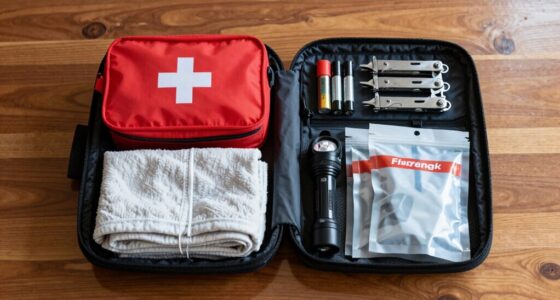

To create an emergency blackout checklist, start by gathering essential supplies like water, non-perishable food, first aid kits, and hygiene items. Include blackout-specific gear such as flashlights, batteries, and portable solar chargers to keep your devices powered. Store everything in accessible locations and make certain you know how to operate your solar-powered equipment. Regularly review and update your list to stay prepared; continue exploring ways to strengthen your emergency plan.
Key Takeaways
- Identify essential supplies such as water, non-perishable food, first aid kits, flashlights, and batteries.
- Incorporate solar power solutions like portable chargers and solar panels to keep devices operational.
- Store emergency kits in accessible locations and include blackout-specific items like lanterns and power banks.
- Develop a communication plan utilizing solar chargers and ensure all devices are compatible with alternative transportation options.
- Regularly review, practice, and update your blackout preparedness plan and supplies to ensure readiness.
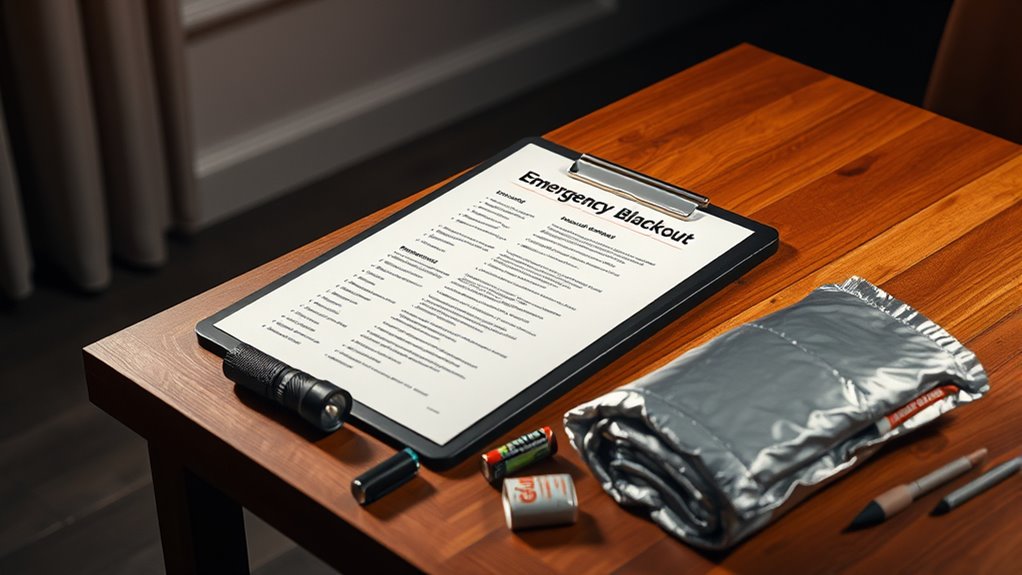
Have you ever wondered how prepared you are for a sudden blackout? It’s a question that often catches people off guard until they find themselves in the dark, stranded without power. Creating an emergency blackout checklist is your best defense against chaos and discomfort during such unexpected events. One of the most practical steps you can take is investing in solar power solutions. Solar panels and portable solar chargers can keep essential devices running when the grid fails. They’re eco-friendly, silent, and dependable, making them ideal for powering radios, flashlights, and even small appliances. Incorporating solar power into your emergency plan ensures you stay connected and informed without relying solely on traditional electricity sources.
A critical part of your blackout preparedness is assembling comprehensive emergency kits. These kits should contain essentials like bottled water, non-perishable food, first aid supplies, and personal hygiene items. But it’s equally important to include items that address specific needs during a blackout, such as flashlights, batteries, and power banks. Many emergency kits also feature multi-tools, blankets, and cash in small denominations—items that can be invaluable when access to services becomes limited. Regularly reviewing and updating your kit guarantees that everything remains functional and relevant. Remember, the goal is to be ready to sustain yourself comfortably for at least 72 hours.
Beyond just having supplies, you need to plan how you’ll use them. For instance, knowing how to operate a solar-powered charger or lantern saves valuable time when the power goes out. Make sure your emergency kits are stored in accessible locations, preferably near an exit or in multiple spots around your home. This way, you can quickly grab what you need without rummaging through clutter when seconds count. Also, consider creating a communication plan that includes charging your mobile devices using solar chargers or power banks, so you can stay in touch with loved ones or emergency services. Additionally, considering the compatibility of portable devices with Vetted electric bike conversion kits can provide alternative transportation options if needed during prolonged outages.
Frequently Asked Questions
How Often Should I Review My Blackout Checklist?
You should review your blackout checklist at least once every six months. Regular reviews help you stay on top of your maintenance schedule and guarantee your checklist remains effective. Additionally, update your checklist whenever there are changes to your equipment or procedures. This proactive approach ensures you’re prepared for emergencies, minimizes risks, and keeps your blackout plan current and reliable.
What Specific Items Are Essential for a Blackout Kit?
During a blackout, having essential supplies is vital. For example, imagine losing power during a storm; your blackout kit should include flashlights, extra batteries, and safety gear like a first aid kit. These items guarantee your safety and comfort while you wait for power to return. Make certain your kit contains essentials like water, non-perishable food, and a battery-powered radio, so you’re prepared for any emergency situation.
How Can I Ensure My Family Knows the Emergency Plan?
To guarantee your family knows the emergency plan, you should establish clear family communication strategies. Regularly hold emergency drills so everyone practices what to do during a blackout. Talk through the plan multiple times, emphasizing key steps, and make sure each family member understands their role. Keep the plan accessible, and encourage open discussions about safety. This way, your family will stay prepared and confident during an actual blackout.
What Should I Do if My Power Outage Lasts Longer Than Expected?
If your power outage lasts longer than expected, you should start your generator and guarantee it’s well-maintained to prevent issues. Use alternative lighting like battery-powered lanterns or flashlights to stay safe and visible. Keep extra fuel on hand and monitor your generator’s performance regularly. Stay informed with a battery-powered radio, and conserve resources until power is restored. Proper generator maintenance and reliable alternative lighting are key to managing extended outages effectively.
Are There Special Considerations for Pets During a Blackout?
During a blackout, prioritize pet safety by keeping their supplies like food, water, and medications readily accessible. Guarantee your pets are in a safe, comfortable space away from hazards, and never leave them in a parked car. Keep their favorite toys and blankets nearby to reduce stress. Regularly monitor their behavior and check their supplies, so you’re prepared to address their needs quickly and keep them calm throughout the outage.
Conclusion
Having an emergency blackout checklist ready can be a lifesaver. Did you know that over 85% of households experience a power outage at least once a year? By preparing now, you guarantee safety and peace of mind when the lights go out unexpectedly. Keep your emergency kit stocked, know your plan, and stay informed. Being proactive means you’re less likely to panic and more likely to handle any blackout confidently. Stay prepared—you’ll thank yourself later.