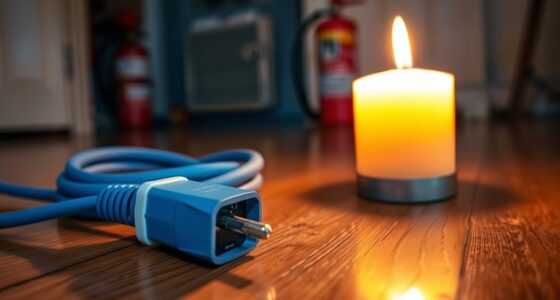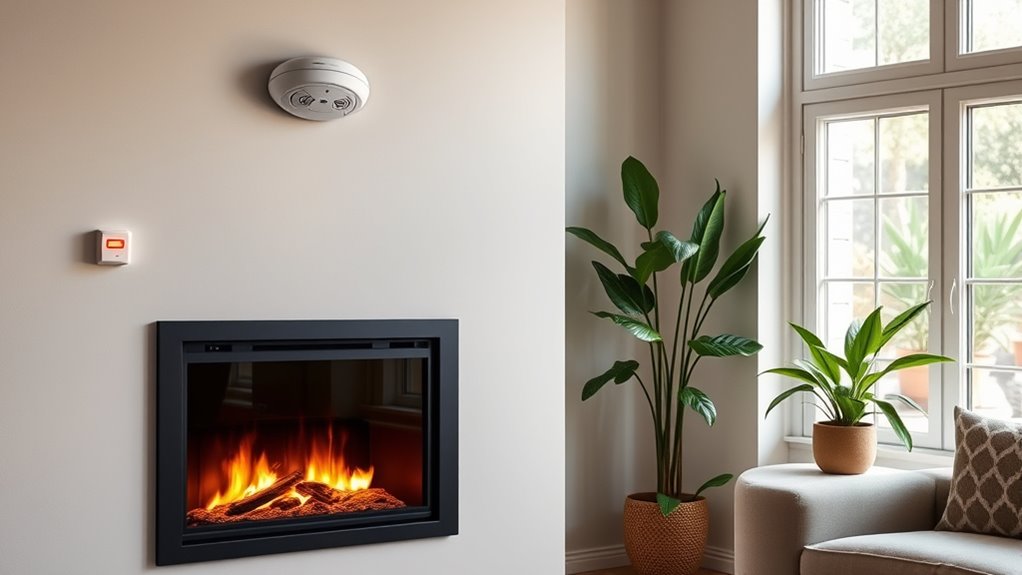

To prevent indoor carbon monoxide buildup, you should install and regularly test CO detectors in key areas, like bedrooms and near appliances. Make sure to maintain fuel-burning appliances such as furnaces, water heaters, and stoves, checking for leaks or corrosion. Use appliances only as intended and ensure proper ventilation when they’re in use. Staying vigilant with these safety measures helps protect your home, and if you continue exploring, you’ll discover even more ways to keep your household safe.
Key Takeaways
- Install and regularly test CO detectors in bedrooms and near fuel-burning appliances.
- Schedule annual inspections of furnaces, water heaters, and stoves by qualified technicians.
- Use appliances only as intended, avoiding indoor use of charcoal grills or portable stoves.
- Ensure proper ventilation when operating fuel-burning appliances to disperse gases effectively.
- Address any signs of leaks, soot, or corrosion immediately to prevent CO buildup.

Carbon monoxide (CO) is a colorless, odorless gas that can pose serious health risks if it builds up indoors. Because you can’t see or smell it, the danger lies in its silent, invisible presence. To protect yourself and your loved ones, it’s vital to prioritize alarm safety and appliance maintenance. Installing carbon monoxide detectors in key areas of your home, such as bedrooms and near fuel-burning appliances, is your first line of defense. These alarms can alert you immediately if CO levels become dangerous, giving you enough time to evacuate and seek fresh air. Remember, it’s not enough to just install detectors; you need to test them regularly to verify they’re functioning properly. Replace their batteries at least once a year, or more often if the device indicates low power. An alarm that doesn’t work could give you a false sense of security, which can be deadly in an emergency.
Maintaining your appliances is equally vital in preventing CO buildup. Gas furnaces, water heaters, stoves, and fireplaces are common sources of CO leaks if not properly cared for. Schedule annual inspections with qualified technicians who can check for leaks, corrosion, or other issues that might cause the appliance to malfunction. Regular maintenance not only extends the lifespan of your appliances but also guarantees they operate efficiently and safely. For example, a clogged vent or dirty burner can produce excess CO, so keep vents clear and follow manufacturer instructions for cleaning. Never ignore strange smells, unusual soot, or signs of corrosion around appliances; these are red flags that need immediate professional attention. Additionally, ensuring proper ventilation in your home can help disperse any accumulating gases and reduce the risk of dangerous buildup.
Additionally, always use appliances as intended and avoid makeshift fixes or modifications. Never use a charcoal grill or portable stove indoors, as these can produce dangerous levels of CO quickly. When using gas-powered tools or generators outside, keep them far from open windows, doors, or vents that could allow CO to seep inside. Good ventilation is essential — ensure your home is well-ventilated when running fuel-burning appliances. Be vigilant about appliance safety and maintenance, and you greatly reduce the risk of dangerous CO buildup. Combining these proactive steps with functioning alarms creates a safety net, giving you peace of mind knowing that your home is protected from this silent threat.

Honeywell 22kW Home Standby Generator
PrecisionPower Technology delivers best-in-class power quality with less than 5 percent total harmonic distortion for clean, smooth operation...
As an affiliate, we earn on qualifying purchases.
Frequently Asked Questions
Can Carbon Monoxide Cause Long-Term Health Issues?
Yes, carbon monoxide can cause long-term health issues if you’re exposed to it regularly or at high levels. Poor indoor air quality from CO buildup may lead to neurological problems, memory loss, or heart issues over time. You should guarantee proper ventilation and maintain appliances to prevent CO accumulation. Protecting indoor air quality is vital to avoid these serious long-term effects and keep yourself safe.
Are Certain Household Appliances More Likely to Produce CO?
Certain household appliances, like furnaces, water heaters, and gas stoves, are more likely to produce CO if not properly maintained. You should regularly check and service these appliances to prevent leaks. Improving ventilation, such as installing exhaust fans and ensuring proper airflow, also helps reduce CO buildup. By maintaining appliances and enhancing ventilation, you lower your risk of dangerous CO accumulation inside your home.
How Often Should I Test My Indoor Air for CO?
You should test your indoor air for CO at least once a month to guarantee safe air quality monitoring. Coincidentally, this regular testing helps catch leaks early before they become dangerous. If you use gas appliances or have a coal or wood stove, increase testing frequency to biweekly or monthly. Staying vigilant ensures your home’s air remains safe, and you avoid the hidden dangers of carbon monoxide buildup.
Do Open Windows Effectively Prevent CO Buildup?
Opening windows can help ventilate your space, but it doesn’t fully prevent CO buildup. Proper ventilation strategies include using cross-ventilation by placing windows on opposite sides of rooms. This promotes better air exchange. Relying solely on open windows isn’t enough; guarantee your heating appliances are maintained and installed correctly. Combining good window placement with ventilation strategies provides the best protection against dangerous carbon monoxide accumulation indoors.
What Are the Signs of CO Poisoning in Children?
Imagine it’s the 21st century, and your child suddenly shows flu-like symptoms—headache, dizziness, nausea, or confusion. These are signs of CO poisoning in children. You must quickly identify symptoms and act fast. If you notice these, immediately call emergency response, move your child outdoors, and seek medical help. Early symptom identification can save lives, so stay alert and never ignore these warning signs.
Honeywell 14kW Home Standby Generator
PrecisionPower Technology delivers best-in-class power quality with less than 5 percent total harmonic distortion for clean, smooth operation...
As an affiliate, we earn on qualifying purchases.
Conclusion
To keep your home safe, regularly maintain your appliances and install carbon monoxide detectors. Remember, over 400 people die annually from CO poisoning in the U.S., often caused by appliances or vehicles running indoors. By staying vigilant and proactive, you can prevent dangerous buildup and protect your loved ones. Don’t wait for symptoms—act now to ensure your home remains a safe haven free from carbon monoxide risks.

20kW Standby Generator with 200amp TS
Automatically restore power in just 10 seconds with the premium power of a Kohler generator that delivers advanced...
As an affiliate, we earn on qualifying purchases.

Champion Power Equipment 201222 22 kW aXis Home Standby Generator with 200A Whole House Switch
Up to 20% more fuel efficient than leading competitors, this 22-kilowatt generator provides 22,000 watts of continuous power...
As an affiliate, we earn on qualifying purchases.