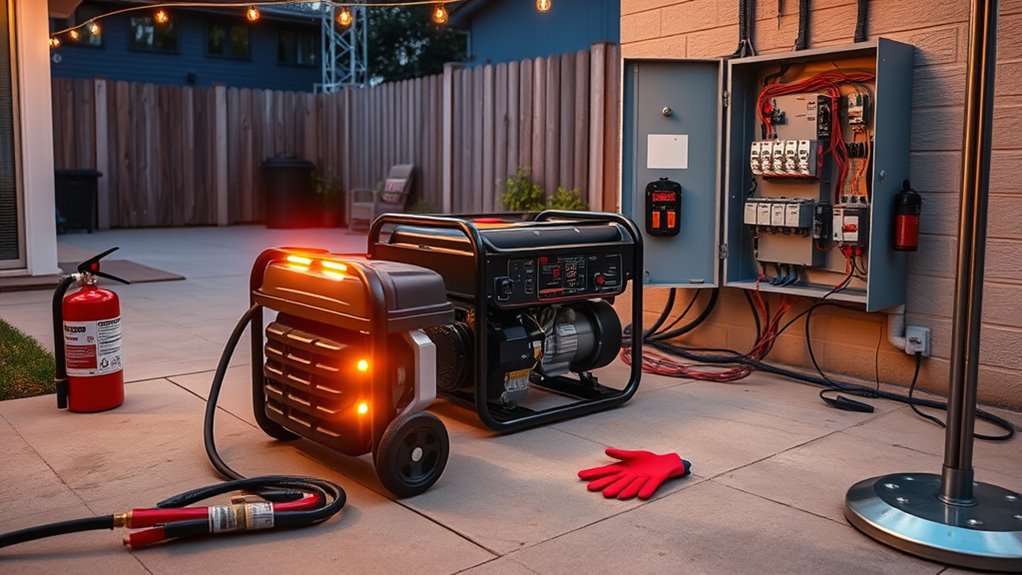

To prevent electrical fires when using a generator, make certain it’s properly grounded by following the manufacturer’s instructions and using the correct grounding wires. Regularly inspect all connections and wiring for wear or damage, and keep the generator in a well-ventilated, stable area away from flammable materials. Avoid modifying safety features or using damaged extension cords. Staying vigilant with maintenance and safety checks is key—continue exploring how to keep your setup safe and fire-free.
Key Takeaways
- Always ensure proper grounding of the generator according to manufacturer instructions.
- Regularly inspect electrical cords, connections, and grounding components for wear or damage.
- Use only properly rated extension cords and outlets suitable for your appliances.
- Place the generator in a well-ventilated, stable area away from flammable materials.
- Follow safety guidelines, avoid modifying safety features, and perform routine safety checks.
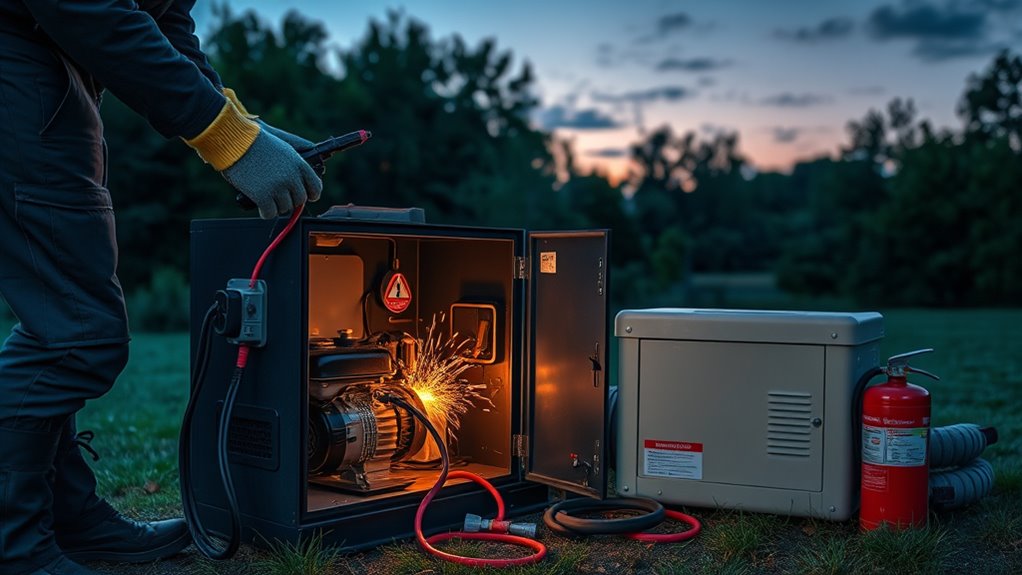
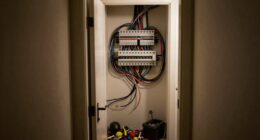
When using a generator, electrical fire prevention is essential to keep your home and loved ones safe. One of the most effective ways to do this is by understanding and applying proper grounding techniques. Proper grounding ensures that any stray electrical current is safely directed into the earth, reducing the risk of sparks or short circuits that could ignite a fire. Always make sure your generator is connected to a grounded outlet or has a grounding wire properly attached. This simple step not only enhances safety but also helps prevent electrical overloads that can cause fires. When you use your generator, double-check that all grounding connections are secure and in accordance with the manufacturer’s instructions. Proper grounding acts as a safeguard against electrical faults, which are a common cause of generator-related fires. Additionally, incorporating mindfulness techniques such as routine safety checks and attentive operation can further reduce risks and promote a safer environment. Regular maintenance is also essential. Inspect your generator for signs of wear or damage, especially around wiring and connections. Keep the generator in a well-ventilated area to prevent overheating and ensure it’s on a stable, level surface. Avoid extension cords that are frayed or damaged, as they can cause shorts or sparks. When plugging in appliances, use properly rated cords and outlets designed for generator use. Never bypass safety features or attempt to modify your generator, as doing so can compromise grounding and overload protections, increasing fire risk.

Honeywell 22kW Home Standby Generator
PrecisionPower Technology delivers best-in-class power quality with less than 5 percent total harmonic distortion for clean, smooth operation...
As an affiliate, we earn on qualifying purchases.
Frequently Asked Questions
How Often Should I Inspect My Generator for Fire Hazards?
You should inspect your generator for fire hazards at least every three months, following a regular maintenance schedule. During each inspection, check for frayed wires, leaks, or debris buildup that could spark a fire. If you use your generator heavily or in harsh conditions, increase inspection frequency to monthly. Regular inspections help catch potential hazards early, ensuring safe operation and reducing the risk of electrical fires.
Can Using Extension Cords Increase Fire Risk During Generator Operation?
Using extension cords can definitely crank up your fire risk during generator use—imagine turning a tiny spark into a blazing disaster. To stay safe, prioritize extension cord safety and verify your cords are compatible with your generator. Avoid overloading them, check for damage, and never substitute proper generator cords. Remember, a small oversight with extension cords can lead to big, costly fires—so play it safe and stay alert.
What Are the Signs of an Electrical Overload Causing a Fire?
You’ll notice electrical sparks or smoke, which indicate an overload causing a fire. Circuit tripping frequently is another sign, as the system tries to prevent damage. If you see sparks, smell burning, or the circuit breaker trips repeatedly, stop using the equipment immediately. These signs signal that your electrical system is overloaded and needs to be checked to prevent a fire hazard.
Is It Safe to Store Fuel Near My Generator?
It’s not safe to store fuel near your generator. Fuel storage should be kept in a cool, well-ventilated area away from heat sources, sparks, and open flames. Follow safety precautions by using approved containers and ensuring proper labeling. Keep a safe distance of at least 10 feet from the generator to prevent fire hazards. Always store fuel outdoors, away from living spaces, to reduce the risk of accidents.
How Do I Properly Shut Down My Generator After Use?
You turn off your generator by following proper shutdown procedures, stopping it smoothly, allowing it to cool, and disconnecting the power. You then perform regular generator maintenance, like checking oil levels and inspecting parts to guarantee safety and longevity. This routine helps prevent electrical fires and keeps your generator running efficiently. Always consult your user manual for specific instructions, and never neglect proper shutdown practices to protect yourself and your property.

Joinfworld Power Distribution Box,50A 125V/250V NEMA SS2-50 CS6375 Inlet, 30A Circuit Breaker, Individually Controllable Sockets, Heavy - Duty Waterproof Enclosure with Cooling Fan
UL-Certified - The power distribution box is UL-certified, featuring 1 50A socket, 5 NEMA 5-20 GFCI sockets, NEMA...
As an affiliate, we earn on qualifying purchases.
Conclusion
By following these safety tips, you can keep electrical fires at bay and avoid getting burned. Always check your generator and connections, keep it dry, and don’t overload circuits. Remember, it’s better to be safe than sorry—don’t let a small oversight turn into a big disaster. Stay vigilant and proactive; after all, an ounce of prevention is worth a pound of cure. Keep safety first, and enjoy worry-free power during outages.

Power Assemblies Power Distribution Box with 50A 125/250V CS6375 Inlet, 50A 125/250V CS6369 Outlet, & 6 20A 125V Duplex GFCI Receptacles
High-Performance Power Distribution Box: Includes (1) 50A CS6375 twist-lock inlet, (1) 50A CS6375 outlet, and (6) 20A GFCI-protected...
As an affiliate, we earn on qualifying purchases.

GXELZK Temporary Distribution Box, It has Both 50A and 30A inlets, six 120V CFGI duplexes, one L14-30R Outlet, one L6-30R, and one TT-30R,Safe and Reliable Power on Any Construction site (Yellow)
The temporary socket distribution box is equipped with ETL-certified L6-30R sockets and L14-30R sockets on one side, and...
As an affiliate, we earn on qualifying purchases.