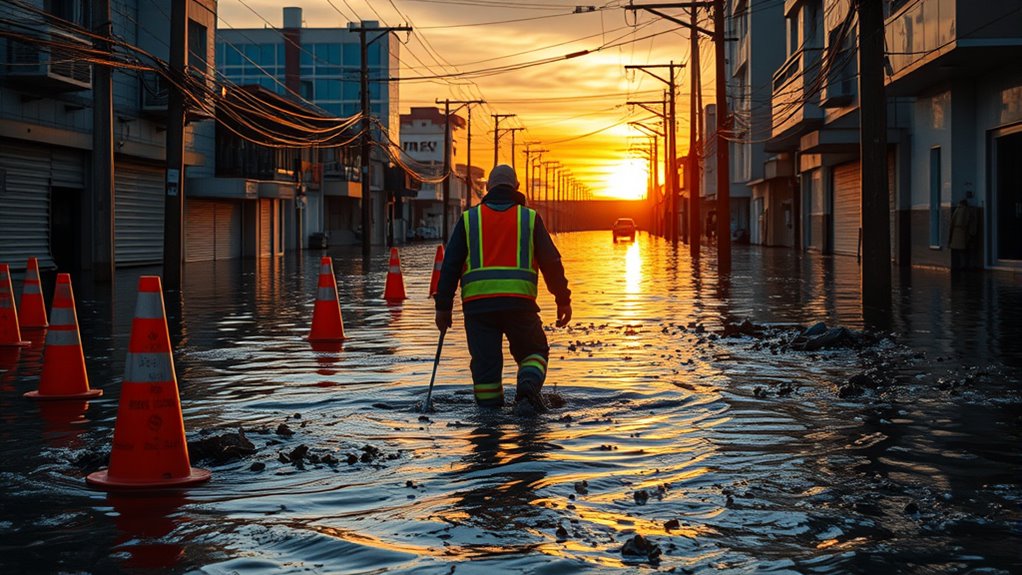

To avoid electrocution risks in flooded areas, always turn off the main power before approaching. Avoid using water-damaged appliances or outlets and keep electrical devices away from water. Install GFCIs in vulnerable areas to cut off power quickly during faults. Never attempt repairs until a qualified electrician inspects and tests damaged wiring and equipment. Staying cautious and following safety protocols can prevent accidents—continue to learn more about protecting yourself in flood situations.
Key Takeaways
- Turn off the main power before entering flooded areas to prevent electrical shocks.
- Avoid contact with water, outlets, or appliances until they are inspected and deemed safe.
- Install and test GFCI outlets in flood-prone zones for added protection against electrocution.
- Have qualified electricians inspect and repair damaged electrical systems before restoring power.
- Keep electrical devices and cords away from water and do not operate submerged or wet equipment.

Electrocution hazards can pose serious risks if you’re not careful around electrical equipment and wiring. When flooding occurs, water can easily come into contact with electrical outlets, appliances, and wiring, creating a dangerous situation. To protect yourself and others, it’s vital to prioritize ground fault prevention and follow key electrical safety tips. Water is an excellent conductor of electricity, so any exposure increases the risk of electric shock. Even if an outlet or device appears dry, residual moisture or hidden damage can make it unsafe. Always assume that flooded electrical equipment is hazardous until properly inspected and tested by a qualified electrician.
Flooded electrical equipment is hazardous until inspected and tested by a qualified electrician.
Before attempting any cleanup or repair work, turn off the main power supply to the affected area. Do not rely on circuit breakers alone, especially if water has infiltrated the wiring or outlets. Instead, disconnect the power at the source to prevent accidental electrocution. Once the power is off, you should inspect the scene carefully. Use a non-contact voltage tester to verify that circuits are de-energized before touching anything. Remember, water can cause short circuits, which may still pose a risk even after power is turned off, so exercise caution.
Ground fault prevention plays an essential role in electrical safety during floods. Ground Fault Circuit Interrupters (GFCIs) are designed to detect imbalance in electrical current and shut off power immediately if a ground fault occurs. Installing GFCIs in flood-prone areas like basements, garages, and outdoor outlets can considerably reduce the risk of electrocution. If your existing outlets aren’t equipped with GFCIs, consider upgrading them. After flooding, any GFCI outlets should be replaced or tested by an electrician before reusing. This proactive measure offers an added layer of protection, especially in environments where water intrusion is common. Understanding electrical safety principles is crucial in preventing accidents and injuries during such incidents.
Practicing electrical safety tips also includes keeping electrical devices and cords away from water. Never touch or attempt to operate appliances that have been submerged or exposed to floodwaters. If you suspect damage, have a professional evaluate the equipment before reconnecting it to power. Additionally, avoid using extension cords or portable power strips in flooded areas, as they can become hazardous. If you need to restore power, ensure the area is thoroughly dried, and all electrical components are inspected for damage. Remember, water exposure can compromise insulation and internal wiring, increasing the risk of future faults.

LEONLITE 28W LED Security Light with GFCI Outlets, Motion Sensor & Dusk to Dawn Flood Lights Outdoor, Adjustable 2-Head, Wet Location, 5000K Daylight, ETL Listed, Bronze
Dual Outlet Convenience: Power your outdoor tools with ease using the two built-in GFCI outlets. Whether you're using…
As an affiliate, we earn on qualifying purchases.
As an affiliate, we earn on qualifying purchases.
Frequently Asked Questions
How Can I Identify Hidden Electrical Hazards Underwater?
You can identify hidden electrical hazards underwater by checking for signs of damaged electrical insulation on submerged wires or equipment. Use a ground voltage tester to detect any stray voltage in the water, which indicates a potential hazard. Always assume electrical issues exist until proven safe, and avoid touching or disturbing submerged electrical sources. Stay alert for unusual currents or buzzing sounds, and consult professionals if you’re unsure.
What Safety Gear Is Essential for Rescue Operations in Flooded Areas?
You need essential safety gear like sturdy personal protective equipment—rubber gloves, boots, and a waterproof helmet—to shield yourself from hidden electrical hazards. Don’t forget reliable communication devices to stay connected with your team, ensuring quick responses to emergencies. This gear acts as your shield against danger, keeping you safe while you navigate flooded areas. Always double-check your equipment before starting rescue operations to avoid surprises and stay protected.
Are There Specific Signs Indicating Electrical Danger in Floodwaters?
You should look for electrical warning signs like flickering lights, sparks, or a strange tingling sensation when touching objects in floodwaters. These floodwater electrical risks are critical indicators of danger. If you notice any of these signs, stay away immediately and avoid contact with the water. Always assume floodwaters contain hidden electrical hazards until authorities confirm it’s safe. Your quick response can prevent serious injury or electrocution.
How Often Should Electrical Systems Be Inspected After a Flood?
Think of your electrical systems like a garden that needs constant tending. You should inspect them immediately after a flood, then follow a regular maintenance schedule—at least once every three to six months—until you’re confident they’re dry and safe. This routine guarantees hidden damage doesn’t turn into danger. Staying vigilant with these inspections keeps your home safe, preventing electrical hazards from lurking beneath the surface once waters recede.
What Are the Legal Responsibilities of Utility Companies During Floods?
Utility companies are legally responsible for following flood response protocols to ensure public safety. They must promptly shut off power, assess utility infrastructure, and communicate risks to residents, minimizing utility company liabilities. During floods, your utility provider’s adherence to these protocols helps prevent accidents and electrocution hazards. By actively managing their response, they protect both themselves and the community, fulfilling their legal obligations effectively.

KAIWEETS Voltage Tester/Non-Contact Voltage Tester with Signal Percentage, Dual Range AC 12V/70V-1000V, Live/Null Wire Tester, Electrical Tester with LCD Display, Buzzer Alarm, Wire Breakpoint Finder
SAFETY FIRST: It will send out multiple alarms through sound and light. When the voltage is detected, the…
As an affiliate, we earn on qualifying purchases.
As an affiliate, we earn on qualifying purchases.
Conclusion
Remember, nearly 50% of electrocution deaths occur in flooded areas, emphasizing how dangerous standing water can be. Always stay away from downed power lines and avoid contact with floodwaters, especially if you suspect electrical hazards. If you see fallen wires or sparking equipment, keep everyone away and report it immediately. Staying alert and cautious can save your life—don’t underestimate the risks of electrical hazards during floods. Your safety depends on it.

ELEGRP GFCI Outlet 15 Amp, Self-Test GFI Electrical Outlet with Thinner Design, TR Tamper Resistant GFCI Receptacle, Ground Fault Circuit Interrupters with Wall Plate, UL Listed, Matte White, 1 Pack
✅【Innovative Dual Protection System】Features twin solenoid and double silicon controlled rectifier (SCR), ensuring an always-on GFCI protection to…
As an affiliate, we earn on qualifying purchases.
As an affiliate, we earn on qualifying purchases.

Intermatic WP3100C Weatherproof Electrical Outlet Cover – Extreme Temperature Resistance, Heavy-Duty Construction, Versatile Design & Multi-Configurable, Easy Install, Secure Fit for Outdoor in-Use
WEATHERPROOF – Meets UL Type 3R outdoor enclosure standards and complies with 2020 NEC Article 314.15 for damp…
As an affiliate, we earn on qualifying purchases.
As an affiliate, we earn on qualifying purchases.