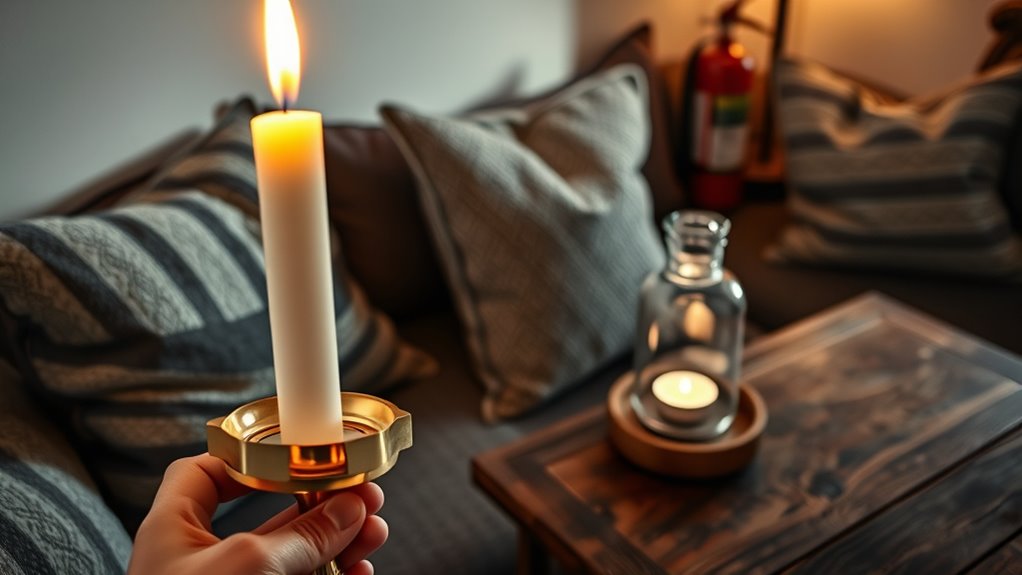

To stay safe with candles and open flames, always place them on stable, heat-resistant surfaces, away from curtains, paper, and children. Never leave them unattended, and blow out candles before leaving the room or sleeping. Regularly check your smoke alarms and keep a fire extinguisher nearby in case of emergencies. Using these precautions can greatly reduce fire risks, and more tips await if you continue exploring fire safety practices.
Key Takeaways
- Place candles on stable, heat-resistant surfaces away from flammable objects and drafts.
- Never leave open flames unattended or when sleeping; extinguish candles before leaving the room.
- Keep candles out of reach of children and pets to prevent accidents.
- Use flameless LED candles as a safer alternative to open flames.
- Ensure proper fire safety planning, including escape routes and regular fire drills.
Candle use and open flames can create a warm, inviting atmosphere, but they also pose substantial fire risks if not handled carefully. To protect yourself and your home, you need to be proactive about safety measures. One of the most effective steps is ensuring your fire extinguisher is properly placed. Keep it in an accessible location, ideally near the main living areas but away from potential fire sources like candles or open flames. This way, if a fire does occur, you can respond quickly without fumbling for the extinguisher. Regularly check that your fire extinguisher is fully charged and in good working condition, and familiarize yourself with its operation. It might seem simple, but knowing how to use it can make a critical difference during an emergency.
Ensure your fire extinguisher is accessible, charged, and ready—crucial for quick response during fire emergencies.
Another essential safety practice involves smoke alarm maintenance. Smoke alarms are your first line of defense against fires, and their proper functioning is non-negotiable. Test your alarms monthly to confirm they’re operational—most models have a test button to verify they’re working. Replace batteries at least once a year, or immediately if you hear a low-battery chirp. Consider upgrading to smoke alarms with long-life lithium batteries or interconnected units that alert the entire home if one detects smoke. This interconnected system guarantees you’re alerted no matter where the fire starts, providing you with precious extra seconds to respond. Additionally, choosing fire-resistant materials for curtains and furniture can help slow down the spread of flames and buy you valuable time in an emergency.
When using candles or open flames, always place them on stable, heat-resistant surfaces, away from curtains, paper, or other combustibles. Never leave a burning candle unattended, especially when you’re leaving the room or going to sleep. Blow out candles before leaving or sleeping, and consider using flameless LED candles as a safer alternative. Keep candles out of reach of children and pets, and avoid placing them in drafty areas where flames could flicker or be knocked over.
In addition to proper placement and maintenance, develop a fire safety plan with your household. Know two ways out of each room and establish a designated meeting point outside. Practice fire drills regularly so everyone knows what to do if a fire occurs. Combining these safety protocols—smart fire extinguisher placement, diligent smoke alarm maintenance, and cautious candle use—can considerably reduce the risk of fire and help protect your loved ones and home from preventable tragedies.
Frequently Asked Questions
Can Candles Be Safely Used Outdoors in Windy Conditions?
You shouldn’t use candles outdoors in windy conditions because the wind can easily blow out the flame or cause it to ignite nearby objects, creating a fire hazard. For outdoor candle safety, always opt for wind-resistant options like lanterns or hurricane lamps. Keep candles away from trees, bushes, and other flammable materials, and never leave them unattended. These precautions help prevent accidents and guarantee safe candle use outdoors.
What Are the Best Types of Candles for Indoor Safety?
Imagine a cozy room softly lit by flameless candles. The best types for indoor safety feature flame containment and are made from sturdy, non-flammable materials like glass or metal. Battery-operated LED candles mimic real flames without the risk of fire. They’re cool to the touch, won’t tip over easily, and eliminate the danger of open flames, making your space safer while maintaining a warm, inviting glow.
How Should I Extinguish a Candle Safely?
You should use proper candle snuffing techniques to extinguish a candle safely. Gently place a candle snuffer over the flame, cutting off oxygen and preventing smoke. Avoid blowing out the candle, as this can cause splattering or accidental fires. Make certain the wick is completely out and the wax is cool before leaving the area. Proper candle snuffing minimizes hazards and keeps your space safe from accidental fires.
Are There Fire-Resistant Candle Holders Recommended for Safety?
Yes, you should use fire-resistant holders or safety-approved containers for candles. These holders are specially designed to withstand heat and prevent accidental fires. Look for ones made from non-flammable materials like glass, ceramic, or metal. Always guarantee the holder is stable and large enough to catch drips. Using these fire-resistant holders helps you enjoy candles safely and reduces the risk of fire hazards.
What Should I Do if a Fire Starts From an Open Flame?
If a fire starts from an open flame, act quickly like a firefighter. First, grab your fire extinguisher and aim it at the base of the flames to put it out. Then, follow your emergency evacuation plan to get everyone to safety. Stay calm, avoid using water on a grease fire, and call emergency services if needed. Being prepared with fire extinguisher readiness can make all the difference.
Conclusion
Remember, your safety is the brightest flame in preventing fires. Always stay vigilant when using candles or open flames—never leave them unattended, and keep flammable objects far away. A small mistake can turn a cozy glow into a raging inferno in seconds, threatening your home and loved ones. By practicing these simple precautions, you’ll keep your space safe and warm without risking a disaster that could consume everything in its path. Stay alert, stay safe.