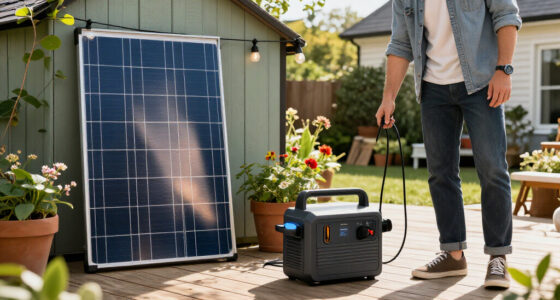
The best solar generator kits for home depend on whether you need a few hours of backup for essentials or a larger off-grid system. My best overall pick is the ECO-WORTHY 10 kW Off-Grid Solar Power Kit with a 16.1 kWh battery, which pairs substantial storage with a high-output system. For a more manageable home backup setup, the BLUETTI Elite 300 stands out for its larger portable battery, while the Jackery Solar Generator 1000 v2 suits lighter, simpler needs. The main tradeoff is between whole-home capability and the cost, complexity, and installation demands of a fixed system versus the portability and shorter runtime of a power station. Read on for the full comparison, buying advice, and recommendations by household use.

Get backup power and energy gear delivered free with Prime
- Fast, free delivery on millions of items
- Prime Video, Amazon Music and more included
- Member-only deals all year
Complete the kit


Key Takeaways
- Whole-home ambitions call for a different class of kit: the ECO-WORTHY 10 kW systems offer far more potential output and storage than portable power stations, but need more planning and installation.
- Battery capacity and panel wattage solve different problems: a larger battery stores more energy for later, while more solar input can replenish it faster when sunlight is available.
- The BLUETTI Elite 300 is a useful middle ground: its 3,014.4Wh LiFePO4 battery offers more stored energy than the 1,024Wh Jackery 1000 v2, without moving to a fixed off-grid system.
- Portable kits trade household coverage for easy handling: the ZeroKor, Jackery, and BLUETTI Elite 100 are better matched to selected devices and short outages than running multiple household circuits.
- System scale alone does not determine fit: the ECO-WORTHY 5 kW kit, the wind-and-solar Giosolar kit, and the larger ECO-WORTHY 10 kW options address different needs, so load planning matters more than choosing the biggest headline number.
| ECO-WORTHY 10 kW Off-Grid Solar System Kit with 9.36 kWh Daily Output |  | Best Overall for a Balanced Off-Grid Home System | Solar array capacity: 2,340 W | Panels: 12 × 195 W N-Type bifacial | Stated daily output: Up to 9.36 kWh with four hours of full sunlight | VIEW LATEST PRICE | See Our Full Breakdown |
| ECO-WORTHY 10 kW Off-Grid Solar Power Kit with 2,950 W Panels and 16.1 kWh Battery |  | Best for Battery Reserve and Expansion | Solar array capacity: 2,950 W | Panels: 5 × 590 W N-type bifacial dual-glass panels | Battery: 48 V, 314 Ah LiFePO₄ | VIEW LATEST PRICE | See Our Full Breakdown |
| BLUETTI Elite 200 V2 Solar Generator with Two 200W Solar Panels, 2080Wh |  | Best Compact Solar Generator for Essential Loads | Battery capacity: 2,080 Wh | Battery chemistry: LiFePO₄ | Continuous AC output: 2,600 W | VIEW LATEST PRICE | See Our Full Breakdown |
| Jackery Solar Generator 1000 v2 with 100W Solar Panel |  | Best Lightweight Backup for Short Outages | Battery capacity: 1,024 Wh | Battery chemistry: LiFePO₄ | AC output: 1,500 W | VIEW LATEST PRICE | See Our Full Breakdown |
| ECO-WORTHY 10 kW Off-Grid Solar System Kit with Split-Phase Inverter, Batteries, and Solar Panels |  | Best for Maximum Home Storage | Inverter output: 10,000 W continuous; 20,000 W peak | AC output: 120 V / 240 V split phase | Solar array capacity: 5,310 W | VIEW LATEST PRICE | See Our Full Breakdown |
| ZeroKor 300W Portable Power Station with 60W Solar Panel |  | Best for Basic Device Backup | Power station output: 300W | Solar panel: 60W monocrystalline | Panel conversion efficiency: 20.5% | VIEW LATEST PRICE | See Our Full Breakdown |
| Jackery Solar Generator 1000 v2 with 200W Solar Panel, 1024Wh LiFePO4 Battery |  | Best for Portable Home Essentials | Battery capacity: 1,024Wh | Battery type: LiFePO4 | AC output: 1,500W | VIEW LATEST PRICE | See Our Full Breakdown |
| Anker SOLIX C1000 Gen 2 Portable Power Station with 200W Solar Panel |  | Best for Fast-Recharging Backup | Battery capacity: 1,024Wh | Battery type: LiFePO4 | Output power: 2,000W | VIEW LATEST PRICE | See Our Full Breakdown |
| Anker SOLIX C2000 Gen 2 Portable Power Station with 400W Bifacial Solar Panel, 2,048Wh |  | Best Expandable Mid-Size Home Backup | Battery capacity: 2,048Wh | Battery chemistry: LiFePO4 | Peak output: 4,000W | VIEW LATEST PRICE | See Our Full Breakdown |
| BLUETTI Elite 300 Solar Generator with Two 200W Solar Panels, 3014.4Wh LiFePO4 Battery |  | Best for Longer Home Backup | Battery capacity: 3,014.4Wh | Battery chemistry: LiFePO4 | Battery cycle life: 6,000+ cycles | VIEW LATEST PRICE | See Our Full Breakdown |
| EF ECOFLOW DELTA Pro Portable Power Station, 3600Wh, 3600W AC Output | 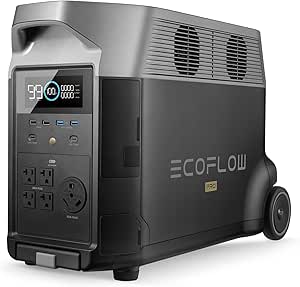 | Best for Expandable Whole-Home Backup | Battery capacity: 3,600Wh | Battery type: LFP | Running AC output: 3,600W | VIEW LATEST PRICE | See Our Full Breakdown |
| Giosolar 1120W Solar and Wind Off-Grid Power Kit with Batteries and Inverter |  | Best for Solar-and-Wind Off-Grid Sites | Solar panel output: 720W total from six 120W panels | Wind turbine output: 400W | Battery storage: 2 × 1,280Wh LiFePO4 batteries | VIEW LATEST PRICE | See Our Full Breakdown |
| BLUETTI Elite 100 V2 Portable Power Station with Two 100W Solar Panels |  | Best Compact Kit for Essential Loads | Battery capacity: 1,024Wh | Battery type: LiFePO4 | Continuous AC output: 1,800W | VIEW LATEST PRICE | See Our Full Breakdown |
| ECO-WORTHY 5 kW Off-Grid Solar System Kit with 2,340 W Panels |  | Best for a Permanent DIY Off-Grid Setup | Solar panel count: 12 | Total solar panel output: 2,340W | Panel type: N-type monocrystalline | VIEW LATEST PRICE | See Our Full Breakdown |
| solar generator kits for home | Battery capacity |
|---|---|
| ECO-WORTHY 10 kW Off-Grid Sola | — |
| ECO-WORTHY 10 kW Off-Grid Sola | — |
| BLUETTI Elite 200 V2 Solar Gen | 2,080 Wh |
| Jackery Solar Generator 1000 v | 1,024 Wh |
| ECO-WORTHY 10 kW Off-Grid Sola | — |
| ZeroKor 300W Portable Power St | — |
| Jackery Solar Generator 1000 v | 1,024Wh |
| Anker SOLIX C1000 Gen 2 Portab | 1,024Wh |
| Anker SOLIX C2000 Gen 2 Portab | 2,048Wh |
| BLUETTI Elite 300 Solar Genera | 3,014.4Wh |
| EF ECOFLOW DELTA Pro Portable | 3,600Wh |
| Giosolar 1120W Solar and Wind | — |
| BLUETTI Elite 100 V2 Portable | 1,024Wh |
| ECO-WORTHY 5 kW Off-Grid Solar | — |
More Details on Our Top Picks
ECO-WORTHY 10 kW Off-Grid Solar System Kit with 9.36 kWh Daily Output
For a home buyer who needs household-voltage flexibility without stepping up to the largest battery in this group, this kit pairs a 10,000 W inverter with 120 V/240 V output and 10.24 kWh of battery storage. Its twelve bifacial panels total 2,340 W, and the stated 9.36 kWh daily production assumes four hours of full sunlight—not a guaranteed daily yield. Compared with the ECO-WORTHY 10 kW kit with 20.48 kWh storage, this one has less battery reserve but a smaller solar array and fewer panels to accommodate. The app-based battery monitoring and configurable charging modes help owners track and manage the system. This is a substantial, fixed-installation setup, though: professional installation is recommended, and buyers seeking a simple backup box should choose a portable station such as the Jackery Solar Generator 1000 v2 instead.
Pros:- 10,000 W inverter provides 120 V/240 V household output.
- 10.24 kWh of lithium battery storage is included.
- Twelve bifacial N-Type panels provide 2,340 W of solar capacity.
- Bluetooth, Wi-Fi, CAN, and RS485 support battery monitoring.
Cons:- Professional installation is recommended, adding complexity for buyers without solar experience.
- The stated 9.36 kWh daily output depends on four hours of full sunlight.
- The 2,340 W array is modest relative to the inverter’s 10,000 W rating.
Best for: Homeowners planning a fixed off-grid system who need 120 V/240 V output and moderate battery storage.
Not ideal for: Renters, beginners seeking plug-and-play backup, and homes needing longer storage reserves than 10.24 kWh.
- Solar array capacity:2,340 W
- Panels:12 × 195 W N-Type bifacial
- Stated daily output:Up to 9.36 kWh with four hours of full sunlight
- Battery storage:10.24 kWh total; two 48 V (51.2 V) 100 Ah lithium batteries
- Inverter output:10,000 W maximum continuous
- AC voltage:120 V / 240 V
- Panel conversion efficiency:25%
- Certifications and testing stated:UL 1741 inverter; UL 1973, UL 9540A, and CEC testing/compliance
Our verdict“Choose this kit for a professionally installed home system that needs split-phase output but not the larger storage package of ECO-WORTHY’s 20.48 kWh kit.”
ECO-WORTHY 10 kW Off-Grid Solar Power Kit with 2,950 W Panels and 16.1 kWh Battery
This kit is a stronger fit for buyers who value stored energy and future expansion over a large initial solar array. It combines a 16.076 kWh LiFePO₄ battery with a 10 kW split-phase inverter, giving a home more stored capacity than the 10.24 kWh ECO-WORTHY kit. Its five bifacial panels total 2,950 W, however, so the array is still much smaller than the inverter’s output rating; the inverter’s headline capacity does not mean the panels can sustain that output throughout the day. The 200 A battery management system and stated parallel capacity for up to 15 batteries offer room to build out storage. Compared with ECO-WORTHY’s 20.48 kWh system, this kit starts with less battery energy and fewer panels, but its five-panel setup may suit sites with tighter array requirements. Pallet freight and recommended professional installation make it a project, not a portable backup purchase.
Pros:- 16.076 kWh LiFePO₄ battery provides substantial stored energy.
- 10,000 W continuous inverter supports 120 V or 120/240 V split-phase output.
- 200 A BMS and support for parallel battery expansion allow room to scale storage.
- Bifacial panels provide 2,950 W of rated solar capacity.
Cons:- The 2,950 W solar array is substantially below the inverter’s 10,000 W continuous rating.
- Pallet freight and heavy panels require planning for delivery and handling.
- Professional installation is recommended.
Best for: Homeowners building a fixed off-grid system who prioritize battery reserve and may expand storage later.
Not ideal for: Buyers who need a high-output solar array from day one, or anyone seeking a portable, ready-to-use outage backup.
- Solar array capacity:2,950 W
- Panels:5 × 590 W N-type bifacial dual-glass panels
- Battery:48 V, 314 Ah LiFePO₄
- Battery energy:16.076 kWh
- Inverter output:10,000 W continuous; 20,000 W peak
- AC voltage:120 V or 120/240 V split phase
- Panel conversion efficiency:23.23%
- Expansion capacity:Up to 15 batteries and up to 6 inverters in parallel
Our verdict“Pick this system if battery reserve and storage expansion matter more than matching the inverter with a larger initial solar array.”
BLUETTI Elite 200 V2 Solar Generator with Two 200W Solar Panels, 2080Wh
The Elite 200 V2 takes a different approach from the fixed ECO-WORTHY kits: it is a portable 2,080 Wh power station with two included 200 W panels, not a whole-home, split-phase installation. Its 2,600 W continuous output can run a range of individual appliances, while 3,900 W power-lifting output adds headroom for compatible loads; the four AC outlets still limit how many AC devices can connect directly. Compared with the Jackery Solar Generator 1000 v2, it offers roughly twice the battery capacity and higher continuous output, but it is also much heavier at 44.5 lb. A stated UPS transfer time of 15 ms or less can help keep select essential devices powered during an interruption. The tradeoff is that 400 W of included solar is a modest recharge source for this capacity, and the unit cannot provide the 120/240 V home circuits available from the larger ECO-WORTHY systems.
Pros:- 2,080 Wh LiFePO₄ battery offers more stored energy than the Jackery Solar Generator 1000 v2.
- 2,600 W continuous AC output supports a range of individual appliances.
- Two 200 W solar panels are included, along with AC, vehicle, and other charging options.
- UPS transfer time is listed at 15 ms or less.
Cons:- At 44.5 lb, the unit is heavy for frequent transport.
- Four AC outlets and portable 120 V output do not replace a split-phase home system.
- The included 400 W of solar capacity may mean slow solar replenishment in limited sunlight.
Best for: Households needing portable backup for several essential devices, with room to store and deploy a 44.5 lb power station.
Not ideal for: Homeowners seeking whole-home or 120/240 V backup, or buyers who need a lightweight station for frequent carrying.
- Battery capacity:2,080 Wh
- Battery chemistry:LiFePO₄
- Continuous AC output:2,600 W
- Power-lifting output:3,900 W
- Included solar panels:2 × 200 W
- AC outlets:4
- Weight:44.5 lb
- UPS transfer time:≤15 ms
Our verdict“Choose the Elite 200 V2 for portable essential-load backup with more capacity than the Jackery 1000 v2, not for whole-home split-phase power.”
Jackery Solar Generator 1000 v2 with 100W Solar Panel
Among these five options, the Jackery 1000 v2 is the easiest to place in a home and move when needed: it weighs 23.4 lb and includes a foldable handle. Its 1,024 Wh battery and 1,500 W AC output suit smaller essentials and short interruptions better than the BLUETTI Elite 200 V2, which doubles the storage and raises output but weighs 44.5 lb. The Jackery’s 10 ms UPS switchover is useful for compatible devices that should stay powered during an outage, while six total ports cover common household electronics. The included 100 W panel provides a modest solar input, so replenishing the battery from sunlight can take time compared with the 400 W panel bundle on the BLUETTI. Emergency AC charging is listed at 50 minutes, but that mode must be enabled in the app. This is a portable backup station, not a replacement for a 120/240 V home system.
Pros:- 23.4 lb weight and foldable handle make it easier to move than the BLUETTI Elite 200 V2.
- 10 ms UPS switchover supports backup for compatible essential devices.
- LiFePO₄ battery is listed to retain over 70% capacity after 4,000 charge cycles.
- Includes a 100 W solar panel and app-controlled charging modes.
Cons:- The 1,024 Wh battery provides less reserve than the BLUETTI Elite 200 V2.
- The included 100 W panel offers limited solar charging capacity.
- 50-minute emergency AC charging requires enabling the setting in the app.
Best for: Households wanting a relatively light, movable backup station for small appliances, electronics, and short outages.
Not ideal for: Families needing multi-day stored energy, high-wattage home circuits, or faster solar replenishment than a 100 W panel can provide.
- Battery capacity:1,024 Wh
- Battery chemistry:LiFePO₄
- AC output:1,500 W
- Surge peak:3,000 W
- Included solar panel:100 W
- Weight:23.4 lb
- Outlets:2 AC, 2 USB-C, 1 USB-A, and 1 DC car port
- UPS switchover:10 ms
Our verdict“Choose the Jackery for lighter, portable backup for essential devices, but step up to the BLUETTI Elite 200 V2 for greater capacity and output.”
ECO-WORTHY 10 kW Off-Grid Solar System Kit with Split-Phase Inverter, Batteries, and Solar Panels
This is the most storage-heavy fixed system in this batch: 20.48 kWh of LiFePO₄ batteries paired with a 10 kW split-phase inverter make it better suited to households seeking a deeper energy reserve than either of the other ECO-WORTHY kits here. Its nine 590 W panels deliver a 5,310 W array, more than the 2,950 W array in the other 10 kW ECO-WORTHY kit, though the panels still cannot produce the inverter’s full rated output under ordinary conditions. Dual MPPT controllers and Wi-Fi monitoring add useful system-management features, and the inverter can be paralleled with up to five more units. Compared with the 2,340 W, 10.24 kWh ECO-WORTHY kit, this one offers substantially more solar capacity and storage, but needs more space, heavier freight handling, and a more involved installation. It is a fixed off-grid project, not a portable outage kit.
Pros:- 20.48 kWh of LiFePO₄ storage provides the largest battery reserve among these five products.
- 5,310 W of solar capacity exceeds the arrays in the other two ECO-WORTHY kits reviewed here.
- 10,000 W inverter supports 120 V/240 V split-phase output.
- Dual MPPT, Wi-Fi monitoring, and inverter parallel support enable system management and expansion.
Cons:- Nine large panels and four batteries require substantial space and careful installation planning.
- Pallet freight and professional installation add delivery and setup complexity.
- The 5,310 W array remains below the inverter’s 10,000 W continuous output rating.
Best for: Homeowners planning a professionally installed off-grid system who need substantial stored energy and a larger solar array.
Not ideal for: Renters, buyers with limited roof or ground-mount space, and households seeking simple portable backup.
- Inverter output:10,000 W continuous; 20,000 W peak
- AC output:120 V / 240 V split phase
- Solar array capacity:5,310 W
- Panels:9 × 590 W
- Battery storage:20.48 kWh total
- Battery configuration:4 × 48 V, 100 Ah LiFePO₄ batteries
- Panel conversion efficiency:23.23%
- Inverter parallel capacity:Up to 6 units
Our verdict“Choose this ECO-WORTHY kit when storage reserve and a larger array take priority over portability and a simpler installation.”
ZeroKor 300W Portable Power Station with 60W Solar Panel
The ZeroKor is the entry point in this group for buyers who want a small solar kit for phones, lights, and other low-draw essentials rather than whole-home backup. Its 300W output and included 60W monocrystalline panel make it a simpler, lighter-duty setup than the Jackery Solar Generator 1000 v2, which can handle a wider range of household devices. Multiple AC, DC, and USB outputs let you charge several small items, while AC, solar, and car recharging provide flexibility when sunlight is unavailable. The tradeoff is a firm ceiling: appliances above 300W may damage the unit, and the panel’s junction box must stay dry. I’d choose this for modest emergency charging, not for running kitchen appliances or maintaining household circuits.
Pros:- Includes a 60W monocrystalline solar panel with 20.5% stated conversion efficiency.
- AC, DC, USB, and quick-charge connections support several small devices.
- Can recharge from an AC outlet, compatible solar panel, or 12V car outlet.
- Built-in flashlight includes reading and SOS modes.
Cons:- The 300W output rules out many common household appliances, and exceeding it may damage the station.
- The solar panel junction box is not waterproof and needs protection from moisture.
Best for: People building a compact emergency kit for phones, lights, and other small devices, with occasional solar or car recharging.
Not ideal for: Households seeking backup for refrigerators, kitchen appliances, or other loads above 300W.
- Power station output:300W
- Solar panel:60W monocrystalline
- Panel conversion efficiency:20.5%
- AC outlets:2; 300W maximum
- USB ports:3; 5V/3A maximum
- Quick-charge USB port:5V/3A, 9V/2A maximum
- Recharge methods:AC outlet, compatible 13V–23V DC5521 solar panel, 12V car outlet
- Protection:Short circuit, over-current, over-voltage, overload, and overheating
Our verdict“Choose the ZeroKor for basic device charging and modest solar replenishment, but pick a higher-output kit such as the Jackery 1000 v2 for broader home backup.”
Jackery Solar Generator 1000 v2 with 200W Solar Panel, 1024Wh LiFePO4 Battery
The Jackery 1000 v2 hits a useful middle ground for households that want to keep essential devices running without moving up to a much larger, heavier backup system. Its 1,024Wh LiFePO4 battery and 1,500W AC output provide more room for practical household loads than the ZeroKor, while its 23.4-pound weight and included 200W panel keep the kit portable. A 10ms UPS switchover can help protect connected essentials during an interruption, and the stated 50-minute AC charge requires emergency charging to be enabled in the app. Compared with the Anker SOLIX C1000 Gen 2, the Jackery has lower output, but it offers a familiar compact setup and a foldable handle. It is not a substitute for a large-capacity home system, and the station and panel ship separately.
Pros:- 1,024Wh LiFePO4 battery paired with 1,500W AC output and 3,000W surge capacity.
- Includes a 200W solar panel for replenishing the station away from an outlet.
- 10ms UPS switchover supports backup for connected essential devices.
- Portable 23.4-pound design with a foldable handle.
Cons:- The 50-minute charging claim requires emergency charging to be enabled in the app.
- The power station and solar panel ship separately.
- Its 1,024Wh capacity offers less stored energy than the BLUETTI Elite 300.
Best for: Households wanting a portable, mid-capacity backup for communications, lights, and selected appliances, with a solar panel included.
Not ideal for: Buyers who need extended backup for high-draw appliances or want the power station and panel to arrive together.
- Battery capacity:1,024Wh
- Battery type:LiFePO4
- AC output:1,500W
- Surge capacity:3,000W
- Included solar panel:200W
- UPS switchover:10ms
- Weight:23.4 pounds
- Warranty:5 years
Our verdict“Pick the Jackery for portable backup of selected home essentials; choose the BLUETTI Elite 300 when longer runtimes matter more than carrying ease.”
Anker SOLIX C1000 Gen 2 Portable Power Station with 200W Solar Panel
The Anker SOLIX C1000 Gen 2 is a strong fit for buyers who value quick recovery between outages as much as stored energy. It pairs a 1,024Wh LiFePO4 battery with 2,000W output, giving it more headroom for household devices than the similarly sized Jackery Solar Generator 1000 v2. Nine ports and app-based monitoring make it easier to manage several connected devices, while UPS switchover under 10ms is useful for electronics that should not lose power during a brief interruption. The listed AC recharge time is 49 minutes at 1,600W, and solar input can reach 600W, though the included panel is 200W, so reaching the higher solar rate requires compatible additional input. This is still a roughly 1kWh portable station, not a long-duration household battery, and the panel ships separately.
Pros:- 2,000W output and 3,000W peak provide more appliance headroom than the Jackery 1000 v2.
- Nine ports support several devices at once.
- AC recharge is listed at 49 minutes, with solar input up to 600W.
- UPS switchover under 10ms and app-based power monitoring and scheduling.
Cons:- The included solar panel is 200W, below the station’s 600W maximum solar input.
- The power station and panel are dispatched separately.
- Its 1,024Wh capacity is limited for prolonged household outages.
Best for: Households that need a portable backup for multiple devices and value fast AC recharging, app monitoring, and UPS support.
Not ideal for: Buyers seeking multi-day home backup from a single battery or a kit delivered as one shipment.
- Battery capacity:1,024Wh
- Battery type:LiFePO4
- Output power:2,000W
- Peak output:3,000W
- Ports:9
- Included solar panel:200W bifacial
- Maximum solar input:600W; 60V maximum
- AC recharge time:49 minutes at 1,600W
- UPS switchover:Under 10ms
Our verdict“Choose the Anker C1000 Gen 2 when fast recharging and higher output matter more than extended runtime from a larger battery.”
Anker SOLIX C2000 Gen 2 Portable Power Station with 400W Bifacial Solar Panel, 2,048Wh
For buyers who want more than a 1kWh portable station without stepping straight up to the BLUETTI Elite 300, the Anker SOLIX C2000 Gen 2 offers a useful middle tier. Its 2,048Wh LiFePO4 battery and 2,400W rated output increase both runtime and appliance flexibility compared with the Anker C1000 Gen 2. Capacity can reach 4kWh with an expansion battery, giving the system a growth path for longer outages. The included 400W bifacial panel can collect sunlight from both sides and is IP68-rated, though it weighs 21.9 pounds and the station and panel ship separately. The stated 58-minute recharge uses AC and solar together, so it is not a solar-only charging promise. Buyers who need the largest ready-to-use battery in this group should compare it with the Elite 300.
Pros:- 2,048Wh LiFePO4 battery and 2,400W rated output support larger loads and longer use than the C1000 Gen 2.
- Expandable capacity reaches 4kWh with an additional battery.
- Included 400W bifacial solar panel can collect light from both sides.
- 58-minute recharge is listed for combined AC and solar charging.
Cons:- Reaching 4kWh requires a separate expansion battery.
- The 21.9-pound solar panel is a substantial item to carry and position.
- The station and solar panel ship separately.
Best for: Households seeking a portable 2kWh-class backup with a clear expansion path and a substantial included solar panel.
Not ideal for: Buyers who need more than 2kWh immediately without purchasing an expansion battery, or who prioritize a lighter panel kit.
- Battery capacity:2,048Wh
- Battery chemistry:LiFePO4
- Peak output:4,000W
- Expandable capacity:Up to 4kWh
- Included solar panel:400W bifacial; IP68-rated
- Panel weight:21.9 pounds
- Recharge time:58 minutes with AC and solar charging
- Power station dimensions:18.1 × 9.8 × 10.1 inches
Our verdict“Choose the C2000 Gen 2 for a portable 2kWh-class system that can expand later; select the BLUETTI Elite 300 for greater built-in capacity from the outset.”
BLUETTI Elite 300 Solar Generator with Two 200W Solar Panels, 3014.4Wh LiFePO4 Battery
The BLUETTI Elite 300 takes the largest ready-to-use battery approach in this portable lineup: 3,014.4Wh of LiFePO4 storage paired with two 200W panels. That gives it more built-in capacity than the Anker SOLIX C2000 Gen 2, which starts at 2,048Wh and needs an expansion battery to reach 4kWh. Its 2,400W output and 4,800W surge rating suit a wider range of backup loads than the smaller Jackery 1000 v2, while the TT-30 outlet and 12V/30A DC port add useful RV compatibility. The tradeoff is solar replenishment: the listed 7–15 hours depends on suitable conditions and is slower than the fast combined-charge claims on the Anker models. I’d favor this for longer outages where stored capacity matters more than rapid solar recovery.
Pros:- 3,014.4Wh LiFePO4 battery offers the largest built-in capacity among these five products.
- 2,400W output and 4,800W surge capacity support substantial backup loads.
- Includes two 200W solar panels.
- TT-30 outlet and 12V/30A DC port suit RV connections.
Cons:- Solar recharge is listed at approximately 7–15 hours under suitable conditions.
- The 3,014.4Wh station is less suited to buyers prioritizing a compact, easy-to-carry kit.
- Solar panels ship separately.
Best for: Households or RV owners who want substantial built-in battery capacity, strong output, and dedicated RV connections for backup use.
Not ideal for: Buyers who need a lightweight kit or rapid solar replenishment during short daylight windows.
- Battery capacity:3,014.4Wh
- Battery chemistry:LiFePO4
- Battery cycle life:6,000+ cycles
- AC output:2,400W
- Surge output:4,800W
- Solar panels:2 × 200W
- Solar recharge time:Approximately 7–15 hours
- AC recharge time:78 minutes to 80%
- RV connections:TT-30 outlet and 12V/30A DC port
Our verdict“Choose the Elite 300 when longer runtime from a large built-in battery is the priority, and favor the Anker C2000 Gen 2 if expansion and faster combined charging matter more.”
EF ECOFLOW DELTA Pro Portable Power Station, 3600Wh, 3600W AC Output
For a buyer who wants a portable starting point that can grow into a larger home backup setup, the DELTA Pro’s 3,600Wh LFP battery and 3,600W AC output put it ahead of smaller portable kits such as the BLUETTI Elite 100 V2. Its expandable capacity, up to 25kWh with compatible equipment, gives it a path to longer outages without requiring a single fixed-size system from day one. Five charging options and app monitoring also make it more adaptable to changing backup needs. The tradeoff is substantial: at 99 lb, it is not an easy grab-and-go unit, and expansion requires separately compatible equipment. Its 120V output also differs from a built-in whole-home installation, so buyers should match its outlets and setup to the circuits they plan to support.
Pros:- 3,600Wh LFP battery offers more stored energy than compact units such as the BLUETTI Elite 100 V2.
- Expandable capacity supports a larger backup setup as needs grow.
- Five charging methods include wall, solar, EV station, generator, and car charging.
- App control supports remote monitoring and settings changes over Wi-Fi or Bluetooth.
Cons:- At 99 lb, moving it around a home or carrying it outdoors is difficult.
- Reaching the stated expanded capacity or paired output requires compatible additional equipment.
- The 120V output may not match every home backup or higher-voltage appliance setup.
Best for: Homeowners who want high-capacity portable backup now, with the option to add compatible batteries or a Smart Generator later.
Not ideal for: Buyers who need a light unit to move frequently, or a ready-made fixed home system without additional compatible equipment.
- Battery capacity:3,600Wh
- Battery type:LFP
- Running AC output:3,600W
- Maximum AC output:4,500W with X-Boost
- Expandable capacity:Up to 25kWh with compatible equipment
- Solar charging time:2.8 hours with four 400W solar panels
- Weight:99 lb
- Control:EcoFlow app via Wi-Fi or Bluetooth
Our verdict“Choose the DELTA Pro if you want substantial portable home backup with room to expand and can accommodate its weight and add-on requirements.”
Giosolar 1120W Solar and Wind Off-Grid Power Kit with Batteries and Inverter
This kit earns its place for buyers whose site can use both sun and wind: it pairs 720W of solar panels with a 400W wind turbine, rather than relying on solar alone like the ECO-WORTHY 5 kW Off-Grid Solar System Kit. That mixed input can suit a cabin or remote property where breezy conditions may help when sunlight is limited. Two LiFePO4 batteries and a 3,000W pure sine wave inverter provide the core storage and AC conversion, but the stated battery energy totals 2,560Wh and the 24V inverter requires the two 12.8V batteries to be configured appropriately. This is a component-based installation, not a portable plug-in backup station. The turbine also needs a tower 4.5–10m high, adding site work and mounting requirements that make it a poor fit for a simple household emergency kit.
Pros:- Combines 720W of solar generation with a 400W wind turbine.
- Includes two LiFePO4 batteries with BMS protection and parallel-connection support.
- The 3,000W pure sine wave inverter supplies AC power for compatible household loads.
- Wind turbine is specified to start at 2.5m/s and adjust to wind direction.
Cons:- The turbine requires a 4.5–10m tower, adding installation complexity and site requirements.
- Two 12.8V batteries must be configured to work with the 24V inverter.
- The included solar array totals 720W, so solar-only replenishment may be limited compared with larger panel kits.
Best for: Cabin owners and off-grid property users with a suitable windy site who can install panels, batteries, controllers, and a turbine tower.
Not ideal for: Homeowners seeking a portable, quick-connect outage kit or anyone without space and permission for a turbine tower.
- Solar panel output:720W total from six 120W panels
- Wind turbine output:400W
- Battery storage:2 × 1,280Wh LiFePO4 batteries
- System voltage:24V
- Inverter:3,000W pure sine wave, 24V DC to 120V AC
- Solar charge controller:60A
- Wind turbine cut-in speed:2.5m/s
- Battery cycle life:More than 3,000 cycles
Our verdict“Pick this kit for a properly sited off-grid property that can benefit from both wind and solar, not for convenient portable home backup.”
BLUETTI Elite 100 V2 Portable Power Station with Two 100W Solar Panels
The Elite 100 V2 is the more manageable choice for essential devices and a small backup footprint: its 1,024Wh battery and 25 lb weight are far easier to place or move than the 99 lb EF ECOFLOW DELTA Pro. The included pair of 100W panels gives buyers a solar starting point, while 1,800W continuous output can handle a broader mix of small appliances and electronics than low-output compact stations. Its 10ms UPS function is a useful distinction for equipment that should stay powered through a brief interruption, and silent mode is specified at 30dB. The capacity is the main limit for home use: it is better suited to selected essentials than extended whole-home backup. Solar input can reach 1,000W, but the included panels total only 200W, so using that higher input ceiling calls for additional compatible panel capacity.
Pros:- 25 lb body is much easier to position than the 99 lb EF ECOFLOW DELTA Pro.
- Includes two 100W solar panels for a basic solar-charging setup.
- 1,800W continuous AC output and 11 ports support a range of essential devices.
- 10ms UPS function and 30dB silent mode suit backup use near electronics or living areas.
Cons:- The 1,024Wh battery offers limited runtime for larger appliances or prolonged outages.
- Included panels provide only 200W total against a maximum solar input of 1,000W.
- The 25 lb unit may still be awkward to carry regularly.
Best for: Apartment dwellers and homeowners who want a lighter solar kit for electronics, communications gear, and selected essential loads.
Not ideal for: Households seeking long runtimes for multiple major appliances or a large stored-energy reserve for extended outages.
- Battery capacity:1,024Wh
- Battery type:LiFePO4
- Continuous AC output:1,800W
- Surge output:3,600W
- Included solar panels:Two 100W panels
- Maximum solar input:1,000W
- UPS transfer time:10ms
- Weight:25 lb
Our verdict“Choose the Elite 100 V2 for compact, quieter backup of essential devices, but look to a larger-capacity system for extended household coverage.”
ECO-WORTHY 5 kW Off-Grid Solar System Kit with 2,340 W Panels
Unlike the portable power stations in this lineup, this ECO-WORTHY kit is aimed at buyers building a fixed solar system: it bundles 12 panels, a 5,000W off-grid inverter, and a 51.2V LiFePO4 battery, along with cables and mounting brackets. Its 2,340W panel array is larger than the Giosolar kit’s 720W solar portion, making it a better fit for a roof, shed, or ground-mounted installation where daily generation matters. The mismatch between the 5,000W inverter rating and the panel array is not automatically a defect, but buyers should not read the inverter rating as the amount the panels can generate. Installation and wiring are DIY responsibilities, and the listed battery is 5.12kWh, so sustained household loads still depend on sun, storage, and power use. This is a system-building choice, not a carry-out backup box.
Pros:- Includes 12 panels, inverter, LiFePO4 battery, cables, and Z brackets in one kit.
- 2,340W panel array provides more solar capacity than the Giosolar kit’s 720W solar array.
- 51.2V, 100Ah battery stores 5.12kWh for use when solar generation is unavailable.
- Panels are specified for roof, ground, or shed mounting.
Cons:- Requires DIY installation and wiring rather than simple plug-in setup.
- The 2,340W panel array is below the inverter’s 5,000W rating.
- A 5.12kWh battery can limit runtime during sustained high household loads.
Best for: DIY-minded cabin or home owners who want a fixed off-grid solar array with included panels, inverter, battery, and mounting hardware.
Not ideal for: Buyers who need a portable outage solution, do not want to handle electrical installation, or expect 5,000W of solar generation from the panel array.
- Solar panel count:12
- Total solar panel output:2,340W
- Panel type:N-type monocrystalline
- Inverter:5,000W off-grid, 48V
- Battery:51.2V, 100Ah Cubix LiFePO4
- Battery energy:5.12kWh
- Panel dimensions:58.86 × 26.18 × 1.18 in
- Output voltage:120V
Our verdict“Choose this kit for a permanent DIY off-grid installation with a sizable panel array, not for portable or ready-to-use backup.”
How We Picked
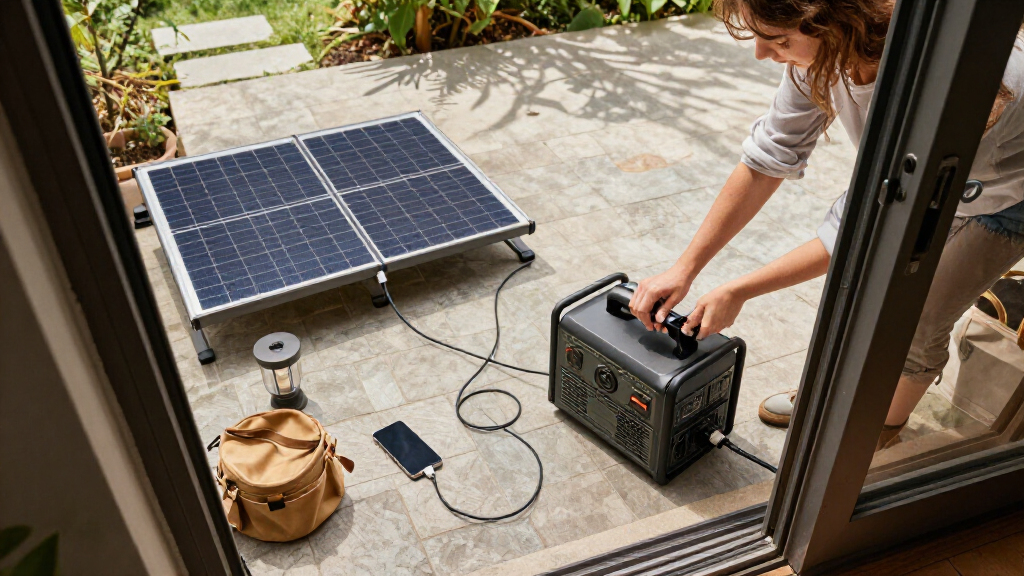
I compared these 14 kits through the lens of home backup: how much power they can supply, how much energy they can store, how their solar input supports replenishment, and whether their format suits household use. I also weighed usability, portability, expandability signals in the listed configuration, and the practical demands of installation and maintenance. A panel’s wattage is not the same as usable stored energy, so I treated those figures as separate parts of the backup picture.
The ranking favors kits that offer a clearer fit for meaningful home backup, with a balance of storage, output, and manageable setup. The larger ECO-WORTHY systems rank ahead for buyers planning fixed off-grid use, while portable options rank higher for simpler, selective backup rather than whole-home coverage. Within the portable group, battery capacity and included panel setup help separate longer-running options from compact entry picks. No kit ranks first for every household: the best choice depends on essential loads, outage duration, available sunlight, and installation preferences.
Factors to Consider When Choosing Solar Generator Kits For Home
Before choosing a kit, I would start with the loads you want to keep running and the length of the outages you want to cover. The following factors help avoid paying for a system that cannot meet your needs—or taking on a larger installation than your household requires.
1. List essential loads before comparing capacity
Write down which devices must stay on during an outage: for example, a refrigerator, modem, lights, medical equipment, or a sump pump. Check each device’s running wattage and note that some motors draw extra power when starting. Add up the loads you expect to run at the same time, not every appliance in the home. This helps distinguish a power station for a few essentials from a system intended to support several circuits. A common mistake is choosing by battery size alone and later finding that the inverter cannot start or run a key appliance. Leave room for the household routine you actually want to preserve, but do not size around every possible convenience load.
2. Separate stored energy from available output
Battery capacity, usually stated in watt-hours, gives a rough sense of how long a kit can supply energy; inverter output, stated in watts, limits how much it can run at once. Neither figure replaces the other. A large battery may still be a poor match for a high-draw appliance if its inverter output is too low, while a powerful inverter can run demanding loads briefly if storage is limited. Ask whether the listed capacity is nominal or usable, and account for conversion losses and reserve capacity. Avoid treating an advertised daily solar output as a guaranteed amount: weather, season, panel angle, and shading all change production. For home backup, both sustained output and runtime matter.
3. Match solar input to outage conditions
Solar panels can replenish a battery during an outage, but the included panel wattage is only part of the story. Check the generator’s supported solar input and connector requirements before planning to add panels later. More panel capacity can shorten recharge time in good sun, yet it will not compensate for poor weather or an installation site with persistent shade. If panels must be placed far from the generator, cable length and safe routing become practical constraints. A household that needs dependable overnight backup should size storage for nighttime loads rather than assume daytime charging will cover everything. The right balance depends on how quickly you need to recover energy between outages or cloudy periods.
4. Decide whether portable or fixed installation fits your home
Portable power stations are easier to move and can serve different rooms or outdoor needs, but their outlets may not connect directly to household circuits. Larger off-grid kits can support a more permanent arrangement, but they require more space, wiring decisions, and installation knowledge. Before buying a fixed system, confirm what is included and what is not, such as mounting hardware, electrical protection, cables, or professional labor. Do not assume that a kit’s system wattage means it can safely power an entire house through an ordinary outlet. For circuit-level backup, ask a qualified electrician about transfer equipment and local requirements. The convenience of portability may matter more than maximum capacity if your needs are limited to a few plug-in devices.
5. Treat chemistry, maintenance, and storage as ownership costs
Battery chemistry affects service life, weight, and how a unit is best used, so compare the product’s stated specifications rather than relying on a category label alone. LiFePO4 models in this lineup include the Jackery 1000 v2 and BLUETTI Elite 300, but buyers should still check the manufacturer’s cycle-life and operating guidance. Fixed systems also bring maintenance tasks such as inspecting connections and keeping panels clear of debris. Think about where the equipment will live: indoor temperature, ventilation, moisture, and access can all affect safe operation. Compact units are easier to store, while larger battery banks need a suitable location. A kit that fits your home and maintenance habits can be a better long-term choice than one with more capacity than you can use.
6. Pay more only for capability you will use
A larger kit makes sense when it solves a real shortfall: higher simultaneous loads, longer backup duration, or the ability to recharge more effectively from solar. It is less compelling if your plan covers only a router, phone, and a few lights. Consider whether you are paying for portability, extra battery storage, higher output, or a more involved fixed system; those are distinct benefits. Also compare the complete setup rather than the main unit alone, since included panels and installation components affect what you can use immediately. Buyers often overbuy by planning for every appliance while overlooking the wiring and solar conditions needed to support them. Match the investment to a written load plan and a realistic outage scenario.
Frequently Asked Questions
Can a solar generator kit power my whole house during an outage?
Some larger off-grid kits may support substantial household loads, but a product’s headline system rating does not automatically mean whole-house backup. You need to compare inverter output, usable battery capacity, appliance startup demands, and the way the system connects to your home’s circuits. Smaller portable units are generally better suited to selected appliances and devices. A transfer switch or other approved connection may be needed for circuit-level backup, and installation rules vary by location. Have an electrician review your load plan and connection method before relying on a kit for whole-home power.
How do I estimate how long a kit will run my refrigerator?
Start with the refrigerator’s actual energy use from its label, manual, or a plug-in energy meter, then estimate how many hours it must run. A refrigerator cycles rather than drawing its full running wattage constantly, but compressor startup can briefly demand more power. Compare both that surge and the estimated energy use with the kit’s inverter output and usable battery capacity. Allow for conversion losses and other devices sharing the battery. If refrigeration is a priority, test your calculations against a realistic outage plan rather than using a single wattage figure.
Are the solar panels included with these kits enough to recharge the battery?
They can recharge a battery in favorable conditions, but included panel wattage does not promise a fixed daily energy amount. Sun hours, season, panel angle, shade, temperature, and the generator’s solar input limit all affect charging. A portable kit with modest panels may take longer to refill a depleted battery than a larger array, especially during cloudy weather. Check the unit’s maximum solar input and whether extra panels can be connected safely. For outage planning, treat solar as a variable source and keep enough stored energy for periods with little sun.
Should I choose a portable power station or a fixed off-grid kit?
Choose a portable station if you want plug-in backup for selected devices, flexible placement, and a simpler setup. A fixed off-grid kit is a better match when you need higher output or want a more permanent system for multiple household loads. Fixed kits can require more planning, appropriate wiring, mounting, and professional installation, so their added capacity comes with added complexity. Think about whether you need to move the battery, where panels can be placed, and whether your home can accommodate the installation. The best format is the one that works with your loads and your comfort level with setup.
What should I check before connecting a kit to household circuits?
Confirm the kit is designed for the connection method you plan to use and check its output limits against the circuits and appliances involved. Never feed power into household wiring through a standard wall outlet; that can create a serious backfeed hazard. Circuit-level backup usually calls for approved transfer equipment and correct installation, subject to local electrical rules. Ask an electrician to verify the system’s grounding, protection, and compatibility with your panel. Also check whether the kit includes the required components or whether they need to be purchased separately.
Conclusion
For buyers planning substantial fixed backup, my best overall choice is the ECO-WORTHY 10 kW Off-Grid Solar Power Kit with a 16.1 kWh battery, with the caveat that a system of this scale calls for careful installation planning. The best value for selective home backup is the Jackery Solar Generator 1000 v2 with a 200W panel if its capacity matches your essential loads; it offers a more approachable scale than a fixed off-grid system. For a higher-capacity portable setup, the BLUETTI Elite 300 is my best premium portable pick. Beginners with modest needs should start by comparing the Jackery 1000 v2 and BLUETTI Elite 100, then choose based on the appliances they plan to run. For larger fixed-system needs, compare the ECO-WORTHY 5 kW and 10 kW kits; for a mixed solar-and-wind setup, look at the Giosolar kit. My final recommendation is to list essential loads first, then choose the smallest system that meets your output and runtime targets.