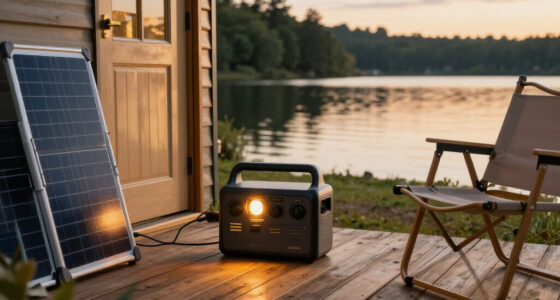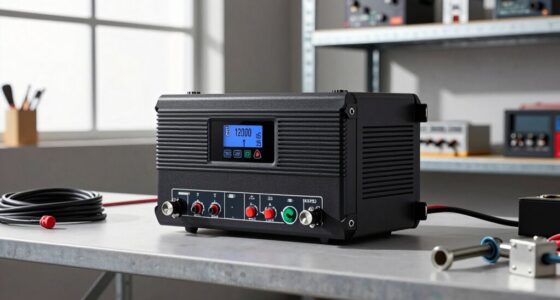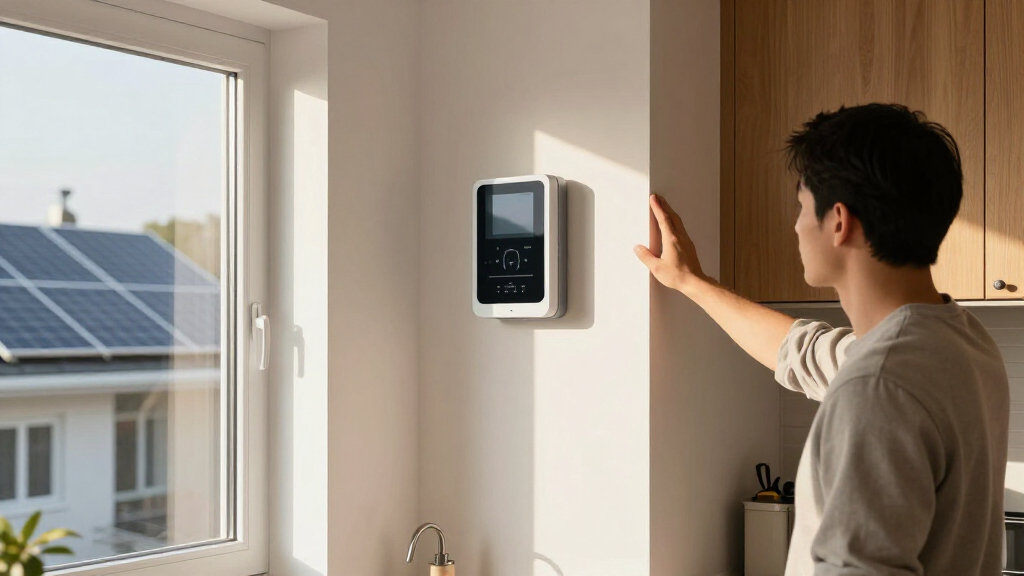

Home battery backup systems with solar range from portable power stations for essentials to larger 48V systems designed to support a home or off-grid setup. I rank the ECO-WORTHY PowerMega 48V system as the best overall for its hybrid inverter and substantial battery capacity, while the Jackery Explorer 5000 Plus stands out for high-output portable backup and the Jackery Solar Generator 1000 v2 for smaller, simpler needs. The main tradeoff is between portability and whole-home ambitions: compact units are easier to set up, while larger systems call for more planning, installation, and load management. Solar-panel bundles also vary, so battery capacity alone does not tell you how quickly a system can recharge. Read on for the full breakdown and guidance on matching a system to your home, appliances, and backup priorities.

Get backup power and energy gear delivered free with Prime
- Fast, free delivery on millions of items
- Prime Video, Amazon Music and more included
- Member-only deals all year
Key Takeaways
- The lineup splits into two kinds of backup. ECO-WORTHY’s 48V kits target larger, more permanent off-grid or home setups; Jackery’s portable stations favor simpler, movable backup.
- Power output and stored energy answer different questions. A high wattage rating helps run demanding equipment, while more watt-hours can keep lower-power loads running longer.
- The PowerMega system leads for buyers seeking an integrated 48V setup. Its 314Ah LiFePO4 battery and 10kW hybrid inverter make it a more substantial home-energy choice than compact portable stations.
- Jackery’s 5000 Plus models suit buyers who want substantial portable output. The Explorer 5000 Plus lists 7200W output, while the Solar Generator 5000 Plus bundle includes two 200W panels.
- Included panels do not make every kit equally solar-ready. The lineup ranges from bundles with two 200W panels to off-grid kits with larger panel arrays, so buyers should compare charging input and likely daily solar harvest, not just battery capacity.
| ECO-WORTHY 10 kW Off-Grid Solar System Kit with 2,340 W Panels, 10 kW Inverter, and 48 V Batteries |  | Best Complete Solar Kit | Solar panels: 12 × 195 W; 2,340 W total | Battery bank: 2 × 48 V, 100 Ah lithium batteries | Inverter output: 10,000 W maximum continuous | VIEW LATEST PRICE | See Our Full Breakdown |
| SUNGOLDPOWER 6500W Off-Grid Solar Kit with Inverter, Battery, and Six 370W Panels |  | Best Value for a Moderate Off-Grid Setup | Inverter power: 6,500 W | Inverter output: 120/240 V AC | Battery: 51.2 V, 100 Ah LiFePO4 | VIEW LATEST PRICE | See Our Full Breakdown |
| Jackery Solar Generator 1000 v2 with 200W Solar Panel |  | Best Compact Emergency Backup | Battery capacity: 1,070 Wh | Battery type: LFP | AC output: 1,500 W | VIEW LATEST PRICE | See Our Full Breakdown |
| Jackery HomePower 3000 Portable Power Station with Two 200W Solar Panels |  | Best Portable Backup for Essential Home Loads | Battery capacity: 3,072 Wh | Battery type: LiFePO4 | AC output: 3,600 W | VIEW LATEST PRICE | See Our Full Breakdown |
| ECO-WORTHY 48V Home Backup Power System with 10kW Inverter and Six LiFePO4 Batteries |  | Best High-Capacity Expandable Battery Bank | Battery chemistry: LiFePO4 | Battery configuration: 6 × 51.2 V, 100 Ah | Total battery capacity: 30,720 Wh | VIEW LATEST PRICE | See Our Full Breakdown |
| Jackery Solar Generator 5000 Plus with Two 200W Solar Panels, 5040Wh |  | Best Solar-Ready High-Output Portable System | Battery capacity: 5,040Wh | Surge output: 14,400W | Output voltage: 120V and 240V | VIEW LATEST PRICE | See Our Full Breakdown |
| ECO-WORTHY PowerMega 48V 314Ah LiFePO4 Energy Storage System with 10kW Hybrid Inverter |  | Best for Fixed Home Energy Storage | Battery capacity: 314Ah at 51.2V | Usable energy: 16.1kWh | Inverter power: 10,000W | VIEW LATEST PRICE | See Our Full Breakdown |
| Jackery HomePower 3600 Plus Portable Power Station with Two 200W Solar Panels |  | Best Portable Solar Bundle | Battery capacity: 3,584Wh | Battery type: LFP | AC output: 3,600W | VIEW LATEST PRICE | See Our Full Breakdown |
| Jackery HomePower 3600 Plus Power Station, 3584Wh, 3600W |  | Best for Flexible Recharging | Battery capacity: 3,584Wh | Output power: 3,600W | Parallel output: 7,200W | VIEW LATEST PRICE | See Our Full Breakdown |
| Jackery Explorer 5000 Plus Portable Power Station, 5040Wh, 7200W |  | Best for Expandable High-Output Backup | Battery capacity: 5,040Wh | Surge output: 14,400W | Voltage: 120V and 240V | VIEW LATEST PRICE | See Our Full Breakdown |
| ECO-WORTHY 10 kW Off-Grid Solar Panel Kit with 48V 314Ah Battery |  | Best High-Capacity Complete Solar Kit | Maximum inverter output: 10,000W continuous; 20,000W peak | Output voltage: 120V or 120V/240V split phase | Solar panel capacity: 5 × 590W; 2,950W total | VIEW LATEST PRICE | See Our Full Breakdown |
| home battery backup systems with solar | Battery capacity | Weight |
|---|---|---|
| ECO-WORTHY 10 kW Off-Grid Sola | — | — |
| SUNGOLDPOWER 6500W Off-Grid So | — | — |
| Jackery Solar Generator 1000 v | 1,070 Wh | 23.8 lb |
| Jackery HomePower 3000 Portabl | 3,072 Wh | 59.5 lb |
| ECO-WORTHY 48V Home Backup Pow | — | — |
| Jackery Solar Generator 5000 P | 5,040Wh | 134.5 lb |
| ECO-WORTHY PowerMega 48V 314Ah | 314Ah at 51.2V | 293.2 lb |
| Jackery HomePower 3600 Plus Po | 3,584Wh | 77.2 lb |
| Jackery HomePower 3600 Plus Po | 3,584Wh | 77.2 lb |
| Jackery Explorer 5000 Plus Por | 5,040Wh | 134.5 lb |
| ECO-WORTHY 10 kW Off-Grid Sola | — | — |
More Details on Our Top Picks
ECO-WORTHY 10 kW Off-Grid Solar System Kit with 2,340 W Panels, 10 kW Inverter, and 48 V Batteries
I’d put this kit near the top for buyers who want panels, batteries, and a 120/240 V inverter together, rather than assembling a system from separate components. Its 10 kW inverter can serve split-phase household loads, while the two 48 V, 100 Ah batteries provide a stated 9.6 kWh of nominal storage. The 2,340 W bifacial array is smaller than the inverter rating, so the system’s ability to run high loads does not mean the panels can replenish the batteries quickly in every season. Compared with the SUNGOLDPOWER 6500W Off-Grid Solar Kit, this offers more inverter capacity and bifacial panels, but the SUNGOLDPOWER kit lists a longer battery cycle-life figure. Professional installation is recommended, and the stated daily generation relies on four hours of full sun.
Pros:- Includes panels, two batteries, inverter, mounting brackets, and accessories
- 10,000 W inverter supports 120/240 V AC output
- Bifacial panels are rated up to 25% conversion efficiency and IP68 water resistance
- Battery monitoring is available through Bluetooth or Wi-Fi
Cons:- Professional installation is recommended
- The 2,340 W array may not replenish the batteries quickly during poor sun conditions or heavy use
- The stated 9.36 kWh daily output assumes four hours of full sunshine
Best for: Homeowners or cabin owners seeking a bundled off-grid setup with 120/240 V output and room to expand inverter capacity.
Not ideal for: Buyers who need a large solar array or substantial stored energy out of the box; its included array is 2,340 W and its two batteries total 9.6 kWh nominal.
- Solar panels:12 × 195 W; 2,340 W total
- Battery bank:2 × 48 V, 100 Ah lithium batteries
- Inverter output:10,000 W maximum continuous
- AC output voltage:120 V/240 V
- Stated daily energy output:9.36 kWh under 4 hours of full sunshine
- Solar cell type:N-Type, 18-busbar, bifacial
- Panel efficiency:Up to 25%
- Certifications:Inverter: UL 1741; batteries: UL 1973 and UL 9540A; CEC-compliant
Our verdict“Choose this kit if you want a bundled, split-phase off-grid system with a high-output inverter, and can plan around professional installation and a modest-sized array.”
SUNGOLDPOWER 6500W Off-Grid Solar Kit with Inverter, Battery, and Six 370W Panels
This kit is a sensible middle ground for buyers who want a complete solar-and-storage package without stepping up to a 10 kW inverter system. Its 6,500 W inverter, 120/240 V output, and 5.12 kWh battery cover a useful mix of household or cabin loads, while six 370 W panels give the array 2,220 W of rated capacity. The stated 8.88 kWh daily generation assumes four hours of full sun, so cloudy weather and seasonal changes will affect how much energy is available. Compared with the ECO-WORTHY 10 kW Off-Grid Solar System Kit, this has less inverter headroom but specifies over 7,000 deep cycles for its LiFePO4 battery and includes long solar extension cables. Buyers should check the listed package dimensions and allow space for installation.
Pros:- Bundled 6,500 W inverter, LiFePO4 battery, six panels, and installation accessories
- 120/240 V AC output supports split-phase loads
- Battery is specified for over 7,000 deep cycles
- Dual MPPT inputs support additional PV array capacity
Cons:- The 5.12 kWh battery offers less stored energy than larger multi-battery kits
- Daily output depends on full-sun conditions
- Listed package dimensions of 80 × 48 × 20 inches may be difficult to accommodate
Best for: Cabin owners and households with moderate loads who want a bundled 120/240 V system and a battery specified for long cycle life.
Not ideal for: Buyers planning to run several high-draw household loads at once or seeking a compact installation; the inverter is smaller than 10 kW and the listed dimensions require substantial room.
- Inverter power:6,500 W
- Inverter output:120/240 V AC
- Battery:51.2 V, 100 Ah LiFePO4
- Solar panels:6 × 370 W monocrystalline
- Stated daily energy output:Approximately 8.88 kWh under 4 hours of full sunlight
- Maximum battery charging capability:140 A
- Battery cycle life:Over 7,000 deep cycles
- PV inputs:Dual MPPT; supports up to two 5,000 W, 500 V PV arrays
Our verdict“Pick this kit for a moderate off-grid load profile where long stated battery cycle life and included solar accessories matter more than a 10 kW inverter.”
Jackery Solar Generator 1000 v2 with 200W Solar Panel
The Jackery 1000 v2 is the compact, portable pick in this group, not a substitute for a permanently installed home battery system. Its 1,070 Wh LFP battery and 1,500 W AC output can keep smaller essentials and electronics running, and the included 200 W panel offers a modest way to recharge when grid power is unavailable. That capacity is far below the Jackery HomePower 3000 or the ECO-WORTHY off-grid kits, so I’d treat it as a targeted backup for a fridge, communications gear, or charging devices rather than whole-home coverage. At 23.8 pounds, it is much easier to move than those larger systems. The panel and power station ship separately, and its fastest stated AC charging requires enabling emergency charging in the app.
Pros:- Portable 23.8-pound unit is easier to move and store than larger backup stations
- LFP battery is specified to retain over 70% capacity after 4,000 charge cycles
- 1,500 W AC output and 3,000 W surge peak support a range of smaller appliances
- App offers emergency, quiet, and energy-efficiency charging modes
Cons:- 1,070 Wh capacity limits how long it can run household loads
- A 200 W panel is a modest solar input compared with the bundled arrays in the off-grid kits
- Power station and solar panel ship separately, and one-hour charging requires an app setting
Best for: Apartment residents, renters, and homeowners who want a movable solar-charged backup for electronics and a limited selection of essential devices.
Not ideal for: Households seeking overnight whole-home backup, split-phase power, or a permanently integrated solar array; its battery and 200 W panel are much smaller than the larger systems here.
- Battery capacity:1,070 Wh
- Battery type:LFP
- AC output:1,500 W
- Surge peak:3,000 W
- Included solar panel:200 W
- Weight:23.8 lb
- AC outlets:3
- Battery lifespan:Over 70% capacity after 4,000 charge cycles
Our verdict“Choose the Jackery 1000 v2 for portable, small-load emergency power, not as a replacement for a high-capacity home battery system.”
Jackery HomePower 3000 Portable Power Station with Two 200W Solar Panels
With 3,072 Wh of storage and 3,600 W AC output, the HomePower 3000 sits between small portable stations and the fixed, high-capacity ECO-WORTHY systems. Its two 200 W panels make solar recharging possible, while the unit’s 20 ms or less UPS switching can help keep compatible connected equipment running through a brief interruption. That combination makes it better suited than the Jackery 1000 v2 for several essential loads, but its 120 V output and 59.5-pound weight still mark it as a portable backup station rather than a split-phase home installation. The 7,200 W surge rating gives some motor-driven appliances a starting-power margin. Solar panels and the station ship separately, and recharging from a 400 W panel set will depend heavily on available sunlight and energy use.
Pros:- 3,072 Wh battery and 3,600 W AC output provide more backup capacity than compact stations
- UPS switching is specified at 20 ms or less
- Two 200 W solar panels are included for solar charging
- LiFePO4 battery is rated for 4,000 cycles to 70% capacity
Cons:- 59.5-pound weight makes frequent carrying difficult
- 120 V output does not provide the 120/240 V split-phase output offered by the off-grid kits
- The power station and solar panels ship separately
Best for: Homeowners or RV users who need portable backup for several essentials, UPS-style switching, and solar recharge without installing a fixed battery system.
Not ideal for: Buyers who need 120/240 V split-phase service, a permanently integrated home battery, or a lightweight unit they can carry frequently.
- Battery capacity:3,072 Wh
- Battery type:LiFePO4
- AC output:3,600 W
- Surge output:7,200 W
- Solar panels:2 × 200 W
- UPS switching time:20 ms or less
- Weight:59.5 lb
- Charging time:1.7 hours via hybrid AC/DC; 2.2 hours via AC
Our verdict“Choose this model if you want portable backup for multiple essential loads with UPS switching, but do not need split-phase output or a fixed solar installation.”
ECO-WORTHY 48V Home Backup Power System with 10kW Inverter and Six LiFePO4 Batteries
This is the lineup’s strongest fit for buyers who prioritize stored energy and future expansion over an all-in-one solar package. Six 51.2 V, 100 Ah LiFePO4 batteries provide 30.72 kWh of stated capacity, paired with a 10 kW inverter that can deliver 120 V or 120/240 V split-phase output. Unlike the ECO-WORTHY 10 kW Off-Grid Solar System Kit, this package includes a much larger battery bank but does not list solar panels, so buyers need to source and plan the array separately. Dual MPPT controllers are built in, and the system can expand to six inverters and 32 batteries according to the supplied specifications. That scale brings installation and space demands: the batteries, inverter, and rack ship separately, and this is not a simple portable backup station.
Pros:- Six LiFePO4 batteries provide 30,720 Wh of stated total capacity
- 10,000 W inverter supports 120 V or 120/240 V split-phase output
- Expandable to as many as six inverters and 32 batteries, according to the specifications
- Includes a server rack and Bluetooth/Wi-Fi battery monitoring
Cons:- Solar panels are not listed among the included components
- Large battery bank and rack require substantial space and installation planning
- Components ship separately
Best for: Homeowners planning a substantial off-grid or backup installation who need long-duration storage, split-phase output, and a path to larger capacity.
Not ideal for: Buyers who want a ready-to-use solar bundle, a compact portable station, or an installation that avoids professional electrical planning.
- Battery chemistry:LiFePO4
- Battery configuration:6 × 51.2 V, 100 Ah
- Total battery capacity:30,720 Wh
- Inverter output:10,000 W
- Peak inverter output:20,000 W
- Output voltage:120 V or 120/240 V split-phase
- MPPT controllers:2
- Expansion capacity:Up to 6 inverters and 32 batteries
- Certifications and standards:UL 1973, UL 1741, UL 9540A; California Energy Commission standards
Our verdict“Choose this system if you need a large expandable battery bank and will arrange a compatible solar array and professional installation separately.”
Jackery Solar Generator 5000 Plus with Two 200W Solar Panels, 5040Wh
I’d shortlist this bundle for backup plans that need both 120V and 240V output and a substantial starting battery. Its 5,040Wh capacity and 7,200W rated output offer more headroom for household loads than the smaller Jackery HomePower 3600 Plus, while expansion up to 60kWh gives it a path toward longer outages. The included pair of 200W panels makes this a more immediately solar-equipped option than the Explorer 5000 Plus sold without panels, though 400W of included panel capacity is modest beside its 4,000W maximum solar input. That gap means buyers seeking faster solar replenishment may need a larger array. At 134.5 pounds, it is also a stationary backup choice more than an easy-to-carry generator, and the battery and panels may ship separately.
Pros:- 5,040Wh capacity with expansion up to 60kWh supports longer backup plans.
- 7,200W rated output and 120V/240V support cover a broader range of household loads.
- Accepts up to 4,000W of solar input for use with a larger solar array.
- Includes two 200W solar panels.
Cons:- At 134.5 pounds, it is difficult to move without help.
- The included 400W of panels is far below the 4,000W maximum solar input.
- The generator and panels may ship separately.
Best for: Households wanting a high-output 120V/240V portable backup system with starter solar panels and room to expand storage.
Not ideal for: Buyers who need a lightweight unit or expect the included two panels alone to make full use of the system’s 4,000W solar input.
- Battery capacity:5,040Wh
- Surge output:14,400W
- Output voltage:120V and 240V
- Maximum solar input:4,000W
- Expandable capacity:Up to 60kWh
- Battery chemistry:LiFePO₄
- Weight:134.5 lb
- Warranty:5 years
Our verdict“Choose this bundle if you want high-output 120V/240V backup with panels included, and can accommodate a heavy unit and potentially larger solar array.”
ECO-WORTHY PowerMega 48V 314Ah LiFePO4 Energy Storage System with 10kW Hybrid Inverter
I rank the PowerMega as the strongest fit here for buyers building a fixed home backup and solar-storage setup, rather than seeking a portable power station. Its 16.1kWh of usable energy and 10kW hybrid inverter exceed the capacity and inverter output of the Jackery HomePower 3600 Plus, making it better suited to larger household loads and substantial stored solar energy. The 120V single-phase or 240V split-phase output also supports different home wiring needs. It brings useful oversight through Wi-Fi and Bluetooth, plus an active-balancing BMS and built-in safety features. The tradeoff is a more involved installation and delivery: the 293.2-pound battery requires palletized truck shipping, and this listing does not include solar panels. I’d skip it if plug-and-play portability matters more than a home-centered system.
Pros:- 16.1kWh usable energy paired with a 10kW hybrid inverter.
- Supports 120V single-phase and 240V split-phase output.
- Wi-Fi and Bluetooth monitoring, alongside RS485, CAN, and RS232 communications.
- Active-balancing BMS, circuit breaker, aerosol fire suppression, and buzzer alarm are specified.
Cons:- The 293.2-pound battery requires palletized truck delivery and is not portable.
- Solar panels are not listed among the included components.
- The inverter exterior version is selected randomly.
Best for: Homeowners planning a fixed solar-storage installation who want 16.1kWh of usable energy, a 10kW inverter, and remote system monitoring.
Not ideal for: Renters or buyers seeking a portable, ready-to-use station with panels included; this is a heavy storage system and the listing does not specify included panels.
- Battery capacity:314Ah at 51.2V
- Usable energy:16.1kWh
- Inverter power:10,000W
- Output voltage:120V single-phase or 240V split-phase
- Battery chemistry:LiFePO₄
- MPPT efficiency:Up to 99.9%
- Cycle life:9,000+ cycles at 80% depth of discharge
- Weight:293.2 lb
- Warranty:10 years
Our verdict“Pick the PowerMega for a substantial, fixed home solar-storage system, not for portable or panel-included backup.”
Jackery HomePower 3600 Plus Portable Power Station with Two 200W Solar Panels
The HomePower 3600 Plus bundle makes more sense than the larger Jackery Solar Generator 5000 Plus when mobility and included solar panels matter more than 240V output or maximum storage. It provides 3,584Wh and 3,600W of output, with wheels and a telescopic handle that help move its 77.2-pound body around a home. Two 200W panels provide a starting point for solar charging, and AC, hybrid AC+DC, and gas-generator charging offer alternatives when sunlight is limited. It can expand to 21kWh per unit, although parallel systems are needed for 240V operation and larger combined capacity. I’d choose this over the panel-free HomePower 3600 Plus listing if a solar bundle is the priority; buyers should still account for its weight and possible split shipments.
Pros:- Includes two 200W solar panels for a solar-ready starting setup.
- 3,600W output and expansion up to 21kWh per unit.
- AC, solar, hybrid AC+DC, and gas-generator charging provide varied recharge options.
- Wheels and a telescopic handle make moving it easier than the 134.5-pound Jackery 5000 Plus.
Cons:- At 77.2 pounds, it is still heavy to lift into a vehicle or carry up stairs.
- 240V output requires parallel operation.
- Power station and panels may arrive in separate packages.
Best for: Households seeking a wheeled backup station with starter solar panels, multiple charging methods, and expansion for longer outages.
Not ideal for: Buyers needing 240V from a single unit, a light one-person carry, or a larger starting battery than 3,584Wh.
- Battery capacity:3,584Wh
- Battery type:LFP
- AC output:3,600W
- Parallel output:7,200W
- Expansion capacity:Up to 21kWh per unit; up to 43kWh with multiple units
- Charging options:Hybrid AC+DC, AC, solar, and gas generator
- Hybrid AC+DC charging time:2 hours
- Weight:77.2 lb
- Included solar panels:Two 200W panels
Our verdict“Choose this bundle for movable, expandable backup with panels included, provided 120V operation from one unit meets your needs.”
Jackery HomePower 3600 Plus Power Station, 3584Wh, 3600W
This version of the HomePower 3600 Plus suits buyers who want the station’s 3,600W output and four charging routes but prefer to choose their own solar panels. Like the bundle version, it stores 3,584Wh, offers expansion up to 21kWh per unit, and has wheels and a telescopic handle; it does not include the two 200W panels supplied with the other HomePower 3600 Plus listing. That makes this a less complete solar purchase out of the box, but a better fit for owners who already have compatible panels or want to size their array separately. Compared with the ECO-WORTHY PowerMega, it is far easier to move and set up as a portable station, but starts with much less usable energy and lacks the listed 240V split-phase output from a single system.
Pros:- 3,584Wh battery capacity and 3,600W output suit a range of backup loads.
- Supports expansion up to 21kWh per unit or 43kWh with multiple units.
- AC, solar, hybrid AC+DC, and gas-generator charging add flexibility.
- Wheels and a telescopic handle ease movement around the home.
Cons:- Solar panels are optional and not included in this listing.
- The 77.2-pound weight makes lifting and stair transport difficult.
- 240V output requires parallel operation.
Best for: Buyers who already own compatible solar panels or want to select an array separately while keeping a portable, expandable backup station.
Not ideal for: Shoppers who want a complete solar bundle at delivery, need a fixed 240V home-storage system, or cannot manage a 77.2-pound unit.
- Battery capacity:3,584Wh
- Output power:3,600W
- Parallel output:7,200W
- Expandable capacity:Up to 21kWh per unit or 43kWh with multiple units
- Voltage:120V; 240V in parallel
- Charging options:Hybrid AC+DC, AC, solar, and gas generator
- Charging times:2 hours hybrid AC+DC; 2.5 hours AC or gas generator; 4 hours solar
- Weight:77.2 lb
- Warranty:5 years
Our verdict“Buy this version if you want the HomePower 3600 Plus platform and plan to supply your own solar panels.”
Jackery Explorer 5000 Plus Portable Power Station, 5040Wh, 7200W
I’d pick the Explorer 5000 Plus when high output and large-scale expansion matter more than receiving solar panels in the box. Its 5,040Wh battery, 7,200W rated output, and 120V/240V support give it more starting capacity and household-voltage flexibility than the HomePower 3600 Plus. It also accepts up to 4,000W of solar input and can expand to 60kWh, making it a stronger foundation for extended backup if paired with suitable panels and added storage. The catch is that this listing is a power station only: unlike the Jackery Solar Generator 5000 Plus bundle, it does not include panels. Its 134.5-pound weight also makes it a poor match for frequent repositioning. I’d treat the stated solar recharge time as dependent on compatible solar equipment and conditions, not a guaranteed result from the unit alone.
Pros:- 5,040Wh capacity and 7,200W rated output provide substantial starting backup.
- 120V and 240V support covers more household equipment than the single-unit HomePower 3600 Plus.
- Expansion up to 60kWh supports longer backup plans.
- Accepts up to 4,000W of solar input.
Cons:- Solar panels are not included.
- At 134.5 pounds, it is difficult to reposition.
- Using its maximum solar input requires a much larger array than the unit-only listing provides.
Best for: Homeowners seeking a high-output portable battery that can grow into a large solar-backed reserve and already have, or plan to buy, panels separately.
Not ideal for: Buyers who want a ready-made solar bundle or need a backup station that one person can move easily.
- Battery capacity:5,040Wh
- Surge output:14,400W
- Voltage:120V and 240V
- Maximum solar input:4,000W
- Expandable capacity:Up to 60kWh
- Battery type:LiFePO₄
- Weight:134.5 lb
- Warranty:5 years
Our verdict“Choose the Explorer 5000 Plus if you want a high-output, expandable battery and are prepared to source solar panels separately.”
ECO-WORTHY 10 kW Off-Grid Solar Panel Kit with 48V 314Ah Battery
I’d choose this kit for an off-grid home that needs substantial battery storage and a complete solar-and-inverter package. Its 16.076 kWh LiFePO₄ battery and 10 kW split-phase inverter provide a stronger foundation for household backup than portable options such as the Jackery Explorer 5000 Plus, while the included five panels reduce the need to source core components separately. The inverter can deliver 120V or 120V/240V power, which makes it more suitable for a broader range of household circuits than smaller power stations.
The tradeoff is that the 2,950W solar array may replenish the large battery more slowly than buyers expect: the stated daily generation reaches up to 11.8 kWh only under optimal conditions. Compared with the ECO-WORTHY 10 kW kit with 2,340W panels, this version brings more panel capacity, but it still calls for professional installation and truck delivery access. I’d skip it for a plug-and-play backup setup.
Pros:- Includes solar panels, inverter, battery, and cables in one kit.
- 16.076 kWh LiFePO₄ battery provides substantial stored energy for household backup.
- 10 kW split-phase inverter supports 120V and 240V loads.
- Battery supports Bluetooth, Wi-Fi, and PC monitoring and can be expanded with up to 15 units in parallel.
Cons:- Professional installation is recommended, adding planning and labor requirements.
- The 2,950W array’s stated generation of up to 11.8 kWh per day depends on optimal conditions and may replenish the battery slowly.
- Panels and battery ship by truck on a pallet, requiring delivery access.
Best for: Off-grid homeowners who need 120V/240V output, substantial battery storage, and panels, inverter, and battery bundled together.
Not ideal for: Renters or buyers seeking a portable, self-installing backup system; professional installation is recommended, and pallet delivery requires suitable access.
- Maximum inverter output:10,000W continuous; 20,000W peak
- Output voltage:120V or 120V/240V split phase
- Solar panel capacity:5 × 590W; 2,950W total
- Battery:48V 314Ah LiFePO₄
- Battery energy capacity:16.076 kWh
- Daily solar generation:Up to 11.8 kWh under optimal conditions
- Charge controllers:Dual MPPT
- Maximum battery charging current:200A
Our verdict“Choose this kit for a professionally installed off-grid home setup with high storage and split-phase output, not for portable or plug-and-play backup.”

How We Picked
I ranked these systems by how well their stated configuration fits real home-backup needs: usable battery capacity, inverter output, solar equipment included, system type, and the amount of planning likely needed to put the equipment to work. I gave more weight to systems that combine meaningful storage with a clearly specified inverter and a path to solar charging, while distinguishing portable stations from 48V systems rather than treating them as interchangeable.
The ranking also reflects tradeoffs in flexibility and setup. Larger ECO-WORTHY kits rise for buyers planning sustained, higher-load or off-grid use, but their installation and sizing demands make them a poor match for someone seeking a plug-and-play outage option. Jackery units rank higher for portability and simpler use, with capacity and panel size limiting their role in longer outages. Product names and listed specifications guide the comparison; buyers should confirm current electrical compatibility, included components, solar input limits, and installation requirements before purchase.
Factors to Consider When Choosing Home Battery Backup Systems With Solar
Choosing a solar-backed battery is less about finding the biggest number and more about matching the system to the way your household uses power. I would start with your outage plan, then check how the battery, inverter, panels, and installation requirements work together.
Decide Which Loads Must Stay On
List the devices you need during an outage, such as a refrigerator, internet equipment, lights, medical devices, or a well pump. Check each device’s running wattage and startup surge; motors can briefly demand much more than their normal draw. Add only the loads you expect to run at the same time, since a large battery cannot compensate for an inverter that cannot handle the combined power. Buyers often size around total daily energy but overlook peak demand, which can cause a system to shut down when several appliances start together. If whole-home coverage is the goal, ask an electrician to map backed-up circuits before choosing equipment.
Separate Battery Capacity From Inverter Output
Battery capacity, usually stated in watt-hours, indicates how much energy is stored; inverter output, stated in watts, indicates how much power can be delivered at once. A system with ample storage can still fail to run a high-demand appliance if its inverter rating is too low. Conversely, a powerful inverter may run several loads but drain a modest battery quickly. Estimate how long essential devices need to run, then compare that energy requirement with the usable capacity rather than relying on a headline capacity alone. Leave room for conversion losses and avoid planning around the assumption that every listed watt-hour reaches your appliances.
Match Solar Charging to Your Outage Pattern
Panels determine how quickly a battery can recover in daylight, but their rated wattage is not a promise of constant output. Cloud cover, shade, panel angle, season, and the system’s solar input limit all affect daily charging. A bundle with a couple of compact panels may be convenient for portable backup yet take longer to refill a large battery than a broader array. Ask how much solar input the battery accepts and whether the included panels can reach that limit. If outages may last several days, prioritize realistic daily harvest and panel expansion options over a bundle’s panel count alone.
Choose Portable Power or a Fixed 48V Setup
Portable stations are appealing when you want a contained unit that can move between rooms or travel with you, while 48V systems are aimed at more substantial installations and larger energy plans. These categories differ in wiring, integration, and installation needs, not just capacity. A portable unit may be a better fit for essential appliances without electrical work, but it is not automatically a whole-home system. A fixed setup can support a broader plan, though circuit integration and local electrical rules may call for a qualified installer. Decide where the system will live and how it will connect before paying for capacity you cannot use conveniently.
Check Expansion, Compatibility, and Service Needs
Some households need a fixed amount of backup; others expect to add batteries or panels later. Before buying, confirm which battery models, inverters, and solar panels the system can accept, as similar voltage labels do not guarantee compatibility. Also check whether the system supports the charging method you need, including grid charging if that matters between outages. Larger battery banks bring more weight, space needs, wiring, and maintenance planning than compact stations. I would favor a clearly documented expansion path only if you expect to use it, rather than paying for a system whose added complexity brings no practical benefit.
Plan for Installation, Location, and Safety
A battery’s home location affects temperature exposure, access, ventilation requirements, cable runs, and protection from water or impact. Outdoor placement, hardwired connections, and transfer equipment can change the total project beyond the product itself. Confirm applicable electrical codes, permits, and manufacturer instructions before installing a large system; a listed kit is not a substitute for a safe, compliant design. Keep enough access for inspection and service, and avoid placing equipment where normal household activity can damage cables or block controls. This planning matters most for the larger off-grid kits, while portable stations still need a dry, stable charging location and sensible cable management.
Frequently Asked Questions
Can a portable power station replace a whole-home battery system?
Usually, a portable station is best treated as backup for selected appliances rather than a direct substitute for a hardwired home battery. Its output, available circuits, and stored energy determine what it can support, and connecting it to home wiring may require approved transfer equipment. For a refrigerator, communications, and a few lights, a portable unit can be a practical choice. If you want several household circuits to operate automatically during an outage, compare fixed systems and discuss the installation with a qualified electrician. Make your choice from the loads and connection method, not the word “home” in a product name.
How do I estimate how much battery capacity my household needs?
Write down each essential device, its wattage, and the number of hours you expect to run it, then multiply watts by hours to estimate energy use. Add the estimates for devices that may run during the same outage period and allow extra room for inverter losses and changing usage. For appliances with motors, check startup demand separately because it affects inverter sizing, not just battery runtime. A short outage plan may need much less storage than several days without reliable solar recharge. If you are unsure, use measured consumption or appliance labels rather than sizing from a household’s total monthly bill.
Are the solar panels included with a battery kit enough for a multi-day outage?
Not necessarily; included panels may be intended to supplement charging rather than fully replace the energy used each day. Compare the system’s accepted solar input with the panel array’s rated output, then account for shade, weather, season, and limited daylight. A battery that can be recharged in ideal conditions may recover slowly during cloudy weather or in a poor panel location. Think about daily energy use as well as the battery’s starting capacity, since repeated nights without enough daytime recharge can drain even a large bank. Buyers expecting extended outages should check whether additional compatible panels can be added.
Should I choose a 48V kit or a portable solar generator?
Choose based on how much installation and integration you want, not just on the system’s capacity. A portable generator suits buyers who need movable backup for a defined group of appliances and prefer a contained setup. A 48V kit is a better direction for buyers planning larger loads, expanded storage, or a more permanent off-grid arrangement, but it needs careful system design and may require professional installation. Confirm that the inverter, batteries, and panels are compatible as a complete system. If you do not need a fixed electrical setup, the extra wiring and planning of a 48V kit may not pay off.
What should I confirm before connecting a battery system to home circuits?
Confirm the system is approved for the intended connection method and that its inverter can handle both the continuous load and appliance startup surges. Ask whether a transfer switch, critical-load panel, or other electrical work is required, and check local permitting and code rules. Never connect a power station to household wiring through an improvised cord or backfeed method; that can create serious hazards for occupants and utility workers. Review the manufacturer’s instructions for grounding, circuit limits, and installation location. A qualified electrician can confirm whether the proposed system matches your panel and backup plan.
Conclusion
For the broadest combination of substantial storage and an integrated hybrid setup, I would start with the ECO-WORTHY PowerMega 48V system as my best overall pick, provided you are prepared for a more involved installation. The best value in practical simplicity is the Jackery Solar Generator 1000 v2 for buyers backing up a small set of essentials, while the best premium portable option is the Jackery Explorer 5000 Plus for those who need higher listed output without choosing a fixed 48V kit. Beginners should look first at the Jackery HomePower 3000 bundle for a more approachable portable setup with panels included. For larger off-grid plans, compare the ECO-WORTHY 10kW kits and PowerMega configuration closely, focusing on panel capacity, battery arrangement, and installation needs; choose the Jackery HomePower 3600 Plus models when mobility and a contained station matter more than a permanent home integration.
Halloween Picks
halloween
As an affiliate, we earn on qualifying purchases.