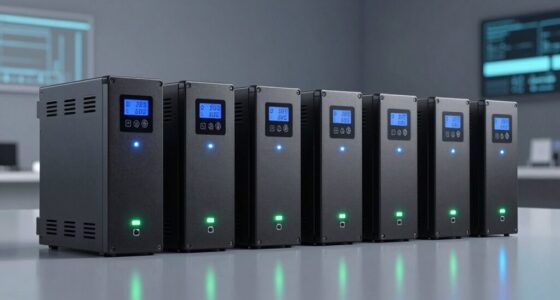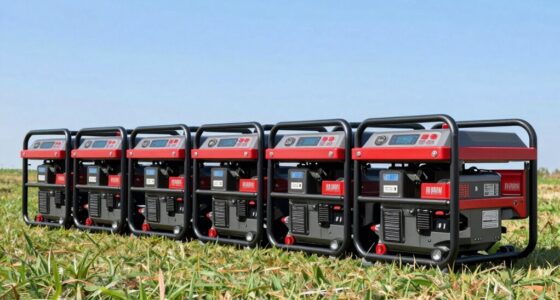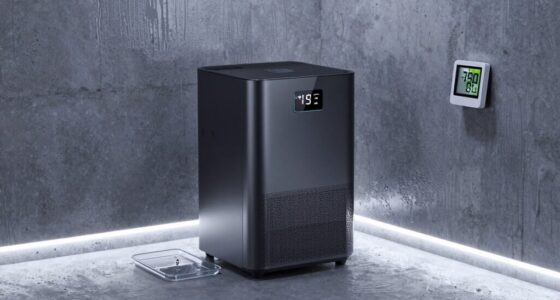
For whole house battery backups, I rank the Anker SOLIX E10 as the best overall choice for its broad 12–90 kWh capacity range, while the EF ECOFLOW TITAN stands out for high output and the ECO-WORTHY 48V system for a more fixed, inverter-and-battery setup. These products differ sharply in how much of a home they can support, how they connect to household circuits, and whether they are designed for portable use or a more permanent installation. A larger battery can run more loads for longer, but capacity alone does not tell you whether the system can start a pump, support central appliances, or connect safely to your panel. I compare those tradeoffs, along with expandability and setup demands, below. Continue reading for the full breakdown and help matching a system to your backup plan.

Get backup power and energy gear delivered free with Prime
- Fast, free delivery on millions of items
- Prime Video, Amazon Music and more included
- Member-only deals all year
Complete the kit


Key Takeaways
- Anker SOLIX E10 earns the broadest whole-home role in this lineup because its 12–90 kWh capacity range can be configured around very different household needs.
- EF ECOFLOW TITAN pairs 10,017 Wh of listed capacity with 7,200 W output, making it a stronger fit for higher-demand loads than compact units, though its portable-station format is not the same as a permanently integrated home system.
- ECO-WORTHY’s 48V system stands apart with a 10 kW inverter and two 51.2V 100Ah LiFePO4 batteries; buyers should weigh that fixed-system approach against the easier-to-move designs elsewhere in the roundup.
- BLUETTI FridgePower and Jackery HomePower 3600 Plus are better suited to essential circuits or selected appliances than a whole-home load, based on their stated capacities.
- The lineup shows that panel connection, inverter output, and usable capacity matter as much as headline battery size when deciding whether backup means a refrigerator and lights or much of the house.
| EF ECOFLOW TITAN Portable Power Station with 5 kWh Extra Battery, 10,017 Wh, 7,200 W |  | Best Portable Split-Phase Pick | Capacity: 10,017 Wh | Continuous output: 7,200 W | Output voltage: 120V/240V AC | VIEW LATEST PRICE | See Our Full Breakdown |
| ECO-WORTHY 48V Home Backup Power System with 10kW Inverter and Two 51.2V 100Ah LiFePO4 Batteries |  | Best Expandable Kit Value | Battery capacity: 10,240 Wh total | Battery configuration: Two 51.2V 100Ah batteries | Inverter output: 10,000 W | VIEW LATEST PRICE | See Our Full Breakdown |
| Anker SOLIX E10 Power Dock and Extra Battery, 12–90 kWh |  | Best for Whole-Home Integration | Battery capacity: 12 kWh, expandable to 90 kWh | Continuous output: 7.6 kW per unit; scales to 22.8 kW | Turbo output: 10 kW per unit; scales to 30 kW with three units | VIEW LATEST PRICE | See Our Full Breakdown |
| EF ECOFLOW DELTA Pro Ultra X Portable Power Station with AC Cable |  | Best Premium High-Capacity System | Capacity: 12,288 Wh | Output power: 12,000 W | Expandable output: 12–36 kW | VIEW LATEST PRICE | See Our Full Breakdown |
| BLUETTI FridgePower Backup System with BC200 Expansion Battery, 2016Wh Expandable to 4032Wh |  | Best for Essential Loads | Capacity: 2,016 Wh, expandable to 4,032 Wh | AC output: 1,800 W | Surge output: 3,600 W | VIEW LATEST PRICE | See Our Full Breakdown |
| Jackery HomePower 3600 Plus Portable Power Station, 3584Wh |  | Best Portable Mid-Range Backup | Battery capacity: 3,584Wh | AC output: 3,600W | Parallel output: Up to 7,200W | VIEW LATEST PRICE | See Our Full Breakdown |
| whole house battery backup | Weight | Capacity | Battery chemistry | Expandable capacity |
|---|---|---|---|---|
| EF ECOFLOW TITAN Portable Powe | 119 lb | 10,017 Wh | Lithium iron phosphate (LFP) | 5–30 kWh |
| ECO-WORTHY 48V Home Backup Pow | 265.5 lb | — | — | — |
| Anker SOLIX E10 Power Dock and | — | — | LFP | — |
| EF ECOFLOW DELTA Pro Ultra X P | 350 lb | 12,288 Wh | LiFePO₄ | 12–180 kWh |
| BLUETTI FridgePower Backup Sys | 41.9 lb | 2,016 Wh, expandable to 4,032 Wh | — | — |
| Jackery HomePower 3600 Plus Po | — | — | — | Up to 21kWh per unit or 43kWh with multiple units |
More Details on Our Top Picks
EF ECOFLOW TITAN Portable Power Station with 5 kWh Extra Battery, 10,017 Wh, 7,200 W
I’d rank the EF ECOFLOW TITAN high for buyers who want substantial backup power without starting with a permanently installed system. Its 120V/240V split-phase output and 7,200 W continuous rating can support a broader range of household loads than the BLUETTI FridgePower, which is better suited to a refrigerator or a small group of essentials. The included battery brings this package to 10,017 Wh, and the system can grow to 30 kWh with added batteries. AC, solar, and generator charging give owners more ways to replenish it during a long outage. The tradeoff is portability in name more than in practice: at 119 lb, moving it is a job, and reaching maximum capacity means buying more expansion batteries. I’d choose it for flexible, high-output backup, not hands-off whole-home integration.
Pros:- 120V/240V split-phase output supports more household equipment than a 120V-only unit.
- 7,200 W continuous output and 10,017 Wh included capacity suit substantial backup loads.
- Expandable from 5 kWh to 30 kWh as backup needs grow.
- AC, solar, and generator charging provide multiple replenishment options.
Cons:- At 119 lb, it is difficult to reposition without help.
- Reaching 30 kWh requires purchasing additional expansion batteries.
- Portable outlet-based backup is less integrated than the Anker SOLIX E10 Power Dock setup.
Best for: Households seeking portable 120V/240V backup for selected major loads, with the option to add storage and recharge from solar or a generator.
Not ideal for: Buyers who want an installed 200A whole-home connection or frequent one-person portability; it weighs 119 lb and the stated package does not include a whole-home dock.
- Capacity:10,017 Wh
- Continuous output:7,200 W
- Output voltage:120V/240V AC
- Battery chemistry:Lithium iron phosphate (LFP)
- Expandable capacity:5–30 kWh
- Maximum solar input:4 kW
- Weight:119 lb
- Connectivity:App control, Wi-Fi, Bluetooth 5.0
Our verdict“Choose the TITAN if you want expandable split-phase backup with several charging paths and can manage its weight and portable setup.”
ECO-WORTHY 48V Home Backup Power System with 10kW Inverter and Two 51.2V 100Ah LiFePO4 Batteries
The ECO-WORTHY 48V system stands out for buyers who want a substantial inverter-and-battery kit with room to build a larger installation over time. Its 10 kW inverter, 10,240 Wh of included storage, and 120/240V split-phase support give it a stronger home-system foundation than the portable EF ECOFLOW TITAN. It can also scale by paralleling up to six inverters and adding batteries, with stated storage expansion up to 163.84 kWh. Dual MPPT controllers make solar charging part of the system design rather than an afterthought. That flexibility comes with a serious setup burden: the full kit weighs 265.5 lb, ships in separate packages, and is less convenient to treat as a ready-to-roll backup. Compared with the Anker SOLIX E10, this is a more configurable kit, but not the simpler route to a Power Dock connection.
Pros:- Includes a 10 kW inverter and two LiFePO4 batteries for 10,240 Wh of storage.
- Supports 120V single-phase or 120/240V split-phase output.
- Dual independent MPPT controllers support solar input management.
- Expansion supports up to six inverters and 163.84 kWh of stated battery capacity.
Cons:- The complete system weighs 265.5 lb, making placement and handling difficult.
- Separate shipments can complicate delivery and installation planning.
- Unlike the Anker SOLIX E10 package, the listed kit does not specify a 200A whole-home Power Dock.
Best for: Homeowners planning a fixed 48V backup installation who want split-phase output, solar controls, and a path to add batteries or parallel inverters.
Not ideal for: Renters, buyers seeking a portable all-in-one station, or anyone unable to accommodate a heavy system and a more involved installation.
- Battery capacity:10,240 Wh total
- Battery configuration:Two 51.2V 100Ah batteries
- Inverter output:10,000 W
- Peak power:20,000 W
- Output:120V single-phase or 120/240V split-phase
- Charge controllers:Two independent MPPT controllers
- Maximum expandable battery capacity:163.84 kWh with up to 32 batteries
- Weight:265.5 lb
Our verdict“Pick ECO-WORTHY if you want a configurable fixed backup system and have the space and installation support to handle its size.”
Anker SOLIX E10 Power Dock and Extra Battery, 12–90 kWh
For readers whose priority is connecting backup to household circuits rather than managing a portable station, I’d put the Anker SOLIX E10 near the top. Its 200A Power Dock is the clearest whole-home integration feature in this lineup, while switchover in 20 ms or less is designed to keep connected equipment running through an outage. The included configuration provides 12 kWh and can expand to 90 kWh; that gives it a more direct home-backup path than the EF ECOFLOW TITAN, which offers split-phase output but is presented as a portable power station. The E10 also supports outdoor use across a stated -4°F to 131°F operating range. Its tradeoff is installation: a Power Dock connection may require professional work, and the dock and extra battery may arrive separately. Buyers wanting a simple outlet-based system should favor a portable model instead.
Pros:- 200A Power Dock is designed for whole-home backup coverage.
- Automatic switchover of 20 ms or less supports continuity for connected equipment.
- 12 kWh included capacity can expand to 90 kWh.
- Weatherproof design and a stated -4°F to 131°F operating range support outdoor placement.
Cons:- Professional installation may be needed for the Power Dock connection.
- The Power Dock and extra battery may be dispatched separately.
- At 7.6 kW continuous output per unit, its base output is lower than the ECO-WORTHY kit’s 10 kW inverter.
Best for: Homeowners seeking a dock-connected backup for household circuits, fast automatic switchover, and substantial expandable storage.
Not ideal for: Renters or buyers who want a ready-to-use portable power station without installation planning; the Power Dock may require professional installation.
- Battery capacity:12 kWh, expandable to 90 kWh
- Continuous output:7.6 kW per unit; scales to 22.8 kW
- Turbo output:10 kW per unit; scales to 30 kW with three units
- Power Dock coverage:200A whole-home backup
- Switchover time:20 ms or less
- Solar input:9 kW per unit
- Battery chemistry:LFP
- Operating temperature:-4°F to 131°F
Our verdict“Choose the E10 if whole-home dock integration and fast switchover matter more than a portable, outlet-based setup.”
EF ECOFLOW DELTA Pro Ultra X Portable Power Station with AC Cable
The EF ECOFLOW DELTA Pro Ultra X is the lineup’s strongest fit for a household planning for large loads and extended outages. It starts with 12,288 Wh and 12,000 W output, then can scale to 180 kWh of storage and 36 kW of output. That growth ceiling exceeds the Anker SOLIX E10’s stated 90 kWh, making the Ultra X more compelling for buyers building toward a very large backup system. Its under-20-ms transfer time and ability to use solar, battery, and off-peak grid power give owners several ways to keep the system supplied. The cost of that capacity is a 350 lb system and a less portable installation. The listed package includes an inverter and two batteries, but shipments may arrive separately. I’d skip it if your goal is simply to protect a fridge and a few essentials.
Pros:- 12,000 W output provides more starting power than the TITAN’s 7,200 W rating.
- Storage can expand from 12 kWh to 180 kWh, exceeding the E10’s stated 90 kWh ceiling.
- Output can expand from 12 kW to 36 kW.
- Under-20-ms transfer and solar, battery, and off-peak grid power support flexible backup operation.
Cons:- At 350 lb, the system is difficult to move or reposition.
- The inverter and extra battery may ship in separate packages.
- Its large expansion potential may be unnecessary for buyers backing up only essential appliances.
Best for: Homeowners planning high-load, long-duration backup who want substantial future capacity and output expansion.
Not ideal for: Small homes or essential-load-only buyers who do not need a large expandable system, and anyone who needs a backup unit they can readily move.
- Capacity:12,288 Wh
- Output power:12,000 W
- Expandable output:12–36 kW
- Expandable capacity:12–180 kWh
- Battery chemistry:LiFePO₄
- Transfer time:Under 20 ms
- Weight:350 lb
- Frequency:60 Hz
Our verdict“Choose the DELTA Pro Ultra X if you need a high-output system with room for very large storage expansion and can plan around its weight.”
BLUETTI FridgePower Backup System with BC200 Expansion Battery, 2016Wh Expandable to 4032Wh
The BLUETTI FridgePower is the most focused option here: it is designed to keep a refrigerator and other modest loads going, not to power an entire home. Its 1,800 W AC output, 2,016 Wh included capacity, and 10 ms UPS transfer make it a better match for essential appliances than the 10 kWh-plus systems from ECO-WORTHY or EF ECOFLOW. The included BC200 battery raises capacity to 4,032 Wh, while solar, AC, car, lead-acid, and generator charging offer several ways to refill it. A slim 75 mm body can suit a tighter installation, though the complete unit still weighs 41.9 lb. The stated runtime is only two minutes, with no conditions provided, so I would not use that figure to plan outage coverage. This is a targeted appliance backup, not whole-house coverage.
Pros:- 10 ms UPS transfer is designed to maintain power through brief interruptions.
- Includes a BC200 battery, bringing the listed capacity to 4,032 Wh.
- Multiple charging options include solar, AC, car, lead-acid, and generator power.
- 75 mm-thick design can fit tighter spaces than larger whole-home systems.
Cons:- 1,800 W AC output and 120V specification make it an essential-load unit rather than whole-home backup.
- Listed runtime is two minutes, with no conditions supplied to help estimate outage coverage.
- At 41.9 lb, it is not as effortless to move as its slim profile might suggest.
Best for: Households that want fast UPS-style protection for a refrigerator and a limited set of essential 120V appliances.
Not ideal for: Buyers expecting to run whole-home circuits, major 240V loads, or appliances for a known duration based on the supplied runtime information.
- Capacity:2,016 Wh, expandable to 4,032 Wh
- AC output:1,800 W
- Surge output:3,600 W
- UPS transfer time:10 ms
- Voltage:120V
- Charging sources:Solar, AC, car, lead-acid, and generator
- Weight:41.9 lb
- Dimensions:13.78 × 22.83 × 2.95 in
Our verdict“Pick FridgePower for fast, compact backup of a refrigerator and other essentials, not for whole-house power.”
Jackery HomePower 3600 Plus Portable Power Station, 3584Wh
I’d place the Jackery HomePower 3600 Plus in the portable middle ground: its 3,584Wh battery and 3,600W output can support several household essentials, while expansion offers a path to longer outages. Unlike the much larger EF ECOFLOW TITAN or Anker SOLIX E10 systems in this lineup, it starts as a single wheeled unit rather than a high-capacity home setup. That makes it easier to reposition and less involved to begin using, but its base capacity is a more limited reserve for whole-house loads. 240V operation requires a parallel connection, so buyers should not treat the listed output as a plug-and-play solution for every large appliance. Multiple charging methods, including solar and hybrid AC+DC, add flexibility; solar panels are optional, and the 77.2-pound weight still makes stairs awkward.
Pros:- 3,600W AC output can handle more demanding loads than smaller portable backup stations
- Expandable capacity provides a route to longer runtime as needs grow
- AC, solar, gas-generator, and hybrid charging offer several ways to replenish the battery
- Wheels and a telescopic handle make movement on level floors easier
Cons:- The 3,584Wh base capacity is modest beside larger systems in this roundup for extended whole-house backup
- 240V operation requires a parallel connection rather than working from one unit alone
- At 77.2 pounds, it is heavy to lift, and solar panels are sold separately
Best for: Households seeking a movable backup for selected essential circuits or appliances, with the option to add capacity later
Not ideal for: Buyers who need substantial whole-home capacity or 240V output from a single unit, or who must carry the system up stairs regularly
- Battery capacity:3,584Wh
- AC output:3,600W
- Parallel output:Up to 7,200W
- Voltage:120V; 240V in parallel
- Expandable capacity:Up to 21kWh per unit or 43kWh with multiple units
- Charging options and times:Hybrid AC+DC: 2 hours; AC or gas generator: 2.5 hours; solar: 4 hours
- Battery cycle life:6,000 cycles
- Weight and dimensions:77.2 pounds; 15.2 × 12.2 × 19.3 inches
- Warranty:5 years
Our verdict“Choose the Jackery for a movable, expandable backup for selected home loads, but pick a larger system if extended whole-house coverage is the priority.”
How We Picked
I compared these six systems by how credibly each can serve a whole-house backup plan, rather than treating any large portable power station as an automatic home solution. The main factors were stated battery capacity, inverter output, expansion range, system format, and the likely gap between powering selected essentials and supporting more household circuits. I also considered how much planning and installation a buyer may need, since a system that cannot connect to the loads a household wants to protect may not be useful regardless of its capacity.
The ranking favors products with greater potential to scale beyond a few appliances, while still distinguishing fixed home-backup equipment from portable stations. The Anker SOLIX E10 ranks first for its wide stated capacity range and home-focused dock format; the TITAN follows for its substantial output and capacity, while ECO-WORTHY offers a robust fixed-system alternative with a 10 kW inverter. The smaller BLUETTI and Jackery options rank lower for whole-home ambitions, but can make more sense for essential loads, simpler backup plans, or buyers who value a more manageable system.
| whole house battery backup | Battery chemistry |
|---|---|
| EF ECOFLOW TITAN Portable Powe | Lithium iron phosphate (LFP) |
| ECO-WORTHY 48V Home Backup Pow | — |
| Anker SOLIX E10 Power Dock and | LFP |
| EF ECOFLOW DELTA Pro Ultra X P | LiFePO₄ |
| BLUETTI FridgePower Backup Sys | — |
| Jackery HomePower 3600 Plus Po | — |
Factors to Consider When Choosing Whole House Battery Backups
Choosing a whole-house backup starts with defining what “whole house” means for your home. I would work from actual loads and outage priorities, then match the system’s output, capacity, connection method, and installation requirements to that plan.
Separate Power Output From Battery Capacity
Output, measured in watts, limits what can run at once; capacity, measured in watt-hours, helps determine how long it can run. A battery may have ample stored energy but still be unable to start a well pump, air conditioner, or other motor-driven appliance if its inverter cannot handle the starting demand. Make a list of the loads you expect to use together, then check both running and startup requirements against the system documentation. A common mistake is choosing by the largest capacity number alone. If you only need refrigeration, lights, and communications, a modest-output system may be enough, while high-demand appliances call for a more careful load plan. Ask an electrician to verify uncertain appliance requirements before buying.
Decide Which Circuits Need Backup
Whole-home backup can mean different things: powering a few chosen circuits, supporting most household loads with limits, or attempting to keep the entire panel operating. The connection hardware and system design determine which of those goals is practical, not just the battery pack. Map essential circuits such as refrigeration, heating controls, lighting, and internet equipment, then decide whether large loads like electric cooking or central cooling belong in the plan. Trying to back up every circuit can add installation complexity and drain stored energy quickly. A critical-load subpanel can focus capacity where it matters, while a panel-level solution may offer broader coverage but needs qualified planning. Confirm compatibility with your panel and local electrical rules before choosing a system.
Estimate Runtime From Real Use
Battery capacity is not the same as guaranteed runtime, because actual consumption, conversion losses, temperature, and battery reserve all affect delivered energy. Use appliance labels or a plug-in energy monitor to estimate daily consumption for the loads you plan to protect. Then ask how many hours or days of backup you need, rather than assuming a larger battery will cover an entire outage. Solar input can extend operation when conditions allow, but its contribution varies with weather, panel placement, and season. Buyers often underestimate cumulative loads such as refrigerators cycling through the day or heating equipment running overnight. Build a conservative estimate and leave room for unexpected use.
Check Expansion and Compatibility Before Scaling
Expandable capacity only helps when added batteries and equipment are compatible with the base system and its operating limits. Confirm the supported battery models, maximum system capacity, connection method, and whether expansion can be added later without replacing core hardware. Also check whether added storage increases runtime only or changes the amount of power the system can deliver at once; those are different benefits. A common buying error is assuming that extra batteries will solve an inverter-output limit. If your needs may grow, ask about the complete system configuration and required accessories before purchasing the first unit. The most useful expansion path is one that fits your future loads and installation plan, not simply the largest advertised capacity.
Plan for Installation, Transfer, and Safety
A home battery needs a safe path to household circuits, and portable outlets are not a substitute for a permitted panel connection. Depending on the product and local code, installation may involve a transfer switch, a backup gateway, a dedicated subpanel, or professional wiring. Never connect a power station to household wiring through an improvised cord or outlet; that can create dangerous backfeed. Ask whether the system supports automatic transfer or requires manual action when utility power fails, since that affects ease of use during an outage. Check placement, ventilation, indoor or outdoor ratings, and access for maintenance. Get installation requirements and labor scope in writing before committing to a system.
Match the System to Outage Frequency and Priorities
The right backup plan depends on how often outages happen and what they disrupt. A household facing brief interruptions may prioritize a straightforward system for refrigeration and communications, while frequent or extended outages can justify more storage, solar charging, or a fixed installation. Think through fuel-free operation, recharge options, noise expectations, and whether someone at home can manage a manual setup. Paying for capacity you rarely need may be less useful than investing in panel integration or a reliable charging plan. Conversely, a compact unit can leave a household exposed if its heating, water, or medical equipment depends on continuous power. Write down your must-run loads and outage duration before comparing system sizes.
Frequently Asked Questions
Can any of these systems power my entire house during an outage?
Not automatically. “Whole house” depends on the system’s output, how it connects to your electrical panel, and which loads you run at the same time. The Anker SOLIX E10 and ECO-WORTHY 48V system are the more home-oriented options in this group, but buyers still need to confirm their configured capacity, supported circuits, and installation requirements. Portable stations such as the BLUETTI FridgePower and Jackery HomePower 3600 Plus are more naturally suited to selected appliances or essential loads. Have an electrician compare your panel and appliance demands with the product’s documentation before treating any unit as full-home coverage.
How do I know whether a battery can start my well pump or air conditioner?
Check the appliance’s running wattage and its startup or surge demand, then compare both with the battery system’s inverter specifications. Motors can briefly draw much more power when starting than they use once running, so a system that appears large enough on capacity may still fail to start the appliance. Ask the manufacturer or installer for the applicable surge rating and duration, not just the continuous output figure. If several large loads may start together, plan for their combined demand. When appliance documentation is unclear, have a qualified electrician measure or estimate the load before selecting equipment.
Is a portable power station a safe way to connect backup power to my home panel?
A portable power station should only connect to home circuits through a manufacturer-approved and code-compliant method. A suitable transfer switch or other approved equipment prevents utility power from feeding back into wiring where it could endanger workers or damage equipment. Never use a male-to-male cord or feed power into a wall outlet. Some portable systems may support a home integration accessory, while others are intended to power appliances directly from their outlets. Confirm the exact connection method with the product maker and a licensed electrician before purchase.
Should I buy more battery capacity or a higher-output inverter?
Choose based on the problem you need to solve: inverter output supports simultaneous and high-startup loads, while battery capacity supports longer runtime. If your system cannot start a pump or run several appliances at once, adding batteries may not fix the limit. If it can run your chosen loads but runs out too soon, more storage may be the better addition. Compare both figures against a written list of backup loads and expected outage duration. For a whole-home plan, check whether the system’s expansion options increase energy storage, output, or both.
Can solar panels keep a whole-house battery charged through a long outage?
Solar can help recharge a battery during an outage, but it does not promise continuous operation or a fixed daily energy amount. Production changes with clouds, season, shading, panel angle, and the system’s solar input limits. Your home may also use energy faster than panels can replace it, especially when heating, cooling, or cooking loads are involved. Check the system’s compatible solar input range and plan how panels will be connected and placed safely. For extended outages, reduce nonessential loads and treat solar as part of a backup plan rather than a guaranteed substitute for stored energy.
Conclusion
For the broadest whole-home backup ambition, I would start with the Anker SOLIX E10, whose 12–90 kWh range gives it the most adaptable capacity path in this lineup. The EF ECOFLOW TITAN is my best pick for buyers who prioritize substantial output in a portable-station format, while the ECO-WORTHY 48V system suits those looking for a fixed inverter-and-battery setup with a 10 kW inverter. I would treat the BLUETTI FridgePower as a focused essential-appliance choice and the Jackery HomePower 3600 Plus as a simpler entry point for selected loads, not a full-panel solution. For value, compare the ECO-WORTHY system’s included inverter and battery configuration against the installation and expansion needs of larger home-focused systems. Beginners should first define a small set of must-run circuits and get an electrician’s connection plan; buyers with specific loads should verify startup wattage before choosing. The best fit is the system that can safely power your priority circuits for the outage duration you expect.