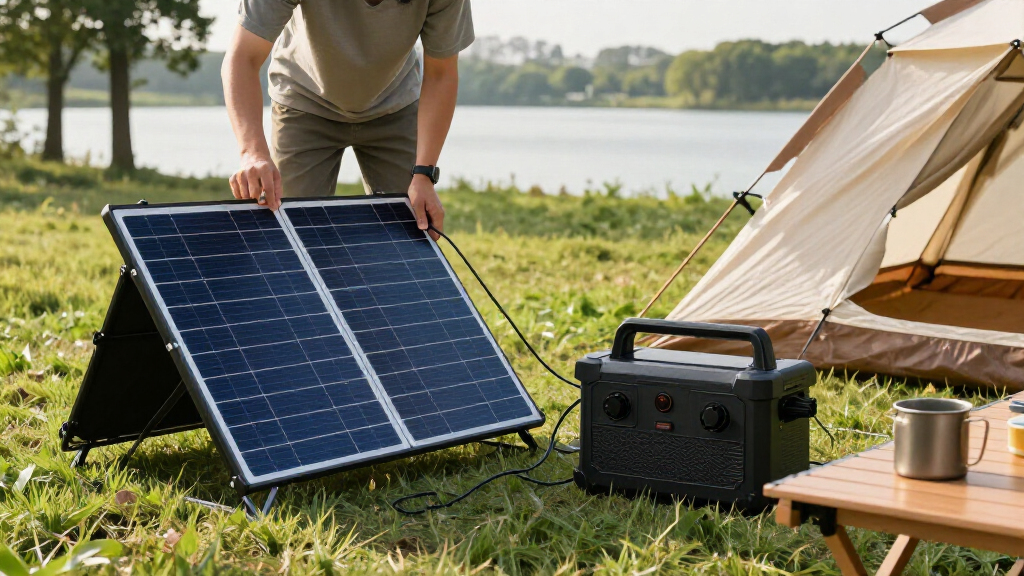
Portable solar panels for power stations can keep a battery topped up away from an outlet, but the right choice depends on panel output, portability, and connector compatibility. I’d name the 400W Foldable Portable Solar Panel best overall for buyers who want higher potential output, while the Renogy 200W stands out for its USB-C and USB-A ports and the HQST 200W N-Type for its adjustable kickstands. The main tradeoff is between greater panel area for faster charging and lighter, easier-to-carry designs that may collect less energy at once. You’ll also need to match the panel’s voltage and connector to your power station rather than relying on wattage alone. Read on for the full comparison and guidance on choosing a panel that fits your gear.

Get backup power and energy gear delivered free with Prime
- Fast, free delivery on millions of items
- Prime Video, Amazon Music and more included
- Member-only deals all year
Key Takeaways
- The 400W foldable panel leads on potential output, but its larger format may be harder to transport and place than the 200W options.
- Renogy adds direct-device charging ports, a useful distinction when you want to charge small electronics without using the power station’s stored energy.
- HQST’s adjustable kickstands address panel positioning; the ability to angle a panel can matter when sunlight shifts during the day.
- The Sogiobe emphasizes lighter handling and ETFE lamination, while the other 200W panels place more emphasis on features such as ports or kickstands.
- ZeroKor is a kit rather than a standalone panel: it pairs a 60W solar panel with a power station, so its role differs from the higher-output panels intended to pair with a station you already own.
| 400W Foldable Portable Solar Panel for Power Stations |  | Best for Higher-Wattage Solar Input | Output voltage: 40V | Cell type: Monocrystalline | Stated conversion efficiency: 23.4% | VIEW LATEST PRICE | See Our Full Breakdown |
| Renogy 200W Portable Foldable Solar Panel with USB-C and USB-A Outputs |  | Best for Direct Device Charging | Model: RPP200EF-SE | Maximum power: 200W | Cell type: 16 N-type monocrystalline cells | VIEW LATEST PRICE | See Our Full Breakdown |
| ZeroKor 300W Portable Power Station with 60W Solar Panel |  | Best Starter Solar-and-Station Bundle | Power station output: 300W maximum | Included solar panel: 60W monocrystalline | Panel conversion efficiency: 20.5% | VIEW LATEST PRICE | See Our Full Breakdown |
| Sogiobe 200W Lightweight Foldable Portable Solar Panel with ETFE Lamination |  | Best for Weather-Exposed Campsites | Maximum power: 200W | Solar cell type: A+ 16BB cells | Maximum conversion efficiency: 25.5% | VIEW LATEST PRICE | See Our Full Breakdown |
| HQST 200W Portable N-Type Solar Panel with Adjustable Kickstands |  | Best Value for a Straightforward Power-Station Setup | Model: HPP200N | Maximum power: 200W | Cell type: 16BB N-type | VIEW LATEST PRICE | See Our Full Breakdown |
| TPDEFZQ 200W Foldable Portable Solar Panel |  | Best for Broad Power-Station Compatibility | Maximum power: 200 watts | Conversion efficiency: Up to 25.5% | Cell type: Monocrystalline silicon | VIEW LATEST PRICE | See Our Full Breakdown |
| portable solar panels for power station | Cell type | Connectors | Maximum power |
|---|---|---|---|
| 400W Foldable Portable Solar P | Monocrystalline | MC4 | — |
| Renogy 200W Portable Foldable | 16 N-type monocrystalline cells | MC4, USB-C, and USB-A | 200W |
| ZeroKor 300W Portable Power St | — | — | — |
| Sogiobe 200W Lightweight Folda | — | MC4 to XT60, DC5521, DC7909 (8mm), DC8020, and Anderson | 200W |
| HQST 200W Portable N-Type Sola | 16BB N-type | — | 200W |
| TPDEFZQ 200W Foldable Portable | Monocrystalline silicon | 5-in-1 cable: XT60, DC5521, Anderson, DC7909 (8 mm), and DC8020 | 200 watts |
More Details on Our Top Picks
400W Foldable Portable Solar Panel for Power Stations
For buyers whose power station can accept substantial solar input, this 400W panel offers twice the stated wattage of the Renogy and HQST 200W options. Its MC4 connectors are a familiar connection type for many stations, while adjustable kickstands help aim the panel as the sun shifts. The stated 23.4% cell efficiency and ETFE-laminated surface suit outdoor charging, but rated output is not a promise of what you will get in changing sunlight. I would check the station’s maximum solar input and connector requirements before choosing it; a station with a lower input limit cannot use all the panel’s rated capacity. The main portability gap is that weight and folded dimensions are not provided, making it harder to judge against the more clearly sized 200W models.
Pros:- 400W rated output offers more stated capacity than the 200W Renogy, Sogiobe, and HQST panels.
- MC4 connectors support connection to many compatible power stations.
- Adjustable kickstands allow users to reposition the panel toward available sunlight.
- ETFE lamination is described as dustproof and high-temperature resistant.
Cons:- The product data does not provide weight or folded dimensions, limiting portability comparisons.
- A compatible power station is required to store and use the generated energy.
- The station’s solar-input limit may prevent buyers from using the panel’s full rated capacity.
Best for: Power-station owners with a high solar-input limit who want a foldable panel with more rated wattage than the 200W options.
Not ideal for: Backpackers and buyers who need a known packed size or weight, or whose power station cannot accept this panel’s voltage and potential input.
- Output voltage:40V
- Cell type:Monocrystalline
- Stated conversion efficiency:23.4%
- Surface:ETFE laminated
- Connectors:MC4
- Design:Foldable with adjustable kickstands
- Weather resistance:Described as dustproof and high-temperature resistant
Our verdict“Choose this panel when your power station supports higher solar input and you value 400W of rated output more than documented carry dimensions.”
Renogy 200W Portable Foldable Solar Panel with USB-C and USB-A Outputs
The Renogy stands apart from the HQST and Sogiobe panels by pairing an MC4 power-station output with USB-C PD and two USB-A ports, so compatible small devices can charge directly without drawing from the station. Its 25% N-type cell efficiency is a strong stated figure for a 200W foldable panel, and four kickstands give buyers several positioning options. The tradeoff is that the 4-in-1 power-station adapter is sold separately, so MC4 alone may not match the input cable your station requires. At 13.89 lb, it is also heavier than the 11 lb HQST and 11.57 lb Sogiobe models. I would favor it for mixed device-and-station charging, but skip it if minimum carry weight or an included station adapter matters more.
Pros:- USB-C PD and dual USB-A outputs allow direct charging of compatible devices.
- Stated 25% efficiency from N-type monocrystalline cells.
- Four kickstands provide multiple positioning angles.
- Magnetic closure and folded dimensions make its packed form easier to assess.
Cons:- The 4-in-1 adapter for power-station connections is sold separately.
- At 13.89 lb, it weighs more than the HQST and Sogiobe 200W panels.
- Its 200W rating is lower than the 400W foldable panel in this roundup.
Best for: Campers and RV travelers who want to charge USB-C or USB-A devices directly while also having the option to feed a compatible power station.
Not ideal for: Hikers prioritizing a lighter panel, or power-station owners who need a bundled adapter cable rather than a separately sold 4-in-1 adapter.
- Model:RPP200EF-SE
- Maximum power:200W
- Cell type:16 N-type monocrystalline cells
- Stated efficiency:25%
- Maximum voltage:21.6V
- Amperage capacity:11.3A
- USB outputs:45W USB-C PD and two USB-A ports
- Connectors:MC4, USB-C, and USB-A
- Weight and folded dimensions:13.89 lb; 23.72 × 22.99 × 1.97 in
Our verdict“Pick the Renogy if direct USB charging matters alongside station charging and you can accommodate its weight and separate adapter cost.”
ZeroKor 300W Portable Power Station with 60W Solar Panel
Unlike the separate panels in this roundup, the ZeroKor includes both a 300W power station and a 60W solar panel, giving first-time buyers a ready-made small-device setup. It can also recharge from an AC outlet or a 12V car outlet, which provides alternatives when sunlight is limited. That convenience comes with a clear ceiling: the panel’s 60W rating is far below the 200W Renogy, HQST, and Sogiobe panels, so replenishing the station by solar will be more limited. The station is rated for devices up to 300W, not high-draw appliances, and its panel junction box must stay dry. I would choose it for phones, tablets, and modest laptop use rather than as a way to expand an existing higher-capacity power station.
Pros:- Includes both a power station and a 60W monocrystalline solar panel.
- Supports AC, solar, and 12V car charging.
- Multiple USB, DC, and AC outputs cover a range of small devices.
- Includes short-circuit, over-current, over-voltage, overload, and overheating protections.
Cons:- The included 60W panel has much lower rated output than the standalone 200W and 400W panels.
- The station is limited to 300W output and is unsuitable for appliances above that rating.
- The solar panel junction box is not waterproof and must be kept dry.
Best for: New campers or emergency-kit buyers who want a small power station and included solar panel for phones, tablets, and other low-draw devices.
Not ideal for: Owners of larger power stations seeking a high-output add-on panel, or anyone who needs to run appliances drawing more than 300W.
- Power station output:300W maximum
- Included solar panel:60W monocrystalline
- Panel conversion efficiency:20.5%
- AC outlets:Two; 300W maximum
- USB outputs:Three USB ports and one quick-charge USB port
- DC output:9–12.6V, 10A maximum
- Charging methods:AC outlet, compatible solar panel, or 12V car outlet
- Protection features:Short-circuit, over-current, over-voltage, overload, and overheating protection
- Flashlight modes:Reading and SOS
Our verdict“Choose this bundled kit for a compact small-device setup, not for fast solar charging or running high-wattage appliances.”
Sogiobe 200W Lightweight Foldable Portable Solar Panel with ETFE Lamination
The Sogiobe’s main distinction is its IP68 rating, paired with ETFE lamination and a one-piece construction described as suitable for outdoor conditions. That makes it a stronger fit for buyers who expect dust or wet weather than the Renogy, whose supplied details focus more on direct USB charging. A 5-in-1 connector cable also covers several common power-station input types without requiring the separate 4-in-1 adapter listed for the Renogy. Its 11.57 lb weight is lower than Renogy’s, though it sits just above the 11 lb HQST. The unusual listed folded dimension of 79.13 inches is a serious packing concern: verify the measurement and your storage space before buying. The station’s own maximum solar-input rating can also cap the power it accepts.
Pros:- IP68 rating is specified for resistance to water and dust.
- Included 5-in-1 cable supports several common power-station connector types.
- Adjustable kickstands and a built-in angle guide support panel positioning.
- Stated maximum conversion efficiency of 25.5%.
Cons:- The listed folded length of 79.13 inches is unusually long and may complicate transport or storage.
- The power station’s maximum solar input can limit charging power.
- Its 11.57 lb weight is higher than the 11 lb HQST panel.
Best for: Car campers and RV owners who want a 200W panel with broad connector support and a stated IP68 ingress-protection rating.
Not ideal for: Buyers with limited storage space who need compact, clearly documented folded dimensions, or users whose station has a low solar-input limit.
- Maximum power:200W
- Solar cell type:A+ 16BB cells
- Maximum conversion efficiency:25.5%
- Lamination:ETFE
- Ingress protection:IP68
- Weight:11.57 lb
- Listed folded dimensions:79.13 × 23.14 × 1.77 in
- Connectors:MC4 to XT60, DC5521, DC7909 (8mm), DC8020, and Anderson
- Warranty:12 months
Our verdict“Favor the Sogiobe for outdoor exposure and connector flexibility, but verify its listed folded dimensions before planning transport.”
HQST 200W Portable N-Type Solar Panel with Adjustable Kickstands
The HQST is a practical middle ground for buyers who want a 200W panel with a bundled multi-connector cable but do not need the Renogy’s direct USB outputs. Its 4.9-foot adapter includes XT60, DC7909, and DC5521 connectors, covering several station inputs, while the stated up to 25% efficiency matches the Renogy’s figure. At 11 lb, it is lighter than Renogy and slightly lighter than Sogiobe, and its 40°–60° kickstand adjustment gives some control over panel angle. The Sogiobe offers a broader five-connector cable and an IP68 rating; HQST specifies IP67 instead. This panel still requires a compatible station, and its 200W rating may be more than some stations can accept. I would choose it for a simple, relatively light station-charging setup, not direct phone charging.
Pros:- Includes a 4.9-foot adapter cable with XT60, DC7909, and DC5521 connectors.
- 16BB N-type cells have a stated efficiency of up to 25%.
- At 11 lb, it is lighter than the Renogy and Sogiobe panels.
- Adjustable kickstands provide a 40°–60° positioning range.
Cons:- Requires a compatible power station and adherence to its solar input limits.
- It does not list USB outputs for charging devices directly.
- Its IP67 rating is below the Sogiobe’s stated IP68 rating.
Best for: Campers and RV owners who want a relatively light 200W panel with an included cable for several common power-station inputs.
Not ideal for: Buyers who need direct USB device outputs, the broader connector selection listed for the Sogiobe, or a panel above 200W.
- Model:HPP200N
- Maximum power:200W
- Cell type:16BB N-type
- Efficiency:Up to 25%
- Weight:11 lb
- Dimensions:3 × 23 × 26 in
- Folded thickness:1.97 in
- Kickstand adjustment:40°–60°
- Adapter cable:4.9 ft; XT60, DC7909 (8 mm), and DC5521 connectors
Our verdict“Pick the HQST for a lighter 200W station-charging panel with a bundled three-connector cable, provided you do not need direct USB charging.”
TPDEFZQ 200W Foldable Portable Solar Panel
The TPDEFZQ 200W earns its place for buyers who want one panel to connect with several power-station brands. Its included 5-in-1 cable has XT60, DC5521, Anderson, DC7909, and DC8020 connectors, reducing the chance that a separate adapter is needed. That gives it a practical compatibility advantage over the Renogy 200W Portable Foldable Solar Panel, whose listed USB-C and USB-A outputs emphasize direct device charging. The TPDEFZQ also folds for storage and lists an IP68 dust- and waterproof rating, while its monocrystalline cells are rated for up to 25.5% conversion efficiency. The tradeoff is carrying weight: the specifications list 17 pounds, while the description also states 11.79 pounds. I would verify the actual weight before choosing it for frequent hikes; the 5-in-1 connector set is more compelling for vehicle trips and campsite setups.
Pros:- Five included connector types cover several common power-station input formats.
- Folding design and magnetic carry handle support storage and transport.
- Listed IP68 protection suits users who want dust- and water-resistant panel construction.
- Monocrystalline cells are rated for up to 25.5% conversion efficiency.
Cons:- Weight information conflicts: the specifications list 17 pounds, while the description says 11.79 pounds.
- At the listed 17 pounds, it may be cumbersome for carrying over long distances.
- The supplied details do not specify USB-C or USB-A outputs for directly charging small devices.
Best for: Campers and road-trip users with a power station that accepts one of the included connector types, especially those who value a broad cable selection.
Not ideal for: Hikers or buyers who need dependable carry-weight information; the listed weight is 17 pounds, and the product description gives a conflicting 11.79-pound figure.
- Maximum power:200 watts
- Conversion efficiency:Up to 25.5%
- Cell type:Monocrystalline silicon
- Output voltage:18 volts
- Connectors:5-in-1 cable: XT60, DC5521, Anderson, DC7909 (8 mm), and DC8020
- Protection:IP68 waterproof and dustproof
- Dimensions:23.22 x 21.22 x 1.77 inches
- Listed weight:17 pounds; product description also states 11.79 pounds
- Warranty:12 months
Our verdict“Choose the TPDEFZQ if you need a foldable 200W panel with several power-station connector options, but verify its weight before buying for portable trips.”
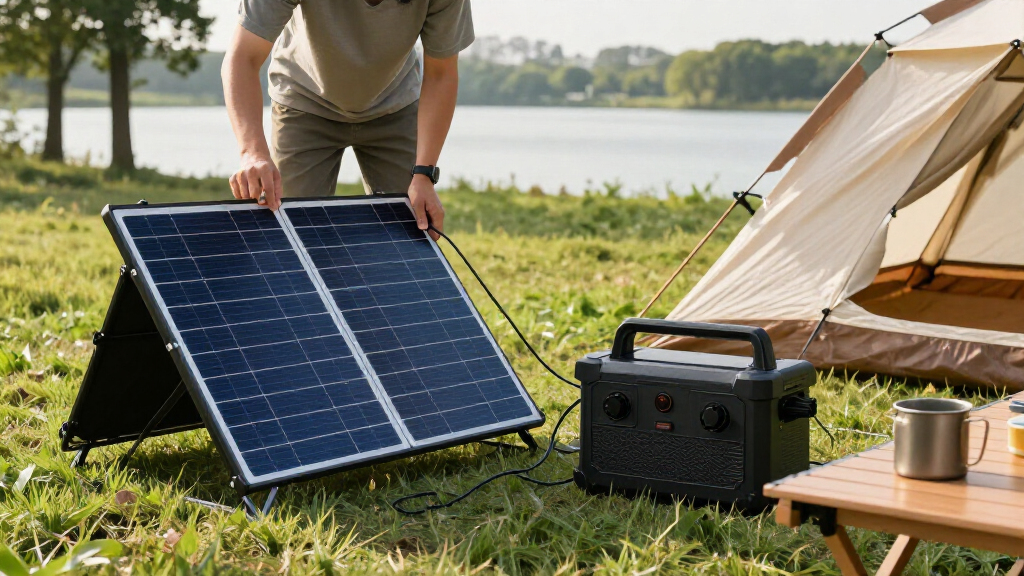
How We Picked
I ranked these options around what matters when charging a portable power station: stated panel output, practical portability, setup features, and how clearly the product fits a particular kind of buyer. Output is useful only when the panel’s voltage, current, and connector work with the station’s solar input, so compatibility is a central part of the comparison rather than an afterthought. I also looked at features that can affect day-to-day use, including kickstands, device-charging ports, construction details, and whether the listing pairs the panel with a station.
The 400W foldable panel ranks first for its higher stated output, with the caveat that a larger panel can be less convenient to carry and position. Among the 200W choices, I separate models by their practical strengths: Renogy for added device ports, HQST for adjustable positioning, and Sogiobe for a lightweight design. TPDEFZQ is a straightforward 200W alternative, while the ZeroKor kit ranks for buyers who need a starter package, not for shoppers seeking a high-output panel to pair with an existing station. Product details supplied here do not establish comparative real-world charging results, so I avoid treating rated wattage as a guarantee of performance.
Factors to Consider When Choosing Portable Solar Panels For Power Stations
Choosing a solar panel is not just a matter of buying the highest wattage. I’d start with the power station’s input limits, then weigh how often you’ll carry the panel, where you’ll set it up, and what you expect to charge. These broader checks can prevent a panel that looks suitable on paper from being a poor match outdoors.
Match the Panel to Your Station’s Solar Input
Check the station manual for its accepted solar-input voltage range, maximum current, and connector type before choosing a panel. A panel’s headline wattage does not confirm that it can safely or effectively charge a specific station. Some stations need an adapter, and an incompatible connector or input range can make a seemingly good pairing unusable. Avoid assuming that panels from the same brand will automatically work together. If you plan to connect multiple panels, check the station’s rules for series or parallel wiring rather than improvising. When specifications are unclear, confirm compatibility with the station maker before buying.
Choose Output Around Your Real Charging Routine
Higher rated wattage can reduce charging time under suitable conditions, but it also usually means a larger panel to carry and deploy. Estimate your daily energy needs in watt-hours and compare them with the station’s capacity and the devices you expect to run. Then account for cloud, shade, panel angle, and shorter winter days, all of which can reduce solar harvest. A panel that is oversized for occasional phone charging may be unnecessary, while a small panel may frustrate someone replenishing a large battery each day. Treat the listed wattage as a rating, not a promise of continuous output. Paying more for extra capacity makes sense only if your station can accept it and you can manage the panel’s size.
Balance Portability Against Setup and Collection Area
Folded dimensions and carrying weight affect whether you’ll bring a panel on a hike, road trip, or campsite stay. Larger panels can collect more energy at once, but they need more clear ground or table space and can be awkward in wind. Small panels are easier to move, yet may require longer exposure to gather the same energy. Consider who will carry and set up the panel, not just how it fits in a vehicle. A compact option can be the better purchase if a large panel would stay packed away. For a fixed campsite or vehicle base, a bigger footprint may be a reasonable trade for more rated output.
Look Beyond the Wattage Label to Positioning
Sunlight changes direction and intensity, so a panel’s placement can affect its output through the day. Kickstands can make it easier to angle a foldable panel toward the sun, but they still need stable ground and occasional repositioning. Shade from a tree, tent, or vehicle can cut output, even if most of the panel remains in direct light. Before choosing a design, think about where you’ll use it and whether you can leave it exposed while the power station stays nearby. A panel that is easy to angle may be more useful than a higher-rated one that sits poorly on your typical terrain. Keep cables clear of walkways and protect connectors from dirt and moisture during setup.
Decide Whether Direct USB Charging Matters
USB ports on a panel can charge phones or small devices directly, which may preserve the power station’s stored energy for larger loads. That convenience is useful on short trips, but it does not replace checking whether the ports provide the output your devices require. Direct charging can also vary with changing sunlight, so a device may charge less consistently than it would from a battery. If you already carry a power station, routing small devices through its USB ports may be simpler. If you want a self-contained package, a kit such as the ZeroKor bundle may appeal, though its included panel is rated at 60W and serves a different use case from the standalone 200W and 400W options. Choose the arrangement that fits how you actually charge, not the one with the longest feature list.
Check What Is Included and How You’ll Maintain It
Confirm whether the listing includes the cables or adapters needed for your station; a panel’s connector may not match your battery’s input. Ask about the warranty and care instructions, since foldable panels can be exposed to dust, rain, transport knocks, and repeated setup. A protective case can help during transit, but it does not make a panel safe to leave out in severe weather. Clean the surface with the method recommended by the maker and avoid putting strain on cable joints. Consider replacement or repair options before buying a panel you expect to use regularly. A slightly simpler panel with clear compatibility and support may be a safer choice than one whose specifications leave key questions unanswered.
Frequently Asked Questions
Can I use any of these panels with a power station from another brand?
Possibly, but the brand name alone does not determine compatibility. Compare the panel’s voltage and current with the station’s permitted solar-input range, then check the connector and any adapter requirements. Do not assume a cable that fits physically is electrically suitable. Also confirm whether the station limits total solar wattage or requires a particular wiring arrangement for multiple panels. If any specification is missing, ask the station manufacturer before connecting the panel.
Is a 400W panel always a better choice than a 200W panel?
No. A 400W rating gives more potential charging capacity in suitable conditions, but the panel may take more room and effort to carry and set up. A 200W panel can be a more practical fit for modest charging needs, smaller vehicles, or trips where portability matters more than peak collection. The power station must also accept the panel’s output; otherwise, the extra rated capacity may not translate into a useful charging advantage. Choose based on your station’s input limit and how much energy you need to replace.
Will a portable panel charge my station on cloudy days?
It may still produce some power, but output can fall sharply when sunlight is weak or obstructed. Cloud cover, tree shade, panel angle, and the time of year all affect how much energy reaches the station. That means a solar panel is less predictable than plugging into an outlet, especially if you need a full recharge by a set time. For trips with little sun, plan a backup charging method or bring enough stored capacity for your expected use. Avoid planning around the panel’s rated wattage as though it were available throughout the day.
Should I choose a panel with USB ports if I already own a power station?
USB ports can be handy if you want to charge a phone or other small device directly while the panel is in sunlight. That setup can leave more stored energy in the station for appliances, but direct charging may vary as sunlight changes. If you prefer steady charging, using the power station as a buffer may be more convenient. The Renogy model is the standout here because it lists both USB-C and USB-A outputs. Check that the port output suits your devices before treating the feature as a deciding factor.
Does the ZeroKor bundle make sense if I already have a power station?
It may, but the bundle’s appeal depends on whether you need the included station as well as the 60W panel. If you already own a station, compare that panel’s output and connector with your existing unit before buying; the bundled panel is a different proposition from the standalone 200W and 400W choices in this roundup. Buyers seeking a panel to replenish a larger station may prefer to focus on a compatible higher-output option. The kit is more relevant when you want a paired starter setup and its capacity suits your planned use. Check exactly what is included and the station’s specifications before deciding.
Conclusion
For most buyers who want higher potential panel output, I’d choose the 400W Foldable Portable Solar Panel as the best overall—provided its size and electrical specifications suit your station. The best value among the 200W options is the TPDEFZQ for shoppers who want a straightforward panel and do not need the Renogy’s USB ports or HQST’s adjustable kickstands; confirm its included cables and compatibility before purchase. For a more feature-focused choice, I’d name Renogy the best premium-style pick for its USB-C and USB-A outputs, while the Sogiobe makes sense if lighter handling and ETFE lamination are priorities. Beginners seeking a bundled setup should compare the ZeroKor kit, but its 60W panel is not a substitute for the higher-output standalone choices. If panel positioning matters most, choose HQST for its adjustable kickstands. My final check would be the power station’s input specifications: the best panel is the one your station can accept and you’ll actually want to carry.
Black Friday Picks

Bose Home Speaker 500 Smart Bluetooth Speaker, Black
As an affiliate, we earn on qualifying purchases.