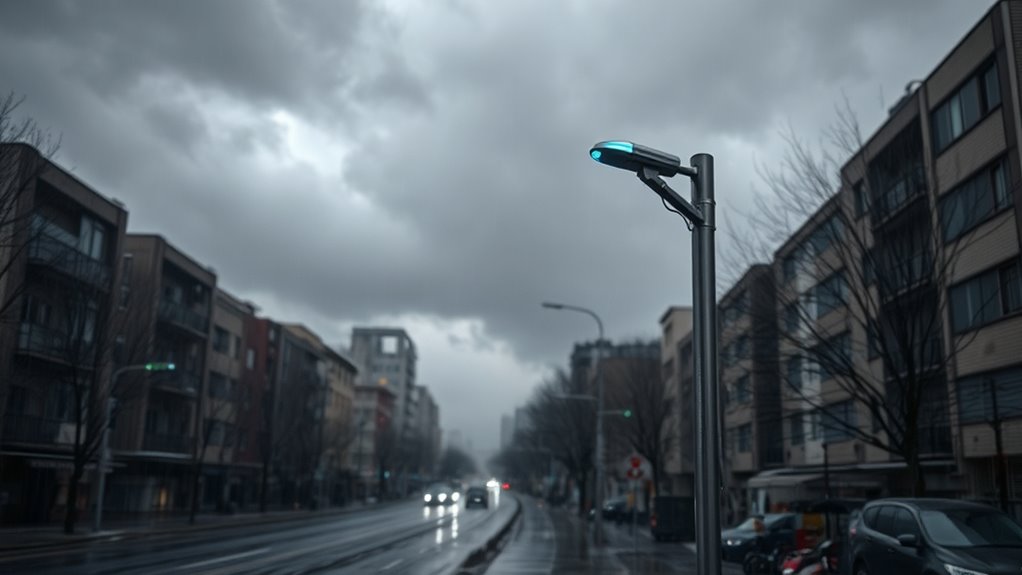

After a major storm, tracking air quality is essential because debris stirred up by winds releases pollutants like dust and tiny particles that can harm your health. You should use real-time sensors, air quality apps, or local monitoring stations to stay updated. These tools help you understand how far pollutants have spread and when it’s safer to go outside. To learn how to better protect yourself, keep exploring how storm debris impacts air quality and health.
Key Takeaways
- Use real-time air quality sensors and indices to monitor pollution levels post-storm.
- Observe increased particulate matter (PM2.5, PM10) as debris disperses into the air.
- Track how far airborne pollutants spread to assess potential health risks.
- Collect data to inform public advisories and safety measures during recovery.
- Analyze pollution patterns to improve response strategies and reduce ongoing air quality issues.

After a storm passes, the air quality often worsens due to increased pollutants and debris stirred up by strong winds and heavy rainfall. The aftermath of a storm doesn’t just leave behind visible destruction; it also markedly impacts the air you breathe. As winds whip through trees and buildings, they pick up storm debris—twigs, leaves, dust, and even larger objects—that become airborne particles contributing to pollution dispersion. These particles linger in the air, reducing visibility and potentially triggering respiratory issues for vulnerable populations. The more intense the storm, the more debris gets dispersed, creating a cloud of pollutants that can hover for hours or even days. Monitoring how storm debris affects air quality is essential because these particles can carry contaminants from soil, water, and pollution sources, spreading them across neighborhoods. Once airborne, storm debris acts as a vehicle for pollution dispersion, pushing pollutants from localized sources into broader areas. This dispersion can complicate efforts to evaluate air quality, as it often results in sudden spikes in particulate matter (PM) levels, especially PM2.5 and PM10. These tiny particles are particularly hazardous because they can penetrate deep into your lungs and enter your bloodstream, causing health problems such as asthma attacks, heart issues, or worsening of existing respiratory conditions. Additionally, the presence of airborne pollutants can aggravate allergy symptoms and reduce overall air quality, making it more challenging for vulnerable groups to breathe comfortably. Tracking air quality after storms involves paying close attention to real-time data from sensors and air quality indices. These tools help you understand how far pollution has dispersed and whether dangerous levels of particulates are present. For instance, during the hours following a storm, air quality monitors might indicate a rise in particulate levels due to storm debris. This information is critical if you’re outdoors or have health vulnerabilities. In some cases, authorities issue advisories urging you to stay indoors or wear protective masks until pollution levels decline. Understanding pollution dispersion caused by storm debris also helps emergency responders and city planners develop strategies to mitigate air quality issues. Clearing storm debris from streets and public spaces can reduce ongoing pollution dispersion, but it’s often a slow process. Meanwhile, tracking how pollutants spread allows you to make informed decisions about outdoor activities and health precautions. Being aware of the patterns of air quality change after storms enables you to better prepare, whether by improving indoor air filtration, limiting outdoor exposure, or adjusting your routines based on real-time air quality data. Ultimately, diligent tracking and understanding of pollution dispersion from storm debris empower you to protect your health during and after severe weather events.
Frequently Asked Questions
How Do Storm Events Influence Long-Term Air Quality Trends?
Storm events can substantially influence long-term air quality trends by releasing storm-related pollutants like debris, mold spores, and chemical residues into the air. You might notice increased levels of particulates and pollutants in the aftermath, which can cause respiratory issues and other long-term health impacts. Over time, these pollutants can accumulate, making it essential for you to monitor air quality and take protective measures during and after storms to reduce health risks.
What Technologies Are Best for Real-Time Air Quality Monitoring Post-Storm?
Imagine a watchful eye over storm aftermaths—sensor networks and drone surveillance are your best tools. Sensor networks provide continuous, real-time data from multiple locations, giving you immediate insights into air quality. Drones can access hard-to-reach areas, capturing aerial images and air samples swiftly. Together, these technologies offer a dynamic and all-encompassing approach, ensuring you stay ahead of hazardous pollutants and protect public health efficiently.
How Can Individuals Protect Themselves From Poor Air Quality After Storms?
To protect your respiratory health after storms, you should stay indoors as much as possible and keep windows closed. Wearing protective gear like masks helps filter out harmful pollutants and debris in the air. Use air purifiers if available, and avoid outdoor activities until air quality improves. Staying informed about local air quality reports allows you to make safer decisions and reduce exposure to poor air quality.
Are Certain Populations More Vulnerable to Post-Storm Air Pollution?
Think of vulnerable populations as fragile glass in a storm—more likely to shatter under stress. Post-storm air pollution hits these groups hardest, especially those facing health disparities like low-income communities, children, and the elderly. Their limited access to healthcare and resources makes them more susceptible to respiratory issues and other health problems. Recognizing these disparities helps you understand why targeted protections are essential after major storms.
What Role Do Local Governments Play in Managing Post-Storm Air Quality?
Local governments play a vital role in managing post-storm air quality by implementing urban planning strategies that reduce pollution risks. They also raise public awareness about air quality hazards and safety measures. You can support these efforts by staying informed about local alerts, following evacuation or safety instructions, and participating in community programs. Your cooperation helps improve air quality and protects vulnerable populations during recovery from storm events.
Conclusion
As you watch storms roll in and clear away, you might notice the air feels different afterward. Coincidentally, just as the storm passes, air quality sensors often pick up changes, revealing cleaner or more polluted air depending on the event. Staying aware of these shifts helps you understand how nature’s chaos impacts your environment. So, next time a storm hits, remember—what you see in the sky often mirrors what’s happening in the air you breathe.