Regional storm warning systems use advanced technology like Doppler radar and satellites to detect severe weather early. Meteorologists analyze weather patterns, wind, humidity, and temperature to forecast possible storms. These systems rely on multiple communication channels, such as sirens, social media, and alerts, to quickly inform communities and provide safety instructions. Accurate predictions are essential for timely alerts, helping people prepare and stay safe. Keep exploring to discover how these systems work together to protect you.

Get backup power and energy gear delivered free with Prime
- Fast, free delivery on millions of items
- Prime Video, Amazon Music and more included
- Member-only deals all year
Key Takeaways
- Regional storm warning systems analyze local weather data to forecast severe weather events specific to the area.
- They utilize technology like Doppler radar and satellite imagery to track storm development and movement locally.
- These systems activate emergency alerts with tailored safety instructions for regional communities.
- Multiple communication channels, including sirens, social media, and local broadcasts, ensure broad message delivery.
- Accurate regional prediction is essential for timely alerts, helping residents prepare and respond effectively to storms.

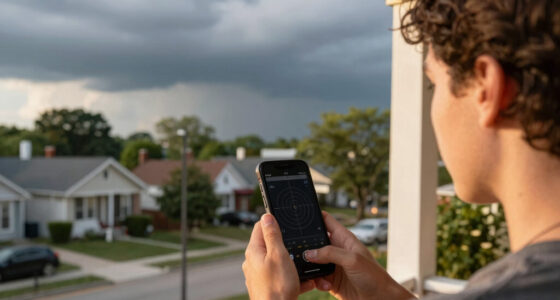
Have you ever wondered how communities stay safe during severe weather events? It all starts with effective regional storm warning systems designed to keep you informed and prepared. These systems rely heavily on storm prediction, which involves analyzing weather data to forecast potential storms hours or even days in advance. Meteorologists use advanced technology, such as Doppler radar and satellite imagery, to track storm development and movement. When a severe storm is predicted, authorities issue emergency alerts to notify residents quickly. These alerts are crucial because they deliver timely information directly to your phone, radio, or TV, allowing you to take necessary precautions.
Understanding how storm prediction works can help you appreciate the importance of regional warning systems. Storm prediction involves complex models that analyze atmospheric conditions, wind patterns, humidity levels, and temperature changes. This data helps meteorologists determine the likelihood of severe weather, such as tornadoes, hurricanes, or thunderstorms. When models indicate a significant threat, emergency alerts are activated to warn the public. These alerts often include specific instructions on how to stay safe, such as seeking shelter or evacuating certain areas. The goal is to minimize damage and protect lives by providing accurate and timely information.
Regional storm warning systems are designed to reach as many people as possible, which is why they often incorporate multiple communication channels. Besides emergency alerts on mobile devices, communities might use sirens, social media updates, community siren systems, and local news broadcasts. This redundancy ensures that even if one communication method fails, others will still deliver the warning. The system’s effectiveness depends on how quickly and accurately it can predict storms and then relay alerts to the community. When emergency alerts are issued promptly, you gain valuable time to prepare your family, secure your property, and seek safe shelter. Additionally, the accuracy of storm prediction plays a vital role in ensuring these alerts are timely and reliable, ultimately saving lives.
As an affiliate, we earn on qualifying purchases.
Frequently Asked Questions
How Are Storm Warning Zones Determined Geographically?
Storm warning zones are determined geographically through detailed zone mapping that considers various factors. You’ll find that authorities analyze geographical boundaries such as coastlines, mountain ranges, and population centers to create accurate zones. This zone mapping helps officials identify areas most at risk during storms, ensuring warnings are timely and precise. By understanding these boundaries, you can better prepare and respond when alerts are issued for your specific zone.
What Technology Is Used to Detect Approaching Storms?
Detecting approaching storms is like having a weather watchman on the lookout. You rely on radar technology, which sends out radio waves to track storm movement and intensity, and satellite imaging, capturing real-time images from space. These tools work together to give early warnings, helping you prepare. They’re essential for predicting storms accurately, so you can stay safe and make informed decisions before severe weather arrives.
How Often Are Warning Systems Tested and Updated?
You should know that warning systems are tested regularly, often through storm siren tests and warning drills, typically at least once or twice a year. These tests verify the systems function properly and are updated with the latest technology. Authorities coordinate these drills to keep you prepared, making sure the storm sirens and other warning methods are reliable when a real storm approaches.
Can Warning Systems Predict Storm Severity Accurately?
Storm prediction has improved considerably, but warning accuracy still isn’t perfect. You can’t predict storm severity with complete certainty because many factors influence a storm’s strength. While advanced models and data help forecast severity more accurately, there’s always some uncertainty, especially with rapidly developing storms. Stay informed through official warnings, and remember that even the best systems can sometimes underestimate or overestimate a storm’s true severity.
What Community Resources Are Available During Storm Alerts?
During storm alerts, you have access to crucial community resources like evacuation procedures and shelters. Think of these resources as your safety toolkit—just like a fire extinguisher is essential during a blaze, shelters provide refuge when storms hit. Local authorities often set up community shelters and distribute evacuation plans, ensuring you’re prepared. Stay informed through alerts, and remember, these resources are there to keep you safe and secure.
As an affiliate, we earn on qualifying purchases.
Conclusion
So, think of regional storm warning systems as your neighborhood’s early alarm clock. When a storm brews, these systems sound the alert, giving you precious minutes to prepare—like a lighthouse guiding ships safely through rough seas. Remember, in 2020, timely warnings helped save thousands from disaster. By trusting and understanding these systems, you’re not just waiting out storms; you’re actively steering your safety ship clear of trouble. Stay alert, stay safe.
As an affiliate, we earn on qualifying purchases.
As an affiliate, we earn on qualifying purchases.
Fall Picks
fall essentials
As an affiliate, we earn on qualifying purchases.