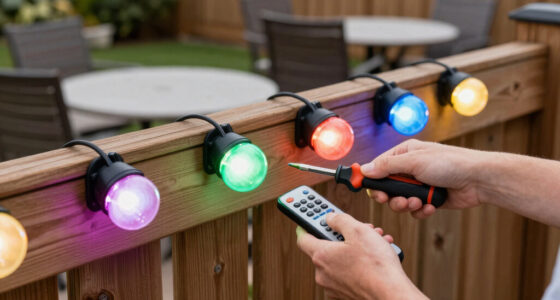

If you have limited mobility, modern lighting solutions like smart bulbs with automation and voice control can be a game-changer. You can program lights to turn on or off automatically or control them using simple voice commands with devices like Alexa or Google Assistant. This setup reduces the need to reach switches and enhances safety at home. Keep exploring to discover how these innovations can make your daily life easier and more independent.

Get backup power and energy gear delivered free — and shop member deals
- Fast, free delivery on millions of items
- Access to Prime Big Deal Days deals on October 6–7
- Prime Video, Amazon Music and more included
Key Takeaways
- Smart lighting systems enable remote control via smartphone apps, reducing the need to reach physical switches.
- Voice-activated lighting allows hands-free operation through devices like Alexa, Google Assistant, or Siri.
- Automated lighting routines can turn on/off based on time, location, or user presence for effortless management.
- Compatible smart bulbs can be dimmed or color-adjusted to create preferred ambiances with minimal effort.
- Integration of automation and voice control enhances safety and independence for individuals with limited mobility.
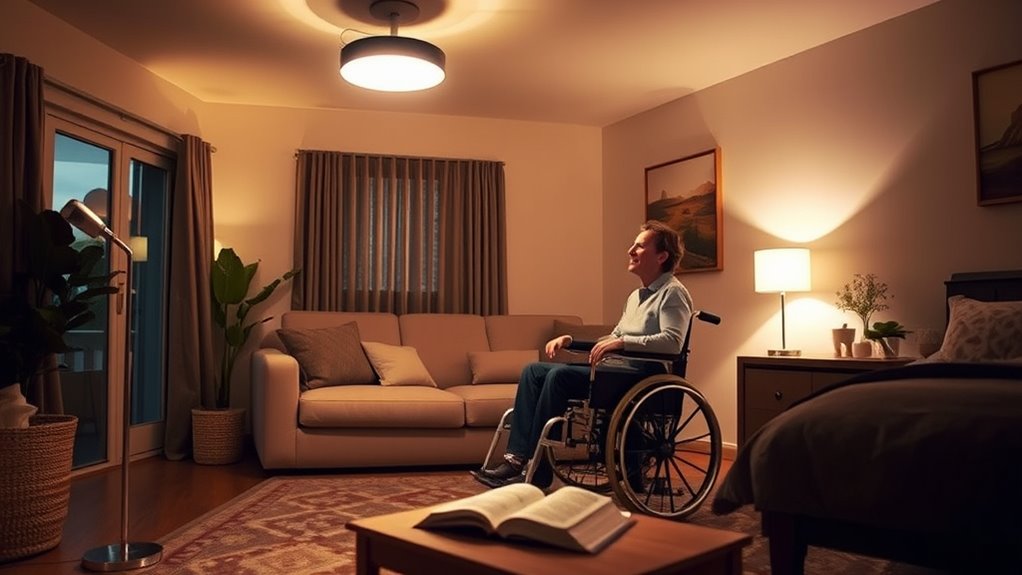
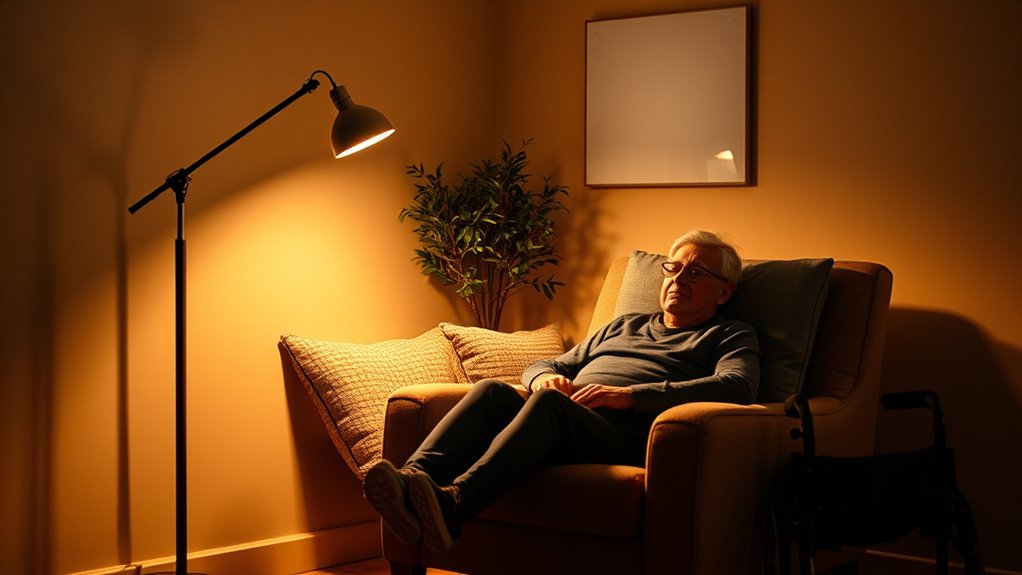
Have you ever struggled to turn on a light after a long day? If so, you’re not alone. For people with limited mobility, reaching for a switch can be frustrating or even impossible. Fortunately, modern lighting solutions like smart bulb automation and voice activated lighting are making it easier to control home lighting effortlessly. These technologies are designed with accessibility in mind, giving you greater independence and comfort. Additionally, accessible lighting technology ensures that everyone can enjoy the benefits of modern innovations regardless of physical limitations.
Smart bulb automation is a game-changer. Instead of fumbling for switches, you can set your lights to turn on or off automatically based on your routine or specific triggers. For example, you can program your lights to turn on at sunset or when you enter a room. With smart bulbs, all you need is a smartphone app or a compatible hub to control your lighting remotely. This means you can adjust brightness levels, set schedules, or turn lights off without physically reaching for a switch. It’s especially beneficial if you find it difficult to move around or have limited dexterity. Plus, with the ability to customize settings, you can create a comfortable ambiance that suits your needs at any time of day.
Voice activated lighting takes convenience even further. With a simple voice command, you can turn lights on or off, dim them, or change their color if your smart bulbs support it. Devices like Amazon Alexa, Google Assistant, or Apple HomeKit integrate seamlessly with smart lighting systems. You don’t need to get up, find a switch, or even press a button. Just say what you want, and your home responds. For example, you can say, “Alexa, turn on the living room light,” or “Hey Google, dim the bedroom lights to 50%.” This hands-free approach is invaluable if you have mobility challenges or are managing other tasks. It also adds a layer of safety, reducing the risk of falls or accidents caused by moving around in the dark.
Combining smart bulb automation with voice activated lighting creates an accessible, intuitive environment. You can set routines that match your daily schedule, and control everything with your voice. These solutions are easy to install, adaptable, and compatible with various devices. Overall, they empower you to manage your home lighting independently, improving your quality of life and providing peace of mind. Whether you’re adjusting lighting for comfort or convenience, these innovations make home living safer, easier, and more tailored to your needs.
As an affiliate, we earn on qualifying purchases.
Frequently Asked Questions
How Do I Choose the Safest Lighting Options for Limited Mobility?
You should choose lighting with easy-to-use dimming options to adjust brightness quickly and prevent falls. Opt for warm color temperatures, around 2700K to 3000K, to create a calming environment and reduce glare. Confirm switches are accessible and consider motion-activated or touch-controlled lights. Prioritize stable fixtures and avoid overly bright or flickering lights, which can cause confusion or accidents, enhancing safety for limited mobility.
Are Smart Lighting Systems Suitable for People With Mobility Challenges?
Think of smart lighting systems as your helpful lighthouse in a foggy night. They’re perfect for mobility challenges because you can control them with voice commands or automated sensors, making navigation safer and easier. You don’t have to reach or fumble, reducing risks of falls or accidents. These systems adapt to your needs, providing reliable illumination that responds seamlessly, guiding you safely through your space whenever you need it.
What Are the Cost Implications of Installing Adaptive Lighting Solutions?
Installing adaptive lighting solutions can have initial installation costs, but these are often offset by energy savings over time. You might spend more upfront, but you’ll save on electricity bills because smart systems optimize lighting use, reducing waste. Consider the long-term benefits. Although installation costs vary, investing in adaptive lighting can lead to lower energy expenses and increased convenience for your mobility needs, making it a smart financial choice.
How Can Lighting Improve Safety in Outdoor and Stair Areas?
Did you know that proper lighting can reduce accidents by up to 35%? You can improve safety in outdoor and stair areas by using motion sensors, which activate pathway illumination as needed. This not only helps you see clearly but also deters intruders. Ensuring well-lit stairs and pathways minimizes tripping hazards, creating a safer environment. Incorporate these lighting solutions to protect yourself and your loved ones effectively.
What Maintenance Is Required for Long-Term Lighting Solutions?
To guarantee your lighting solutions last long, you need regular maintenance. Check the battery lifespan of any solar or battery-powered lights and replace batteries when needed. For wired fixtures, inspect bulbs periodically and replace them promptly to maintain brightness. Clean fixtures to prevent dust buildup, which can reduce efficiency. By staying on top of these tasks, you’ll keep your lighting safe and functional, reducing the risk of outages or dim lighting.
automated lighting system for limited mobility
As an affiliate, we earn on qualifying purchases.
As an affiliate, we earn on qualifying purchases.
Conclusion
By embracing thoughtful lighting solutions, you create an environment that gently supports independence and comfort. Thoughtfully placed lights and easy-to-use fixtures subtly guide your daily routines, fostering a sense of ease. When your surroundings are illuminated with care, you nurture not just practicality, but a quiet confidence within yourself. Ultimately, these lighting choices serve as silent allies, softly illuminating your path and allowing you to navigate life’s moments with grace and dignity.
As an affiliate, we earn on qualifying purchases.
As an affiliate, we earn on qualifying purchases.
Fall Picks
fall essentials
As an affiliate, we earn on qualifying purchases.