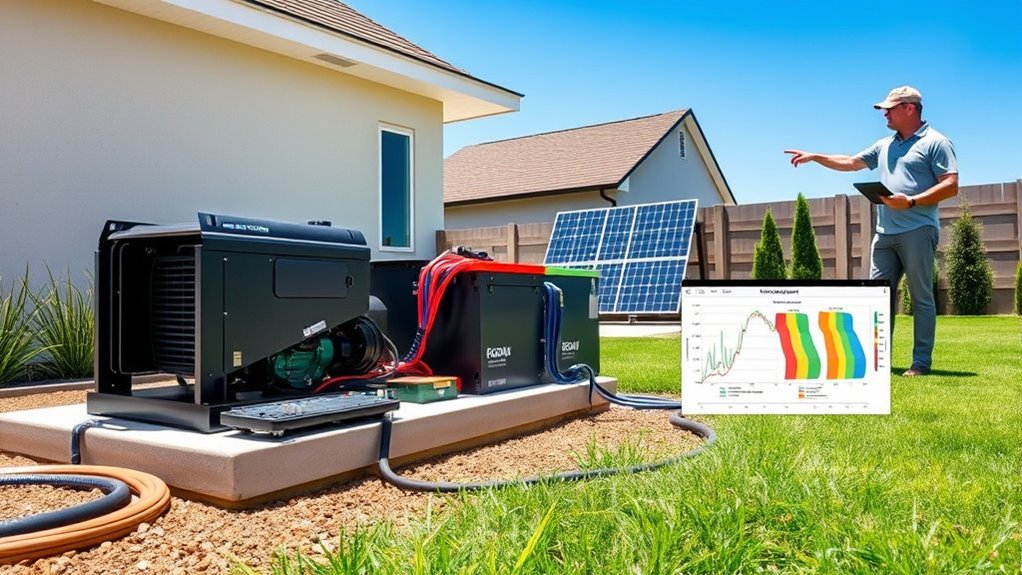

To finance your home backup power installation, explore available incentives like tax credits and rebates that can lower upfront costs. Consider specialized renewable energy loans, personal loans, or home equity lines of credit, and compare their terms to find the best fit. Properly sizing your system and leveraging grants can boost your savings. If you want to discover more ways to make your backup power project affordable, continue exploring options tailored to your needs.
Key Takeaways
- Explore available federal, state, and local incentives like tax credits and rebates to reduce upfront costs.
- Consider specialized renewable energy loans or financing plans from manufacturers and installers.
- Use personal loans or home equity lines of credit (HELOC) to fund your backup power system.
- Properly size and plan your system to maximize efficiency and long-term savings.
- Compare different financing options to find affordable terms that suit your budget and energy goals.

Having reliable backup power is essential when outages strike, but financing one can seem formidable. The good news is, there are several ways to make your home backup power installation more affordable, especially if you’re interested in achieving grid independence. When you invest in a backup power system, such as a generator or a home battery, you’re not only protecting your household from disruptions but also moving toward greater energy independence. This shift can reduce your reliance on the grid during outages and help you control your energy costs in the long run. Plus, many states and local governments offer renewable incentives that can considerably offset the initial costs of installing renewable-powered backup systems, like solar batteries or hybrid generators. These incentives can include tax credits, rebates, or other financial programs designed to encourage cleaner energy solutions.
Understanding how to leverage these incentives is key. Many backup power systems now integrate renewable energy sources, making you eligible for various renewable incentives. For example, if you install a solar-powered battery backup, you might qualify for federal tax credits or state-led rebates that reduce the overall investment. These incentives not only decrease your upfront costs but also make financing options more attractive, as the return on investment becomes quicker. Additionally, some utility companies offer special programs or credits for backup systems that contribute to grid stability or help you achieve grid independence. These programs can provide ongoing savings or reimbursements, making your backup power system more financially viable over its lifespan.
Leverage renewable incentives like tax credits and rebates to reduce backup power system costs and boost financial viability.
When considering financing options, you should explore personal loans, home equity lines of credit (HELOC), or specialized renewable energy loans. These options often come with competitive interest rates, especially if your system qualifies for renewable incentives that lower the overall project cost. Many equipment manufacturers or installation companies also offer financing plans designed specifically for renewable projects, sometimes bundling the costs into a single low-interest payment plan. It’s worth shopping around to compare terms and find a solution that fits your budget and energy goals. Additionally, understanding the importance of proper sizing and load planning can help ensure your investment is optimized for efficiency and cost savings.
Ultimately, the goal is to find a financing plan that balances your immediate budget with long-term savings and energy independence. By taking advantage of renewable incentives and understanding the various financing options available, you can make your home backup power system a reality without breaking the bank. The investment not only enhances your home’s resilience but also aligns with broader efforts to promote cleaner, more sustainable energy use, all while giving you greater control over your energy future.
Frequently Asked Questions
Are There Government Grants Available for Backup Power Systems?
Yes, there are government grants available for backup power systems, especially those focused on renewable energy and energy storage. You can explore federal, state, or local programs that support renewable energy projects, including home backup systems. These grants often aim to promote energy resilience and sustainability. Check with your local energy offices or visit official government websites to find current grant opportunities tailored to renewable energy and energy storage solutions for your home.
Can I Finance a Backup Generator With Bad Credit?
Yes, you can finance a backup generator even with bad credit. Look into specialized generator financing options that cater to those with less-than-perfect credit, such as lenders offering bad credit options or installment plans. Make sure to compare interest rates and terms carefully. You might also consider securing a co-signer or providing a larger down payment to improve your chances of approval and get better financing terms.
What Is the Typical Loan Term for Backup Power Installations?
The typical loan term for backup power installations usually ranges from 5 to 15 years, depending on the loan duration you choose. Your payment schedule can be flexible, often monthly, quarterly, or annually. Longer loan durations reduce your monthly payments but may increase total interest costs. It’s important to compare options, considering your budget and financial goals, to select a plan that fits your needs best.
Are There Specific Tax Incentives for Backup Power Investments?
You can benefit from tax credits and rebate programs when investing in backup power systems. These incentives help offset installation costs and make your investment more affordable. Check federal, state, and local programs, as many offer credits for renewable energy or energy storage projects. To maximize benefits, guarantee your system qualifies and keep detailed records. Taking advantage of these incentives can markedly reduce your overall expenses and encourage sustainable energy use.
How Does Leasing Differ From Buying a Backup Power System?
When you compare leasing vs purchasing, leasing involves paying a monthly fee for the backup power system, often with rental options that include maintenance. Buying, on the other hand, means you pay upfront or finance the system and own it outright. Leasing can lower initial costs and offer flexibility, while purchasing provides long-term ownership benefits. Your choice depends on your budget, long-term plans, and preferred ownership style.
Conclusion
Now, with the right financing, installing backup power becomes a breeze—like turning on a giant, invisible force field that shields your home from even the worst storms. Imagine never worrying about blackouts again, feeling like you’ve accessed a secret superpower. So, seize this opportunity, make the investment, and transform your home into an unstoppable fortress of comfort and security. Power it up today, and watch your peace of mind soar to legendary heights!