
TL;DR

Get backup power and energy gear delivered free with Prime
- Fast, free delivery on millions of items
- Prime Video, Amazon Music and more included
- Member-only deals all year
Chile’s Environmental Assessment Service approved the environmental impact statement for the Sidon Solar project, planned across Cabrero and Pemuco. The approved design includes 158.17 MWdc of solar capacity and a 1,296 MWh battery system rated to inject 150 MW for five hours; construction is planned to take 24 months.
Chile’s Environmental Assessment Service (SEA) has approved the environmental impact statement for Sidon Solar, a planned 158.17 MWdc photovoltaic project with 1,296 MWh of battery storage. The project is planned across Cabrero in the Biobío region and Pemuco in the Ñuble region, and its batteries are designed to deliver up to 150 MW for five hours into Chile’s National Electricity System.
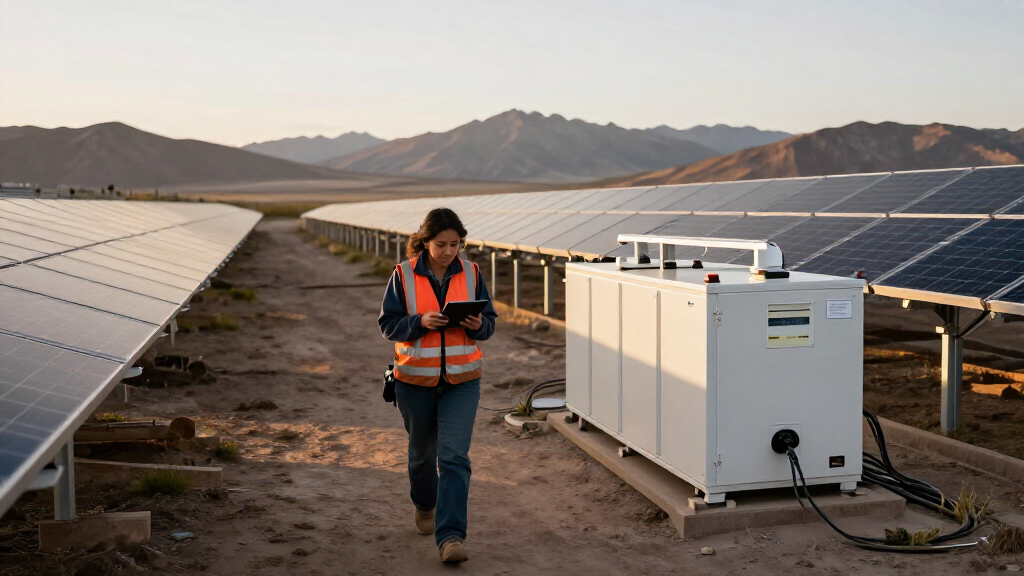
The approved solar configuration consists of 218,160 modules rated at 725 watts, mounted on 4,040 single-axis trackers. The panels will occupy two areas totaling 185.44 hectares and connect through 18 transformer stations. The full project footprint, including the solar plant and transmission infrastructure, is stated as 275.31 hectares.
The battery component comprises 324 Huawei Luna2000 units on a 30,967-square-meter site. Its approved energy capacity is 1,296 MWh, with an injection capacity of 150 MW for five hours. The project description says the storage system will shift some solar electricity for delivery after dark; this is the stated operating purpose, not a report of electricity already being supplied.
Power is planned to leave the project substation over a 5.7-kilometer, 220 kV transmission line to the Entre Ríos substation, which is connected to the National Electricity System. The line is specified as a single circuit with a nominal capacity of 170 MVA. The project’s declared investment is $100 million, and its operating life is estimated at 33 years.
Storage Extends Solar Delivery
The project pairs a large solar installation with storage that can move some generation into hours when sunlight is unavailable. Its stated 150 MW injection rate over five hours gives a more specific picture of the planned dispatch capability than the headline energy figure alone. That capability could make the project’s output available beyond daylight hours, subject to construction, connection and operation.
Approval clears an environmental assessment milestone, but it is not the same as completion or proof that the project has begun supplying power. The planned line to Entre Ríos would connect the facility to an existing point on Chile’s grid. The project also represents a stated $100 million investment and is expected to create construction work in two municipalities, though the employment figures are forecasts rather than reported jobs.
solar panel with single-axis tracker
As an affiliate, we earn on qualifying purchases.
As an affiliate, we earn on qualifying purchases.
Design Changed Since 2025
The approved design has 158.17 MWdc of solar capacity, below the 162.55 MWdc configuration submitted for environmental assessment in 2025, according to the source report. The earlier configuration specified 150 MWac of generation. A June 2025 report from Chile’s Ministry of Energy also listed 150 MW as the project’s net capacity. These figures use different capacity labels and refer to different stages or descriptions of the project; they should not be treated as interchangeable measures.
Sidon Solar SpA, established by Trina Solar Systems (Chile) SpA in July 2023, is identified as the project developer. The approval covers facilities in Cabrero and Pemuco, in neighboring Biobío and Ñuble regions. The environmental decision is the development reported here; the supplied information does not establish that all other financing, construction or grid-related steps have been completed.
“The SEA approved the environmental impact statement for the Sidon Solar photovoltaic project.”
— Chile’s Environmental Assessment Service, as reported by Energy Storage
home battery storage system 2000Wh
As an affiliate, we earn on qualifying purchases.
As an affiliate, we earn on qualifying purchases.
Construction and Delivery Still Pending
The environmental approval does not establish when construction will begin, when the project will enter service, or whether financing and any remaining implementation requirements have been finalized. The report gives a 24-month construction schedule but does not specify a start date, so a completion date cannot be calculated from the available information.
Other details also remain open in the supplied report. It does not set out the project’s final construction timetable, the exact schedule for connecting and commissioning the battery system, or whether the approved capacity figures may change again. The expected workforce and 33-year operating life are planning estimates, not evidence of realized employment or actual operating performance.
solar energy storage batteries Huawei Luna2000
As an affiliate, we earn on qualifying purchases.
As an affiliate, we earn on qualifying purchases.
Construction Timeline and Grid Link
The next milestones will be the start and progress of construction, installation of the solar and battery equipment, and delivery of the transmission link to Entre Ríos. The source report says the transmission infrastructure is expected to take 17 months, within a project construction schedule of 24 months; it does not provide calendar dates for either period.
During construction, the project is forecast to employ an average of 350 workers, rising to a peak of 600. Its developer has committed to promoting recruitment of residents of Cabrero and Pemuco through the municipalities’ employment offices. The operational phase is expected to require 12 maintenance workers. These commitments and estimates can be assessed against later reporting on hiring, construction progress and the project’s eventual connection and operation.
portable solar generator for backup power
As an affiliate, we earn on qualifying purchases.
As an affiliate, we earn on qualifying purchases.
Key Questions
What did Chile approve?
The SEA approved the environmental impact statement for the Sidon Solar photovoltaic and battery-storage project. The approval is an environmental assessment decision; it does not mean the facility is already built or operating.
How much solar and battery capacity is planned?
The approved design includes 158.17 MWdc of solar capacity and 1,296 MWh of battery energy storage. The battery system is specified to inject 150 MW for five hours.
Where will Sidon Solar be built?
The project is planned across Cabrero in the Biobío region and Pemuco in the Ñuble region. Its electricity is planned to reach the national grid through a transmission line to the Entre Ríos substation.
When will construction start or the project open?
The source report gives a 24-month expected construction period but does not state a start date or opening date. The timing of construction and commissioning remains unclear from the available information.
How will the battery system be used?
The project description says the batteries will store part of the solar generation and support injection into Chile’s National Electricity System after dark. This is the planned operating role, not a report of current electricity delivery.
Source: rss
Fall Picks
fall essentials
As an affiliate, we earn on qualifying purchases.