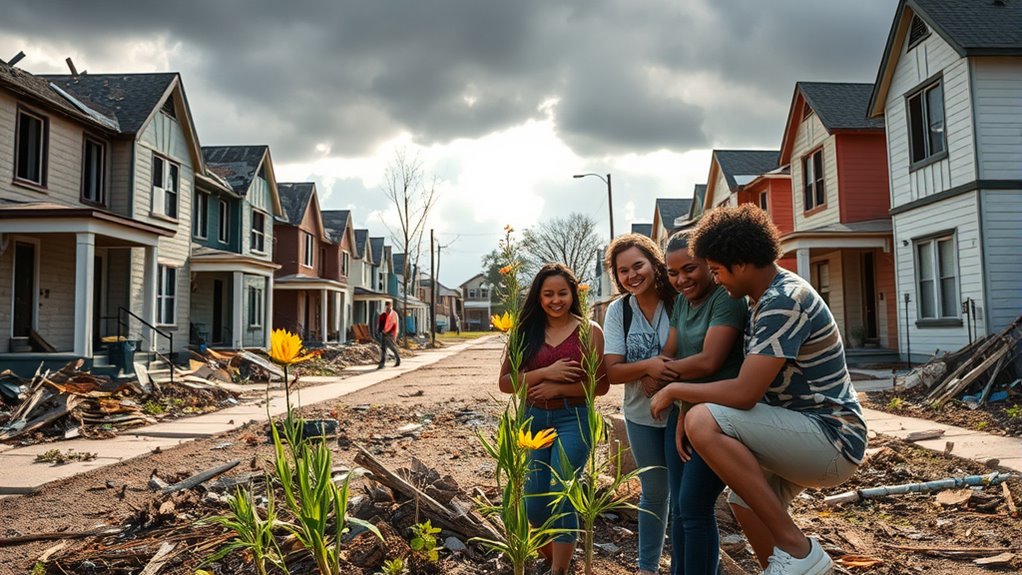

After a major storm, your psychological recovery is a gradual process that involves building emotional resilience, seeking support from loved ones or groups, and sometimes getting professional help. It’s normal to experience ups and downs, so practicing patience and self-compassion is key. Small steps like staying active or talking about your feelings can make a big difference. Keep exploring how understanding these steps will help you recover more effectively and regain your emotional stability.

Get backup power and energy gear delivered free — and shop member deals
- Fast, free delivery on millions of items
- Access to Prime Big Deal Days deals on October 6–7
- Prime Video, Amazon Music and more included
Key Takeaways
- Recognize and validate emotional responses like sadness, anxiety, and helplessness as normal parts of recovery.
- Build emotional resilience through self-care, small goals, and acknowledging feelings without judgment.
- Connect with community support networks to reduce isolation and share experiences for comfort.
- Understand that healing is non-linear, requiring patience, self-compassion, and stress-reduction activities.
- Seek professional mental health support if feelings of anxiety, depression, or trauma persist or worsen.

Experiencing a major storm can be overwhelmingly traumatic, leaving emotional scars that may take time to heal. The destruction, loss, and disruption can shake your sense of safety and stability. During this difficult period, building emotional resilience becomes essential. Emotional resilience is your ability to adapt to adversity, maintain a sense of hope, and bounce back from distress. It doesn’t mean you won’t feel overwhelmed or sad; instead, it helps you manage those feelings more effectively and regain your footing faster. Developing resilience involves acknowledging your emotions without judgment, practicing self-care, and setting small, achievable goals to regain a sense of control.
Community support plays a vital role in your psychological recovery. When you connect with others who understand what you’re going through, it can significantly lessen feelings of isolation and helplessness. Sharing your experience with friends, family, or support groups provides comfort and validation. These connections remind you that you’re not alone in your struggles and that others are also finding their way through recovery. Community support can take many forms: emotional listening, practical assistance, or simply being present during moments of distress. This collective strength fosters a sense of solidarity that can empower you to face each day with renewed hope.
As you work through recovery, it’s important to recognize that healing isn’t linear. Some days will be better than others, and setbacks are normal. Embracing patience and compassion for yourself allows you to move forward without unnecessary self-criticism. Engage in activities that reinforce your emotional resilience, like mindfulness, journaling, or physical exercise, which can help reduce stress and improve your mood. Additionally, understanding the importance of emotional resilience can guide you in developing strategies to cope more effectively with ongoing challenges. Don’t hesitate to seek professional help if feelings of anxiety, depression, or trauma persist. Therapists and counselors are trained to guide you through this process, helping you develop coping strategies tailored to your needs.
Frequently Asked Questions
How Long Does Psychological Recovery Typically Take After a Storm?
Your psychological recovery after a storm varies, but it generally takes weeks to months. During this time, you build post-storm resilience and focus on emotional healing. Remember, everyone’s process is different—some bounce back quickly, while others need more time. Stay patient, seek support when needed, and practice self-care. With time and effort, you’ll regain emotional strength and resilience, helping you cope better with future challenges.
Are Children More Vulnerable to Psychological Effects Than Adults?
Think of children as delicate seedlings in a storm’s aftermath; they’re more vulnerable to psychological effects because their emotional resilience isn’t fully developed yet. You might notice their vulnerability in heightened anxiety or fear, but with nurturing support, they can grow stronger. Children’s vulnerability means you should provide extra care, patience, and reassurance, helping them build resilience and recover emotionally from the storm’s impact.
What Are Early Signs of Long-Term Psychological Trauma?
You might notice early signs of long-term psychological trauma like emotional numbness, where you feel detached from your emotions, or sleep disturbances, such as difficulty falling or staying asleep. These symptoms can indicate ongoing stress or unresolved feelings from the storm event. Pay attention to persistent mood changes, irritability, or loss of interest in activities. Recognizing these signs early helps you seek support and start the healing process sooner.
Can Community Support Speed up Individual Recovery?
Yes, community support can speed up your recovery by strengthening social networks and fostering community cohesion. When you connect with others who understand your experience, you feel less isolated and more supported. Participating in community activities or support groups helps you share coping strategies and regain a sense of normalcy. This collective effort boosts your resilience, making it easier to navigate the emotional challenges after a storm.
Are There Specific Therapies Proven Effective Post-Storm?
You can find hope in trauma-focused therapies and resilience-building strategies that are proven effective after storms. These approaches help you process difficult emotions and strengthen your ability to bounce back. Trauma-focused therapies, like CBT, guide you through understanding your feelings, while resilience strategies boost your confidence. Engaging in these methods offers a gentle path forward, turning adversity into an opportunity for growth and renewed strength.
Conclusion
Think of your mind as a resilient garden after a storm. The winds may have torn through, but with patience, care, and time, new growth can emerge stronger than before. Your psychological recovery is the gentle sunshine and nourishing rain that help heal the wounds and restore balance. Remember, even after the fiercest storms, your inner landscape can flourish again—renewed, resilient, and more beautiful than ever.
Fall Picks
fall essentials
As an affiliate, we earn on qualifying purchases.