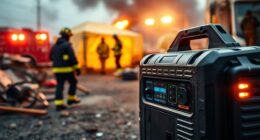

To stay in contact when cell towers fail, keep a reliable radio device like a walkie-talkie or ham radio ready and fully charged. Familiarize yourself with its operation and pre-set channels or frequencies for quick access during emergencies. Establish a clear communication plan with trusted contacts and responders. Consider supplementary options like satellite phones for extended range. Preparing in advance guarantees you maintain connection and safety; there’s more to learn about optimizing your radio strategy below.
Key Takeaways
- Use battery-powered or rechargeable radios kept charged and ready for immediate use during outages.
- Familiarize yourself with device operation and preset communication channels for quick access.
- Establish a clear communication plan with contacts, including designated channels or frequencies.
- Utilize alternative devices like satellite phones or emergency radios for extended range beyond local areas.
- Maintain multiple radios and keep them accessible to ensure reliable communication during cell tower failures.

When cell towers fail, maintaining communication becomes a critical challenge, especially during emergencies. In such situations, relying solely on cellular networks can leave you cut off from essential information and help. That’s why knowing how to use alternative radios for emergency communication is indispensable. These radios operate independently of cell towers, making them reliable backup tools when traditional communication lines go down. By preparing in advance and understanding how to operate these devices, you can guarantee your safety and stay connected with others in crisis scenarios.
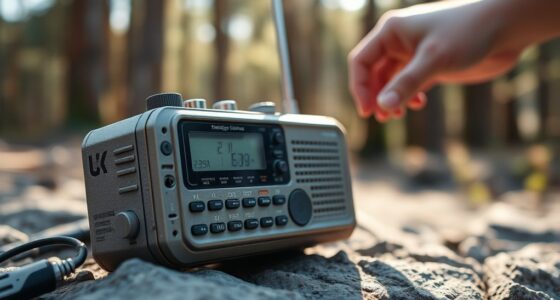
Alternative radios, such as walkie-talkies or ham radios, are designed to function without the need for cellular infrastructure. They transmit signals directly between devices within a certain range, which can vary from a few hundred meters to dozens of miles, depending on the type of radio. This makes them invaluable during power outages, natural disasters, or any event that disables cell towers. When cell towers fail, these radios become your primary means of emergency communication, allowing you to coordinate with family, friends, or emergency responders quickly and efficiently. It’s also important to understand the basic operation of these radios to maximize their effectiveness during a crisis.
Walkie-talkies and ham radios function independently of cellular networks, providing vital communication during emergencies.
To make the most of alternative radios, you should always keep a few units charged and ready. Familiarize yourself with their operation well before an emergency occurs, so you won’t waste precious time figuring out how to use them in a crisis. It’s also wise to establish a communication plan with your contacts, including designated channels or frequencies. This way, everyone knows where to tune in and what to listen for when traditional networks are unavailable. Remember, unlike cell phones, these radios often require you to manually select frequencies or channels, so knowing your way around the device is crucial.
In addition to walkie-talkies and ham radios, you might also consider other specialized communication equipment like satellite phones or portable emergency radio systems. These devices can extend your communication range beyond local areas and operate independently of ground-based infrastructure. Investing in such equipment can greatly improve your emergency preparedness, especially if you live in remote or disaster-prone regions.
Ultimately, maintaining radio contact when cell towers fail hinges on preparation and knowledge. Having alternative radios on hand and understanding how to use them ensures you won’t be left in the dark during a crisis. These devices provide a dependable line of communication when cellular options are compromised, helping you stay connected, informed, and safe when it matters most.
Frequently Asked Questions
What Alternative Communication Devices Can I Use During Tower Outages?
During tower outages, you can use satellite phones or handheld transceivers to stay connected. Satellite phones work anywhere with a clear sky, providing reliable communication when cell towers are down. Handheld transceivers, or walkie-talkies, are great for short-range communication, especially in remote areas. Keep these devices charged and in your emergency kit, so you’re prepared to communicate effectively when traditional cell networks fail.
How Can I Improve Radio Signal Range in Emergencies?
Your radio signal range can stretch farther than you think if you optimize antenna placement and use signal boosters. Position your antenna high and clear of obstructions to maximize coverage. Invest in a reliable signal booster to amplify weak signals, especially in remote areas. Regularly check connections and keep equipment well-maintained. These steps can turn your radio into a powerful communication tool, even during emergencies when every second counts.
Are There Legal Restrictions on Emergency Radio Communications?
Yes, there are legal restrictions on emergency radio communications. You need to follow license regulations and adhere to frequency restrictions set by authorities like the FCC. Using unauthorized frequencies or operating without a proper license can lead to fines or penalties. Always verify you’re compliant with these regulations, especially during emergencies, to avoid legal issues and ensure your communication remains effective and lawful.
What Training Is Recommended for Effective Radio Operation?
Think of radio operation as your bridge across silent waters; mastering it keeps you connected. You should train in radio protocol to understand proper communication flow, ensuring your messages are clear and concise. Practice maintaining signal clarity by adjusting your equipment and speaking clearly. Regular drills help you become confident, so when the moment comes, your voice cuts through static like a lighthouse guiding ships safely to shore.
How Do Weather Conditions Affect Radio Contact Reliability?
Weather conditions can considerably impact your radio contact reliability. Heavy rain, snow, or fog weaken signals, making communication difficult. Using satellite radios helps, as they’re less affected by local weather. Make sure your equipment is weatherproofed to prevent damage and maintain clear contact. Regularly check your gear’s condition and keep antenna connections secure. By preparing for weather challenges, you’ll improve your chances of maintaining reliable radio contact in adverse conditions.
Conclusion
When cell towers fall silent, your radio becomes your lifeline, connecting you to safety and others. Without the reliance on modern networks, you’re reminded that simple radio communication offers resilience and independence. It’s a stark contrast—today’s instant messages versus the steady, dependable signal of a radio. In emergencies, this old-school tool becomes more than just a device; it’s your backup, your reassurance, and your link to hope when everything else fails.