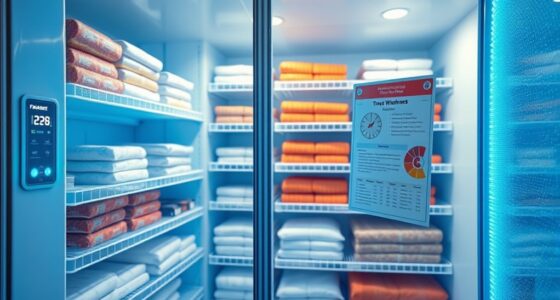
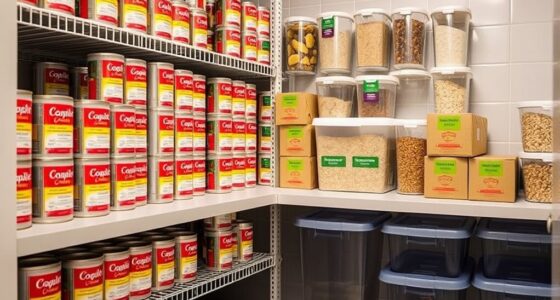
To store freeze-dried meals for long-term outages, you should use high-quality, airtight packaging like Mylar bags with oxygen absorbers to keep out moisture, light, and oxygen. Store them in a cool, dry, dark place away from heat and humidity. Regularly check for damage or odors to guarantee freshness. Properly stored, these meals can last decades. To discover more about ideal storage techniques, keep exploring the best practices.
Key Takeaways
- Use high-quality, airtight packaging like Mylar bags with oxygen absorbers to prevent spoilage.
- Store meals in a cool, dry, dark environment to slow degradation and maintain freshness.
- Regularly inspect packaging for tears, holes, or odors to ensure integrity and safety.
- Choose opaque materials to block light and prevent nutrient loss or flavor deterioration.
- Maintain consistent storage conditions and avoid heat or humidity for maximum shelf life.
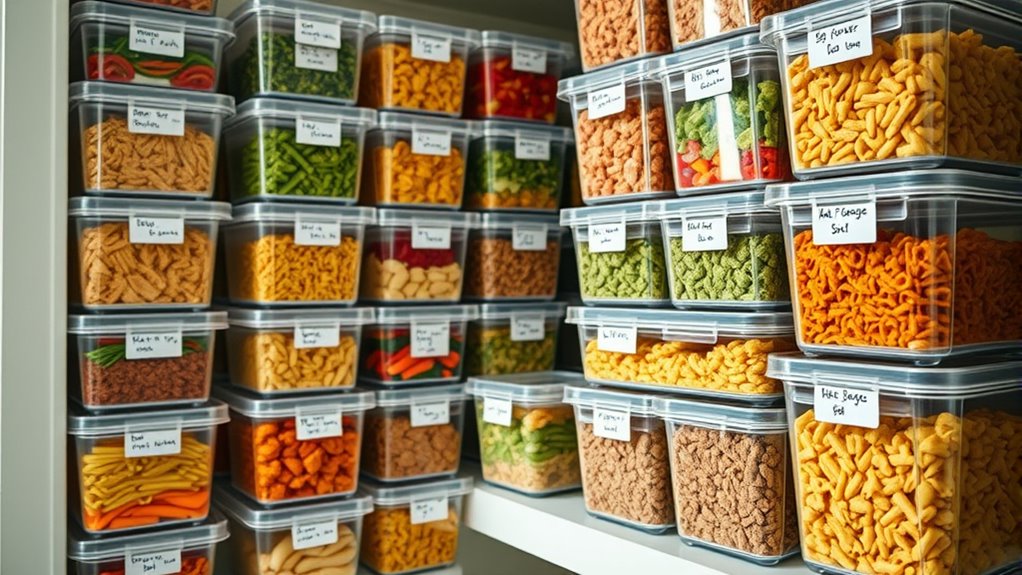
Proper storage is crucial to keep your freeze-dried meals fresh and flavorful for long-term use. When it comes to preserving these meals, paying attention to meal packaging is critical. The right packaging acts as a barrier against moisture, oxygen, and light, which are primary factors that can degrade the quality of your food over time. Typically, high-quality vacuum-sealed pouches or Mylar bags with oxygen absorbers are recommended because they provide an airtight environment that prolongs the shelf life of your meals. Avoid using flimsy or resealable plastic bags that don’t offer a strong seal, as these can let in air and moisture, leading to spoilage or loss of flavor.
Understanding the importance of meal packaging directly impacts how long your freeze-dried meals stay edible and tasty. Properly packaged meals can maintain their nutritional value, texture, and taste for years if stored correctly. The packaging should be durable, opaque to block out light, and capable of resisting punctures or tears. Incorporating oxygen absorbers within the packaging can greatly extend the shelf life by removing residual oxygen that causes oxidation. When you invest in good meal packaging, you’re essentially creating a protective cocoon around your meals, safeguarding them against environmental factors that accelerate spoilage. Additionally, using appropriate storage conditions such as a cool, dry, and dark environment further helps preserve their quality over time.
Your goal is to maximize shelf life, which varies depending on the packaging method and storage conditions. Generally, well-packaged freeze-dried meals stored in a cool, dry, and dark place can last anywhere from 10 to 25 years. Keeping meals in a temperature-controlled environment slows down the natural degradation process and helps preserve flavor and nutrients. Avoid storing meals near heat sources, in humid areas, or where they are exposed to direct sunlight. Periodically checking your stored meals is also wise; look for signs of damage to packaging or any unusual odors when opening a package. Proper storage practices ensure you get the most out of your investment and can rely on your meals during emergencies or long-term outages.
Frequently Asked Questions
How Long Can Freeze-Dried Meals Be Stored Safely?
You can typically store freeze-dried meals safely for 25 to 30 years if you follow proper storage techniques. Keep them in a cool, dry, and dark environment, ideally in airtight containers or vacuum-sealed packages. Avoid exposure to moisture, heat, or sunlight, as these can reduce shelf life. Regularly check for any signs of spoilage or packaging damage to guarantee your meals remain safe and nutritious for long-term use.
Do Freeze-Dried Meals Require Special Storage Conditions?
Yes, freeze-dried meals do require special storage conditions. You should keep them in a cool, dry place, ideally in vacuum packaging to prevent air exposure. Humidity control is vital; high humidity can cause moisture buildup, leading to spoilage. Store your meals away from direct sunlight and temperature fluctuations. Proper vacuum packaging and humidity control help extend shelf life and maintain quality for long-term storage.
Can I Store Freeze-Dried Meals With Other Food Items?
Sure, you can store freeze-dried meals with other foods, but pay attention to packaging compatibility and storage container types. Imagine opening your pantry and finding all your essentials together; just make certain the containers are airtight and compatible with freeze-dried packaging to prevent moisture or contamination. Use sturdy, sealed containers to keep everything fresh, and avoid storing with strong-smelling or moisture-prone items that could compromise your freeze-dried meals.
What Are Signs of Spoilage in Freeze-Dried Meals?
You’ll notice spoilage in freeze-dried meals if the packaging integrity is compromised, such as tears or holes. Check for unusual odors, which may indicate bacterial growth or mold. Additionally, look for discoloration or clumping inside the package. If any of these signs appear, it’s safest to discard the meal to avoid health risks. Always store meals in a cool, dry place to maintain freshness and quality.
Are There Any Health Risks From Long-Term Storage?
Did you know that freeze-dried meals can last up to 25 years if stored properly? Long-term storage might cause some nutritional degradation, but the risk of bacterial contamination remains very low if you keep the packages sealed and in a cool, dry place. However, always check for signs of spoilage before eating, and avoid consuming meals that show unusual odors or textures to prevent health risks.
Conclusion
So, while you happily stash those freeze-dried meals for a rainy day, don’t forget—you’re actually preparing for the day you’ll never need them. Ironically, your long-term outage plan might just sit untouched, and you’ll be glad you invested in that extra survival stash when the power finally goes out for good. So go ahead, keep storing those meals—you never know when they might turn out to be your best backup plan after all.