TL;DR

Get backup power and energy gear delivered free — and shop member deals
- Fast, free delivery on millions of items
- Access to Prime Big Deal Days deals on October 6–7
- Prime Video, Amazon Music and more included
A Colorado rural hospital is considering renewable generation and battery storage instead of relying on full-building generators for a $65 million addition. An adviser estimated the eligible systems could produce $4 million to $8 million in Section 48E tax credits, while facilities also face unsettled domestic-content and foreign-entity rules.
A rural Colorado hospital is considering renewable power and battery storage instead of full-building generators for a $65 million addition, with an adviser estimating that eligible systems could generate $4 million to $8 million in Section 48E investment tax credits. The case, reported by Utility Dive, reflects growing interest among hospitals, schools and other facilities in using federal incentives to change the economics of on-site energy projects.
Matthew Noll, chief operating officer of Alliant, said the hospital’s construction team had initially planned to include generators to help stabilize its power supply. It is now evaluating a mix of combined heat and power, geothermal and solar, paired with a battery system. The project is under consideration; the report does not say the hospital has finalized or built the system.
Noll estimated that heating and cooling would account for about 17% to 20% of the development cost, or roughly $13 million. He said credits tied to eligible energy components could amount to $4 million to $8 million, depending on project costs and applicable credit rates. That estimate is his assessment, not a confirmed award or a guaranteed return for the hospital.
For buildings already connected to the grid, Noll said batteries can store electricity bought when prices are lower, often at night, and supply it when rates rise. He described battery energy storage as a frequent area of interest. A small factory, for example, could use stored power to run energy-intensive equipment during the day. The report provides these as potential project models, not documented savings from a completed facility.
How organizations receive the tax benefit depends on their tax status. Noll said qualifying nonprofits and public facilities can receive a direct payment from the Treasury, while private businesses that cannot use the credit against their own tax liability may sell it to another company. He said buyers were paying about 85 to 93 cents per dollar of credit at the time of the report. Actual proceeds can vary; the quoted range is not a guaranteed sale price.
Credits Change Facility Project Costs
Energy equipment can require substantial upfront spending, and the prospect of a credit can make a project financially viable for facilities that otherwise would have retained conventional backup generation or bought all their power from the grid. Noll said some smaller and mid-sized organizations that had not previously considered solar and batteries are now requesting an evaluation because they expect the credit and future energy savings to improve the numbers.
The choice can affect more than an organization’s capital budget. Replacing or supplementing generators may reduce exposure to fuel costs and, where diesel equipment is displaced, local emissions and noise. Batteries can also let operators shift some electricity use away from higher-priced periods. Those benefits depend on electricity tariffs, project design, operating patterns and the equipment installed; the report does not establish a uniform level of savings.
The credit’s practical value also differs by owner. A tax-exempt hospital or public school may rely on direct payment, while a taxable company might use or transfer a credit. That flexibility can expand the pool of potential projects, but the amount recovered depends on eligibility and, for transferred credits, market terms.
As an affiliate, we earn on qualifying purchases.
Eligibility After Federal Law Changes
The report says the One Big Beautiful Bill Act reduced or ended eligibility for several energy incentives, including credits for some solar and other alternative-energy systems. It also says solar paired with battery storage remains eligible under Section 48E and that geothermal credits were left in place. Plankton Energy, a solar developer, similarly states on its website that standalone battery systems and batteries paired with solar remain eligible. Specific project eligibility still depends on the law and applicable rules.
Projects must also satisfy domestic-content requirements for components in solar arrays and other renewable systems. The report says guidance has been issued but that questions involving prohibited foreign entities remain unresolved. An analysis by Crux Climate, which connects clean-energy projects with investors, said some buyers were pricing that exposure into deals rather than waiting for complete regulatory clarity. This describes the approach identified by the analysis, not a final government interpretation.
Noll said many of Alliant’s clients are larger institutions, including hospitals, universities and K-12 schools, but interest is also expanding among smaller facilities. He pointed to improvements in battery technology and said facilities are revisiting systems they might once have rejected over lifespan and fire-safety concerns. Those are his observations; equipment performance and safety depend on the specific system and installation.
““This $65 million project should yield somewhere in the neighborhood of $4 million and $8 million in a credit.””
— Matthew Noll, chief operating officer of Alliant
As an affiliate, we earn on qualifying purchases.
Project Eligibility Still Depends on Rules
The hospital has not been reported as having selected a final design, begun construction on the energy system or received a tax benefit. The $4 million to $8 million figure is an adviser’s estimate, and the report does not provide a final equipment budget, a credit calculation or an eligibility determination.
It is also unclear how outstanding domestic-content and prohibited-foreign-entity questions will apply to individual projects. The report notes that guidance exists but says specialists still had unresolved questions. Facilities may price in that risk, as Crux described, but that does not settle whether a particular project will qualify or what credit it will receive.
The report also does not establish how much facilities will save on utility bills, how widely the reported credit-sale prices apply, or whether the policy deadlines will change. Noll cited bipartisan support for extending incentives, but support and proposed legislation do not themselves alter current law.
As an affiliate, we earn on qualifying purchases.
Projects Await Rules and Policy Decisions
The immediate next step for the Colorado hospital is a decision on the addition’s final energy design and the costs and eligibility of its proposed systems. Other facilities considering similar investments will need to evaluate equipment, electricity rates, financing and the tax treatment of each project, including applicable sourcing rules.
On the legislative side, Rep. Brian Fitzpatrick and other lawmakers introduced the American Energy Dominance Act, H.R. 8477, which the report says would remove accelerated deadlines placed on Section 48E and other energy incentives. The bill’s introduction does not mean those deadlines have changed. Its progress, along with any further federal guidance on component sourcing and foreign-entity restrictions, will shape the incentives facilities can count on when making investment decisions.
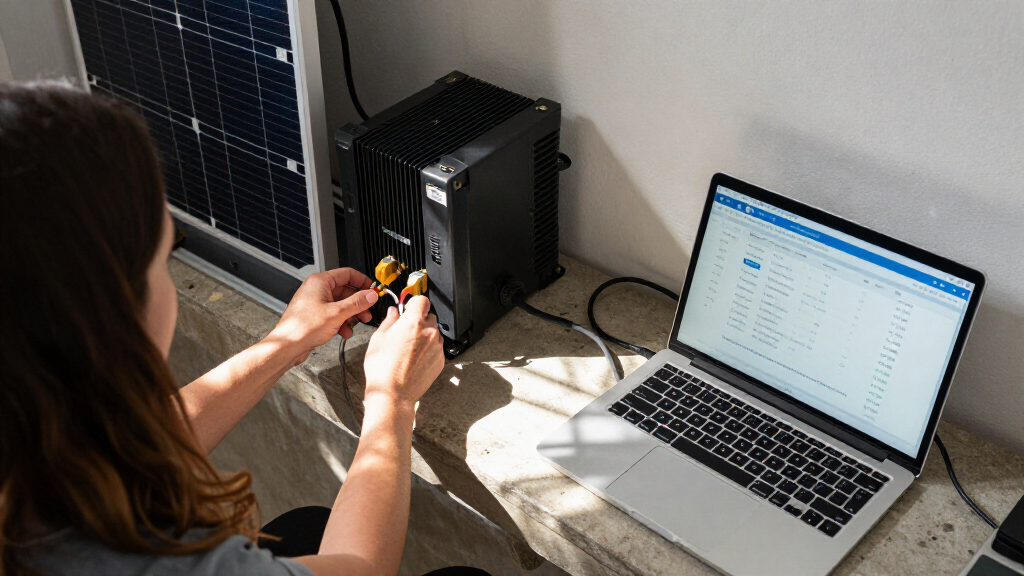
renewable energy generation system for hospitals
As an affiliate, we earn on qualifying purchases.
As an affiliate, we earn on qualifying purchases.
Key Questions
What is Section 48E?
Section 48E is a federal investment tax credit for eligible energy projects. The source report discusses its use for technologies including battery storage and certain renewable systems; eligibility depends on the project and applicable requirements.
Has the Colorado hospital committed to the energy system?
No commitment is reported. The hospital’s team was evaluating a mix of generation technologies and battery storage as an alternative to full-building generators for its addition.
How much might the hospital receive?
Alliant executive Matthew Noll estimated $4 million to $8 million in credits for the project. The report does not confirm an award, and the estimate depends on the final system and its eligibility.
Can nonprofits and public facilities use the credit?
Noll said eligible tax-exempt organizations, including public facilities, can receive the benefit as a direct Treasury payment. The particular project must still meet the applicable requirements.
What could affect eligibility?
Among the issues identified are technology eligibility and domestic-content rules, as well as unresolved questions involving prohibited foreign entities. The report says guidance has been released, but some questions remained open.
Source: rss
Fall Picks
fall essentials
As an affiliate, we earn on qualifying purchases.