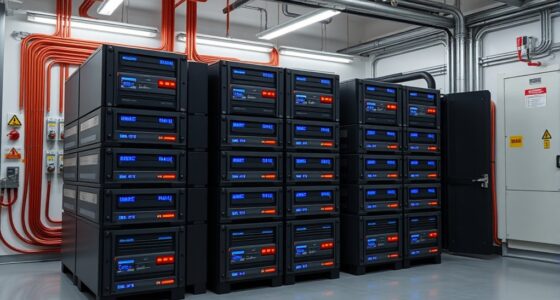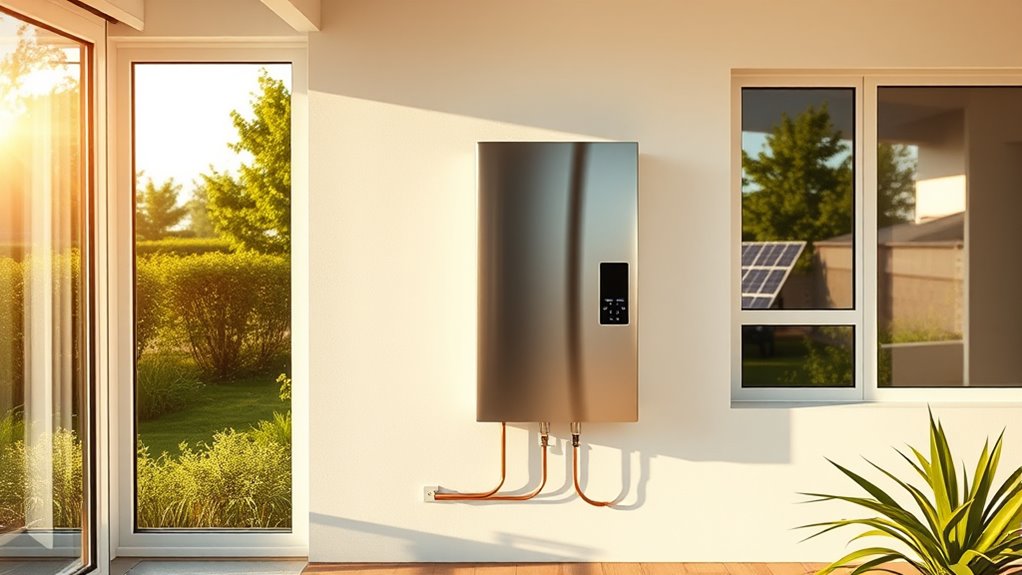

Moving to whole-home battery systems lets you store excess energy from solar panels, ensuring you have reliable backup during outages and reducing your dependence on the grid. These systems improve your home’s energy resilience, lower your electricity bills, and give you control over energy use. As technology advances, they become more affordable and efficient, making grid independence more attainable. If you’re interested in how to maximize these benefits, there’s more to discover.
Key Takeaways
- Assess your home’s energy needs and compatibility with battery systems before installation.
- Consider initial costs, available incentives, and long-term savings potential.
- Choose advanced, reliable battery technology to ensure durability and efficiency.
- Integrate renewable energy sources like solar panels for optimal energy storage.
- Plan for professional installation and ongoing system maintenance to maximize benefits.
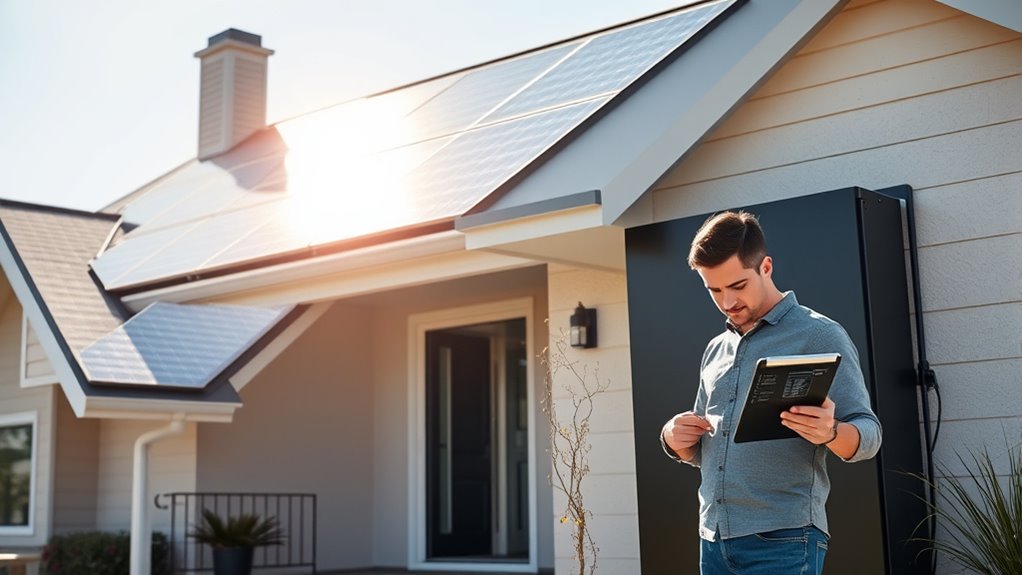
Whole-home battery power systems are transforming how homeowners manage energy, offering a reliable backup during outages and reducing reliance on the grid. With these systems, you gain the ability to store excess energy generated by solar panels or other renewable sources, making it easier to keep your home running smoothly even when the power grid goes down. This approach to energy storage not only enhances your home’s resilience but also moves you toward greater grid independence. Instead of depending solely on utility companies, you can harness stored energy during peak hours or emergencies, giving you more control over your electricity usage and costs.
Whole-home batteries store renewable energy, ensuring reliable backup and reducing dependence on the grid.
When you install a whole-home battery system, you’re fundamentally creating a self-sufficient energy ecosystem. During the day, your solar panels generate more power than your household needs, and the surplus is stored in the batteries. At night or on cloudy days, you draw from this stored energy instead of consuming power from the grid. This process maximizes your renewable energy usage and minimizes your electricity bills. Over time, you’ll notice how the system reduces your reliance on utility providers, especially if you’re in an area with high energy rates or frequent outages. You’re not just saving money—you’re also gaining energy security, knowing that your home can operate smoothly regardless of external disruptions.
The key to making the most of a whole-home battery system lies in understanding energy storage. Efficient storage means your batteries can hold enough power to meet your household’s needs during outages or peaks in demand. As technology advances, battery systems become more sophisticated, offering longer-lasting, more reliable performance. This, in turn, enhances your ability to achieve true grid independence. You no longer need to worry about power interruptions or unpredictable utility rates because you control when and how you use stored energy. You can even set your system to prioritize using stored energy during times when electricity is most expensive, further reducing your overall costs. Battery technologies continue to improve, making these systems more accessible and effective for homeowners.
Transitioning to a whole-home battery power system might seem intimidating at first, but the benefits are clear. You become less vulnerable to power outages and less dependent on the grid, which is increasingly vulnerable to disruptions. Plus, with the right system, you can optimize your energy storage to guarantee your home remains comfortable and functional at all times. As technology continues to improve, these systems will only become more affordable and efficient, making grid independence an attainable goal for more homeowners. Ultimately, adopting a whole-home battery system empowers you to take control of your energy future while contributing to a more sustainable, resilient home.
Frequently Asked Questions
How Long Do Whole-Home Batteries Typically Last?
Your whole-home batteries typically last around 10 to 15 years, depending on their battery lifespan and usage. Proper maintenance requirements, like keeping the system clean and monitoring performance, can extend their longevity. You should also follow manufacturer guidelines for regular checks and updates. Investing in high-quality batteries and professional installation helps guarantee they perform at their best throughout their lifespan, giving you reliable power for years to come.
Are There Government Incentives for Installing Battery Systems?
They say, “Every cloud has a silver lining,” and right now, there’s good news—many government grants and tax incentives are available for installing battery systems. You can benefit from these programs to reduce costs and make your home more energy-efficient. Check federal, state, and local initiatives, as eligibility varies. Taking advantage of these incentives helps you save money while supporting sustainable energy efforts.
Can Battery Systems Be Integrated With Existing Solar Panels?
Yes, you can integrate battery systems with your existing solar panels. Most battery systems are compatible with a variety of solar panel setups, ensuring smooth solar panel compatibility. You’ll want to evaluate your battery capacity options to match your energy needs. Proper integration allows you to store excess solar energy efficiently, providing backup power during outages and reducing reliance on the grid. Always consult a professional for seamless, safe installation.
What Maintenance Is Required for Battery Power Systems?
You need to follow a regular maintenance schedule to keep your battery power system running smoothly. Check for corrosion, guarantee connections are tight, and keep the system clean. Battery lifespan depends on proper care, so monitor performance and temperature. You might also need to update firmware or replace parts over time. Staying proactive helps extend your battery’s life and ensures reliable power when you need it most.
How Do Battery Systems Perform During Prolonged Power Outages?
During prolonged power outages, your battery system performs reliably, providing renewable energy and enhancing your grid independence. It stores excess solar power, so you can use it whenever needed, ensuring continuous power even when the grid is down. This setup allows you to maintain essential appliances, reduce reliance on utility companies, and stay powered longer. Proper maintenance keeps your batteries in top shape, maximizing their performance during extended outages.
Conclusion
Switching to a whole-home battery power system isn’t just about backup—it’s about embracing a more sustainable, reliable future. Imagine a world where your home seamlessly runs on stored energy, reducing reliance on the grid and lowering your carbon footprint. While some may doubt the long-term efficiency, technology continues to improve, making this a practical solution. Embrace the shift now, and you’ll enjoy peace of mind and a greener lifestyle for years to come.