
Managing cash on hand and understanding ATM use is essential for financial safety and efficiency. You should know how much physical money you need for daily expenses and emergencies, while also being aware of cash security tips like checking bills for counterfeit features. Understanding ATM limits, fees, and how to avoid extra costs helps save money. Stay alert to secure your cash and personal info; exploring the details will help you become more confident in handling your finances.
Key Takeaways
- Understand the importance of cash on hand for immediate expenses and emergency situations.
- Recognize different cash types, security features, and safe handling practices to prevent counterfeit currency.
- Know ATM withdrawal limits, fees, and strategies to minimize costs and manage cash efficiently.
- Practice secure ATM usage by protecting PINs, inspecting machines, and avoiding skimming devices.
- Plan international ATM use by understanding foreign transaction fees, currency exchange rates, and cost-saving tips.
What Is Cash on Hand and Why Is It Important?
Cash on hand refers to the physical money a business or individual has available at a given moment. It’s a crucial part of your cash reserves, providing immediate access for daily expenses or emergencies. Maintaining enough cash on hand ensures your cash flow stays smooth, helping you cover bills, payroll, or unexpected costs without delay. Without sufficient cash reserves, you risk financial instability, especially during slow periods or unforeseen events. Having cash on hand also gives you control over your finances, reducing reliance on credit or loans. It’s an essential component of good financial management, allowing you to meet short-term obligations and stay operational. Additionally, understanding the contrast ratio of your financial resources can help you better evaluate your liquidity and readiness for unexpected expenses. In short, your cash on hand keeps your business liquid and ready for whatever comes next.
Understanding Different Types of Cash

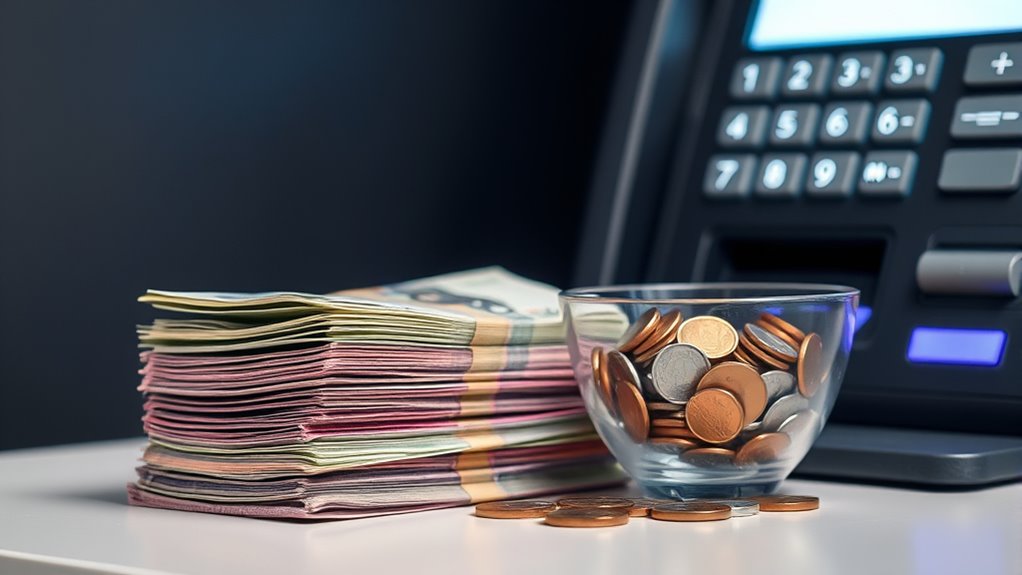
Understanding the different types of cash you handle can help you manage your finances more effectively. Cash comes in various denominations, like $1, $5, $10, $20, $50, and $100 bills. Recognizing these helps you quickly count and verify amounts. It’s also essential to watch for counterfeit bills; fake currency can cause financial losses. Here’s a quick overview:
| Cash Denomination | Common Use | Security Tip |
|---|---|---|
| $1, $5 | Small purchases | Check for watermarks and security strips |
| $10, $20 | Daily expenses | Feel for textured paper |
| $50, $100 | Larger payments | Look for color-shifting ink |
| Coins | Tipping, vending | Confirm weight and ridges |
| Counterfeit Bills | Fake currency | Use counterfeit detection pens |
Knowing these types helps you spot fake bills and handle cash confidently. Being aware of the security features, like watermarks and color-shifting ink, can further protect you from accepting counterfeit currency.
How to Manage Your Cash Safely and Effectively
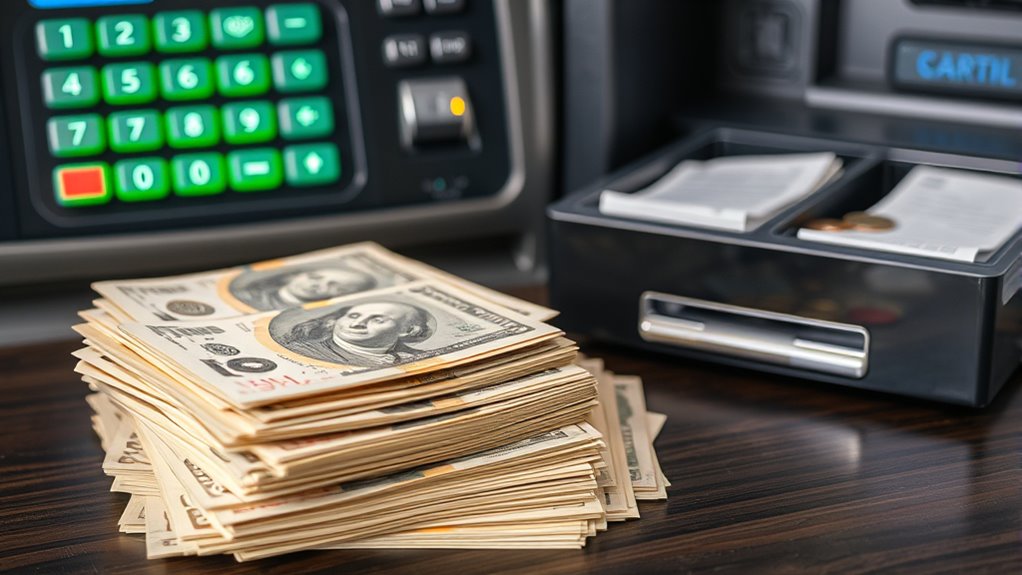
To manage your cash safely and effectively, start by organizing your money in a secure place, such as a locked cash box or a dedicated wallet. Keep track of your cash to avoid losing it or overspending. Use digital wallets and mobile payments for added convenience and security. These tools help you leave less physical cash lying around, reducing the risk of theft or loss. Always set spending limits and monitor your transactions regularly to spot any suspicious activity early. When using digital wallets, enable two-factor authentication and use strong, unique passwords. Avoid sharing sensitive information, and be cautious when making mobile payments in public. By staying organized and cautious, you can handle your cash smarter and safer every day. Additionally, being aware of air purifier maintenance dos and don’ts can help you maintain a healthy environment, especially if you’re using air purifiers to improve indoor air quality.
When you use ATMs, it’s important to know your withdrawal limits so you don’t run out of cash unexpectedly. Always stay alert for safety, especially when entering your PIN or handling cash. Understanding these basics helps you use ATMs confidently and securely. Being aware of your celebrity lifestyle insights can also inspire you to personalize your own space for comfort and security.
ATM Withdrawal Limits
Have you ever tried withdrawing cash from an ATM only to find out your bank’s limit? That’s because ATM withdrawal limits are set by your bank’s cash dispensing policies, which cap how much money you can take out in a single transaction or daily. These limits protect your account from fraud and help manage cash flow at ATMs. Usually, the maximum per withdrawal ranges from $300 to $1,000, but it varies depending on your bank and account type. Some banks let you adjust these limits manually or request higher limits for specific transactions. Keep in mind, exceeding these limits requires multiple transactions or scheduling a visit to your bank. Understanding your bank’s ATM withdrawal limits ensures you plan your cash needs accordingly without surprises. Cookies and data privacy policies also play a role in how your banking information is handled during transactions.
Using ATMs Safely
Understanding your bank’s ATM withdrawal limits is just the first step; knowing how to navigate ATMs safely helps safeguard your account and personal information. To ensure cash security and follow proper ATM etiquette, keep these tips in mind:
- Be aware of your surroundings—stay alert and avoid isolated machines.
- Cover your PIN as you enter it to prevent shoulder surfing.
- Limit cash exposure—only withdraw what you need and secure it immediately.
- Respect ATM etiquette—wait your turn, don’t rush, and leave the machine tidy.
- Stay informed about ATM safety features to better protect yourself during transactions.
Making the Most of ATM Transactions
To make the most of your ATM transactions, it’s vital to plan ahead and stay informed about your bank’s policies. Use mobile banking apps to check your account balance before withdrawing cash, avoiding unnecessary trips or overdrafts. If your bank offers fee-free ATMs or reimbursements, take advantage of these options to save money. Be aware that some locations have Cryptocurrency ATMs, which allow you to buy or sell digital currency; understanding their fees and processes helps you make smarter choices. Additionally, consider withdrawing larger amounts at once to reduce multiple transaction fees. Familiarize yourself with daily withdrawal limits and your bank’s policies to avoid surprises. Utilizing the best vacuums for dust removal in 2024 can ensure your home stays clean and allergen-free, especially if you suffer from allergies or have pets. Planning ahead ensures smoother transactions and helps you maximize your cash on hand efficiently.
Common ATM Fees and How to Avoid Them
Understanding common ATM fees can save you money. Out-of-network charges, usage limits, and foreign transaction fees often catch users off guard. Knowing how to avoid these costs helps you make smarter choices when withdrawing cash.
Out-of-Network Charges
Have you ever been surprised by a hefty fee just for using an ATM outside your bank’s network? Out-of-network charges can hit hard, especially if you aren’t prepared. Here’s how to avoid them:
- Use your bank’s ATMs whenever possible; they usually don’t charge fees.
- Opt for digital wallets—many offer fee-free ATM withdrawals or cash back options.
- Be cautious at cryptocurrency ATMs; they often have high fees, so check costs beforehand.
- Plan ahead by knowing your bank’s ATM locations or carrying cash to sidestep extra charges.
- Regularly review your bank’s policies and available Glycolic Acid benefits to stay informed about potential fees and benefits.
Staying aware of these strategies helps you save money and avoid unexpected expenses. Being informed means you keep more control over your cash and avoid surprises, whether you’re using traditional ATMs, digital wallets, or cryptocurrency ATMs.
ATM Usage Limits
ATM usage limits often come with fees that can add up quickly if you’re not careful. Many banks set daily withdrawal caps to manage cash recycling, which helps guarantee ATMs stay operational and secure. If you exceed these limits, you might face extra charges or be unable to withdraw more cash until the next day. To avoid fees, check your bank’s ATM usage policies, especially if you plan to withdraw large amounts. Some ATMs now use biometric authentication, allowing you to access cash faster and more securely, reducing the need for multiple transactions. Being aware of your daily limits and the technology available can help you plan your withdrawals efficiently, saving you money and making your ATM experience smoother. Additionally, understanding Glycolic Acid exfoliation benefits can assist you in choosing skincare products that support skin health after ATM use, especially in sensitive areas.
Foreign Transaction Fees
Did you know that using your debit or credit card abroad can trigger unexpected fees? Foreign transaction fees often catch travelers off guard, especially with currency exchange rates. These fees can add up quickly, making your trip more expensive than planned. To avoid surprises, keep these tips in mind:
- Use international cards with no foreign transaction fees.
- Opt for cards that offer free currency exchange.
- Withdraw larger amounts to minimize ATM fees and avoid multiple charges.
- Research your bank’s partnership ATMs in your destination country.
- Be aware that currency exchange rates can vary and impact the overall cost of your transactions.
Tips for Staying Secure When Using Cash and ATMs
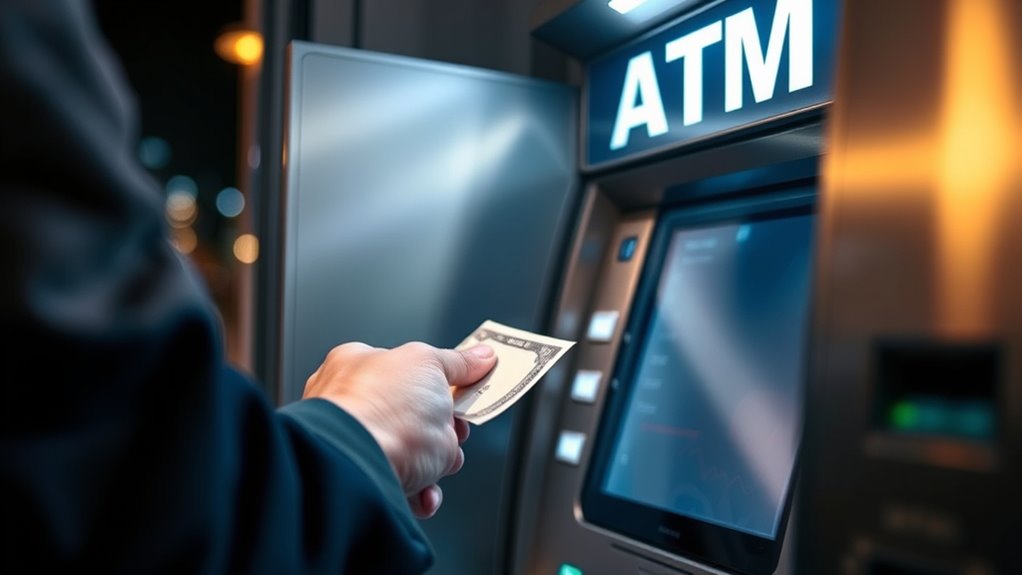
Staying secure when using cash and ATMs requires vigilance and mindful habits. Always examine bills for counterfeit detection by checking for watermarks, holograms, and texture. When withdrawing cash, stay alert to your surroundings and shield your PIN as you enter it. Use ATMs in well-lit, secure locations, preferably those inside banks or busy areas. Keep your cash secure by following cash storage tips: avoid counting money in public and use a pocket or bag to conceal your cash. Be cautious of skimming devices or suspicious attachments on ATMs—if something looks off, avoid using it. Regularly check your bank account for unauthorized transactions. By staying alert and practicing these tips, you can better protect your funds and personal information.
Frequently Asked Questions
How Do I Detect Counterfeit Cash Effectively?
To detect counterfeit cash effectively, you should perform multiple counterfeit detection checks. Feel the paper’s texture and compare it to authentic bills, look for color-shifting ink, and examine security features like watermarks and security threads. Use UV light to reveal hidden markings. Always stay updated on new counterfeit techniques. These steps help verify cash authenticity quickly and ensure you’re not accepting fake bills, protecting your business or personal transactions.
What Are the Best Practices for Storing Cash at Home?
To store cash securely at home, you should implement strong security measures like hiding money in discreet, inconspicuous spots away from obvious places. Use storage tips such as waterproof, fireproof safes, and avoid obvious locations like under the mattress. Keep cash organized in small denominations, and limit access to trusted individuals. Regularly check and update your security measures to guarantee your cash stays safe and protected from theft or damage.
How Can I Quickly Locate the Nearest ATM?
To find the nearest ATM quickly, use your smartphone’s map app or ATM locator tools, which often leverage ATM networks’ data. Simply open your preferred app, type “ATM,” and it will show nearby options for cash withdrawal. Make sure your location services are enabled for accuracy. You can also check your bank’s website or mobile app for a list of ATMs within their network, ensuring smoother cash withdrawal experiences.
Are There Safer Alternatives to Using ATMS?
Imagine your phone as a digital wallet, holding your money securely while you shop. Using mobile payments or digital wallets is safer than ATMs because you avoid skimming devices and cash theft risks. You simply tap your device at compatible terminals, making transactions quick and secure. These alternatives protect your funds better, especially in unfamiliar areas, giving you peace of mind knowing your money stays safe with just a few taps.
What Should I Do if My ATM Card Is Lost or Stolen?
If your ATM card is lost or stolen, act quickly to protect your account. Contact your bank immediately to report the loss, ensuring ATM safety by preventing unauthorized access. Request a card replacement so you can regain access to your funds. Meanwhile, monitor your account for suspicious activity and consider changing your online banking password for added security. Acting swiftly minimizes potential fraud and keeps your finances secure.
Conclusion
Staying smart with your cash and ATM use keeps your money safe and accessible. For example, Jane kept her cash secure by avoiding ATMs in sketchy areas and checking for skimming devices, saving her from potential theft. By understanding the basics of cash on hand, types of cash, and ATM tips, you can confidently manage your money and avoid costly fees. Remember, being cautious and informed is your best defense in handling cash safely.