
TL;DR

Get backup power and energy gear delivered free — and shop member deals
- Fast, free delivery on millions of items
- Access to Prime Big Deal Days deals on October 6–7
- Prime Video, Amazon Music and more included
Brooklyn startup PopWheels launched a six-month battery-swapping pilot in July for 10 food-cart vendors near Flushing Meadows Corona Park in Queens. The vendors can use shared batteries for free during the trial; the company hopes a future subscription will cost less than buying and fueling a generator, but commercial pricing and results have not been established.
Brooklyn startup PopWheels launched a six-month battery-swapping pilot in July for 10 food-cart vendors near Flushing Meadows Corona Park in Queens, giving them access to charged batteries as an alternative to generators. The trial matters because it tests whether vendors can cut generator noise and exhaust without buying batteries or arranging their own charging. Their access is currently free through grant funding.
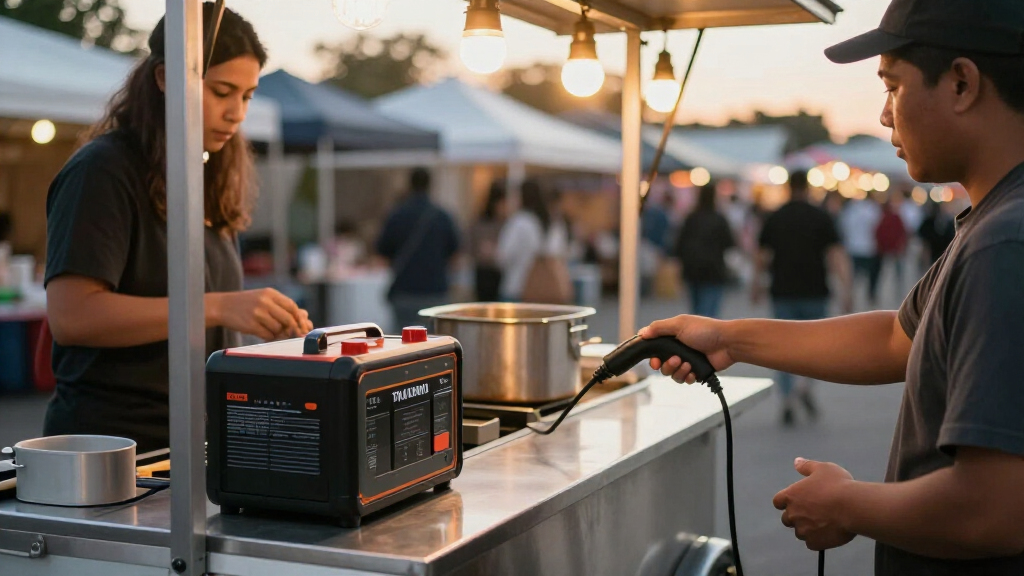
PopWheels installed two battery cabinets in the park area. Participating vendors can exchange depleted batteries for charged ones during the day, avoiding the need to take batteries home or charge them at a commissary. The pilot received $46,000 from the City Parks Foundation and $30,900 from nonprofit Resilient Cities Catalyst, which cover the service during the trial.
The company’s longer-term plan is to charge vendors a monthly subscription fee for access to the swapping network, along with a fee to buy or lease the inverter that holds the batteries in a cart. PopWheels says it wants the arrangement to compete with the cost of owning and fueling a generator. Commercial prices have not been announced in the report.
William Arevalo, one of the participating vendors, said the batteries had worked well so far and that he would consider paying to continue using them. He told Canary Media he spends about $500 to $600 a month on generator fuel, with maintenance and repairs as additional costs. He also said generator noise can make it harder for customers and workers to hear one another.
The pilot tests whether a shared charging network can address two obstacles that make battery systems difficult for small vendors: upfront expense and access to charging. Vendors avoid buying a full set of batteries for the trial, while swapping cabinets let them continue operating without waiting for batteries to recharge. If a paid version is affordable and reliable, it could give vendors another way to reduce local exhaust and noise.
The potential health effects are personal for some workers. Arevalo told the report he worries about prolonged exposure to generator smoke and knows friends with lung problems. The report does not establish a medical finding about his health or quantify pollution reductions from the pilot. The cart’s electrical equipment runs on batteries, but its grill still uses propane, so the setup does not eliminate fossil fuel use from the business.
Whether the model can spread depends on more than the batteries themselves. PopWheels needs to offer a service that vendors can afford, place cabinets where vendors can reach them, and supply enough charged batteries to meet demand. The pilot is a test of those practical requirements as well as of the equipment.
How the Queens Trial Works
PopWheels already operates a battery-swapping service for New York City delivery workers, who use its cabinets to exchange batteries for electric bikes. The company charges those customers $65 to $95 per month and has more than 45 cabinets across the city, according to the report. That existing network gives the food-cart trial a potential source of shared infrastructure: the batteries used for the carts are the same ones used for the e-bikes.
The report says PopWheels has also paid some delivery workers to carry batteries to vendors located farther from the cabinets. That arrangement could connect two groups of customers, though its reach and operating costs are not specified. Isabelle Thomas, a policy adviser at the NYC Mayor’s Office of Climate and Environmental Justice, said the battery technology had been used before, while its application to food vendors was new.
Battery swapping is not the only route to electrifying carts. Some vendors can buy batteries and charge them at home or at the depots where they park overnight. A vendor cited in the report switched after receiving noise and pollution complaints and charges a battery at a Brooklyn depot. But charging access varies: some commissaries have capacity, while others may need electrical upgrades or lack enough outlets, Thomas said. The report also notes that batteries can cost more upfront than generators.
““They’re not going to want to switch if it’s more expensive.””
— Ben Rosenn, PopWheels’ director of deployments
Costs and Coverage Remain Open
The pilot’s paid price and financial results remain unknown. Vendors are not paying during the trial, and the report does not give a planned subscription rate or show whether the service has matched generator costs across all 10 participants. Arevalo’s stated fuel spending is his own experience, not a cost estimate for every vendor.
The technology also has limits. PopWheels says the current batteries cannot meet the power needs of an ice cream truck without frequent swaps; serving higher-energy operations would likely require a different battery type and more cabinets. The report does not specify which types of carts the system can support, how many swaps vendors typically need, or how the service will perform beyond the pilot area.
It is also unclear how many vendors will choose to pay after the free trial, whether grant funding or other support will continue, and how much charging infrastructure different commissaries would need. The report provides no measured figures for emissions or noise reductions.
The Six-Month Trial’s Results
The pilot is scheduled to run for six months from its July launch. The next indications of the model’s viability will be whether participating vendors keep using the batteries, what paid service and inverter costs PopWheels proposes, and whether those costs compare favorably with generator fuel, upkeep, and replacement.
PopWheels’ stated plan is to develop a subscription service if the approach can meet vendors’ needs. The report does not give a date for a final evaluation or a decision on expansion. Any broader rollout would also depend on cabinet locations, battery availability, and the power requirements of the carts being served.
Key Questions
What is PopWheels testing?
It is testing a battery-swapping service for 10 food-cart vendors near Flushing Meadows Corona Park. Vendors exchange depleted batteries at two cabinets for charged ones.
Are vendors paying for the batteries now?
No. The pilot service is currently free to participating vendors, supported by grants from the City Parks Foundation and Resilient Cities Catalyst. PopWheels has discussed a future paid subscription but has not provided a price in the report.
How much does one vendor spend on generator fuel?
Participant William Arevalo told Canary Media he spends about $500 to $600 per month on fuel. That is his reported expense; maintenance and repairs cost extra, and his figure is not presented as typical for all vendors.
Can the batteries power every kind of food cart?
No. PopWheels’ director of deployments said the current setup cannot serve an ice cream truck because of its power needs. The report says higher-energy vendors may require a different battery type and more cabinets.
Source: rss
Fall Picks
fall essentials
As an affiliate, we earn on qualifying purchases.