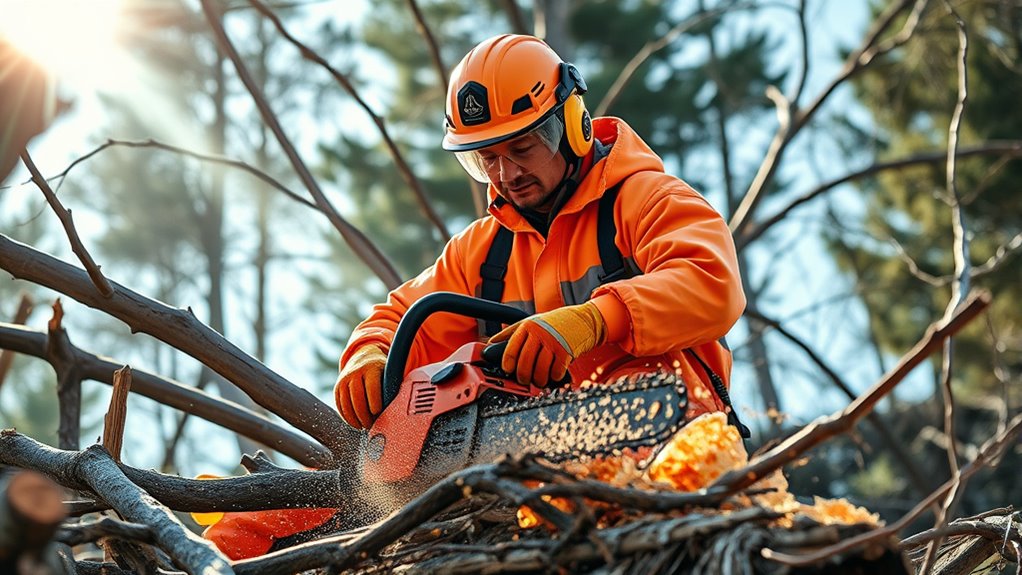

After a storm, always gear up with a helmet, safety goggles, ear protection, gloves, cut-resistant pants, and steel-toed boots to stay safe. Assess the area carefully for unstable trees or branches and watch out for power lines or other hazards. Maintain control with proper techniques, keep a firm grip, and avoid cutting with the tip of the bar. Regularly inspect and maintain your chainsaw. Stay alert and prioritize safety—if you keep these tips in mind, you’ll be prepared for safe operation.
Key Takeaways
- Inspect the area for unstable trees, hanging branches, or power lines before starting work.
- Wear full protective gear, including helmet, eye protection, gloves, and steel-toed boots.
- Assess wood condition for rot or weakness that could cause unpredictable falls.
- Maintain a firm grip and proper stance; avoid cutting near electrical hazards or in bad weather.
- Clear the work zone of debris and ensure no bystanders are nearby before operating the chainsaw.
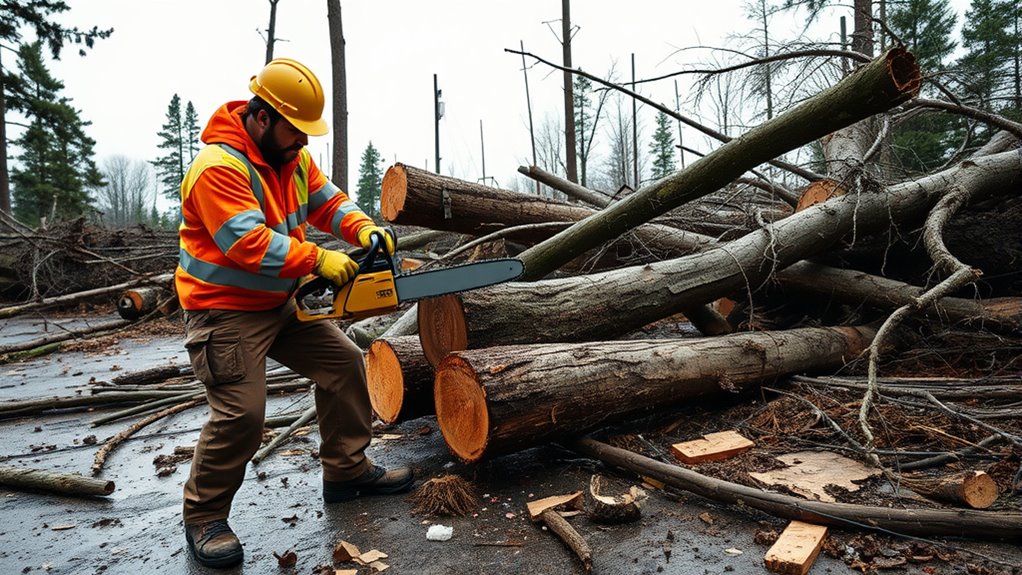
After a storm, operating a chainsaw can be necessary to clear fallen branches and damaged trees, but it also comes with significant safety risks. Before you even start, it’s essential to prioritize your safety by wearing the right protective gear. This includes a sturdy helmet with a face shield or safety goggles to protect your eyes and face from flying debris. Ear protection is indispensable, as chainsaws generate loud noise that can damage your hearing. Gloves with good grip help you maintain control, while thick, cut-resistant pants or chainsaw chaps shield your legs from accidental cuts. Steel-toed boots give your feet protection and stability on uneven, slippery ground. Never underestimate the importance of proper gear; it’s your first line of defense against injury.
Hazard awareness is equally critical when working with a chainsaw after a storm. Before you begin, assess the area carefully. Look out for unstable trees or branches that might shift unexpectedly. Be aware of power lines or other hazards that could increase the risk of electrocution or injury. Check the weather conditions—avoid operating the chainsaw in high winds or rain, as they can make the task more dangerous. Pay attention to the wood’s position and the direction it might fall; plan your cuts accordingly to prevent dangerous surprises. Recognize signs of weakened or rotting wood, which may break or fall unpredictably. Always keep an eye on your surroundings and maintain a safe distance from others who might be nearby, especially children or pets. Additionally, familiarizing yourself with the history of chainsaw safety can help you understand the importance of proper procedures and precautions.
When operating the chainsaw, maintain a firm grip and a balanced stance. Keep both hands on the saw, and stand with your feet shoulder-width apart for stability. Be cautious about kickback, which can occur if the tip of the chainsaw contacts an object or is pinched. To minimize this risk, avoid cutting with the tip of the bar and always use the proper cutting techniques. Stay alert and don’t rush the job—taking your time reduces mistakes and accidents. Turn off the chainsaw when not in use or when moving to a new cutting site. Regularly inspect your equipment for damage, such as loose chains or worn-out parts, and perform maintenance as needed.
Frequently Asked Questions
Can I Operate My Chainsaw Immediately After a Storm?
You shouldn’t operate your chainsaw immediately after a storm. Storm debris and tree damage can hide hazards like unstable branches or power lines, increasing your risk of injury. Wait until you evaluate the area carefully, remove loose debris, and guarantee the damaged trees are stable. Always wear protective gear and proceed cautiously to prevent accidents. If unsure, consult a professional before starting any chainsaw work in storm-affected areas.
What Safety Gear Is Essential When Using a Chainsaw Post-Storm?
You need essential safety gear when using a chainsaw post-storm. Wear protective clothing to shield your body from debris, safety glasses to protect your eyes from flying wood chips, gloves for a firm grip, and sturdy boots for stability. Always make sure your helmet is on to guard your head, ear protection to reduce noise, and a high-visibility vest to stay seen. Prioritize safety gear to prevent injuries and work confidently.
How Do I Identify Damaged Trees Safe for Cutting?
To identify damaged trees safe for cutting, you need to assess their stability and look for signs of damage like cracks, hanging branches, or leaning. Perform a damage assessment by checking for rot, loosened roots, or broken limbs that could cause the tree to fall unexpectedly. If a tree appears unstable or heavily damaged, it’s best to consult a professional before proceeding with any cuts to guarantee safety.
Are There Specific Weather Conditions to Avoid During Chainsaw Use?
Think of weather like an unpredictable storm at sea—you don’t want to sail during choppy waters. Avoid using your chainsaw in windy conditions, as gusts can cause loss of control. Also, steer clear of operation during lightning risks, which are dangerous and unpredictable. Wait for clear, calm weather to guarantee safety; rushing now could turn a small accident into a storm of trouble.
What Should I Do if My Chainsaw Gets Stuck in a Tree?
If your chainsaw gets stuck in a tree, stay calm and avoid forcing it out. Perform a safe tree rescue by evaluating the situation carefully. Use your saw’s chain brake to prevent accidental cuts, then gently wiggle or rotate the chainsaw to loosen it. For stuck removal, consider using wedges or a pry bar if necessary. If you’re unsure, call a professional to ensure safe and effective removal.
Conclusion
So, next time a storm leaves chaos in its wake, grab your chainsaw like a superhero wielding a mighty sword—just don’t forget your safety gear. Imagine yourself as a lumberjack hero, slicing through fallen branches with a flourish, all while wearing your helmet and gloves. Because nothing says “safety first” like conquering the storm’s mess with style—and maybe a little bit of humor. Stay safe out there, and remember: even heroes wear their gear.