

The Complete Generator Placement Rules Glossary Playbook guides you on how to position generators safely, efficiently, and legally. It covers essential principles like choosing ideal locations, ensuring proper ventilation, and maintaining clearances to prevent overheating or damage. You’ll learn tactical placement strategies, safety protocols, and how to avoid penalties or legal issues. Mastering these details helps maximize performance and safety. Continue exploring; you’ll discover even more ways to optimize your setup for success.
Key Takeaways
- Provides comprehensive guidelines on safe, efficient generator placement considering environmental, legal, and technical factors.
- Defines key terminology such as clearance requirements, ventilation zones, and efficiency principles for proper setup.
- Offers strategic placement tactics to optimize performance, minimize noise, and ensure safety and compliance.
- Outlines best practices for outdoor installation, grounding, and avoiding hazards like water, debris, and CO buildup.
- Includes troubleshooting tips and optimization strategies to improve generator lifespan, safety, and operational reliability.
Understanding the Basics of Generator Placement
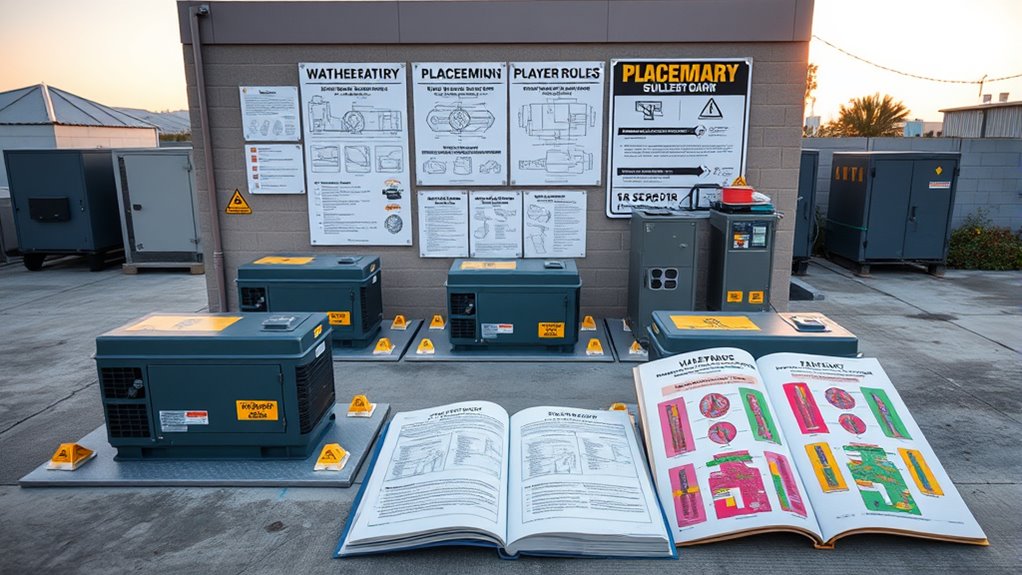
Understanding the basics of generator placement is essential to guarantee safe and efficient operation. Proper positioning minimizes risks and supports easy generator maintenance, which is crucial for longevity and performance. You need to contemplate environmental considerations, such as avoiding locations prone to flooding, excessive dust, or debris that could impair operation or cause damage. Ensure there’s adequate ventilation to prevent heat buildup, reducing the risk of overheating. Placing the generator on a stable, level surface helps prevent vibrations and noise issues. Keep it away from enclosed spaces to avoid carbon monoxide buildup, which can be hazardous. Taking these factors into account helps you maintain your generator effectively, reduces potential safety hazards, and guarantees it operates reliably whenever you need it most. Additionally, understanding the placement rules can help optimize your generator’s performance and safety.
Key Terminology in Generator Positioning
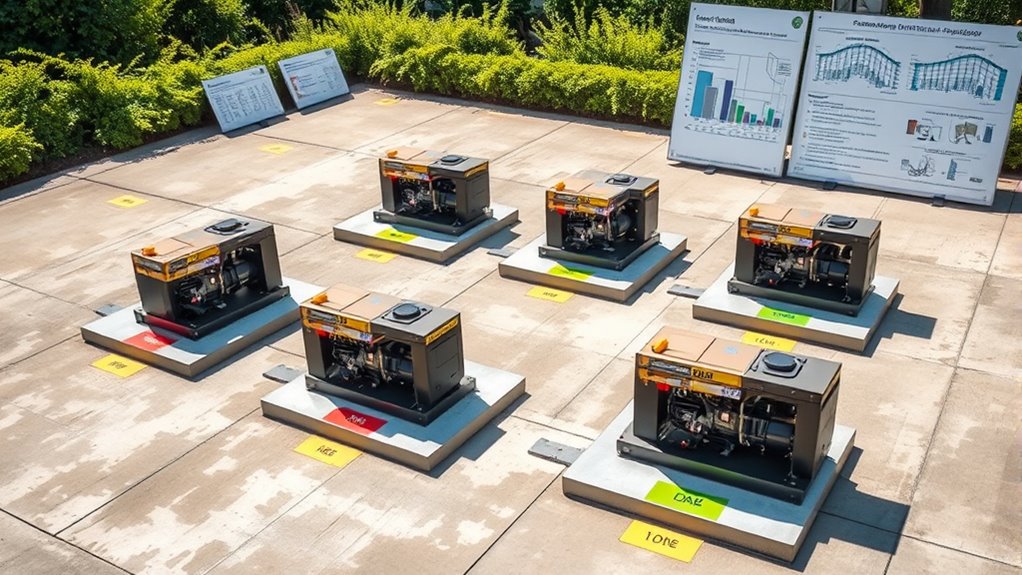
Have you ever wondered what specific terms are essential when positioning a generator? Key terminology helps you understand how to optimize your setup. “Generator efficiency” refers to how well your generator converts fuel into power, impacting performance and energy savings. “Placement aesthetics” describes how the generator fits into its environment, ensuring it doesn’t disrupt visual harmony or distract from surrounding structures. Other terms include “clearance requirements,” which specify safe distances from obstacles, and “ventilation zones,” critical for preventing overheating. Understanding these technical concepts can help you optimize both the functionality and visual appeal of your generator placement. Knowing these terms helps you balance performance with visual appeal, ensuring your generator functions effectively without compromising the site’s look. Mastering this terminology allows you to make informed decisions that enhance both efficiency and aesthetic appeal in your placement strategy.
Optimal Locations for Generator Placement

You should place your generator in high traffic areas to guarantee easy access and maintenance. A centralized location strategy helps distribute power efficiently across the system. Additionally, positioning near power sources minimizes transmission losses and improves overall reliability. Employing dynamic communication exercises can also enhance coordination among team members responsible for maintenance and operation.
High Traffic Areas
Placing your generator in high traffic areas guarantees easy access for maintenance and quick response during emergencies. Urban zones and commercial districts experience frequent activity, making these locations ideal for generator placement. High traffic areas ensure personnel can reach the generator swiftly, minimizing downtime during power outages. In busy commercial districts, accessibility is vital for routine inspections and urgent repairs. These locations also facilitate better visibility, helping staff monitor the generator’s condition regularly. Additionally, considering essential oils for safety can help create a more comfortable environment around the generator. However, avoid placing generators too close to pedestrian pathways or crowded zones to prevent safety hazards. Strategically positioning in high traffic areas balances accessibility with safety, guaranteeing your generator remains operational and ready when needed. This approach maximizes efficiency while maintaining compliance with safety standards in busy urban environments.
Centralized Location Strategy
Where is the best place to position your generator for maximum efficiency and safety? A centralized location guarantees your system operates smoothly and simplifies maintenance. This strategy minimizes cable length, reducing energy loss and improving reliability for renewable energy setups. It also makes generator maintenance easier, allowing quick access for inspections or repairs. To implement this effectively, consider the importance of noise reduction technology to ensure quiet operation and minimal disturbance. 1. Choose a spot with stable ground, away from potential flood zones. 2. Ensure adequate ventilation to prevent overheating and exhaust buildup. 3. Keep the area clear of debris and obstructions for safe access and fire safety compliance.
Near Power Sources
Positioning your generator near existing power sources, such as inverters or main electrical panels, minimizes the length of wiring needed and reduces energy losses. This setup makes your electrical system more efficient and easier to manage. Keep in mind, placing the generator close to your home can help reduce generator noise, making it less intrusive. However, consider aesthetic considerations; locate it where it won’t detract from your property’s appearance or cause visual clutter. Being near power sources also simplifies maintenance and fuel supply hookups. Just ensure it’s positioned in a way that balances accessibility with noise control and visual impact. Proper placement near existing electrical infrastructure streamlines setup and keeps your generator functioning smoothly without compromising your home’s look. Additionally, understanding Honda Tuning principles can help you optimize the overall performance of your electrical setup.
Common Placement Strategies and Tactics

To maximize your generator’s efficiency and reliability, adopting proven placement strategies and tactics is essential. Effective placement enhances fuel efficiency and reduces noise. Consider these tactics:
Proper placement boosts generator efficiency, reduces noise, and ensures long-term performance and safety.
- Choose a Ventilated Location: Place your generator in an open area to improve airflow, which boosts fuel efficiency and prevents overheating.
- Elevate the Unit: Position it on a stable, elevated surface to minimize dust and debris, protecting components and reducing maintenance needs.
- Opt for Noise-Reducing Barriers: Use barriers or enclosures to contain sound, improving noise reduction and keeping neighbors happy.
Implementing these strategies ensures your generator operates smoothly, conserves fuel, and minimizes noise disruptions. Proper placement is key to long-term performance and safety.
Rules for Safe and Effective Generator Setup
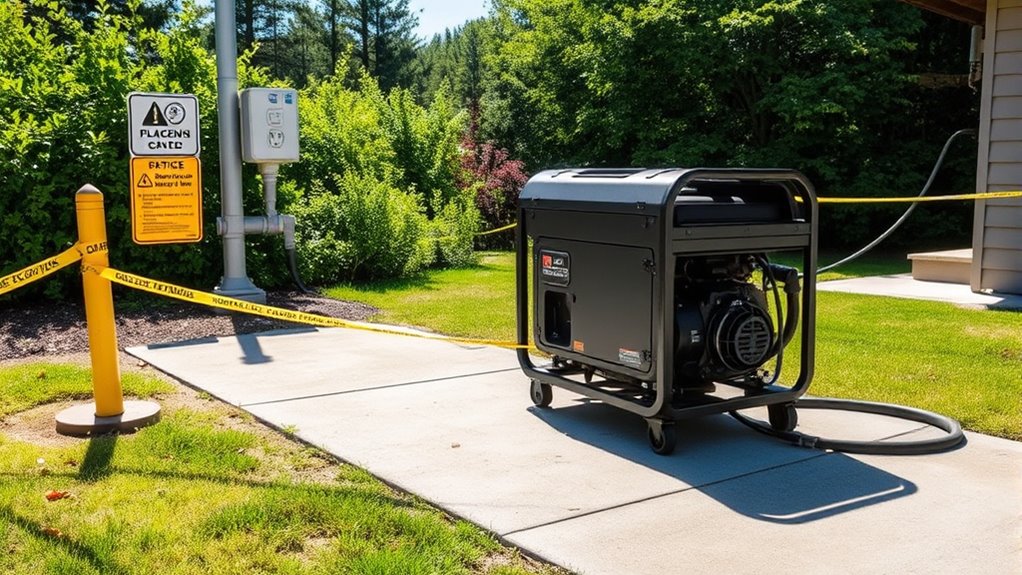
Ensuring your generator is set up safely and effectively starts with understanding and following key rules. First, prioritize generator safety by placing it outdoors, away from windows, vents, and doors to prevent carbon monoxide buildup. Always use a grounded outlet and keep the unit on a flat, stable surface to avoid tipping or movement. Environmental considerations are vital; avoid placing your generator near water or in wet conditions to prevent electrical hazards. Confirm proper ventilation to reduce harmful emissions and prevent overheating. Regularly inspect cords and connections for damage, and never overload the generator. Incorporating professional equipment and proper setup techniques ensures optimal operation and safety. Following these safety and environmental guidelines helps protect you, your property, and the environment while maximizing your generator’s performance.
Penalties and Risks Associated With Placement
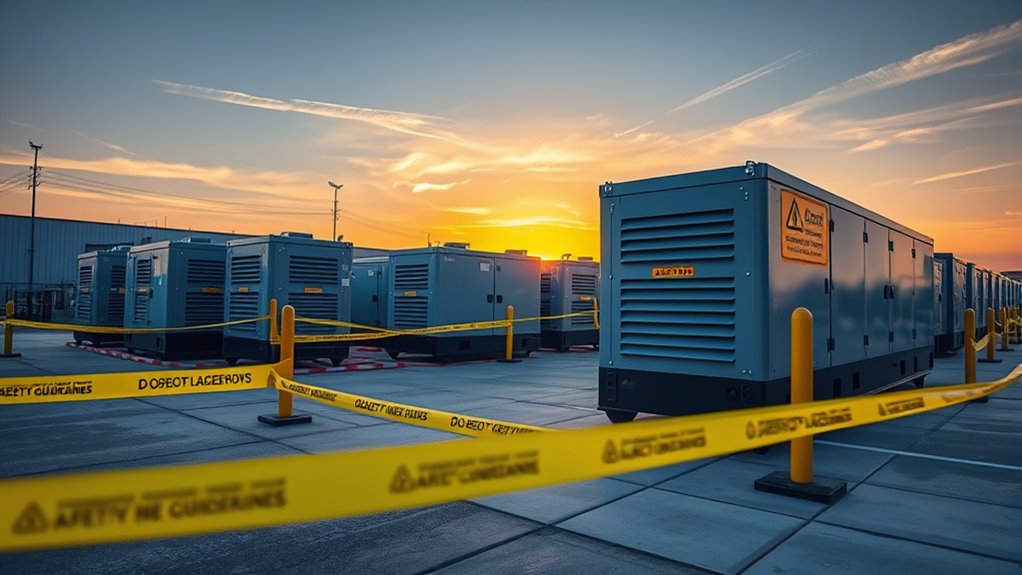
Incorrect generator placement can lead to code violations and hefty fines, risking your project’s compliance. You also face the danger of equipment damage if you don’t follow proper guidelines. Additionally, improper setup can cause power outages, disrupting your operations and increasing your risk of penalties. To ensure safety and efficiency, it is important to consider proper placement techniques when installing your generator.
Code Violations and Fines
Have you considered what can happen if your generator isn’t placed according to local codes? Violating permitting requirements or zoning restrictions can lead to fines and penalties. To avoid this, ensure your placement complies with all regulations. Specifically:
- You might face costly fines for illegal installation or non-compliance.
- Authorities could require you to remove or relocate your generator, increasing expenses.
- Non-compliance might void insurance coverage if damages or accidents occur.
- Understanding regulatory standards is crucial to ensure your generator’s placement meets all legal requirements.
Ignoring permitting requirements or zoning restrictions puts you at significant risk, both financially and legally. Always verify local codes before installation, and obtain necessary permits. Proper placement not only prevents fines but also ensures safety and legal peace of mind.
Equipment Damage Risks
Improper placement of your generator can lead to serious equipment damage, risking costly repairs or replacement. If placed in a poorly ventilated area, your generator may overheat, decreasing efficiency and causing internal damage. Additionally, improper positioning can expose the generator to moisture or debris, further increasing the risk of overheating. Electrical surges are another danger; placing your generator too close to sensitive electronics or in areas prone to power fluctuations can lead to damaging surges. These surges can fry components or cause long-term wear. Ensuring proper spacing and ventilation reduces these risks, helping your generator operate safely and efficiently. Proper placement also involves understanding Gold IRA guidelines to avoid penalties and ensure compliance, which can prevent costly legal or tax issues. Avoiding improper placement not only extends your equipment’s lifespan but also prevents expensive repairs caused by overheating or electrical surges.
Power Outage Penalties
Choosing the right placement for your generator not only prevents equipment damage but also helps you avoid costly penalties during power outages. Improper placement can disrupt backup power systems or lead to fuel management issues, increasing the risk of penalties. To minimize these risks:
- Ensure your generator is positioned to provide reliable backup power without obstructing airflow or ventilation.
- Place it where fuel supply is accessible and safe, reducing the chance of delays or spills.
- Avoid locations prone to flooding or extreme weather, which can compromise your generator’s operation and lead to penalties if service interruptions occur.
Proper placement guarantees your generator functions efficiently, maintains steady backup power, and simplifies fuel management, helping you avoid penalties and keep your system running smoothly during outages.
Advanced Techniques for Competitive Play

Mastering advanced placement techniques can give you a significant edge in competitive play. Focus on optimizing generator locations to enhance fuel efficiency, ensuring they’re positioned where they operate smoothly without unnecessary strain. Proper placement minimizes fuel consumption, extending your run time during critical moments. Additionally, consider noise reduction by placing generators away from high-traffic zones or sensitive areas, so they don’t become distractions or reveal your position. Strategic placement also involves balancing proximity to power needs with these factors, creating a setup that’s both efficient and discreet. Use terrain and structures to your advantage, shielding noise and conserving fuel. Developing a keen eye for these details improves your overall performance, making your generator layout more resilient and harder for opponents to detect or exploit.
Troubleshooting and Adjusting Your Generator Layout
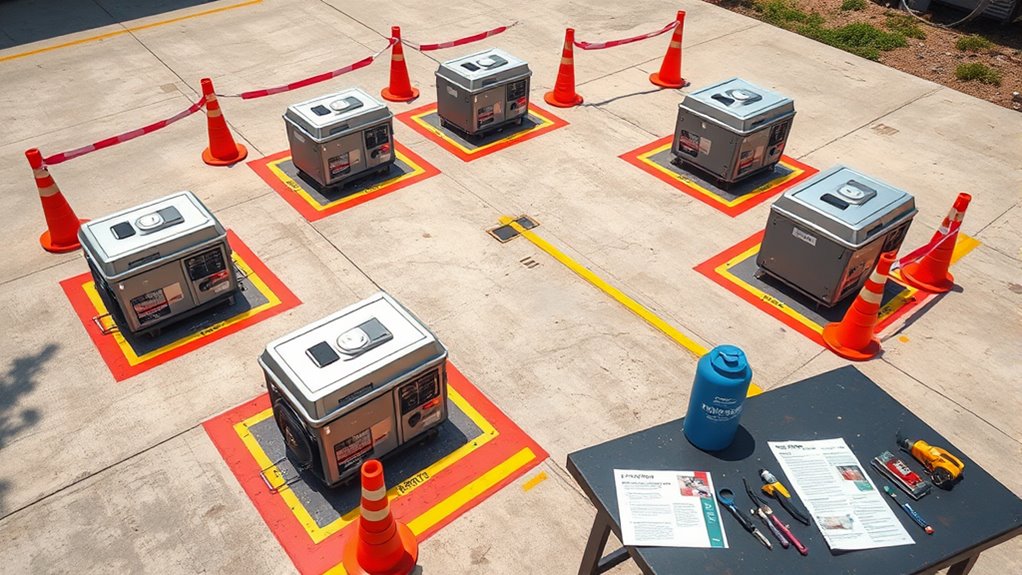
When your generator layout isn’t performing as expected, troubleshooting quickly becomes essential to restore efficiency and reliability. Start by checking your generator maintenance routines—dirty filters or worn parts can reduce fuel efficiency and cause issues. Next, analyze your placement to identify potential airflow obstructions or heat buildup, which can impact performance. Finally, modify your layout if needed: reposition generators to optimize cooling, minimize cable lengths, and ensure easy access for maintenance. Regularly inspecting and fine-tuning your setup helps maintain fuel efficiency and prevents costly breakdowns. Remember, a well-maintained and properly adjusted generator layout maximizes output, minimizes downtime, and keeps your system running smoothly. Quick troubleshooting ensures your setup stays efficient and reliable under all conditions.
Frequently Asked Questions
How Do Generator Placement Rules Vary Across Different Game Modes?
Generator placement rules vary across different game mode variations, affecting how you position them. In some modes, you might need to place generators closer together for quick access, while in others, strategic spacing is vital to avoid detection or optimize resource flow. Always adapt your placement strategy based on the specific game mode, as these variations influence the best approach to maximize efficiency and survivability.
What Are Common Mistakes to Avoid When Placing Generators?
You might think that incorrect placement doesn’t matter, but ignoring obstacles can severely limit your generator’s efficiency. Common mistakes include placing generators too close to each other, which can hinder repair speed, and ignoring obstacles that block access or reduce visibility. Always consider the environment and plan placements carefully, ensuring unobstructed access and strategic positioning. Avoid these pitfalls to maximize your generator’s performance and speed up your team’s progress.
How Does Terrain or Map Design Influence Generator Positioning?
Terrain obstacles and map symmetry play a big role in generator placement. You should position generators away from terrain obstacles that limit access or visibility, making them harder for enemies to find or attack. Also, consider map symmetry; placing generators strategically on either side ensures balanced defense and easier access. Avoid clustering generators in one area, and use terrain features to your advantage for better protection and strategic positioning.
Are There Specific Tools or Software to Assist With Placement Strategies?
You can use tools like generator mapping software and placement analysis programs to optimize your setup. These tools help you visualize terrain, identify strategic locations, and plan efficient generator placements. By analyzing the map with dedicated software, you can spot ideal spots that maximize coverage and efficiency. This approach safeguards you time, reduces guesswork, and ensures your generator placement aligns perfectly with your overall strategy.
How Do Updates or Patches Impact Existing Generator Placement Tactics?
Updates or patches can greatly impact your generator placement tactics by altering game mechanics or grid layouts. You need to assess the patch impact quickly and adjust your strategy accordingly. These updates might introduce new rules or constraints, so staying flexible allows you to optimize your placements and maintain an advantage. Regularly review patch notes and experiment with adjustments to make sure your placement tactics stay effective after each update.
Conclusion
Mastering generator placement is like tending a delicate garden—you need the right spots, timing, and care. I once watched a player cleverly hide their generator in a corner, avoiding detection and turning the tide of the game. With these rules and strategies, you’ll cultivate your setup into a well-oiled machine. Remember, every placement decision is a seed—plant it wisely, and watch your chances grow stronger with every match.