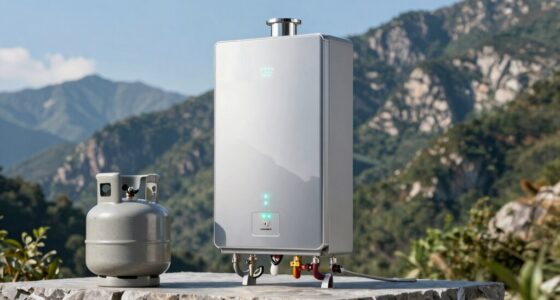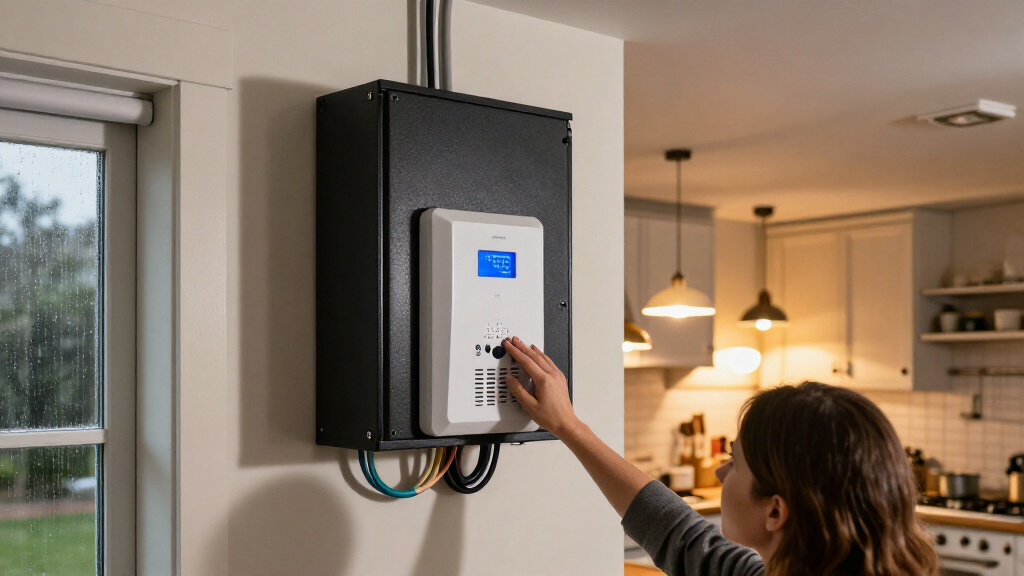
Whole house battery backup systems range from portable power stations for essential appliances to expandable systems designed to support a home’s circuits. My best overall pick is the EcoFlow Delta Pro Ultra X with Smart Home Panel 3, which pairs substantial storage with a home integration panel. For a larger off-grid setup, the Anker SOLIX E10 Prime stands out for its 30 kWh battery and solar capacity, while the ECO-WORTHY PowerMega 48V system offers a battery-and-inverter approach for buyers comfortable with a more hands-on setup. The main tradeoff is between plug-and-play convenience and the output, capacity, and electrical integration needed to power more of a home. Read on for the full comparison and guidance on matching a system to your backup goals.

Get backup power and energy gear delivered free with Prime
- Fast, free delivery on millions of items
- Prime Video, Amazon Music and more included
- Member-only deals all year
Key Takeaways
Home integration separates the leading whole-home options from portable stations: the EcoFlow Delta Pro Ultra X includes Smart Home Panel 3, while smaller Jackery and Anker units are better treated as targeted backup unless paired with suitable home equipment.
Capacity varies widely across this lineup: the Anker SOLIX E10 Prime lists a 30 kWh battery, while the Jackery HomePower 3600 Plus and Anker SOLIX F3800 sit near 3.6–3.8 kWh, making them different classes of backup rather than direct substitutes.
Expandable battery choices matter: ECO-WORTHY‘s single 16.07 kWh battery and 2-pack let buyers shape storage capacity, but batteries alone are not a complete backup system without compatible inverter and installation components.
Solar bundles trade flexibility for a ready-made package: the Jackery HomePower 3600 Plus with two 200W panels adds a modest solar input option, while larger systems list far more solar capacity but can require a more involved installation plan.
Voltage and output claims affect what can run: the Jackery HomePower 3600 Pro Max lists 240V output alongside 120V, which may suit some larger loads, but buyers still need to check continuous output, surge demands, and circuit compatibility.
| ECO-WORTHY PowerMega 48V 314Ah LiFePO4 Energy Storage System with 10kW Hybrid Inverter |  | Best Whole-Home Battery-and-Inverter Package | Battery chemistry: LiFePO4 | Battery voltage and capacity: 51.2V, 314Ah | Usable energy: 16.1 kWh | VIEW LATEST PRICE | See Our Full Breakdown |
| Jackery HomePower 3600 Plus Portable Power Station, 3584Wh, 3600W |  | Best Portable Entry Point | Battery capacity: 3,584Wh | Output power: 3,600W | Parallel output: 7,200W | VIEW LATEST PRICE | See Our Full Breakdown |
| Anker SOLIX E10 Prime Off-Grid Power System with 30 kWh Battery and 9 kW Solar |  | Best for Solar-Ready Off-Grid Homes | Battery capacity: 30 kWh, expandable to 90 kWh | Solar array: 9 kW, 10 × 440W panels | Continuous output: 7.6 kW | VIEW LATEST PRICE | See Our Full Breakdown |
| Jackery HomePower 3600 Plus Portable Power Station with Two 200W Solar Panels |  | Best Portable Solar Bundle | Battery capacity: 3,584Wh | AC output: 3,600W | Parallel output: 7,200W | VIEW LATEST PRICE | See Our Full Breakdown |
| Anker SOLIX F3800 Portable Power Station, 3,840Wh |  | Best Portable 240V Output | Battery capacity: 3,840Wh (3.84 kWh) | AC output: 6,000W | Voltage: 120V/240V | VIEW LATEST PRICE | See Our Full Breakdown |
| EcoFlow Delta Pro Ultra X with Smart Home Panel 3 – 12,288 Wh Power Station |  | Best for Whole-Home Integration | Battery capacity: 12,288 Wh | Continuous output: 12,000 W | Maximum expandable capacity: 180 kWh | VIEW LATEST PRICE | See Our Full Breakdown |
| ECO-WORTHY Powermega 48V 314Ah LiFePO4 Battery, 16.07kWh |  | Best Single-Battery Storage Upgrade | Battery chemistry: LiFePO4 | Nominal voltage: 48 V (51.2 V) | Capacity: 314 Ah | VIEW LATEST PRICE | See Our Full Breakdown |
| ECO-WORTHY Powermega 48V 314Ah LiFePO4 Battery, 2-Pack |  | Best for Building a Large Battery Bank | Pack size: 2 batteries | Energy capacity per battery: 16.07 kWh | Combined energy capacity: 32.14 kWh | VIEW LATEST PRICE | See Our Full Breakdown |
| EcoFlow Delta Pro Ultra 12kWh Power Station with Extra Battery |  | Best for Fast-Charging Backup | Battery capacity: 12 kWh | Expandable capacity: Up to 90 kWh | Continuous output: 7,200 W | VIEW LATEST PRICE | See Our Full Breakdown |
| Jackery HomePower 3600 Pro Max Power Station – 3584 Wh, 2000 W (120 V) / 4000 W (240 V) |  | Best Compact 240 V Backup | Battery capacity: 3,584 Wh | Expandable capacity: Up to 43 kWh | Continuous output: 4,000 W | VIEW LATEST PRICE | See Our Full Breakdown |
| whole house battery backup system | Warranty | Battery capacity | Expandable capacity | Voltage |
|---|---|---|---|---|
| ECO-WORTHY PowerMega 48V 314Ah | 10 years | — | — | — |
| Jackery HomePower 3600 Plus Po | 5 years | 3,584Wh | Up to 21 kWh per unit or 43 kWh with multiple units | 120V; 240V in parallel |
| Anker SOLIX E10 Prime Off-Grid | 5 years | 30 kWh, expandable to 90 kWh | — | — |
| Jackery HomePower 3600 Plus Po | 5 years | 3,584Wh | Up to 21 kWh per unit or 43 kWh with multiple units | 120V; 240V in parallel |
| Anker SOLIX F3800 Portable Pow | 5 years | 3,840Wh (3.84 kWh) | Up to 26.9 kWh with additional battery packs; listing also mentions up to 53.8 kWh | 120V/240V |
| EcoFlow Delta Pro Ultra X with | — | 12,288 Wh | — | 240 V |
| ECO-WORTHY Powermega 48V 314Ah | 10 years | — | — | — |
| ECO-WORTHY Powermega 48V 314Ah | 10 years | — | — | 48 V nominal (51.2 V) |
| EcoFlow Delta Pro Ultra 12kWh | — | 12 kWh | Up to 90 kWh | — |
| Jackery HomePower 3600 Pro Max | — | 3,584 Wh | Up to 43 kWh | — |
More Details on Our Top Picks
ECO-WORTHY PowerMega 48V 314Ah LiFePO4 Energy Storage System with 10kW Hybrid Inverter
The ECO-WORTHY PowerMega is the most direct fit here for buyers building a fixed home backup system: its 16.1 kWh usable battery is paired with a 10 kW hybrid inverter that supports 120V and 240V split-phase output. That combination offers more substantial stored energy than the portable Jackery HomePower 3600 Plus, while its inverter is rated for higher output than the Anker SOLIX E10 Prime’s 7.6 kW continuous output. The tradeoff is portability: at 293.2 pounds, the battery calls for delivery and planned installation rather than room-to-room use. WiFi and Bluetooth monitoring, active balancing, and multiple listed safety features add useful oversight, but the package includes only one battery and one inverter, so buyers needing longer outage coverage may need a larger system. I’d shortlist it for a dedicated installation, not a grab-and-go backup.
Pros:- 16.1 kWh usable energy paired with a 10 kW hybrid inverter
- 120V single-phase and 240V split-phase output for broader household compatibility
- WiFi and Bluetooth monitoring with RS485, CAN, and RS232 communications
- Active-balancing BMS and listed circuit breaker, aerosol fire suppression, and buzzer alarm
Cons:- The 293.2-pound battery needs planned handling and pallet or truck delivery
- The package includes only one battery, which may not cover extended outages for high-use homes
- The inverter exterior version is selected randomly
Best for: Homeowners planning a fixed 120V/240V backup installation who want substantial battery capacity and a 10 kW inverter in one package.
Not ideal for: Renters or buyers who need a movable backup unit, or households seeking a complete high-capacity multi-battery system without adding equipment.
- Battery chemistry:LiFePO4
- Battery voltage and capacity:51.2V, 314Ah
- Usable energy:16.1 kWh
- Inverter power:10,000W
- Output:120V single-phase / 240V split-phase, pure sine wave
- Cycle life:9,000+ cycles at 80% depth of discharge
- Connectivity:WiFi, Bluetooth, RS485, CAN, and RS232
- Weight:293.2 lbs
- Warranty:10 years
Our verdict“Choose the ECO-WORTHY PowerMega for a fixed home installation that prioritizes 16.1 kWh of storage and 10 kW output over portability.”
Jackery HomePower 3600 Plus Portable Power Station, 3584Wh, 3600W
The Jackery HomePower 3600 Plus suits buyers who want backup power they can move between home and RV use, rather than a permanently installed whole-house battery. Its 3,584Wh capacity and 3,600W output can support selected loads, and its wheeled luggage-style design is more practical to reposition than the 293.2-pound ECO-WORTHY PowerMega battery. It can also expand, accept four charging methods, and reach 240V output when units are paired. Those options make it flexible, but the base unit remains a smaller reserve than the PowerMega’s 16.1 kWh or the Anker SOLIX E10 Prime’s 30 kWh. I’d treat it as a portable backup foundation for priority circuits and appliances, not assume one unit will run an entire home through a long outage. The solar panel is optional in this listing.
Pros:- 3,600W output for a portable power station
- Expandable capacity, with 240V output available when units are paired
- AC, solar, gas generator, and hybrid charging support
- Wheels and telescopic handle make it easier to move than fixed battery systems
Cons:- Base capacity of 3,584Wh is substantially below the ECO-WORTHY PowerMega and Anker SOLIX E10 Prime
- At 77.2 pounds, it is still heavy to lift despite the wheels
- Solar panels are not included with this listing
Best for: RV owners and households that need a movable station for essential appliances, with the option to expand or recharge from different sources.
Not ideal for: Homeowners seeking a ready-made, fixed whole-house system with substantial battery storage and 240V output from a single unit.
- Battery capacity:3,584Wh
- Output power:3,600W
- Parallel output:7,200W
- Expandable capacity:Up to 21 kWh per unit or 43 kWh with multiple units
- Voltage:120V; 240V in parallel
- Charging options:Hybrid AC+DC, AC, solar, and gas generator
- Recharge time:2 hours hybrid AC+DC; 2.5 hours AC or gas generator; 4 hours solar
- Weight:77.2 lbs
- Warranty:5 years
Our verdict“Pick the HomePower 3600 Plus if portability and flexible recharging matter more than single-unit whole-home capacity.”
Anker SOLIX E10 Prime Off-Grid Power System with 30 kWh Battery and 9 kW Solar
For buyers planning a solar-backed home system rather than assembling separate portable stations, the Anker SOLIX E10 Prime brings a 30 kWh battery and 9 kW solar array into the package. Its listed storage is nearly twice the ECO-WORTHY PowerMega’s 16.1 kWh, making it better suited to homes with sustained energy needs, while its 7.6 kW continuous output is lower than the ECO-WORTHY unit’s 10 kW inverter rating. Turbo output reaches 10 kW, and expansion to 90 kWh gives this setup a longer growth path than the base Jackery HomePower 3600 Plus. That scale comes with limits: expansion requires additional units, and generator compatibility is specified for supported models and 120V/240V AC generators. The outdoor-rated enclosure and included solar array make it the more integrated off-grid choice, but buyers should plan around its system-specific components.
Pros:- Includes 30 kWh of battery capacity and a 9 kW solar array
- Battery capacity can expand to 90 kWh
- NEMA 4-rated enclosure is designed for outdoor use
- Supports compatible generators, including the Anker SOLIX Smart Generator 5500
Cons:- 7.6 kW continuous output is below the ECO-WORTHY PowerMega’s 10 kW inverter rating
- Expansion to the stated maximum requires additional units
- Generator support is limited to compatible models and specified AC generators
Best for: Owners of off-grid or solar-focused homes who want substantial included storage, a solar array, and the option to add battery capacity.
Not ideal for: Buyers who need a lightweight portable station, higher continuous output than 7.6 kW, or a system that can expand without purchasing additional units.
- Battery capacity:30 kWh, expandable to 90 kWh
- Solar array:9 kW, 10 × 440W panels
- Continuous output:7.6 kW
- Turbo output:10 kW
- Maximum expandable output:30 kW turbo with triple units
- Generator compatibility:Anker SOLIX Smart Generator 5500 and 120V/240V AC generators
- Operating temperature:-4°F to 122°F
- Warranty:5 years
Our verdict“Choose the E10 Prime for an off-grid home that values included solar and a large, expandable battery more than the highest continuous output.”
Jackery HomePower 3600 Plus Portable Power Station with Two 200W Solar Panels
This HomePower 3600 Plus bundle is the more self-contained Jackery pick for buyers who want solar panels included, unlike the standalone HomePower 3600 Plus listing. The station keeps the same 3,584Wh capacity and 3,600W output, with expansion and paired-unit 240V output for a system that can grow beyond its portable starting point. Two 200W panels give owners an included solar option, but that array is modest beside the Anker SOLIX E10 Prime’s included 9 kW solar system and 30 kWh battery. The Jackery’s wheeled form and AC, generator, solar, and hybrid charging offer more mobility and charging flexibility; they do not turn its base capacity into a fixed whole-house installation. I’d favor this bundle over the standalone Jackery when solar panels are wanted upfront, while buyers with high household loads should look to larger installed systems.
Pros:- Includes two 200W solar panels with the 3,584Wh power station
- 3,600W output and expandable capacity
- Supports AC, solar, gas generator, and hybrid charging
- Wheeled design and telescopic handle help with repositioning
Cons:- Base capacity is far below the Anker SOLIX E10 Prime’s 30 kWh
- The included 400W of solar is much smaller than a residential-scale array
- The 77.2-pound station can be difficult to lift, and panels may ship separately
Best for: Households seeking a portable backup station with solar panels included for recharging during outages, camping, or RV use.
Not ideal for: Buyers who need large-scale household storage or a substantial solar array to support extended off-grid operation.
- Battery capacity:3,584Wh
- AC output:3,600W
- Parallel output:7,200W
- Included solar panels:Two 200W panels
- Expandable capacity:Up to 21 kWh per unit or 43 kWh with multiple units
- Voltage:120V; 240V in parallel
- Charging options:Hybrid AC+DC, AC, solar, and gas generator
- Battery cycle life:6,000 cycles
- Warranty:5 years
Our verdict“Choose this bundle over the standalone Jackery if you want included portable solar, but choose a larger installed system for whole-home-scale storage.”
Anker SOLIX F3800 Portable Power Station, 3,840Wh
The Anker SOLIX F3800 is the portable pick I’d favor when output capability matters more than matching a fixed home battery’s storage. Its 6,000W AC output at 120V/240V exceeds the 3,600W rating of either Jackery HomePower 3600 Plus, and the NEMA 14-50 and L14-30 connections give buyers listed EV and RV connection options. Its 3.84 kWh base capacity, however, is close to the Jackery’s 3.584 kWh and far below the ECO-WORTHY PowerMega’s 16.1 kWh or the Anker SOLIX E10 Prime’s 30 kWh. Additional battery packs can raise capacity, but the product information gives conflicting maximum expansion figures, so I would verify the supported configuration before planning a whole-house setup. WiFi and Bluetooth monitoring are useful additions, though this remains a portable station rather than a complete fixed installation.
Pros:- 6,000W AC output with 120V/240V support
- LFP battery chemistry and expandable storage with additional packs
- NEMA 14-50 and L14-30 connections for compatible EV and RV uses
- WiFi and Bluetooth app monitoring
Cons:- Base capacity of 3.84 kWh is limited for extended whole-house backup
- Additional battery packs are required to expand storage
- Listed maximum expansion figures conflict, making system planning less clear
Best for: RV and home-backup buyers who want portable 120V/240V power with higher output than the Jackery HomePower 3600 Plus.
Not ideal for: Homeowners who want a clearly specified, large-capacity fixed backup package without buying extra battery packs or resolving expansion limits.
- Battery capacity:3,840Wh (3.84 kWh)
- AC output:6,000W
- Voltage:120V/240V
- Battery type:LFP
- Expandable capacity:Up to 26.9 kWh with additional battery packs; listing also mentions up to 53.8 kWh
- Ports:NEMA 14-50 and L14-30
- Connectivity:WiFi and Bluetooth
- Power source:Battery powered
- Warranty:5 years
Our verdict“Pick the F3800 when portable 240V output is the priority, but verify expansion limits and add storage before treating it as whole-house backup.”
EcoFlow Delta Pro Ultra X with Smart Home Panel 3 – 12,288 Wh Power Station
The Delta Pro Ultra X is the strongest fit here for buyers who want an expandable, automatically managed home-backup system rather than a battery to connect manually. Its 12 kW continuous output and transfer response under 20 ms can support a broad range of household loads while keeping interruptions brief. Automatic coordination of solar, stored power, and off-peak grid electricity also gives it an energy-management role beyond outage coverage. Compared with the EcoFlow Delta Pro Ultra 12kWh, it offers higher stated continuous output and expansion to 180 kWh rather than 90 kWh. The tradeoff is a more involved installation: the Smart Home Panel 3 needs a professional, and separately shipped components add coordination work. Its portable design offers deployment flexibility, but this is not a simple plug-in whole-house solution.
Pros:- 12 kW continuous output suits larger household loads.
- Under-20-ms outage response helps keep connected critical equipment running.
- Capacity can expand from 12.288 kWh to 180 kWh.
- Automatic solar, battery, and off-peak grid management can support both outage backup and energy shifting.
Cons:- Smart Home Panel 3 requires professional installation.
- Components ship separately, adding setup and delivery coordination.
- The stated maximum capacity requires additional system components rather than the base unit alone.
Best for: Homeowners seeking professionally installed, whole-home backup with high output, automatic power management, and room to expand storage.
Not ideal for: Buyers who need a ready-to-run portable station or want to avoid professional panel installation and coordinating separate shipments.
- Battery capacity:12,288 Wh
- Continuous output:12,000 W
- Maximum expandable capacity:180 kWh
- Voltage:240 V
- Outage response:Under 20 ms
- Power sources:Solar, battery, and grid
- Dimensions:26.6 × 18.7 × 9.06 in
- Panel:Smart Home Panel 3; professional installation required
Our verdict“Choose the Delta Pro Ultra X if you want a high-output, professionally integrated system with the largest stated expansion ceiling in this group.”
ECO-WORTHY Powermega 48V 314Ah LiFePO4 Battery, 16.07kWh
This 16.07 kWh LiFePO4 battery is for buyers building a whole-house system around compatible 48 V equipment, not for anyone expecting a self-contained backup station. It offers more stored energy in one battery than the 12 kWh EcoFlow Delta Pro Ultra, and ECO-WORTHY lists expansion to 15 units for very large storage banks. The 200 A active-balancing BMS, fire suppression, and UL 1973 certification add meaningful protection features; a touchscreen and wireless monitoring make status checks easier once the battery is installed. The key tradeoff is system integration: the listing provides battery storage, not an inverter or whole-home transfer panel, so buyers must pair it with compatible equipment and plan installation. Compared with the two-battery ECO-WORTHY set, this single unit is a smaller initial build, but offers less total stored energy out of the box.
Pros:- 16.07 kWh capacity in a single battery.
- Expansion support for up to 15 units.
- 200 A active-balancing BMS, aerosol fire suppression, and UL 1973 certification.
- Touchscreen plus Wi-Fi and Bluetooth monitoring.
Cons:- Battery alone does not provide an inverter or whole-home transfer equipment.
- Large, heavy format requires suitable installation space and handling.
- Palletized truck delivery requires an address that can accommodate freight.
Best for: Solar and backup-system builders who already have, or are selecting, a compatible 48 V inverter and want one substantial battery with expansion options.
Not ideal for: Homeowners seeking a turnkey whole-house system, or households without space and access for palletized truck delivery.
- Battery chemistry:LiFePO4
- Nominal voltage:48 V (51.2 V)
- Capacity:314 Ah
- Energy capacity:16.07 kWh
- BMS current:200 A
- Parallel expansion:Up to 15 units; listed maximum 241 kWh
- Monitoring:7-inch touchscreen, Wi-Fi, and Bluetooth
- Safety certification:UL 1973
- Warranty:10 years
Our verdict“Pick this single ECO-WORTHY battery if you are assembling a compatible 48 V system and prefer one large storage module over a preconfigured power station.”
ECO-WORTHY Powermega 48V 314Ah LiFePO4 Battery, 2-Pack
For a whole-house project where storage duration matters more than plug-and-play simplicity, this two-battery set supplies 32.14 kWh total before any further expansion. That is twice the energy of the single ECO-WORTHY Powermega battery, making it a more suitable starting point for longer outages or larger solar-storage builds. Each unit includes a 200 A active-balancing BMS, aerosol fire suppression, UL 1973 certification, and touchscreen and wireless monitoring. But these are batteries, not a complete backup system: buyers still need compatible inverter and transfer hardware, plus an installation plan for two large modules. Compared with the EcoFlow Delta Pro Ultra 12kWh, this set offers much more stated storage, but it lacks the EcoFlow’s integrated inverter, multiple charging inputs, and UPS features. Freight delivery also calls for practical access planning.
Pros:- 32.14 kWh combined capacity from two 16.07 kWh batteries.
- Each battery has a 200 A active-balancing BMS and aerosol fire suppression.
- UL 1973 certification and a listed 10-year warranty.
- Touchscreen, Wi-Fi, Bluetooth, RS485, CAN, and RS232 connectivity.
Cons:- No inverter or whole-home transfer panel is included in the listed battery set.
- Two large batteries increase space, handling, and installation demands.
- Truck delivery requires a suitable freight-receiving address.
Best for: Homeowners and off-grid system builders with compatible 48 V equipment who want a substantial storage bank from the outset.
Not ideal for: Buyers looking for a single boxed, ready-to-use backup unit or those unable to receive and handle palletized freight.
- Pack size:2 batteries
- Energy capacity per battery:16.07 kWh
- Combined energy capacity:32.14 kWh
- Battery type:LiFePO4
- Voltage:48 V nominal (51.2 V)
- Capacity per battery:314 Ah
- BMS:200 A with active cell balancing
- Safety certification:UL 1973
- Warranty:10 years
Our verdict“Choose the two-pack if you already have compatible system hardware and want substantially more starting storage than the single ECO-WORTHY battery.”
EcoFlow Delta Pro Ultra 12kWh Power Station with Extra Battery
The Delta Pro Ultra suits homeowners who want substantial backup storage with a built-in inverter and several ways to recharge. Its 7,200 W continuous output, 21.6 kW peak, and 120/240 V AC support a broader mix of household equipment than the Jackery HomePower 3600 Pro Max, whose stated continuous output is 4,000 W. The listed 12 kWh battery can grow to 90 kWh, while solar, EV charger, wall outlet, and generator charging give owners options when one source is unavailable. A stated two-hour full recharge is useful when power or charging windows are limited, and zero-millisecond UPS transfer is aimed at sensitive electronics. The tradeoff is physical: at 293.6 lb, moving it is a substantial task, and the inverter and battery arrive separately. Its 90 kWh ceiling also trails the Delta Pro Ultra X’s 180 kWh expansion limit.
Pros:- 7,200 W continuous output with 21.6 kW peak output.
- Expandable from 12 kWh to 90 kWh.
- Listed full recharge time of about two hours and four charging source types.
- Zero-millisecond UPS transfer supports sensitive electronics.
Cons:- At 293.6 lb, the system is difficult to reposition.
- Inverter and battery ship separately, adding assembly work.
- Its 90 kWh expansion ceiling is below the Delta Pro Ultra X’s 180 kWh maximum.
Best for: Households needing high-output 120/240 V backup, fast recharging, and the option to add storage over time.
Not ideal for: Buyers who need an easily movable unit, want the highest expansion ceiling in this lineup, or prefer a one-package setup.
- Battery capacity:12 kWh
- Expandable capacity:Up to 90 kWh
- Continuous output:7,200 W
- Peak output:21.6 kW
- AC voltage:120 V / 240 V
- Full recharge time:About 2 hours
- Charging sources:Solar, EV charger, wall outlet, and generator
- Weight:293.6 lb
- UPS transfer:0 ms
Our verdict“Choose this EcoFlow if fast recharging and strong 120/240 V output matter more than easy handling or the lineup’s largest expansion capacity.”
Jackery HomePower 3600 Pro Max Power Station – 3584 Wh, 2000 W (120 V) / 4000 W (240 V)
The HomePower 3600 Pro Max is the most compact starting point here for buyers who want 120/240 V output without beginning with a very large battery bank. Its 3.584 kWh capacity is far below the 12 kWh EcoFlow Delta Pro Ultra, so it is better suited to selected circuits and shorter backup periods than broad, long-duration whole-home coverage. The tradeoff is a comparatively manageable 74 lb form factor, quiet operation below 30 dB, and expansion potential to 43 kWh. Its under-10-ms UPS response is also faster than the Delta Pro Ultra X’s listed under-20-ms response, though system capacity and expansion limits differ. Eight recharge options, including generator compatibility, give owners flexibility; still, scaling this into whole-house backup means adding storage, and the unit’s weight and footprint make it less portable than the term power station might suggest.
Pros:- 120/240 V output with 4,000 W continuous power.
- Under-10-ms UPS response helps limit interruptions.
- Expandable capacity up to 43 kWh.
- Quiet operation below 30 dB and eight listed recharge options.
Cons:- Base capacity of 3.584 kWh is limited for extended whole-house backup.
- At 74 lb, it is heavy for frequent lifting or travel.
- Reaching the listed 43 kWh capacity requires additional batteries.
Best for: Households prioritizing quiet, compact 120/240 V backup for selected essential loads, with the option to add batteries later.
Not ideal for: Buyers who need substantial whole-house runtime from the base unit or want a lightweight station for frequent carrying.
- Battery capacity:3,584 Wh
- Expandable capacity:Up to 43 kWh
- Continuous output:4,000 W
- Input and output voltage:120 V / 240 V
- Battery type:LFP
- UPS switch time:Under 10 ms
- Noise level:Under 30 dB
- Weight:74 lb
- Recharge options:8, including gas generator compatibility
Our verdict“Pick the Jackery if quiet, compact 240 V backup for essential circuits matters more than high capacity in the base configuration.”
How We Picked
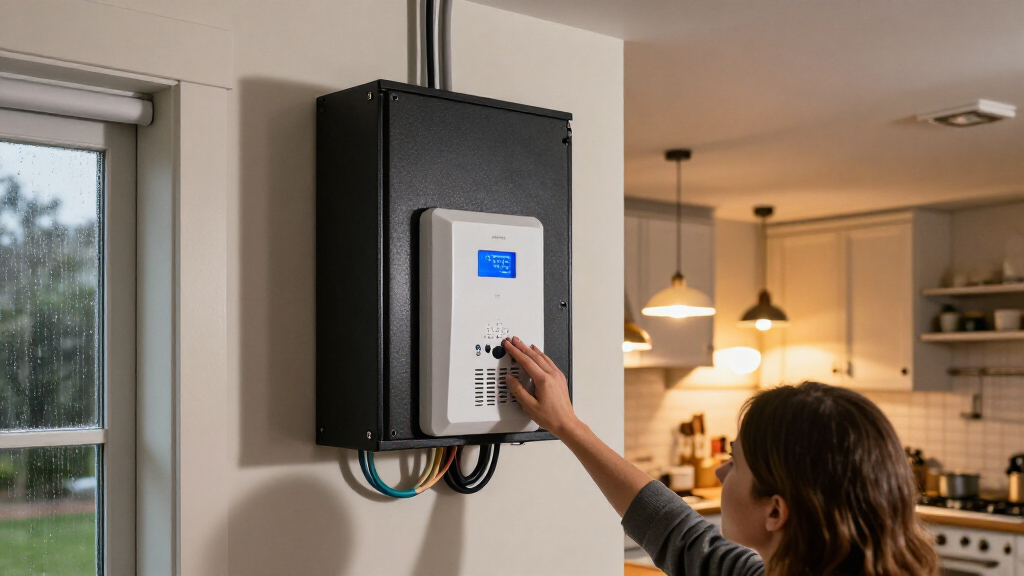
I ranked these whole house battery backup systems by how credibly each can support home backup, rather than by battery capacity alone. I weighed listed usable storage, continuous and surge output where provided, voltage options, solar input, expandability, and whether the package includes an inverter or home integration equipment. I also separated complete systems from standalone batteries and portable power stations, since those products require different planning and should not be treated as interchangeable.
The order favors systems that bring together meaningful capacity and practical home integration, while also accounting for flexibility and setup demands. A higher-capacity or more powerful system may rank well for whole-home ambitions, but it can be a poor fit for someone seeking simple backup for a few appliances. Where product details do not establish circuit-level integration or full system compatibility, I treat that as a limitation rather than assuming the feature is included.
| whole house battery backup system | Expandable capacity |
|---|---|
| ECO-WORTHY PowerMega 48V 314Ah | — |
| Jackery HomePower 3600 Plus Po | Up to 21 kWh per unit or 43 kWh with multiple units |
| Anker SOLIX E10 Prime Off-Grid | — |
| Jackery HomePower 3600 Plus Po | Up to 21 kWh per unit or 43 kWh with multiple units |
| Anker SOLIX F3800 Portable Pow | Up to 26.9 kWh with additional battery packs; listing also mentions up to 53.8 kWh |
| EcoFlow Delta Pro Ultra X with | — |
| ECO-WORTHY Powermega 48V 314Ah | — |
| ECO-WORTHY Powermega 48V 314Ah | — |
| EcoFlow Delta Pro Ultra 12kWh | Up to 90 kWh |
| Jackery HomePower 3600 Pro Max | Up to 43 kWh |
Factors to Consider When Choosing Whole House Battery Backup Systems
Before choosing a system, I would start with the loads you need during an outage, then check whether the product is a complete home backup package or only one part of one. These decisions often matter more than headline battery capacity.
Decide Which Circuits Must Stay On
Make a short list of the loads you actually want powered, such as refrigeration, lighting, internet equipment, medical devices, or a well pump. Add their running wattage and note which appliances have motors or compressors that can draw a larger surge at startup. A system may have enough stored energy for several hours yet still lack the output to start a large appliance. Whole-home backup does not always mean powering every circuit at once; a selected-load panel can make a smaller battery more useful. Avoid choosing capacity from a household’s total daily consumption without considering which loads run simultaneously. This load list helps determine both inverter output and the circuits an electrician should connect.
Separate Battery Capacity From Power Output
Battery capacity, usually stated in kilowatt-hours, describes stored energy; inverter output, stated in kilowatts, describes how much power the system can deliver at a moment. A large battery can run out of stored energy slowly but still fail to handle a high-demand appliance if its output ceiling is too low. The reverse is also possible: a powerful inverter can support several loads but only for a limited time if storage is modest. Check whether listed capacity is nominal or usable, and account for conversion losses and reserve settings. Compare continuous output with surge output rather than treating a brief peak rating as a sustainable figure. This distinction explains why portable units in this roundup are not direct replacements for larger home-integrated systems.
Confirm What Makes It a Complete System
A battery is only one component of a home backup setup. Depending on the product, you may also need an inverter, transfer equipment, a home panel, wiring, permits, and professional installation. A portable power station can be useful for plug-in loads without automatically connecting to household circuits. Likewise, a standalone battery listing does not prove that a compatible inverter or transfer switch is included. Before ordering, request a full bill of materials and confirm compatibility between every component. This check can prevent a capacity-focused purchase from turning into an incomplete system or an unexpectedly complex project.
Plan for Solar and Recharge Time
Solar input affects how quickly a battery can recover during a long outage, but a panel’s rated output is not the same as its everyday production. Sun angle, clouds, shading, season, panel placement, and the system’s input limits all shape recharge time. A small panel bundle may help top up a portable unit, while a larger solar-ready system may call for more roof or ground space and additional electrical planning. Check panel compatibility, maximum input voltage and wattage, and whether the system can charge from both solar and the grid. A common mistake is buying substantial storage without enough recharge capacity to refill it between outages. If outages are brief and infrequent, grid charging may matter more than building a large solar array.
Check Voltage, Transfer Method, and Installation Rules
Most household outlets and many everyday devices use 120V, while some large appliances require 240V. Confirm that the system’s voltage and output match the specific loads you plan to back up; a listed 240V capability does not by itself confirm compatibility with every home panel or appliance. Ask how the system transfers power during an outage and whether it can isolate the home safely from the utility grid. Hardwired installations commonly require a qualified electrician and may involve local permits or utility requirements. Portable operation can reduce installation work, but it may not provide automatic backup or power fixed circuits. Get these answers before choosing between a plug-in unit and a panel-connected system.
Compare Expansion, Warranty, and Long-Term Support
Expansion can make a system easier to size in stages, but added batteries only help when the inverter and control system support them. Verify the maximum supported capacity, approved battery models, and whether expansion changes output or only runtime. Ask about warranty length and coverage terms, expected battery cycle life, software support, and access to replacement parts or service. A modular system may cost more to install initially but give a household room to add storage as its needs change. Conversely, a fixed portable unit can be simpler to move or replace, though it may not scale into a home backup system. Compare the full system plan over its expected service life, not just the battery count in the first package.
Frequently Asked Questions
Can a portable power station in this roundup back up my whole house?
Usually, a portable power station is better suited to selected appliances than every circuit in a home. Its listed capacity indicates stored energy, but output limits, voltage, and connection method determine what it can actually run. Some home connections require compatible transfer equipment and professional installation, which may not be part of a portable unit’s package. Check the product’s continuous and surge output against your appliances, then confirm how it can connect safely to the loads you want backed up. If you need automatic, panel-level backup, compare it with systems that include home integration equipment.
How much battery capacity do I need to keep essential appliances running overnight?
There is no single capacity that fits every household, because runtime depends on which appliances run and how much energy they consume. Estimate watt-hours by multiplying each load’s wattage by its expected hours of use, then add the totals for the outage period. Include startup surges when checking inverter output, but do not confuse those brief peaks with energy use over the night. Allow for conversion losses and avoid planning to drain the battery completely. If you have medical equipment, a well pump, or other high-priority loads, include them in the estimate before choosing a system.
Do I need an electrician to connect a battery backup system to my home’s panel?
For a hardwired connection or a system that supplies household circuits through a transfer device, plan on qualified electrical help and check local rules. The work must prevent power from feeding back into utility lines and must match the home’s panel, grounding, and circuit layout. A portable station used with compatible plug-in devices may avoid panel wiring, but that does not make it a whole-house installation. Ask the manufacturer or installer which components are included and which are required separately. Confirm permit and utility requirements before scheduling the work.
Are the ECO-WORTHY PowerMega batteries ready to use as home backup by themselves?
No: the listed 16.07 kWh battery and its 2-pack option are storage components, not proof of a complete backup system on their own. Buyers need to verify compatible inverter, controls, protection equipment, wiring, and a safe method of connecting the system to household loads. The PowerMega system listing that includes a 10 kW hybrid inverter is a different package and should be checked for exactly what is supplied. Confirm battery-inverter compatibility and installation requirements before buying separate components. This approach can suit buyers planning a configurable system, but it asks for more system-level planning than a packaged power station.
Should I choose more battery storage or more solar panels for long outages?
Storage and solar solve different problems: more battery capacity gives you a larger reserve, while more solar can help replenish that reserve during daylight. If your outage is short or sunlight is unreliable, added storage may better cover immediate needs. For an extended outage, a battery that cannot recharge may eventually run empty, so solar input and realistic daily production matter. Check the system’s solar input limits and estimate output for your location, season, and panel placement rather than relying on panel nameplate wattage. The best balance depends on how long outages last and whether you have reliable access to sunlight.
Conclusion
For a buyer seeking the strongest blend of storage and household integration in this lineup, I would start with the EcoFlow Delta Pro Ultra X with Smart Home Panel 3 as the best overall pick. The ECO-WORTHY PowerMega 48V system with 10 kW hybrid inverter is my best value direction for buyers comfortable checking compatibility and planning a configurable installation, while the Anker SOLIX E10 Prime is the best premium fit for those prioritizing a larger listed battery and substantial solar capacity. For beginners who want a simpler, portable starting point, I would look at the Jackery HomePower 3600 Plus, while recognizing that it is not equivalent to a panel-connected whole-home system. For specific needs, choose the Jackery bundle if included panels suit your portable setup, the Jackery HomePower 3600 Pro Max if 240V output matches a target load, or an ECO-WORTHY battery configuration if modular storage is the priority. Before deciding, match output and capacity to your load list and confirm the installation components you will need.
Halloween Picks
halloween
As an affiliate, we earn on qualifying purchases.