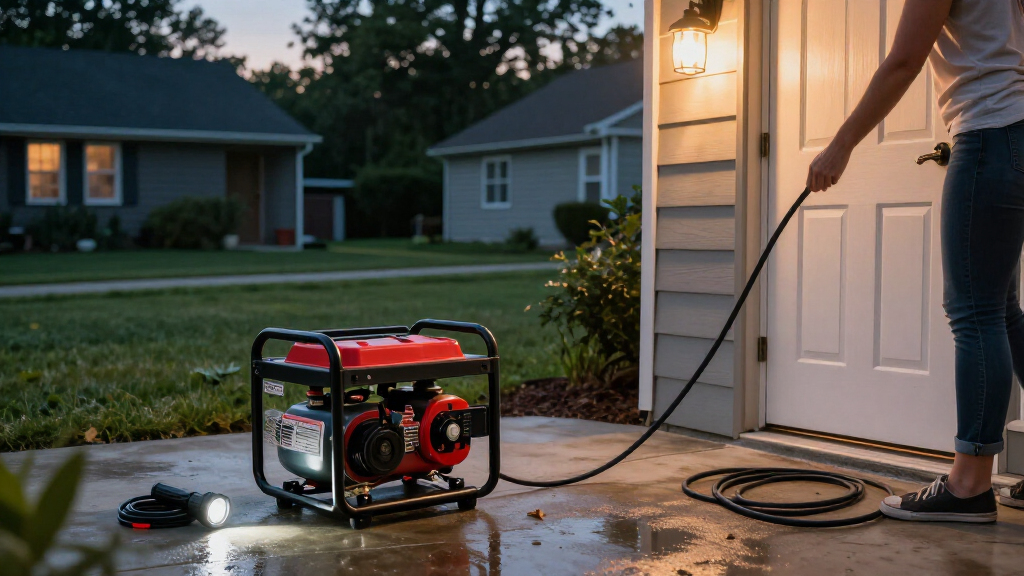

Dual fuel inverter generators let you run on gasoline when it’s convenient and switch to propane when gas is scarce or you want cleaner, longer-term storage — which is exactly why they’ve become the default choice for RV owners and home backup planning. After comparing 12 current models, the Westinghouse iGen12000DFc stands out as the best overall pick for whole-home backup thanks to massive dual-fuel output and a remote start, while the WEN DF360iX wins on value for casual RV use and the GENMAX GM3500iED is the lightest truly portable option. The main tradeoffs in this category come down to wattage versus portability, propane’s roughly 10-15% power penalty, and how much runtime and noise matter for your setting. Read on for the full breakdown of every model and which buyer each one actually suits.

Get backup power and energy gear delivered free with Prime
- Fast, free delivery on millions of items
- Prime Video, Amazon Music and more included
- Member-only deals all year
Complete the kit


Key Takeaways
- Westinghouse‘s two entries (the iGen12000DFc and iGen8200TFc) dominated the high-wattage end, but their weight and price make them overkill for anyone who isn’t backing up a whole house or job site.
- The mid-range 3,500-4,500W class is the most crowded and most competitive — the Champion 4000-Watt, PowerSmart 4400, and WEN DF480iX all trade blows on runtime, outlets, and warranty rather than raw power.
- Propane derating separates the field: budget models like the PowerSmart 3800 lose more of their rated output on propane than premium options, which matters if you plan to run primarily on LP.
- GENMAX‘s GM3500iAD is the only sub-60-pound model with a true 30A RV outlet, making it the clear choice for solo RV travelers who actually lift their generator.
- AIVOLT‘s 8000W unit and the ERAYAK 4500W sit in an awkward middle ground — strong on paper but with shorter track records and weaker support networks than Champion, Westinghouse, and WEN.
| Champion 4000-Watt Dual Fuel RV Ready Portable Inverter Generator |  | Best for RV Owners | Starting Watts: 4000 | Running Watts (Gasoline): 3000 | Running Watts (Propane): 2700 | VIEW LATEST PRICE | See Our Full Breakdown |
| WEN DF680iX 6800-Watt Dual-Fuel Portable Inverter Generator |  | Best High-Output Pick | Engine: 224cc dual-fuel | Fuel Tank: 2.9 gallons | Runtime (Propane): Up to 9 hours at half load (20-lb tank) | VIEW LATEST PRICE | See Our Full Breakdown |
| PowerSmart 4400 Watt Dual Fuel Portable Generator with Inverter Technology |  | Best Value Mid-Size | Starting Watts (Gasoline): 4400 | Running Watts (Gasoline): 3600 | Running Watts (LPG): 3300 | VIEW LATEST PRICE | See Our Full Breakdown |
| WEN DF360iX Dual-Fuel 3600-Watt RV-Ready Portable Inverter Generator |  | Best for Quiet Camping | Surge Watts (Gasoline): 3600 | Fuel Type: Gasoline / Propane | Outlets: Two 120V, TT-30R RV, 12V DC, two USB | VIEW LATEST PRICE | See Our Full Breakdown |
| PowerSmart 3800-Watt Dual-Fuel Inverter Generator |  | Best Budget Backup | Starting Watts (Gasoline): 3,800 | Running Watts (Gasoline): 3,300 | Running Watts (Propane): 3,100 | VIEW LATEST PRICE | See Our Full Breakdown |
| ERAYAK 4500W Dual-Fuel Portable Inverter Generator |  | Best for Quiet, Lightweight Backup | Fuel types: Gasoline and propane | Gasoline output: 4,500W peak, 3,500W rated | Propane output: 4,050W peak, 3,150W rated | VIEW LATEST PRICE | See Our Full Breakdown |
| GENMAX GM3500iAD Dual-Fuel Portable Inverter Generator, 3500W |  | Best for Wheeled Portability | Model: GM3500iAD | Fuel types: Gasoline and propane | Gasoline output: 3,500 peak watts, 3,200 rated watts | VIEW LATEST PRICE | See Our Full Breakdown |
| AIVOLT 8000W Dual-Fuel Inverter Generator |  | Best for Higher Output with Electric Start | Fuel types: Gasoline and propane | Starting and running power: 8,000W starting, 6,100W running | Engine: 322cc four-stroke OHV | VIEW LATEST PRICE | See Our Full Breakdown |
| Westinghouse iGen8200TFc Tri-Fuel Portable Inverter Generator |  | Best Fuel Flexibility | Fuel types: Gasoline, propane, and natural gas | Gasoline output: 6,600 running watts, 8,200 peak watts | Propane output: 5,940 running watts, 7,380 peak watts | VIEW LATEST PRICE | See Our Full Breakdown |
| Westinghouse iGen12000DFc Dual-Fuel Portable Inverter Generator |  | Best for High-Capacity Home Backup | Fuel types: Gasoline and propane | Gasoline output: 12,000W peak, 9,000W running | Propane output: 11,000W peak, 8,100W running | VIEW LATEST PRICE | See Our Full Breakdown |
| PowerSmart 3800-Watt Dual-Fuel Inverter Generator |  | Best for Quiet Long-Haul Propane Runs | Starting watts (gasoline): 3,800 W | Running watts (propane): 3,100 W | Noise level: 59 dBA at 25% load (Eco Mode) | VIEW LATEST PRICE | See Our Full Breakdown |
| WEN DF480iX 4800-Watt Dual-Fuel Portable Inverter Generator |  | Best Mid-Size Value with RV Port | Engine: 224cc | Gasoline output: 4,800 surge / 4,000 rated watts | Propane output: 4,320 surge / 3,600 rated watts | VIEW LATEST PRICE | See Our Full Breakdown |
| dual fuel inverter generator | Noise Level | Warranty | Engine |
|---|---|---|---|
| Champion 4000-Watt Dual Fuel R | 64 dBA at 23 feet | 3-year limited | — |
| WEN DF680iX 6800-Watt Dual-Fue | 64 dB at quarter load | 3-year limited | 224cc dual-fuel |
| PowerSmart 4400 Watt Dual Fuel | — | 2-year limited | 223cc, 5 hp |
| WEN DF360iX Dual-Fuel 3600-Wat | — | 3 years | — |
| PowerSmart 3800-Watt Dual-Fuel | 59 dBA in Eco Mode | 2-year limited with lifetime tech support | — |
| ERAYAK 4500W Dual-Fuel Portabl | 58 dBA at 23 feet, quarter load | — | — |
| GENMAX GM3500iAD Dual-Fuel Por | 62 dB | — | 145cc four-stroke OHV |
| AIVOLT 8000W Dual-Fuel Inverte | 62 dBA at 23 feet | — | 322cc four-stroke OHV |
| Westinghouse iGen8200TFc Tri-F | Around 60 dBA at 25% load | — | 298cc four-stroke OHV |
| Westinghouse iGen12000DFc Dual | As low as 64 dBA | — | 457cc four-stroke OHV |
| PowerSmart 3800-Watt Dual-Fuel | 59 dBA at 25% load (Eco Mode) | 2-year limited with lifetime technical support | — |
| WEN DF480iX 4800-Watt Dual-Fue | 62 dB at quarter load | 3-year limited | 224cc |
More Details on Our Top Picks
Champion 4000-Watt Dual Fuel RV Ready Portable Inverter Generator
The Champion 4000 earns its spot as the most RV-friendly mid-size option in this lineup. What sets it apart is the combination of a TT-30R RV receptacle, a weight under 55 pounds, and a runtime story that favors propane: up to 25 hours on a 20-pound tank versus 10 hours on gasoline. Compared with the PowerSmart 4400, which is 13 pounds heavier and lacks a USB port for charging phones, the Champion is noticeably easier to lift into a truck bed or pass through an RV compartment door.
The tradeoffs are real, though. Running watts drop to 2700 on propane, and if you want to double capacity later, the parallel kit is sold separately, which pushes the total cost past what the WEN DF680iX costs upfront for more power in a single unit.
Pros:- Under 55 pounds — the lightest generator in this batch
- 25 hours of runtime on propane at quarter load
- Dedicated TT-30R RV receptacle plus parallel-ready design
- CO Shield automatic shutoff and clean <3% THD power
Cons:- Parallel kit sold separately, raising the cost of expanding capacity
- Propane running watts drop to 2700, limiting heavier loads
Best for: RV owners and campers who want a light, lift-friendly generator with a dedicated RV outlet and long propane runtime
Not ideal for: Buyers who think they’ll eventually want 6000+ watts — the separate parallel kit makes scaling up more expensive than buying a bigger unit
- Starting Watts:4000
- Running Watts (Gasoline):3000
- Running Watts (Propane):2700
- Fuel Type:Gasoline / Propane
- Weight:Under 55 lbs
- Runtime (Propane):Up to 25 hours at 25% load
- Noise Level:64 dBA at 23 feet
- Warranty:3-year limited
Our verdict“If your priority is a portable generator that travels well with an RV and sips propane for days, this is the pick; if you want big single-unit power, look elsewhere.”
WEN DF680iX 6800-Watt Dual-Fuel Portable Inverter Generator
Among the sub-$big-wattage options here, the DF680iX is the most powerful all-rounder, with 5100 rated watts on gasoline and a 240V outlet that even supports low-power Level 2 EV charging — something no other generator in this batch can do. Where the Champion 4000 tops out at 3000 running watts, this WEN can run a fridge, a window AC unit, and a microwave simultaneously and still have headroom.
That capability comes with compromises. The 2.9-gallon tank only manages 6.1 hours at half load on gasoline, so extended outages practically demand propane, and you’ll need to supply your own tank. It’s also a heavier, bulkier machine than the WEN DF360iX, though the wheels and telescoping handle offset that for garage-to-driveway moves rather than campsite hauling.
Pros:- 5100 rated watts on gasoline — the highest output in this batch
- 240V L14-30R outlet supports low-power Level 2 EV charging
- Electric start with recoil backup plus wheels and telescoping handle
- Extremely clean power (under 1.2% THD at full load) for sensitive electronics
Cons:- Only 6.1 hours runtime at half load on gasoline
- Propane tank and parallel kit both sold separately
Best for: Homeowners prepping for outages who need to run multiple large appliances at once, plus EV owners wanting a backup charging option
Not ideal for: Campers and tailgaters — it’s heavy, thirstier on gas, and overkill for charging phones and running a cooler
- Engine:224cc dual-fuel
- Fuel Tank:2.9 gallons
- Runtime (Propane):Up to 9 hours at half load (20-lb tank)
- Starting:Electric start with recoil backup
- Noise Level:64 dB at quarter load
- Warranty:3-year limited
Our verdict“This is the generator for buyers who’d rather buy power once than chain two smaller units together — as long as they accept shorter gasoline runtimes.”
PowerSmart 4400 Watt Dual Fuel Portable Generator with Inverter Technology
For buyers who want more muscle than a 3600-watt unit without paying for the WEN DF680iX’s electric start and 240V output, this PowerSmart splits the difference well. Its 3600 running watts on gasoline edge out the WEN DF360iX’s 2900, and its 24-hour propane runtime on a standard 20-pound tank matches the smaller PowerSmart 3800’s endurance while delivering more output.
But there’s a reason it isn’t ranked higher: at 68 pounds with no wheels, it’s the heaviest lift in this batch, and unlike the Champion 4000, there’s no USB charging or parallel path to grow later. The twist-lock L5-30R outlet is handy for home backup wiring, though RV owners will notice the missing TT-30R receptacle the Champion includes.
Pros:- 3600 running watts on gasoline — strong output for the size class
- 24 hours of runtime on a 20-lb propane tank
- Inverter technology delivers clean power for electronics
- CO sensor and low-oil shutdown included
Cons:- 68 pounds with no wheels — the heaviest and least portable here
- No USB ports, no RV receptacle, and no parallel capability
Best for: Budget-conscious buyers prioritizing raw wattage per dollar for home backup or job-site use
Not ideal for: RV travelers and anyone who moves a generator solo — 68 pounds with no wheel kit gets old fast
- Starting Watts (Gasoline):4400
- Running Watts (Gasoline):3600
- Running Watts (LPG):3300
- Engine:223cc, 5 hp
- Weight:68 lbs
- Runtime (LPG):24 hours at 25% load (20-lb tank)
- Warranty:2-year limited
Our verdict“A sensible pick when watts-per-dollar matters more than portability, but skip it if you’ll be hauling it in and out of a vehicle every weekend.”
WEN DF360iX Dual-Fuel 3600-Watt RV-Ready Portable Inverter Generator
Where the WEN DF680iX is the workhorse of the WEN pair, the DF360iX is the refined, campsite-friendly sibling. It keeps the features that matter outdoors — quiet operation, USB ports for device charging, a TT-30R RV receptacle, and WEN’s CO Watchdog shutdown sensor — while trimming output to 2900 rated watts on gasoline. The tool-free LPG quick-connector deserves a callout: swapping propane tanks takes seconds, while the PowerSmart 4400’s connection process is fussier.
The honest tradeoff is capacity. At 2600 running watts on propane, it trails the PowerSmart 3800’s 3100, so running a large RV air conditioner alongside other loads may push it. And with no wheels or electric start, it’s a carry-everywhere design that assumes you don’t need to move it daily.
Pros:- Quiet operation suited to campgrounds and close quarters
- Tool-free LPG quick-connector makes tank swaps fast
- TT-30R RV outlet plus two USB ports for device charging
- CO Watchdog sensor and fuel shutoff protect against common hazards
Cons:- Only 2600 running watts on propane — the lowest sustained output in this batch
- No wheels or electric start despite a moderate weight class
Best for: Campers and RV owners who value quiet operation and quick propane swaps over maximum wattage
Not ideal for: Whole-home backup shoppers — 2900 running watts won’t carry a fridge, AC, and well pump together
- Surge Watts (Gasoline):3600
- Fuel Type:Gasoline / Propane
- Outlets:Two 120V, TT-30R RV, 12V DC, two USB
- Safety:CO Watchdog automatic shutdown
- Warranty:3 years
Our verdict“The right choice when decibels and convenience outrank wattage on your priority list, provided your load stays modest.”
PowerSmart 3800-Watt Dual-Fuel Inverter Generator
This model is the entry point of the roundup, and it punches above its price class in a few specific ways: 59 dBA in Eco Mode makes it quieter than the Champion 4000’s 64 dBA, it includes USB ports the PowerSmart 4400 lacks, and its safety stack — overload, short-circuit, CO, and low-oil protection — carries ANSI/UL2201 certification. That certification matters if you’re shopping for a first home-backup unit and want documented CO compliance.
The compromises are fuel-related. A 1.3-gallon gas tank is the smallest here, and the 8-hour gasoline runtime is only quoted at 25% load, so realistic half-load runtimes will be shorter — propane is effectively mandatory for long outages. Compared with the WEN DF360iX, you get more running watts (3300 vs 2900 on gas) but a shorter warranty at 2 years versus 3.
Pros:- Quietest in this batch at 59 dBA in Eco Mode
- 3300 running watts on gasoline — more than similarly sized rivals
- ANSI/UL2201 certified CO protection plus overload and short-circuit safeguards
- Lifetime technical support included
Cons:- Smallest gas tank here at 1.3 gallons, with runtime quoted only at 25% load
- 2-year warranty is shorter than the 3-year coverage on WEN and Champion models
Best for: First-time generator buyers who want a quiet, safety-certified backup for essentials without a big investment
Not ideal for: Anyone planning long gasoline-only runtimes — the tiny 1.3-gallon tank means frequent refueling without propane
- Starting Watts (Gasoline):3,800
- Running Watts (Gasoline):3,300
- Running Watts (Propane):3,100
- Gas Tank:1.3 gallons
- Runtime (Propane):Up to 24 hours (20-lb tank)
- Noise Level:59 dBA in Eco Mode
- Certifications:ANSI/PGMA G300, ANSI/UL2201, EPA
- Warranty:2-year limited with lifetime tech support
Our verdict“A smart starter generator for essentials-during-outages duty, as long as you plan around propane rather than its small gas tank.”
ERAYAK 4500W Dual-Fuel Portable Inverter Generator
The ERAYAK 4500W pairs a carryable 54-pound frame with enough rated output for a modest home backup setup or an RV, making it easier to store and move than the much heavier AIVOLT 8000W. Its 58 dBA rating at quarter load is also lower than the GENMAX GM3500iAD’s stated 62 dB, a useful difference for campsites or nearby neighbors. Automatic fuel switching lets it move to gasoline when propane runs out, extending operation without a manual fuel change. The tradeoff is capacity: its 3,500W gasoline rating sits well below the larger Westinghouse models, and the 2.25-gallon tank limits fuel on board. I’d choose it for quieter, portable dual-fuel power, not for running a large collection of household circuits.
Pros:- 54-pound weight makes transport and storage more manageable than the larger AIVOLT and Westinghouse units
- 58 dBA stated noise level at quarter load is lower than the GENMAX’s 62 dB figure
- Automatic fuel switching can keep power going when propane runs out
- RV outlet, USB-A, and USB-C cover several common connection needs
Cons:- 3,500W rated gasoline output is limited for whole-home backup or multiple high-draw appliances
- 2.25-gallon gasoline tank is small compared with the GENMAX’s 3.5-gallon tank
- Gasoline must not be added while the unit is running or hot
Best for: RV owners and households seeking a relatively quiet backup unit that one person can move and store
Not ideal for: Buyers who need high running wattage for several large appliances or want a large onboard gasoline supply
- Fuel types:Gasoline and propane
- Gasoline output:4,500W peak, 3,500W rated
- Propane output:4,050W peak, 3,150W rated
- Weight:54 lbs
- Noise level:58 dBA at 23 feet, quarter load
- Gasoline tank capacity:2.25 gallons
- Runtime:Up to 16 hours on gasoline at 25% load; over 20 hours on propane
- Outlets:Two 120V/20A outlets, one 30A L5-30P RV outlet, USB-A, and 18W USB-C
- Safety:Carbon monoxide sensor with shutdown and outlet circuit breaker protection
Our verdict“Choose the ERAYAK for quieter, easier-to-move dual-fuel power when portability matters more than high capacity.”
GENMAX GM3500iAD Dual-Fuel Portable Inverter Generator, 3500W
The GENMAX GM3500iAD is a practical pick when rolling a generator matters more than carrying one: its wheels and telescopic handle help move the 56.2-pound unit across a campsite or driveway. It offers 3,200 rated watts on gasoline, more than the ERAYAK’s 3,150W propane rating, though the ERAYAK is lighter and lists a lower noise level. The GENMAX’s under-3% THD suits sensitive electronics, and its CO shutoff adds a layer of protection during outdoor use. Parallel capability gives buyers a path to more output, but the kit is sold separately, so expansion adds another purchase and another unit to manage. Its manual starting system also means there is no electric or remote start convenience.
Pros:- Wheels and telescopic handle ease movement over short distances
- 3,200 rated gasoline watts provide useful capacity for a compact unit
- Less than 3% THD is suitable for sensitive electronics
- CO shutoff and parallel capability add safety and expansion options
Cons:- Manual starting lacks the convenience of the electric start on the AIVOLT
- Parallel kit is sold separately
- 62 dB stated noise level is higher than the ERAYAK’s 58 dBA figure
Best for: Campers and tailgaters who want dual-fuel power with wheels for moving the generator around a site
Not ideal for: Buyers who want push-button starting, a quieter stated operating level, or a ready-to-use parallel setup
- Model:GM3500iAD
- Fuel types:Gasoline and propane
- Gasoline output:3,500 peak watts, 3,200 rated watts
- Propane output:3,100 peak watts, 2,800 running watts
- Engine:145cc four-stroke OHV
- Noise level:62 dB
- Tank volume:3.5 gallons
- Weight:56.2 pounds
- Parallel capability:Connect two units for up to 7,000 peak and 6,400 running watts; kit sold separately
Our verdict“Pick the GENMAX if wheeled mobility and parallel expansion matter more than quiet operation or electric starting.”
AIVOLT 8000W Dual-Fuel Inverter Generator
With 6,100 running watts and electric start, the AIVOLT serves buyers who need more than a compact RV generator can supply but do not need the Westinghouse iGen12000DFc’s 9,000 running gasoline watts. Its 322cc engine and stated 8,000W starting output give it room for larger loads, while the LCD makes operating information easier to check at a glance. The 129-pound weight changes the portability equation: wheels and a telescoping handle help, but this is a rollable machine rather than something to lift into a vehicle alone. Its runtime claim of up to 10 hours applies at only 25% load, so heavier use will shorten the interval between refueling. This is a capacity-focused compromise, not a lightweight travel choice.
Pros:- 6,100 running watts exceed the compact ERAYAK and GENMAX options
- Electric start avoids relying on a manual pull start
- CO detection and low-oil shutdown provide automatic safety protections
- Never-flat wheels and telescoping handle help with rolling the heavy unit
Cons:- 129-pound weight makes lifting and vehicle loading difficult
- Up to 10-hour runtime is specified at 25% load and will vary with demand
- 62 dBA stated noise level is higher than the ERAYAK’s listed 58 dBA
Best for: Homeowners who need several thousand running watts and want electric start with gasoline or propane flexibility
Not ideal for: Solo campers and RV travelers who need a generator they can easily lift, carry, or pack into limited storage
- Fuel types:Gasoline and propane
- Starting and running power:8,000W starting, 6,100W running
- Engine:322cc four-stroke OHV
- Fuel tank capacity:3.6 gallons
- Runtime:Up to 10 hours at 25% load
- Noise level:62 dBA at 23 feet
- Weight:129 lbs
- Starting system:Electric start
- Safety:CO sensor with automatic shutdown and low-oil shutdown
Our verdict“Choose the AIVOLT for higher dual-fuel output and electric starting if you can accommodate a 129-pound generator.”
Westinghouse iGen8200TFc Tri-Fuel Portable Inverter Generator
The iGen8200TFc stands apart from the dual-fuel options here by accepting gasoline, propane, and natural gas. That third fuel source can matter for stationary backup when a home already has a natural gas connection, while its 50A outlet supports a compatible transfer switch or interlock setup. On gasoline, its 6,600 running watts exceed the AIVOLT’s 6,100W, though it falls short of the iGen12000DFc’s 9,000W. The listed runtime of up to 17 hours is at 25% load, so it should not be read as a full-load estimate. At around 60 dBA at that load, it is quieter on paper than the larger Westinghouse model’s 64 dBA figure, but output and runtime change by fuel. The added flexibility comes with fuel-specific performance tradeoffs.
Pros:- Three fuel choices can help maintain backup options during supply interruptions
- 6,600 gasoline running watts exceed the AIVOLT’s 6,100W rating
- 50A outlet supports compatible home transfer-switch or interlock connections
- Under 3% THD and inverter output suit sensitive electronics
Cons:- Running output falls from 6,600W on gasoline to 5,280W on natural gas
- Runtime varies by fuel and load, so the 17-hour figure applies only at 25% load
- Larger Westinghouse iGen12000DFc offers substantially more gasoline running output
Best for: Homeowners who want inverter backup power and the option to connect to natural gas as well as gasoline or propane
Not ideal for: Buyers who need maximum running wattage or specifically want a dual-fuel-only model with simpler fuel comparisons
- Fuel types:Gasoline, propane, and natural gas
- Gasoline output:6,600 running watts, 8,200 peak watts
- Propane output:5,940 running watts, 7,380 peak watts
- Natural gas output:5,280 running watts, 6,560 peak watts
- Engine:298cc four-stroke OHV
- Runtime:Up to 17 hours at 25% load
- Noise level:Around 60 dBA at 25% load
- Outlets:120/240V 14-50R 50A; 120V TT-30R 30A; 120V 5-20R GFCI duplex
- Total harmonic distortion:Less than 3%
Our verdict“Choose the iGen8200TFc when natural gas access and multiple fuel options matter more than the highest output in the lineup.”
Westinghouse iGen12000DFc Dual-Fuel Portable Inverter Generator
The iGen12000DFc is the capacity leader among these five, with 9,000 running watts on gasoline and 8,100 on propane. That makes it a better fit for substantial home backup loads than the AIVOLT, while its remote and electric start add convenience when the generator is stored outside. Transfer-switch-ready outlets and parallel capability support a more involved backup setup. The size of that capability is reflected in its 457cc engine and 7.9-gallon tank: this is a large unit to position, and its 64 dBA minimum noise figure is above the iGen8200TFc’s roughly 60 dBA at quarter load. The advertised 19-hour runtime is also a 25% load figure. I’d favor it when output and long intervals between refills matter more than easy transport.
Pros:- Highest listed running output in this group on both gasoline and propane
- Remote and electric start simplify startup when the unit is stored outdoors
- 7.9-gallon tank supports a listed runtime of up to 19 hours at 25% load
- Transfer-switch-ready outlets and parallel capability suit expandable backup setups
Cons:- Large engine and high output make it bulky to move and store
- 64 dBA minimum noise figure is higher than the iGen8200TFc’s stated level
- Runtime and noise depend on load and operating conditions
Best for: Households planning substantial backup loads through compatible transfer-switch connections and wanting remote start
Not ideal for: Campers, apartment residents, or buyers with limited storage who need a compact, easy-to-lift generator
- Fuel types:Gasoline and propane
- Gasoline output:12,000W peak, 9,000W running
- Propane output:11,000W peak, 8,100W running
- Engine:457cc four-stroke OHV
- Total harmonic distortion:Less than 3%
- Noise level:As low as 64 dBA
- Runtime:Up to 19 hours at 25% load
- Fuel tank capacity:7.9 gallons
- Starting method:Electric start and remote start
Our verdict“Pick the iGen12000DFc for high-capacity home backup with remote starting if you have room for a large generator.”
PowerSmart 3800-Watt Dual-Fuel Inverter Generator
The strongest argument for this PowerSmart is its propane runtime: up to 24 hours on a 20-pound tank, which comfortably beats the WEN DF480iX’s 20-hour propane figure and makes overnight outages far less stressful. Pair that with 59 dBA in Eco Mode — quieter than the WEN’s 62 dB — and this option makes the most sense for campers and neighbors-close neighborhoods where noise matters. Its lifetime technical support and a strong safety suite (CO sensor, low-oil shutdown, overload protection) round out a genuinely protective package. The tradeoff is raw output: 3,300 running watts on gasoline trails the similarly portable WEN DF480iX by 700 watts, so bigger loads like a well pump may push it too hard. Gasoline runtime is also the shorter side of the category at 8 hours.
Pros:- Runs up to 24 hours on a 20 lb propane tank
- Very quiet at 59 dBA in Eco Mode
- Full safety suite including CO sensor and low-oil shutdown
- Lifetime technical support backs the 2-year warranty
Cons:- Gasoline runtime tops out at 8 hours at just 25% load
- Lower output than similarly priced rivals like the WEN DF480iX
- No wheels or handle, so moving it is a two-person or cart job
Best for: Campers and suburban homeowners who want near-silent operation and multi-day propane runtime for fridges, fans, and device charging
Not ideal for: Households running power-hungry appliances like well pumps or window AC units — 3,300 running watts leaves little headroom
- Starting watts (gasoline):3,800 W
- Running watts (propane):3,100 W
- Noise level:59 dBA at 25% load (Eco Mode)
- Gas tank capacity:1.3 gallons
- Runtime (propane):Up to 24 hours with 20 lb tank
- Outlets:120V 30A twist-lock, 120V duplex, 12V DC, dual USB
- Safety features:CO sensor, low-oil shutdown, overload and short circuit protection
- Warranty:2-year limited with lifetime technical support
Our verdict“Buy this if quiet, extended propane runtime matters more than maximum wattage; skip it if you need to run large appliances.”
WEN DF480iX 4800-Watt Dual-Fuel Portable Inverter Generator
Compared with the PowerSmart 3800-Watt above, the DF480iX trades a little quiet for a lot of capability: 4,000 rated watts on gasoline means it can run an RV air conditioner and still have headroom, something the PowerSmart can’t manage. The built-in TT-30R RV outlet is the real differentiator here — most competitors in this wattage class, including the PowerSmart, make you adapt a twist-lock instead. WEN also adds wheels and a telescoping handle, which the PowerSmart lacks entirely, and clean power under 1.2% THD at full load keeps electronics safe. The drawbacks are real, though: propane output drops to 3,600 rated watts, the parallel kit is sold separately if you want to double up later, and it’s slightly louder at 62 dB. The 3-year warranty beats the PowerSmart’s 2-year coverage.
Pros:- 4,000 rated watts on gasoline with 4,800 surge for starting motors
- Dedicated TT-30R RV outlet plus four household receptacles and USB ports
- Wheels and telescoping handle make it genuinely portable
- 3-year warranty, longer than most rivals in this class
Cons:- Parallel connection kit sold separately
- Propane rated output falls to 3,600 watts
- Slightly louder than the PowerSmart 3800 at 62 dB
Best for: RV owners and tailgaters who want a dedicated RV outlet, rolling portability, and enough wattage for an air conditioner
Not ideal for: Buyers planning to expand capacity later — the parallel kit costs extra, so stacking two units gets expensive fast
- Engine:224cc
- Gasoline output:4,800 surge / 4,000 rated watts
- Propane output:4,320 surge / 3,600 rated watts
- Noise level:62 dB at quarter load
- Gas tank capacity:1.9 gallons
- Runtime:Up to 7 hrs (gas, half load); up to 20 hrs (20 lb propane)
- Outlets:4x 120V 5-20R, TT-30R RV, 12V DC, 2x USB
- THD:Under 1.2% at full load
- Warranty:3-year limited
Our verdict“The best pick here for RV travelers who need a true 30-amp RV plug and rolling portability without stepping up to the heavier WEN DF680iX.”

How We Picked
I ranked these generators by the factors that actually decide a purchase: usable wattage on both fuels (not just the gasoline peak number), runtime at quarter and half load, noise output in decibels, portability, and outlet selection including 30A RV and transfer-switch-friendly twist locks. Because dual fuel machines carry a price premium over gasoline-only inverters, I also weighed whether the propane mode sacrifices meaningful output or runtime compared with competing models.
Warranty length and the manufacturer’s parts-and-service footprint factored into the ordering as well — a cheap generator with no support network is a poor long-term value. Finally, I grouped the lineup by realistic buyer: whole-home backup, RV travel, and light recreational use, and penalized models whose weight, price, or output didn’t match their intended role. That’s why the ranking favors established brands at the extremes and only lets value-brand models win where their tradeoffs are genuinely minor.
Factors to Consider When Choosing Dual Fuel Inverter Generators
Choosing a dual fuel inverter generator comes down to matching four numbers — starting watts, running watts, runtime, and weight — to how you’ll actually use it. These are the factors I’d weigh before spending money in this category.
Match Running Watts to Your Real Load, Not the Big Number
The headline wattage on the box is the gasoline surge rating, and it’s the least useful number on the spec sheet. What matters is running watts on propane, because propane typically costs you 10-15% of output, and that’s the fuel most buyers eventually rely on for long outages. Add up the running watts of what you’d genuinely run simultaneously — fridge, a few lights, a CPAP, maybe a window AC unit — then add 20% headroom for motor startup surges. A common mistake is buying a 3,500W generator for a 3,000W load with no buffer, then tripping the overload every time the refrigerator compressor kicks on. Inverter generators also shouldn’t be run at maximum load continuously; sizing for 70-80% capacity extends engine life dramatically.
Weight and Portability Are a One-Time Decision You Live With Forever
Inverter generators in the 3,500W class weigh anywhere from 55 to over 100 pounds, and that difference decides whether the machine lives in your RV bay or stays home because nobody can lift it. Models above roughly 80 pounds really need wheels and a folding handle — which is fine for a patio or job site but a hassle for a truck bed. If you’re RV-focused, measure your storage compartment before buying, because several 4,000W-plus units won’t fit standard bays. For home backup only, weight barely matters and you can trade portability for wattage freely. Buyers routinely underestimate this and end up with a generator they use less often purely because it’s a pain to move.
Runtime on Propane Versus Gasoline Changes Your Fuel Strategy
Runtime claims are measured at quarter load, which almost nobody actually runs at — a generator rated for 12 hours may deliver 6-7 at realistic loads. Propane stores indefinitely and doesn’t gum up carburetors, which is why dual fuel exists, but a 20-pound propane tank only holds about a third of the energy of a full gas tank of comparable size. The practical pattern most owners land on: gasoline for short recreational use, propane for standby emergency power you might not touch for a year. If you’re buying primarily for storm backup, prioritize models with longer propane runtimes and buy a second tank. If it’s for weekly camping, gasoline runtime matters more.
Noise Levels and Clean Power for Electronics
All inverter generators produce clean enough power for laptops and phones, but noise output varies from roughly 52 to 68 decibels at quarter load — and that gap is the difference between background hum and something your campground neighbors will complain about. Check whether the decibel figure is measured at quarter or half load, because manufacturers quote the more flattering number. Closed-frame designs like the smaller WEN and GENMAX units run quieter than open-frame high-wattage models like the AIVOLT and Westinghouse iGen12000DFc, which trade noise for cooling and power. If you’ll run it at a campsite or near an open window, anything under 60 dB should be a hard requirement. For job sites, don’t pay a premium for quiet.
Outlets, Parallel Capability, and Transfer-Switch Compatibility
The outlet panel decides what your generator can actually connect to. A 30A TT-30 RV outlet is mandatory for full RV hookups, and a 30A or 50A twist-lock is what you need to feed a home transfer switch — models with only household outlets can’t do either. Parallel capability lets you pair two smaller inverters later instead of replacing one bigger unit, which is a smart path if your power needs might grow. USB ports and CO shutoff sensors are nice, but don’t let them distract from amperage. Before buying, sketch exactly what you’ll plug in and verify the panel supports it; return rates on generators are heavily driven by outlet mismatches.
Brand Support and Warranty Are Part of the Price
Dual fuel engines have more components that can fail — fuel selectors, regulators, a second carburetor path — so warranty length and parts availability matter more here than with gasoline-only units. Champion and Westinghouse back their generators with multi-year warranties and have established service networks; smaller brands like PowerSmart, ERAYAK, and AIVOLT offer shorter coverage and rely more on replacement-than-repair support. That can still be fine for an occasional-use machine, but if this generator is your storm-season insurance policy, factor support into the value calculation. Also check whether local small-engine shops will service the brand — many won’t touch obscure imports. Sometimes paying more upfront is really buying a repair path.
Frequently Asked Questions
Will a dual fuel generator produce less power on propane than on gasoline?
Yes, nearly every dual fuel model loses 10-15% of its rated output when running on propane, because propane contains less energy per unit of air-fuel mixture than gasoline. A generator rated at 4,000 running watts on gasoline might deliver only 3,400-3,600 on LP. Some budget models derate more than premium ones, so check the propane-specific rating rather than the headline figure if you plan to run primarily on LP. Size your load calculations against the propane number, since that’s the fuel most people use during extended outages and long-term storage. The tradeoff is worth it for most buyers: propane stores indefinitely, burns cleaner, and won’t ruin a carburetor during a year of sitting unused.
Can I run a dual fuel inverter generator indoors or in a garage during an outage?
No — never indoors, in a garage, or near windows and vents, regardless of fuel type. Propane burns somewhat cleaner than gasoline, but both produce carbon monoxide, and modern generators include CO shutoff sensors precisely because this is the leading cause of generator-related deaths. Run the unit at least 20 feet from your home with the exhaust pointed away, ideally under a canopy or generator tent designed for the purpose. Planning this placement before storm season matters as much as the generator itself: you’ll also want to measure how far your power cords or transfer switch wiring needs to reach. If a whole-home interlock kit is beyond your setup, a heavy-duty 30A extension cord to a power strip indoors covers the basics safely.
Is a bigger wattage generator always the safer choice?
Not necessarily, and oversizing carries real costs beyond price. Larger units like the Westinghouse iGen12000DFc or AIVOLT 8000W weigh 150-250 pounds, burn noticeably more fuel at light loads, and are louder than mid-size models — and inverter generators are least efficient when they’re loafing. If your realistic load is a fridge, some lights, and electronics, a 3,500-4,500W model runs more efficiently, quieter, and cheaper for years. Bigger makes sense when you’re backing up a well pump, electric water heater, or central AC, or when you want to connect through a transfer switch without load-management discipline. Match wattage to an honest inventory of what you’ll run, then add modest headroom rather than buying the biggest number you can afford.
Can I connect two smaller inverter generators together instead of buying one large one?
Many inverter models — including several in this lineup from WEN, Champion, and GENMAX — support parallel kits that link two identical units and combine their output through a single 30A or 50A outlet. This is a genuinely good strategy for RV owners whose power needs swing between a weekend trip and a full summer of living aboard: run one unit for light loads, fire up the second for air conditioning. The downsides are cost (two small units often exceed one mid-size one), twice the maintenance, and the constraint that both units must typically be the same model. You’ll also need to store and fuel two machines. If your needs will only ever grow modestly, buying one slightly larger generator up front is simpler.
How should I store a dual fuel generator between uses?
The dual fuel design actually solves most storage headaches: run the carburetor dry of gasoline, then store the unit with propane as its standby fuel, since propane doesn’t degrade the way gasoline does over months. Gasoline begins breaking down within 30-60 days and leaves varnish in the carburetor, which is the single most common cause of a generator that won’t start when you need it. If you keep gasoline in the tank, add fuel stabilizer and plan to run the unit for 20-30 minutes every couple of months. Keep a dedicated 20-pound propane tank or two filled and stored outdoors. Also start the generator quarterly — a machine that never runs is a machine that won’t start during the first storm of the season.
Conclusion
For most buyers, the Westinghouse iGen12000DFc is the best overall choice — its dual-fuel output, remote start, and outlet panel cover whole-home backup in a way nothing else here matches. If raw power plus propane flexibility on a tighter budget is the goal, the AIVOLT 8000W delivers similar capability for less, with a shorter warranty as the tradeoff. Best value goes to the WEN DF360iX, which handles RV essentials at a price that leaves room for cords and a propane tank. Beginners should start with the GENMAX GM3500iAD: it’s light, simple, and cheap to make mistakes with. For home standby, the tri-fuel Westinghouse iGen8200TFc adds natural gas hookups that pure dual-fuel models can’t touch, while the Champion 4000-Watt is my pick for RV owners who want brand support and clean power in one package. Whatever you choose, size against your propane rating, not the gasoline headline number — that single habit prevents most buyer’s remorse in this category.