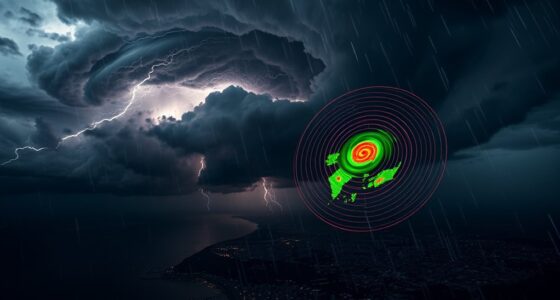

Global warming is causing noticeable changes in weather patterns, making storms more intense and longer-lasting. Rising temperatures warm oceans, fueling stronger hurricanes and typhoons, while shifts in the jet stream create unpredictable and extreme weather events. Urban heat islands exacerbate these effects, leading to higher temperatures and more severe storms. If you want to understand how these climate changes continue to influence weather risks, there’s more to uncover below.
Key Takeaways
- Global warming increases sea surface temperatures, fueling more intense and longer-lasting storms like hurricanes and typhoons.
- Wavier jet streams caused by climate change lead to prolonged extreme weather events, affecting storm paths and severity.
- Rising urban heat islands amplify local temperatures, exacerbating heatwaves and complicating storm impact predictions.
- Changes in atmospheric circulation patterns disrupt traditional weather systems, resulting in unpredictable and severe storm behaviors.
- Overall, climate change intensifies storm energy and frequency, increasing risks of catastrophic flooding and weather-related damages.
Understanding weather pattern trends is essential because they directly impact your daily life and the environment around you. One of the most noticeable effects of changing climate patterns is the increase in urban heat. As cities grow and concrete structures replace natural landscapes, they trap heat more effectively, creating urban heat islands. This phenomenon causes cities to be markedly warmer than surrounding rural areas, especially during summer. You might notice how heat waves become more intense and prolonged, making outdoor activities uncomfortable and even hazardous. The rising urban heat not only affects human health but also strains energy systems as demand for air conditioning surges. These temperature spikes can disrupt local weather patterns, influencing everything from local breezes to precipitation. Additionally, the advancement of climate science helps us better understand and predict these complex interactions, enabling more effective adaptation strategies.
Another vital component influencing weather patterns is the jet stream, a high-altitude wind current that guides weather systems across the globe. When the jet stream shifts or becomes more meandering, it can lead to prolonged periods of extreme weather. For instance, a wavier jet stream might cause cold air to dip further south or warm air to stay in one region longer than usual. This can result in unusually severe storms or extended droughts. As the climate warms, scientists observe that the jet stream tends to become more unpredictable, leading to more extreme and less stable weather patterns. You might experience this firsthand in the form of unpredictable storm tracks, heavy rainfall in some areas, or persistent droughts in others. The jet stream’s behavior is a key indicator of how global warming is altering atmospheric circulation, and understanding these shifts helps you anticipate and prepare for upcoming weather events.
These changes in weather patterns, driven by global warming, also influence storm severity. Warmer oceans provide more energy for storms, leading to more powerful hurricanes and typhoons. As sea surface temperatures rise, storms gain strength more quickly and maintain their intensity longer. You may notice that hurricanes are becoming more destructive, with higher wind speeds and increased rainfall, causing devastating flooding. The combination of urban heat and a shifting jet stream amplifies these effects, creating conditions ripe for severe weather. Recognizing these interconnected factors helps you understand why storms are intensifying and how climate change is making weather more unpredictable and dangerous. Staying informed about these trends is vital for community preparedness, as it allows you to better anticipate risks and adapt to the evolving climate landscape.
Frequently Asked Questions
How Do Ocean Currents Influence Weather Pattern Changes?
Ocean currents critically influence your weather patterns by redistributing heat across the globe. As part of the ocean circulation system, they help regulate climate variability, warming some regions while cooling others. This movement of warm and cold water impacts atmospheric conditions, leading to changes in rainfall, temperature, and storm activity. By altering local and global climates, ocean currents play an essential role in shaping the weather you experience daily.
What Regions Are Most Affected by Increased Storm Severity?
You’ll notice that coastal regions, especially in the Atlantic and Gulf of Mexico, are most affected by increased storm severity. These areas face heightened regional vulnerabilities, with stronger hurricanes causing severe coastal impacts like flooding and erosion. As storm intensity rises, you should be aware that communities along these coastlines are at greater risk, requiring increased preparedness and adaptive strategies to mitigate damage from more powerful storms.
How Reliable Are Climate Models in Predicting Future Storms?
Climate models are fairly reliable in predicting future storms, but you should remember that model accuracy varies. They help identify potential trends and increase understanding, yet prediction challenges remain because storm behavior is complex and influenced by many factors. You can trust these models as valuable tools, but always consider their limitations and the ongoing need for refinement to improve forecast precision over time.
What Role Do Natural Climate Variations Play Alongside Global Warming?
You might think natural climate variations like solar cycles and volcanic activity are minor, but they actually play a big role alongside global warming. These factors can temporarily boost or dampen storm activity, making climate predictions trickier. Ironically, while we focus on human-caused warming, natural swings like solar peaks or volcanic eruptions remind us that Earth’s climate constantly shifts, blending long-term trends with unpredictable natural influences.
How Can Individual Actions Mitigate Climate Change Impacts on Weather?
You can reduce climate change impacts on weather by choosing renewable energy sources like solar or wind, which cut down emissions. Supporting sustainable agriculture practices helps preserve soil health and reduce greenhouse gases. Additionally, conserving energy, reducing waste, and advocating for policies that address climate change make a difference. Your actions, big or small, contribute to mitigating the severity of storms and other extreme weather events influenced by global warming.
Conclusion
As you can see, climate change is making storms more intense and frequent. For example, the number of major hurricanes has increased by about 60% since the 1980s. This means you should stay alert and prepared, knowing that these extreme weather patterns affect us all. By understanding these trends, you can better appreciate the urgent need to reduce greenhouse gases and protect our environment for future generations. Stay informed and stay safe.