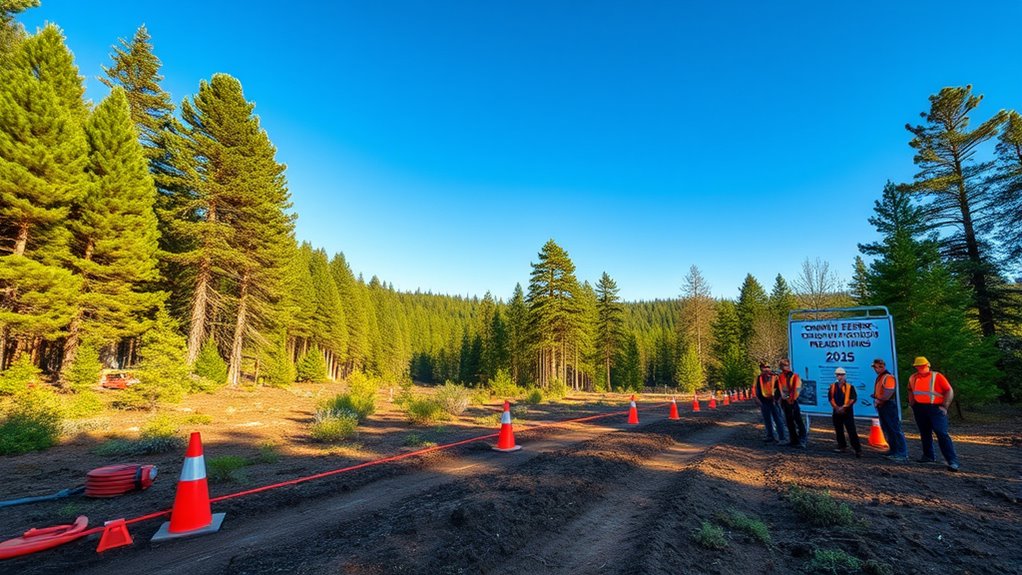

To prepare for wildfire season in 2025, start by creating a defensible space around your home, removing dead vegetation and using fire-resistant materials. Develop multiple evacuation routes and practice drills regularly, ensuring everyone knows the plan. Stay informed with alerts and keep emergency supplies ready in an accessible place. Prioritizing these steps boosts your safety and resilience. Keep going to discover detailed strategies to strengthen your wildfire readiness and protect what matters most.
Key Takeaways
- Update and review your home’s defensible space and fire-resistant materials annually, especially before wildfire season begins.
- Develop, communicate, and practice a comprehensive evacuation plan with multiple routes and designated meeting points.
- Sign up for local fire alerts, monitor weather conditions, and keep emergency supplies and vehicle readiness prioritized.
- Install ember-resistant vents, seal gaps, and keep gutters clear to prevent ember intrusion during wildfire threats.
- Stay informed about wildfire risks and prioritize health, nutrition, and stress management to enhance resilience during emergencies.
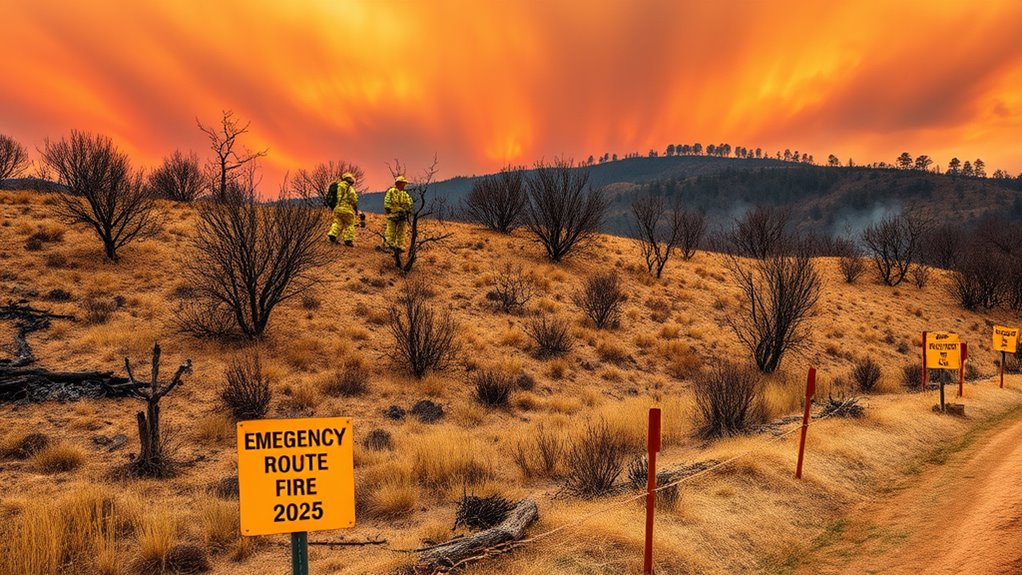
As wildfire season approaches in 2025, it’s crucial to take proactive steps to protect yourself and your property. Preparing for wildfires isn’t just about having supplies; it’s about understanding fire safety and establishing a solid evacuation plan. Start by evaluating your surroundings—clear away dead vegetation, leaves, and other debris that can fuel flames close to your home. Creating a defensible space around your property reduces fire risk and offers you peace of mind. Use fire-resistant materials for roofing and exterior walls, and keep gutters free of combustible materials. These small steps considerably improve your home’s resilience and demonstrate your commitment to fire safety.
Equally important is developing an evacuation plan you can rely on during an emergency. Don’t wait until a fire is imminent to figure out your route; plan ahead and communicate it with everyone in your household. Identify multiple escape routes out of your neighborhood, considering potential road closures or bottlenecks. Keep an emergency kit stocked with essentials like water, non-perishable food, medications, important documents, and clothing suitable for changing weather conditions. Make sure all family members know how and when to evacuate, and establish a designated meeting point outside the danger zone. Practicing your evacuation plan periodically helps everyone remember their roles and reduces panic during actual emergencies.
Stay informed about fire alerts and weather conditions in your area. Sign up for local alerts and keep a battery-powered radio handy to receive updates if power goes out. When a wildfire approaches, follow official instructions promptly—evacuate early rather than waiting too long. Remember, delaying evacuation can increase your risk and complicate rescue efforts. Keep your vehicle fueled and ready to go at all times during fire season, and store your emergency kit in an accessible location. It’s also wise to prepare your home by installing ember-resistant vents and sealing gaps that could allow embers to enter. These measures can make a big difference in preventing ignition and protecting your property. Additionally, understanding nutritional advantages of green juice can support your overall health and resilience during stressful situations like wildfires.
Ultimately, your safety depends on proactive planning and awareness. Prioritize fire safety by creating defensible space and practicing your evacuation plan regularly. Staying informed and prepared ensures that when wildfire season hits, you’re not caught off guard. With careful planning, you can reduce risks, protect your loved ones, and respond confidently in the face of danger. Remember, being proactive today can save lives and minimize damage tomorrow.
Frequently Asked Questions
How Can I Volunteer for Wildfire Prevention Efforts?
You can volunteer for wildfire prevention efforts by contacting local organizations involved in community education and volunteer coordination. Look for fire departments, community groups, or nonprofits that focus on wildfire safety. You may assist with community outreach, educational events, or clearing brush around neighborhoods. By volunteering, you help spread awareness and actively reduce fire risks, making your community safer during wildfire season. Your efforts truly make a difference.
What New Technologies Will Assist Firefighting in 2025?
In 2025, you’ll see drones surveillance becoming more widespread, giving firefighters real-time aerial views of wildfires. AI prediction tools will also improve, helping you anticipate fire spread and respond faster. These technologies work together, allowing you to act swiftly and strategically. Embracing these advancements means you’re better equipped to protect communities and natural resources, enhancing wildfire management efforts markedly.
Are There Specific Evacuation Routes for Vulnerable Communities?
Yes, there are specific evacuation routes for vulnerable communities. You should look for community mapping and clear emergency signage that directs you safely out of danger zones. Authorities are working to update these routes regularly, ensuring they account for new wildfire risks. Always stay informed through local alerts, and familiarize yourself with these designated pathways beforehand, so when an emergency strikes, you can evacuate quickly and safely.
How Will Climate Change Impact Wildfire Frequency in 2025?
Climate change will considerably increase wildfire frequency in 2025 by altering fire weather patterns. Climate modeling predicts hotter, drier conditions, and stronger winds, which create ideal fire weather. These changes mean you’ll face more frequent and intense wildfires. To stay safe, stay informed on fire weather alerts, prepare your community, and follow local evacuation plans. Climate change‘s impact makes proactive wildfire preparedness more vital than ever.
What Mental Health Resources Are Available Post-Wildfire?
You can access mental health support through local counseling centers, which often offer post wildfire counseling to help you process trauma and stress. Many communities also provide hotlines and online resources for immediate assistance. Don’t hesitate to reach out to mental health professionals who specialize in disaster recovery. Support groups are another great option, giving you a space to share experiences and find comfort after a wildfire.
Conclusion
As you prepare for wildfire season in 2025, remember that an ounce of prevention is worth a pound of cure. Stay vigilant, keep your defensible space clear, and have an emergency plan in place. Being proactive now can save you time, money, and peace of mind later. Don’t wait until it’s too late—preparation is your best defense. After all, a stitch in time saves nine, so start today and stay safe!