
After a storm, it’s essential to clean your gutters and roof safely to prevent water damage and accidents. Use a sturdy ladder on even ground, maintain three points of contact, and avoid overreaching. Clear debris carefully with proper tools, and check your roof for loose shingles or damage using good footwear. Always avoid working in high winds or stormy weather. Keep safety in mind, and you’ll find tips that help you clean confidently and securely.
Key Takeaways
- Use a sturdy, properly positioned ladder with a safety person for gutter and roof access.
- Wear gloves, eye protection, and non-slip footwear during debris removal and inspection.
- Clear gutters of leaves and branches thoroughly to prevent water blockage and damage.
- Inspect roofs carefully for loose shingles or storm damage, avoiding weak areas and considering professional help.
- Avoid working in high winds or stormy conditions; prioritize safety over speed during cleanup tasks.
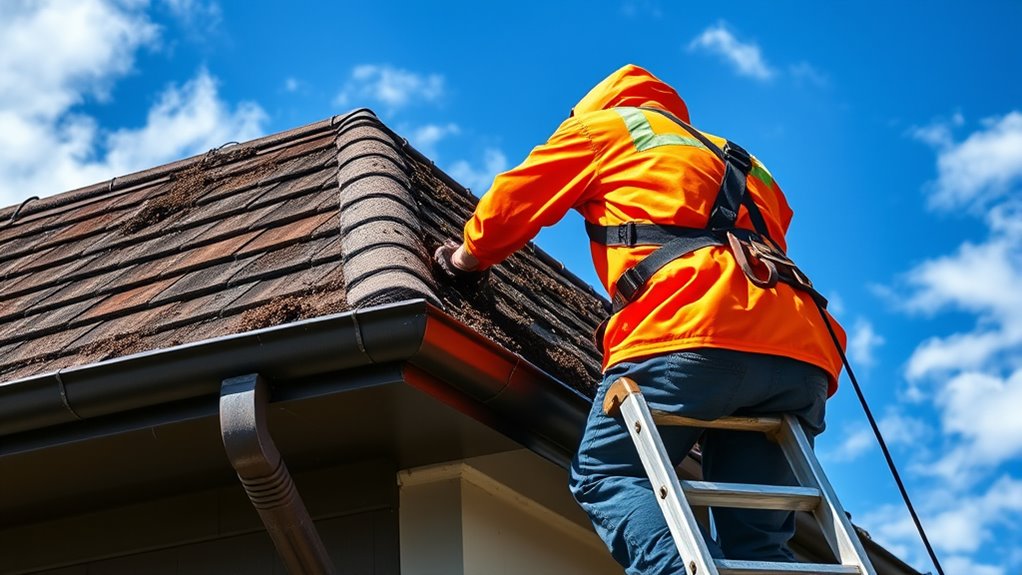
After a storm, cleaning your gutters and roofs is essential to prevent water damage and further issues. Heavy rains and strong winds can leave behind a mess of storm debris—fallen branches, leaves, and other materials—that can clog your gutters and trap water on your roof. Tackling this task promptly helps protect your home’s foundation, walls, and roof structure. However, safety must come first. When working at heights, ladder safety is vital. Make sure your ladder is sturdy, placed on level ground, and angled properly—about 75 degrees—to prevent slipping. Always maintain three points of contact—two hands and one foot or two feet and one hand—while on the ladder. Never overreach; instead, move the ladder closer to the area you’re working on to avoid losing your balance. If possible, have a second person hold the ladder steady, especially when working on taller or more precarious spots. Use gloves and eye protection to guard against sharp debris or splinters, and avoid working during high winds or stormy conditions, which can make ladder work dangerous. Regular safety checks and proper equipment can significantly reduce the risk of accidents during cleanup.
Storm debris removal is an integral part of post-storm cleanup. Begin by removing large branches and accumulated debris from your gutters by hand or with a small scoop. Avoid relying solely on tools that could damage your gutters or cause injury. Clear the gutters thoroughly, ensuring water can flow freely toward downspouts. Once the gutters are cleared, inspect your roof for loose shingles, damaged flashing, or other issues caused by the storm. Be cautious when walking on the roof; use proper footwear with good traction, and avoid stepping on weak spots. If your roof is too steep or damaged, consider hiring professionals for inspection and repairs. When removing debris from the roof itself, use a sturdy rake or broom, working from the ground if possible, to minimize risk. If you need to climb onto the roof, do so with extreme care, following safety protocols, and only if you’re confident in your abilities. Remember, storm debris can be heavy and awkward; take your time to avoid strain or falls. Additionally, utilizing appropriate cleaning tools can make the process safer and more efficient.
Cleaning gutters and roofs after a storm isn’t just about maintenance—it’s about protecting your home and ensuring your safety. Taking the time to do it right, with attention to ladder safety and storm debris removal, saves you from potential costly damage and injury down the line. Stay alert, work deliberately, and don’t hesitate to call in professionals if the job feels overwhelming. Your safety and your home’s integrity depend on it.
Frequently Asked Questions
Can I Clean Gutters During a Rainstorm?
You shouldn’t clean gutters during a rainstorm because it’s unsafe. Rain makes the storm debris slippery and harder to remove, increasing your risk of falls. Plus, gutters can be filled with water, making inspection difficult and dangerous. Wait until the storm passes, then inspect your gutters for debris buildup and damage. Clear out any leaves, twigs, or other debris to prevent water backup and potential roof damage.
What Safety Gear Is Essential for Roof Cleaning?
Oh, sure, because risking your life for a spotless roof is totally worth it, right? You definitely need proper personal protective equipment and fall prevention gear. Invest in sturdy gloves, a helmet, non-slip shoes, and a harness if you’re working at heights. Safety glasses protect your eyes from debris, and a high-quality respirator keeps dust and mold out of your lungs. Stay safe, and don’t become a roof statistic!
How Do I Prevent Future Storm Damage?
To prevent future storm damage, prioritize storm preparedness and structural reinforcement. You should regularly inspect and reinforce your roof, windows, and doors to withstand high winds and heavy rain. Trim trees near your home to reduce falling branches, and secure loose outdoor items. Installing storm shutters and reinforcing your foundation can also help. Stay informed about weather forecasts and develop an emergency plan to act quickly when storms approach.
Is It Safe to Use a Ladder Alone?
Think twice before climbing that ladder alone—it’s risky. You can’t always guarantee ladder stability when you’re solo, and a sudden shift could lead to a dangerous fall. For your safety, it’s best to have someone hold the ladder or use stabilizers. Don’t gamble with your well-being; prioritize solo safety by never ignoring these precautions. When in doubt, always ask for help to stay secure.
When Should I Hire a Professional Instead of DIY?
You should hire a professional when DIY pitfalls outweigh your skills or safety. If you’re unsure about using ladders safely or working at heights, professionals bring experience and proper equipment that reduce risks. The professional benefits include thorough cleaning, damage prevention, and peace of mind. Don’t push your limits—trust experts when tasks involve complex or dangerous work, ensuring your home stays safe and well-maintained without unnecessary hazards.
Conclusion
After a storm, think of your gutters and roof as the body’s immune system—they protect your home from damage. By safely cleaning them, you prevent costly repairs and keep everything running smoothly. Remember, safety comes first—use sturdy ladders, gloves, and eye protection. Don’t rush; storms may have left debris that’s like hidden traps. Taking these precautions guarantees your home stays healthy and strong, weathering whatever comes next.