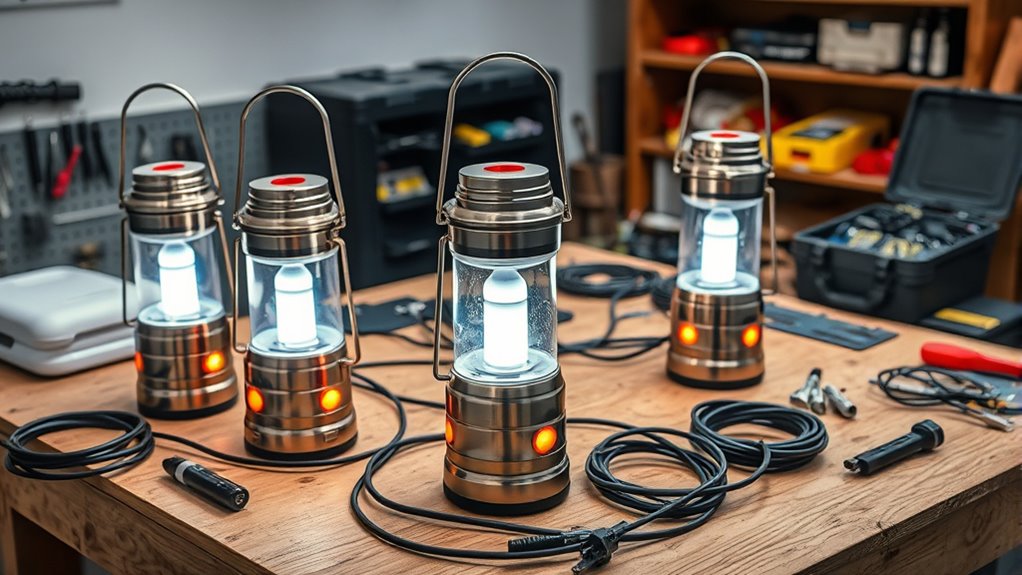

To set up a rechargeable emergency lantern system, start by choosing modern LED lanterns with adjustable brightness and rechargeable batteries, preferably with solar or USB options. Store them in a cool, dry, accessible area and fully charge them before storm seasons. Regularly test the lanterns to verify they work properly and keep backup batteries or extra units nearby. Proper maintenance, organized storage, and routine checks guarantee your lights are ready when you need them most—keep going to learn more.
Key Takeaways
- Designate a central storage and charging station for easy access and organized deployment.
- Fully charge lanterns before storm seasons or high-risk periods to ensure readiness.
- Regularly test lanterns monthly to verify proper operation and battery performance.
- Keep backup batteries or additional lanterns on hand for quick replacement during outages.
- Follow manufacturer instructions for charging cycles and maintenance to prolong lantern lifespan.

During power outages or emergencies, having a reliable light source is vital, and rechargeable emergency lanterns offer a practical solution. Setting up these systems properly guarantees you’ll always have dependable illumination when you need it most. The first step is understanding the importance of battery maintenance. Regularly checking and maintaining the batteries in your lanterns keeps them ready for use. Follow the manufacturer’s instructions for charging cycles, and avoid letting batteries completely discharge, as this can reduce their lifespan. Keeping batteries clean and free of corrosion also helps guarantee peak performance. It’s a good idea to periodically test your lanterns, verifying that they hold a charge and operate correctly. Proper storage is equally important; store your lanterns in a cool, dry place, away from direct sunlight or extreme temperatures, which can degrade the battery’s health over time.
Lighting technology plays a vital role in the effectiveness and longevity of your emergency lanterns. Modern lanterns utilize advanced LED lighting, which offers brighter illumination with less power consumption than traditional bulbs. LEDs also tend to have a longer lifespan, meaning fewer replacements and less maintenance overall. When selecting lanterns, look for models that incorporate the latest lighting technology—features such as adjustable brightness levels, long-lasting LEDs, and energy-efficient circuitry. These improvements not only extend the operational time during outages but also reduce the strain on the batteries, making your setup more dependable. Additionally, some lanterns come with smart features like automatic shutoff or built-in rechargeable batteries that can be recharged via solar panels or USB ports, adding convenience and versatility. Incorporating advanced lighting technology can further improve the efficiency and reliability of your emergency setup.
When setting up your emergency lantern system, consider creating a designated storage and charging station. Keep your lanterns fully charged and ready to go, especially before storm seasons or periods of high risk. Establish a routine of testing the devices monthly to confirm they’re functioning correctly. It’s wise to keep spare batteries or backup lanterns on hand, so you won’t be caught unprepared if one fails. Make sure your charging procedures align with the lighting technology used—some lanterns may require specific charging times or compatible power sources. By paying attention to battery maintenance and leveraging the latest lighting technology, you’ll maximize the effectiveness of your setup. This proactive approach ensures that, in an emergency, your rechargeable emergency lanterns will provide clear, dependable light, helping you stay safe and prepared when the power goes out unexpectedly.
Frequently Asked Questions
How Long Do Rechargeable Lantern Batteries Typically Last?
Rechargeable lantern batteries usually last between 2 to 5 years, depending on their battery lifespan and how often you charge them. You can expect about 300 to 500 charging cycles before their capacity markedly declines. To extend their life, avoid overcharging and store them properly when not in use. Regular maintenance and proper charging habits help guarantee your lantern remains reliable during emergencies.
Can Rechargeable Lanterns Be Used Outdoors in Bad Weather?
Yes, you can use rechargeable lanterns outdoors in bad weather if they have a weatherproof design. Imagine a sturdy lantern glowing through a rainstorm, its sealed body protecting the battery lifespan from moisture. Look for features like waterproof seals and robust casings to guarantee durability. With proper weatherproofing, your lantern will shine brightly, providing reliable light even amid heavy rain or snow, keeping you safe and visible.
What Safety Precautions Are Necessary When Charging Lanterns?
When charging lanterns, you should always use the correct charger to guarantee compatibility and prevent overcharging. Keep the area well-ventilated and avoid charging near flammable materials. Never leave lanterns unattended while charging, and disconnect once fully charged. Properly dispose of old batteries according to local regulations to prevent environmental harm, and avoid using damaged chargers or cords to minimize risks of fires or electrical shocks.
Are There Eco-Friendly Rechargeable Lantern Options Available?
Yes, eco-friendly rechargeable lantern options are available. You can choose solar alternatives that harness sunlight, reducing reliance on electricity and lowering environmental impact. Some lanterns are made from biodegradable materials, making them safer for the planet. These options help you stay prepared during emergencies while supporting sustainability. Look for products labeled as eco-friendly or solar-powered to guarantee you’re making environmentally conscious choices.
How Often Should I Replace the Rechargeable Batteries?
An ounce of prevention is worth a pound of cure, so you should replace your rechargeable batteries every 2-3 years. Regularly check their capacity and performance, and follow charging tips to extend their life. When batteries reach the end of their lifespan, recycle them properly through battery recycling programs. Doing this keeps your lantern reliable and helps protect the environment, ensuring you’re always prepared when the lights go out.
Conclusion
Now that you know how to set up rechargeable emergency lantern systems, you’re better prepared for any blackout that comes your way. Keep your lanterns charged and ready to go; after all, a stitch in time saves nine. With these simple steps, you’ll guarantee safety and peace of mind when darkness falls. Don’t wait for the storm to hit—get your system in place today and stay one step ahead of trouble!