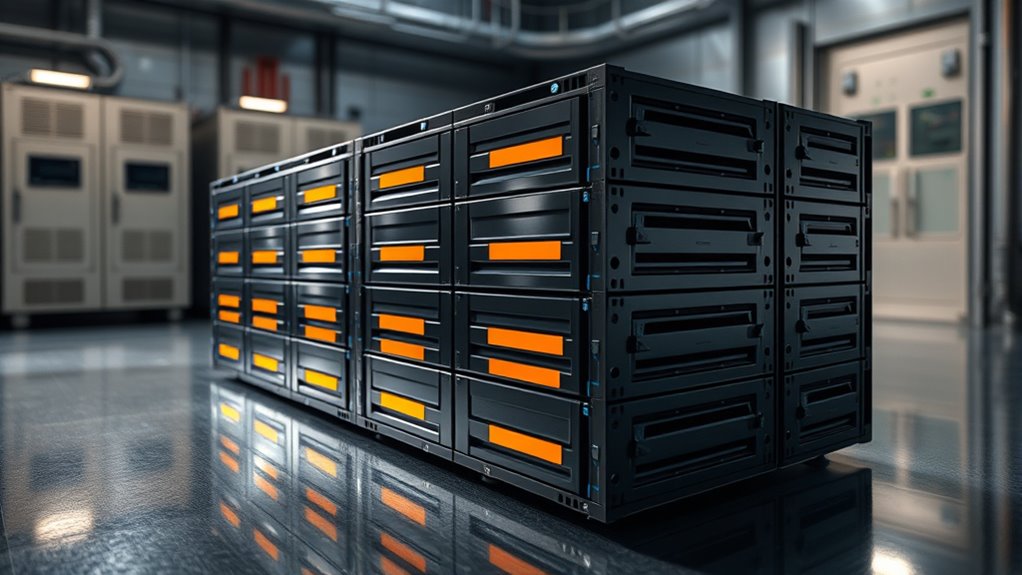

Lithium-ion batteries are crucial for emergency power because they provide quick, reliable energy when outages occur. With built-in safety features like thermal management and protective circuits, they prevent hazards like overheating and thermal runaway. These batteries guarantee your system stays stable during faults or unexpected events, offering dependable backup power. Their safety, fast response, and resilience improve overall system reliability. To discover how these batteries are transforming emergency solutions, keep exploring their unique safety and performance advantages.
Key Takeaways
- Provide reliable, quick energy storage to power critical loads during outages.
- Incorporate safety features to prevent thermal runaway and ensure safe operation under fault conditions.
- Support renewable energy integration, enhancing emergency power resilience with sustainable sources.
- Enable fast charging, allowing rapid replenishment during grid stability events or peak renewable generation.
- Maintain system integrity through monitoring and fail-safe mechanisms, ensuring dependable emergency power supply.
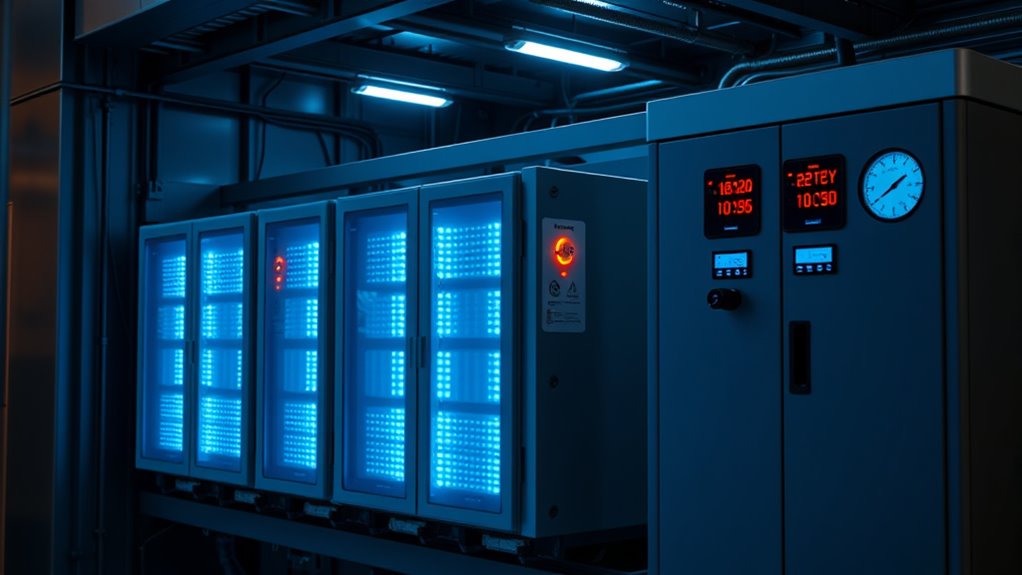
Lithium-ion batteries have become a fundamental component in emergency power systems because of their high energy density and fast charging capabilities. When you’re relying on these batteries to provide backup power, understanding their safety features is essential. Battery safety isn’t just about preventing fires or explosions; it involves designing systems that can safely handle various operational stresses, such as overcharging, overheating, or physical damage. Modern lithium-ion batteries incorporate advanced safety mechanisms like thermal management systems, protective circuits, and fail-safe shutdowns to mitigate risks. This focus on safety ensures that, even during unexpected events or faults, the batteries operate reliably without endangering personnel or infrastructure.
Modern lithium-ion batteries incorporate safety features like thermal management and protective circuits to prevent risks during operational stresses.
In addition to safety, lithium-ion batteries play a critical role in renewable integration. As you incorporate renewable energy sources like solar or wind into your power systems, these batteries act as essential energy buffers. They store excess energy generated during peak production times, which you can then deploy during periods of low generation or high demand. This capability smooths out the intermittent nature of renewables, making your energy system more stable and dependable. By integrating lithium-ion batteries, you effectively enhance the resilience of your emergency power setup, ensuring that critical loads stay powered regardless of fluctuations in renewable energy output.
The fast charging feature of lithium-ion batteries also supports renewable integration by allowing quick replenishment of stored energy. When sunlight or wind is abundant, you can rapidly charge the batteries, maximizing the use of renewable resources without delay. This efficiency reduces reliance on fossil fuel-based backup generators, decreasing carbon emissions and supporting sustainability goals. Furthermore, these batteries are compact and lightweight compared to traditional energy storage options, which simplifies installation and maintenance—further boosting the reliability of your emergency power system.
However, you must pay attention to battery safety when deploying lithium-ion technology. Proper thermal management, regular maintenance, and adherence to manufacturer guidelines are critical to prevent potential issues like thermal runaway. Incorporating monitoring systems that track temperature, voltage, and current helps you catch problems early, maintaining both safety and performance. As renewable energy sources expand, so does the importance of integrating batteries that are not only efficient but also safe and resilient. This ensures your emergency power system remains robust, capable of supporting your needs during crises, and aligned with environmental sustainability.
Frequently Asked Questions
How Long Do Lithium-Ion Batteries Typically Last in Emergency Use?
Lithium-ion batteries typically last 3 to 5 years in emergency use, but their lifespan depends on storage conditions and usage. To maximize their longevity, you should store them in a cool, dry place and avoid frequent deep discharges. Regular maintenance and proper storage can help guarantee your lithium-ion batteries remain reliable during emergencies, providing power when you need it most.
Are Lithium-Ion Batteries Environmentally Friendly After Disposal?
Lithium-ion batteries aren’t entirely environmentally friendly after disposal due to their environmental impact. You should be aware of recycling challenges, like extracting valuable materials and preventing toxic leaks. Proper recycling helps reduce pollution and conserves resources, but it’s often complex and underdeveloped. By recycling lithium-ion batteries responsibly, you contribute to minimizing their environmental footprint, ensuring safer disposal and promoting sustainable use of this essential technology.
Can Lithium-Ion Batteries Be Recharged Repeatedly Without Performance Loss?
Did you know lithium-ion batteries can typically handle around 300 to 500 recharging cycles before their capacity drops markedly? Yes, they can be recharged repeatedly without major performance loss initially, but battery degradation occurs over time due to repeated recharging cycles. As you use them, expect a gradual decrease in capacity, meaning you’ll need to replace or recharge more often. Proper care can extend their lifespan, keeping performance steady longer.
What Are the Safety Concerns Associated With Lithium-Ion Battery Use?
You should be aware that lithium-ion batteries pose safety concerns like fire hazards and thermal runaway. If damaged, improperly charged, or exposed to high temperatures, they can overheat and catch fire. To stay safe, avoid puncturing, crushing, or exposing batteries to extreme heat. Always use the correct charger and follow manufacturer guidelines. Proper handling minimizes risks, ensuring safe and reliable battery performance during emergencies.
How Do Lithium-Ion Batteries Compare to Traditional Backup Power Options?
You’ll find lithium-ion batteries outperform traditional backup options in several ways. They offer longer battery lifespan, meaning fewer replacements and less hassle. Plus, their cost efficiency shines over time despite higher initial costs. But, the real question is whether their superior reliability and quick recharge capabilities outweigh the risks and costs associated with their safety concerns. This comparison keeps you guessing, as the choice depends on your specific emergency power needs.
Conclusion
So, next time your blackout hits, thank lithium-ion batteries for saving your midnight Netflix binge. Who knew that tiny power packs could be the unsung heroes in your life’s most dramatic moments? Without them, you’d be sitting in the dark, pondering life’s biggest questions—like why your fridge decided to take a vacation. So, here’s to lithium-ion batteries: quietly keeping the lights on while you pretend to work. Cheers to modern magic!