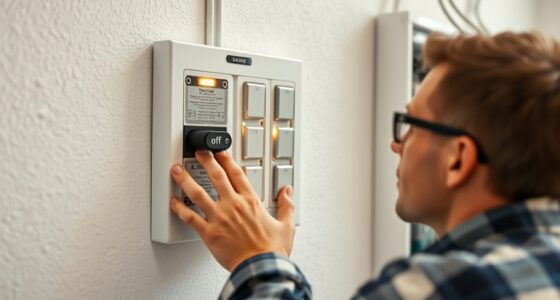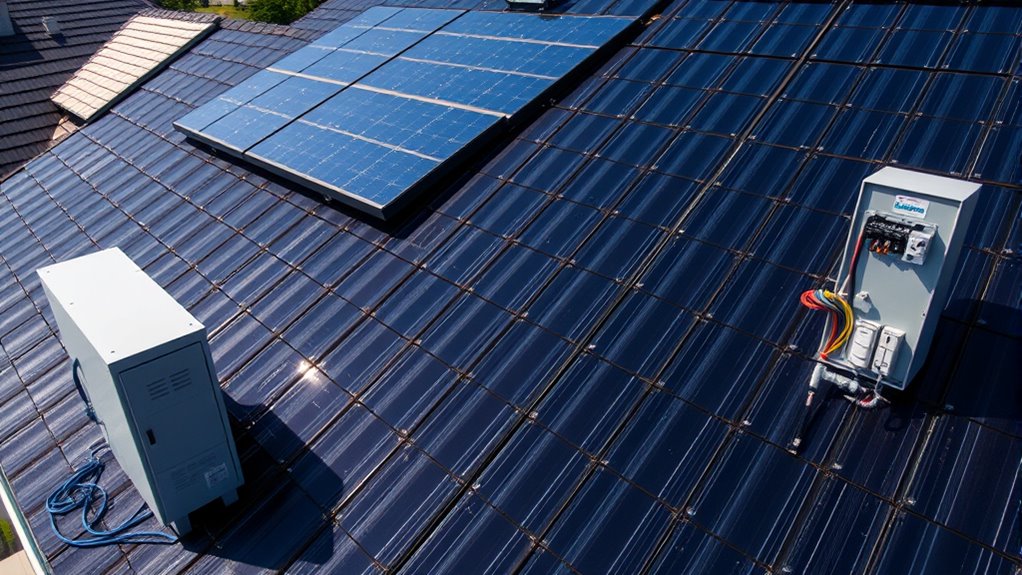

To integrate backup for your solar roof, start by evaluating your energy needs and selecting a suitable battery system like lithium-ion. Work with professionals to properly connect the batteries to your existing solar inverter and install transfer switches or backup gateways for seamless switching during outages. Use smart management tools to optimize performance and guarantee safety. If you follow these essential steps, you’ll improve your power reliability — and exploring further will reveal even more details.
Key Takeaways
- Assess your energy needs and select compatible battery systems based on capacity, lifespan, and cost.
- Connect batteries securely to existing solar inverters, ensuring proper wiring and system configuration for safety.
- Install a transfer switch or backup gateway to enable automatic power switching during outages.
- Use smart management features to monitor energy flow, set priorities, and control system remotely via apps.
- Schedule regular maintenance and updates to optimize system performance and ensure long-term reliability.
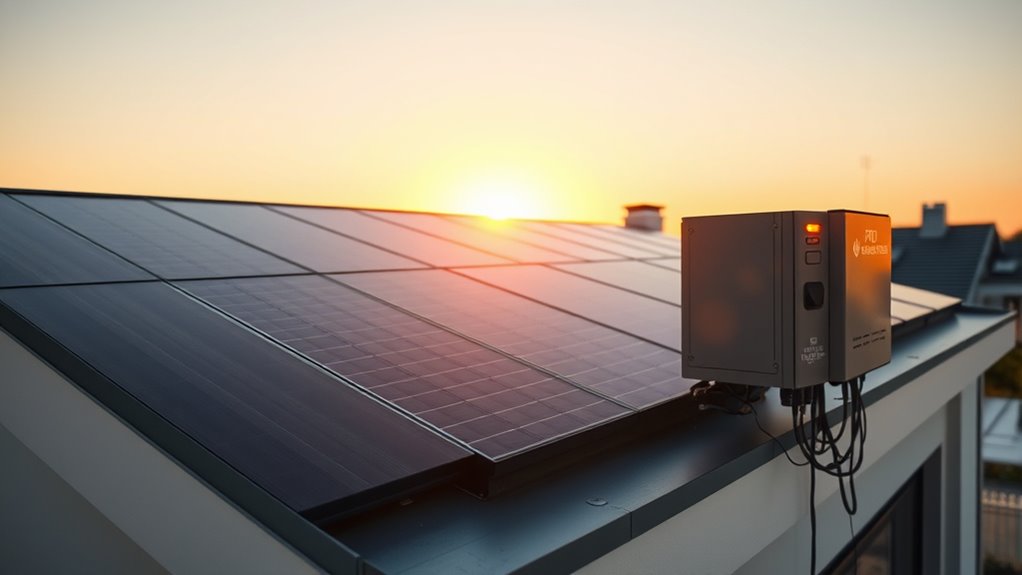
Have you ever wondered how to guarantee your solar roof keeps providing power even during outages? The key lies in integrating battery storage into your solar system. Battery storage allows you to store excess energy generated during sunny days, so you’re not solely dependent on the grid. This setup enhances your grid independence, meaning you can rely on your stored power when the grid goes down. It’s a smart way to ensure continuous electricity, especially during emergencies or maintenance periods.
Integrate battery storage to keep your solar power running during outages and boost grid independence.
To start, you need to assess your energy needs and determine the right size for your battery storage system. Think about your average consumption, peak loads, and how long you want to be off-grid during outages. Once you have this information, choose a compatible battery system that can handle your requirements. Many options exist, from lithium-ion batteries to more advanced alternatives, each varying in capacity, lifespan, and cost. Selecting the right one is essential to maximize your backup power and achieve true grid independence.
Next, you’ll need to work with a professional installer to integrate the battery storage into your existing solar setup. This involves connecting the batteries to your solar inverter, which manages the flow of electricity between your panels, batteries, and home. Proper wiring and configuration are critical to ensure the system operates smoothly, safely, and efficiently. During this process, you’ll also want to install a transfer switch or a dedicated backup gateway. These devices automatically switch your home’s power source from the grid to your batteries when an outage occurs, ensuring seamless power continuity.
Once installed, you’ll need to configure your system’s settings to optimize performance. Many modern battery systems come with smart management features that allow you to monitor energy flow, set priority levels for charging and discharging, and even connect to apps for remote control. Regular maintenance and software updates will help keep your system running at peak efficiency. This way, you can trust that your solar roof, combined with battery storage, will deliver reliable power regardless of external grid conditions.
Frequently Asked Questions
What Are the Costs Involved in Solar Roof Backup Integration?
You’ll need to contemplate the cost analysis for solar roof backup integration, which includes equipment, installation, and potential upgrades. The costs vary depending on your system size and existing infrastructure. Don’t forget to explore financial incentives like tax credits or rebates that can offset expenses. Budgeting for ongoing maintenance is also wise. Overall, the initial investment can be significant, but incentives and long-term savings make it worthwhile.
How Long Does the Installation Process Typically Take?
Your installation process could seem like a lightning-fast race or an eternity, but typically, it takes about one to two days. First, you’ll undergo a thorough site assessment to make sure everything’s perfect. After that, the actual installation timeline is quick, often completed within a day or two, depending on your roof’s complexity. You’ll be up and running with backup power quicker than you ever imagined!
What Maintenance Is Required for the Backup System?
You should regularly inspect your backup system’s batteries to make certain they’re functioning properly and look out for any signs of wear or corrosion. Additionally, keep your system’s software updated to improve performance and security. These routine checks and updates help prevent issues, extend battery life, and ensure your backup system is ready when you need it most. Schedule inspections periodically and stay current with software updates for peak operation.
Can the System Be Scaled or Expanded Later?
They say “the only constant in life is change,” and your backup system is no exception. You can definitely scale or expand it later, thanks to its flexibility. The system’s scalability options allow you to add more battery capacity or integrate new technologies as your energy needs grow. Its expansion potential guarantees you stay prepared for future demands, making your investment both smart and adaptable.
Are There Any Specific Weather Considerations for Installation?
Weather considerations are vital for your solar roof backup installation. You should plan for installation challenges like rain, snow, or high winds, which can delay or complicate the process. It’s best to schedule installation during clear, mild weather to guarantee safety and proper setup. Keep in mind that extreme weather conditions might affect the equipment’s performance or longevity, so follow all manufacturer guidelines and consult with professionals to minimize risks.
Conclusion
Now that you’ve mastered the solar roof backup integration, you’re well-equipped to keep your home powered even during outages. Remember, this setup isn’t just a modern marvel; it’s a game-changer akin to installing a trusty alchemical engine in your castle. Stay diligent with maintenance and updates, and you’ll enjoy peace of mind for years to come. Don’t let your home be left in the dark—embrace this innovation and keep shining bright, just like a true Renaissance inventor.